People often inquire about this issue as INA 212a3E, 212a3E, or Section 212a3E. These are shorthand references to INA § 212(a)(3)(E), which includes three related inadmissibility grounds: (i) participation in persecution (human rights violator), (ii) genocide, and (iii) torture or extrajudicial killings.

INA 212a3E (INA 212(a)(3)(E)) — Persecution, Genocide, Torture, Extrajudicial Killing
INA 212a3E (INA 212(a)(3)(E)) — Persecution, Genocide, Torture, Extrajudicial Killing

What is a ground of inadmissibility?
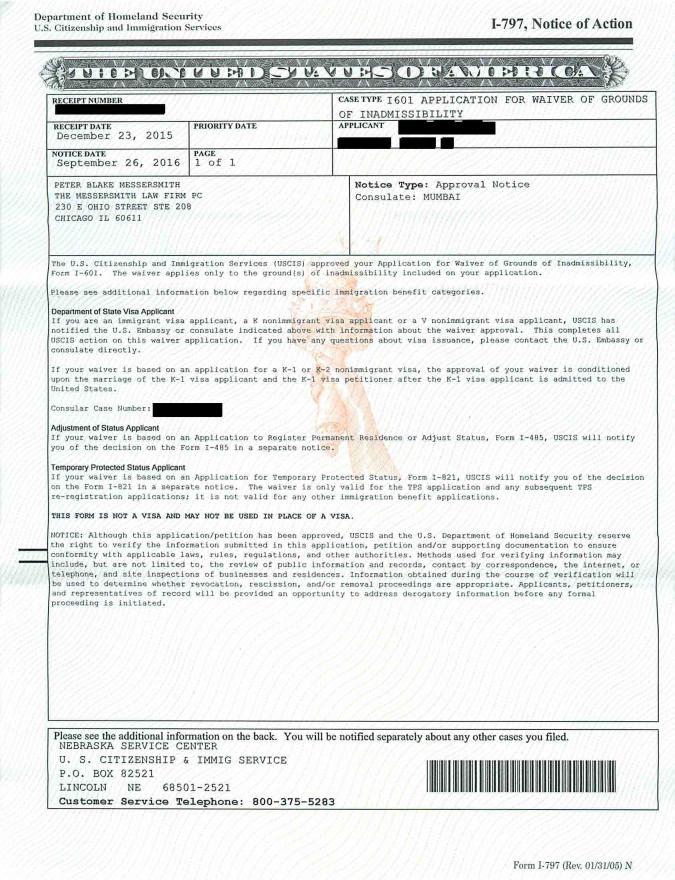
In order for a foreign national to be admitted to the United States, he or she must be admissible. A foreign national can be deemed inadmissible to the United States by USCIS, CBP and a Consulate. If the foreign national is deemed inadmissible to the United States, he or she cannot enter without a waiver of inadmissibility or a determination that the inadmissibility charge was made in error.

212(a)(3)(E)(i), 212(a)(3)(E)(ii) & 212(a)(3)(E)(iii) Inadmissibility due to Nazi Party, Genocide & Torture
Foreign nationals may be inadmissible if he or she participated in Nazi persecutions or genocide.
Any alien who, during the period beginning on March 23, 1933, and ending on May 8, 1945, under the direction of, or in association with the Nazi government of Germany, any government in any area occupied by the military forces of the Nazi government of Germany, any government established with the assistance or cooperation of the Nazi government of Germany, or any government which was an ally of the Nazi government of Germany, ordered, incited, assisted, or otherwise participated in the persecution of any person because of race, religion, national origin, or political opinion is inadmissible.
Any alien who ordered, incited, assisted, or otherwise participated in genocide, as defined in section 1091(a) of title 18, United States Code, is inadmissible.
Any alien who, outside the United States, has committed, ordered, incited, assisted, or otherwise participated in the commission of any act of torture, as defined in section 2340 of title 18, United States Code or under color of law of any foreign nation, any extrajudicial killing, as defined in section 3(a) of the Torture Victim Protection Act of 1991 (28 U.S.C. 1350 note), is inadmissible.

How to obtain a determination that the 212(a)(3)(E)(i), 212(a)(3)(E)(ii) & 212(a)(3)(E)(iii) ground of inadmissibility was incorrectly made.
No matter which US government agency made the inadmissibility determination, each provides a method to dispute the determination, though each has drastically different processing times. We have achieved successful outcomes by petitioning the US Department of State where the determination was made by the Consulate in as little as 2 weeks. CBP quotes turnaround times of as little as 30 days and USCIS will not offer a time frame. In our experience, the more difficult the situation, the longer it will take to get resolved.
How INA 212a3E issues come up (common examples)
INA 212a3E is usually raised when the government believes a person ordered, incited, assisted, or otherwise participated in persecution, genocide, torture, or an extrajudicial killing. These issues most often appear in asylum-related histories, consular processing, and cases involving military, police, intelligence, or government service in certain countries.
Common fact patterns include:
- Allegations that the person participated in persecution based on race, religion, nationality, membership in a particular social group, or political opinion
- Military, police, or security service histories where the government questions whether the person assisted or participated in human rights abuses
- Evidence the government interprets as involvement in torture or extrajudicial killings (direct participation or command responsibility)
- Documentary records, media reports, or third-party information that officers rely on to assess human rights involvement
- Cases where the government relies on non-public information or broad allegations that require careful clarification
Because these grounds are extremely fact-specific, the strongest approach is to build a clear timeline, identify what conduct is actually alleged, and address the legal elements (ordered/incited/assisted/participated) with supporting documentation.
Waivers and options for INA 212a3E
INA 212a3E (INA 212(a)(3)(E)) covers persecution, genocide, torture, and extrajudicial killings. In most cases, these grounds are treated as having no standard immigrant or nonimmigrant waiver, so the strategy is typically record-driven.
Practical options often focus on:
- Identifying the exact subsection cited: 212(a)(3)(E)(i) (persecution), (ii) (genocide), or (iii) (torture/extrajudicial killing)
- Building a clear timeline of service/employment and duties, supported by documentation
- Addressing the “ordered, incited, assisted, or otherwise participated” element directly with facts and corroboration
- Correcting inaccuracies in the record and distinguishing the person’s role from alleged misconduct
- Using the appropriate process depending on where the issue arose (consulate, CBP, or USCIS)
Because these cases are highly fact-specific and often depend on what information the government is relying on, the first step is usually to obtain and organize the available records and respond directly to the specific allegations.
Frequently asked questions about INA 212a3E (212(a)(3)(E))
What is INA 212a3E?
INA 212a3E (INA 212(a)(3)(E)) is a group of inadmissibility grounds related to human rights violations: (i) participation in persecution (human rights violator), (ii) genocide, and (iii) torture or extrajudicial killings.
Does INA 212a3E require a criminal conviction?
Not necessarily. These grounds can be applied based on records, credible information, and officer determinations about conduct, even when there is no conviction.
What does “ordered, incited, assisted, or otherwise participated” mean?
It covers direct participation and certain forms of assistance or facilitation. The analysis is fact-specific and focuses on what conduct is alleged and whether it meets the legal elements.
What is the “persecutor bar” and how does it relate to 212(a)(3)(E)(i)?
The persecutor bar is commonly discussed in protection/asylum contexts. 212(a)(3)(E)(i) similarly focuses on participation in persecution and can affect admissibility in other immigration contexts.
Can INA 212a3E be waived?
In general, these grounds are treated as having no standard immigrant or nonimmigrant waiver. Strategy often focuses on challenging whether the evidence meets the legal standard.
What evidence helps address a 212(a)(3)(E) concern?
Helpful evidence often includes a clear service timeline, job role descriptions, documentation distinguishing the person’s duties from alleged abuses, and records that address the specific allegations directly.
News Related to INA § 212(a)(3)(E)(i), 212(a)(3)(E)(ii) & 212(a)(3)(E)(iii)
| Date | Title | Details | ||
|---|---|---|---|---|
| September 12, 2024 | Department of State's Foreign Affairs Manual (FAM) | This section offers insights into various security-related inadmissibility grounds, including those related to persecution, genocide, and torture. | ||
| February 1, 2023 | USCIS Policy Manual | This chapter outlines inadmissibility grounds and the availability of waivers. |