People often inquire about this issue as INA 212a6G, 212a6G, Section 212a6G, or student visa abuser. These are shorthand references to INA § 212(a)(6)(G), which can make a person inadmissible for five years if the person is determined to have violated the F-1 student visa restrictions under INA 214(m), including certain transfers from private to public school.

INA 212a6G (INA 212(a)(6)(G)) — Student Visa Abuser (INA 214(m)) 5-Year Bar
INA 212a6G (INA 212(a)(6)(G)) — Student Visa Abuser (INA 214(m)) 5-Year Bar

What is a ground of inadmissibility?
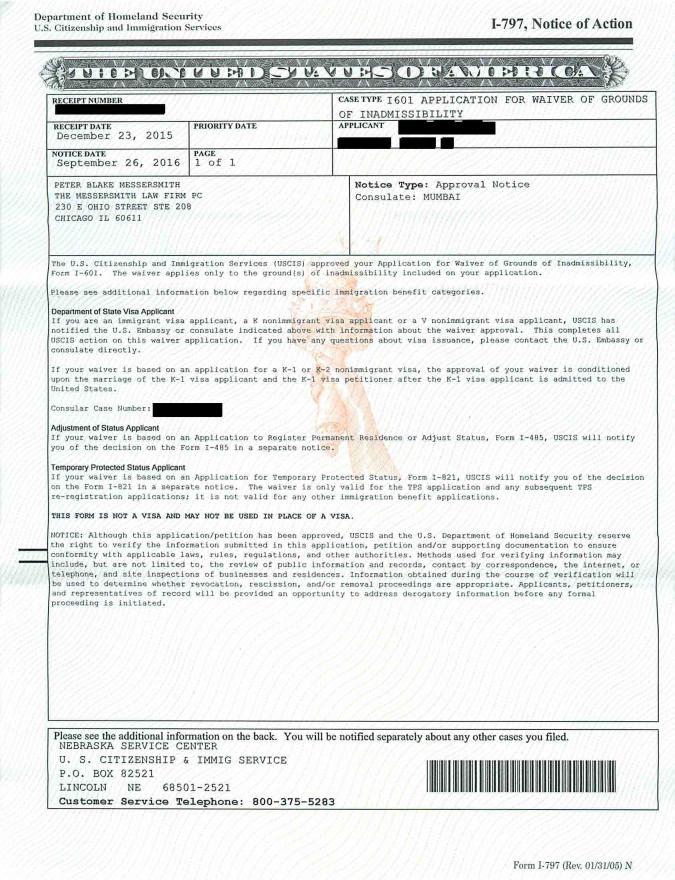
In order for a foreign national to be admitted to the United States, he or she must be admissible. A foreign national can be deemed inadmissible to the United States by USCIS, CBP and a Consulate. If the foreign national is deemed inadmissible to the United States, he or she cannot enter without a waiver of inadmissibility or a determination that the inadmissibility charge was made in error.

212(a)(6)(G) Inadmissibility due to Student Visa Abusers
Foreign nationals may be inadmissible if he or she violated the terms of his or her F1 visa status under 214(l) and has not been outside the US for a continuous period of five years.
An alien who obtains the status of a nonimmigrant under section 101(a)(15)(F)(i) and who violates a term or condition of such status under section 214(l) is excludable until the alien has been outside the United States for a continuous period of 5 years after the date of the violation.

How to obtain a determination that the 212(a)(6)(G) ground of inadmissibility was incorrectly made.
No matter which US government agency made the inadmissibility determination, each provides a method to dispute the determination, though each has drastically different processing times. We have achieved successful outcomes by petitioning the US Department of State where the determination was made by the Consulate in as little as 2 weeks. CBP quotes turnaround times of as little as 30 days and USCIS will not offer a time frame. In our experience, the more difficult the situation, the longer it will take to get resolved.
Common examples of INA 212a6G “student visa abuser” findings
INA 212a6G cases most often arise when an F-1 student is alleged to have violated the public-school restrictions under INA 214(m). Common fact patterns include:
- Entering the U.S. in F-1 status to attend a private school and then transferring to a public school in a way that violates the 214(m) restrictions
- Enrolling in a public elementary school or publicly funded adult education program without meeting the F-1 requirements tied to public school attendance
- Attending a public high school beyond the permitted limits or without satisfying the required conditions
- Records in SEVIS or school documentation that conflict with the student’s stated school history and dates
- Consular or CBP review that flags a public-school attendance history as inconsistent with lawful F-1 compliance
Because this ground is timeline- and record-driven, the strongest approach is to build a clear school/enrollment timeline (private vs public, dates, program type) and match it to the entry/visa timeline and SEVIS records.
Frequently asked questions about INA 212a6G (212(a)(6)(G)) student visa abuser
What is INA 212a6G?
INA 212a6G (INA 212(a)(6)(G)) is the “student visa abuser” ground of inadmissibility. It can apply when the government determines a person violated certain F-1 restrictions under INA 214(m), including restrictions related to public school attendance.
How long is the 5-year bar under 212(a)(6)(G)?
This section provides a 5-year inadmissibility period. Timeline details matter, so the relevant dates should be reviewed carefully.
What is INA 214(m) and why does it matter?
INA 214(m) contains restrictions on public school attendance in F-1 status. Many 212a6G cases are tied to alleged violations of those public-school restrictions.
What is a common 212a6G scenario?
A common scenario is entering the U.S. in F-1 status for a private school and then transferring to a public school in a way that violates the INA 214(m) restrictions.
Can INA 212a6G be overcome?
Strategy is fact-specific and often starts with confirming the school and SEVIS timeline, the type of program attended (private vs public), and whether the record accurately reflects compliance or noncompliance.
What documents help address a 212(a)(6)(G) concern?
SEVIS records, school enrollment letters, transcripts, I-20 history, and a clear timeline showing the student’s school history and visa/entry history are commonly important.
News Related to INA § 212(a)(6)(G)
| Date | Title | Details | ||
|---|---|---|---|---|
| May 31, 2024 | Department of State's Foreign Affairs Manual (FAM) | The Department of State's FAM offers guidance to consular officers on the inadmissibility of foreign nationals who have violated the terms of their F-1 student visa status. | ||
| October 25, 2016 | USCIS Policy Manual | U.S. Citizenship and Immigration Services (USCIS) updated its Policy Manual to provide detailed guidance the inadmissibility of foreign nationals who have violated the terms of their F-1 student visa status. |