People often inquire about this issue as INA 212a9C, 212a9C, Section 212a9C, or permanent bar. These are shorthand references to INA § 212(a)(9)(C), often called the “permanent bar,” which can apply when a person reenters or attempts to reenter the United States unlawfully after a prior removal or after accruing more than one year of unlawful presence.

INA 212a9C (INA 212(a)(9)(C)) — Permanent Bar (Unlawful Reentry After Removal)
INA 212a9C (INA 212(a)(9)(C)) — Permanent Bar (Unlawful Reentry After Removal)

What is a ground of inadmissibility?
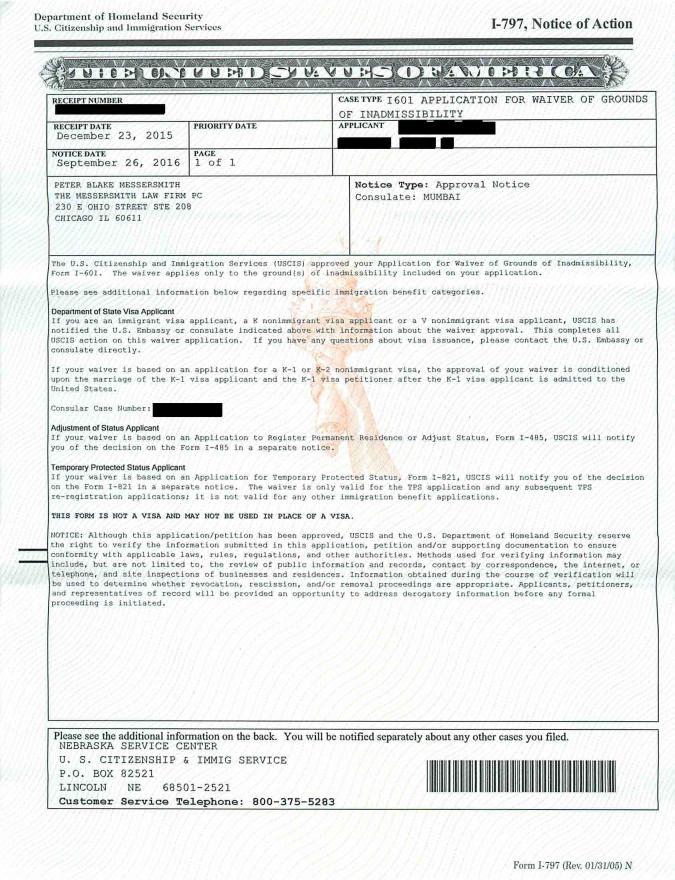
In order for a foreign national to be admitted to the United States, he or she must be admissible. A foreign national can be deemed inadmissible to the United States by USCIS, CBP and a Consulate. If the foreign national is deemed inadmissible to the United States, he or she cannot enter without a waiver of inadmissibility or a determination that the inadmissibility charge was made in error.

212(a)(9)(C) Inadmissibility due to Unlawful Presence after Prior Immigration Violation
This ground is commonly described as a permanent bar; in many cases, a person must remain outside the United States for 10 years before seeking permission to reapply (often discussed with Form I-212), depending on the facts and posture.
Any alien who has been unlawfully present in the United States for an aggregate period of more than 1 year, or has been ordered removed and who enters or attempts to reenter the United States without being admitted is inadmissible.
This section shall not apply to an alien seeking admission more than 10 years after the date of the alien’s last departure from the United States if, prior to the alien’s reembarkation at a place outside the United States or attempt to be readmitted from a foreign contiguous territory, the Secretary of Homeland Security has consented to the alien’s reapplying for admission.

How to obtain a determination that the 212(a)(9)(C) ground of inadmissibility was incorrectly made.
No matter which US government agency made the inadmissibility determination, each provides a method to dispute the determination, though each has drastically different processing times. We have achieved successful outcomes by petitioning the US Department of State where the determination was made by the Consulate in as little as 2 weeks. CBP quotes turnaround times of as little as 30 days and USCIS will not offer a time frame. In our experience, the more difficult the situation, the longer it will take to get resolved.
Common triggers for INA 212a9C (permanent bar)
INA 212a9C is most commonly discussed as the “permanent bar” because it is triggered by unlawful reentry (or attempted unlawful reentry) after certain prior immigration violations. Two common trigger patterns are:
- Unlawful reentry (or attempted reentry) after a prior removal order (including removal at the border or removal through immigration court)
- Unlawful reentry (or attempted reentry) after accruing more than one year of unlawful presence in the United States
Many cases involve overlapping grounds (for example, prior removal under 212(a)(9)(A) and unlawful presence under 212(a)(9)(B)), so the correct strategy depends on building a complete timeline and identifying exactly what events occurred and when.
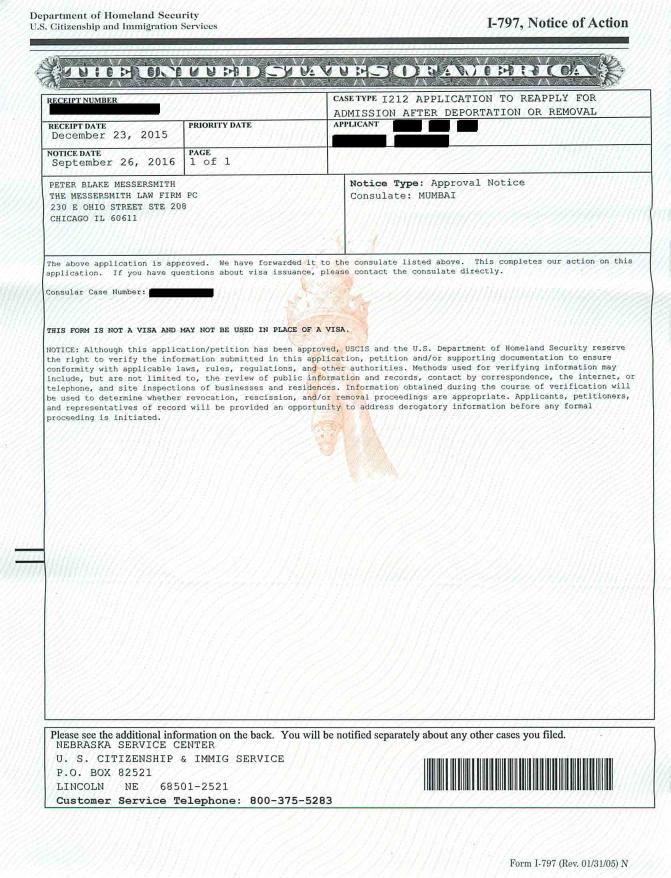
10 years outside the U.S. and Form I-212 (permission to reapply) for 212(a)(9)(C)
A commonly discussed rule in 212(a)(9)(C) cases is that, depending on the facts and posture, the person may need to remain outside the United States for 10 years before seeking permission to reapply for admission (often discussed with Form I-212).
Because these cases are timeline-driven, the first step is to confirm:
- The exact prior removal history (and dates)
- Whether and when unlawful reentry or attempted reentry occurred
- Whether the person accrued more than one year of unlawful presence before the reentry/attempt
- Whether other bars also apply (for example, 212(a)(9)(A) or 212(a)(9)(B))
A clean timeline and complete records are essential before selecting an I-212 strategy.
Frequently asked questions about INA 212a9C (212(a)(9)(C)) permanent bar
What is INA 212a9C?
INA 212a9C (INA 212(a)(9)(C)) is often called the “permanent bar.” It can apply when a person unlawfully reenters (or attempts to reenter) the United States after a prior removal, or after accruing more than one year of unlawful presence.
Why is 212(a)(9)(C) called the permanent bar?
It is commonly described as “permanent” because it is more severe than the 3-year or 10-year unlawful presence bars and is triggered by unlawful reentry after certain prior violations.
Is a person inadmissible for only 10 years under 212(a)(9)(C)?
No. The ground is commonly described as a permanent bar. In many cases, 10 years outside the U.S. is discussed as a prerequisite before seeking permission to reapply, depending on the facts and posture.
What is the difference between 212(a)(9)(B) and 212(a)(9)(C)?
212(a)(9)(B) is the unlawful presence 3-year/10-year bar triggered by departure after unlawful presence accrues. 212(a)(9)(C) involves unlawful reentry (or attempted reentry) after a prior removal or after more than one year of unlawful presence, and is more severe.
Can Form I-212 fix the permanent bar?
Timing and eligibility are fact-specific. Many discussions involve remaining outside the U.S. for 10 years before seeking permission to reapply (I-212), but the correct strategy depends on the full history.
What documents matter most in a 212(a)(9)(C) case?
Removal records, travel history, evidence of unlawful presence periods, and any records related to reentry or attempted reentry are typically critical. A clean timeline is usually the first step.
News Related to INA § INA 212(a)(9)(C)
| Date | Title | Details | ||
|---|---|---|---|---|
| January 24, 2025 | USCIS Policy Manual | U.S. Citizenship and Immigration Services (USCIS) updated its Policy Manual to provide detailed guidance on the inadmissibility of individuals who have previously been unlawfully present in the United States for more than one year or who have been ordered removed and subsequently reentered or attempted to reenter the U.S. without being admitted. | ||
| September 19, 2024 | Department of State's Foreign Affairs Manual (FAM) | The Department of State's FAM offers guidance to consular officers on the inadmissibility of individuals who have previously been unlawfully present in the United States for more than one year or who have been ordered removed and subsequently reentered or attempted to reenter the U.S. without being admitted. |