H-2B Visa — Temporary Nonagricultural Workers, Employer Requirements, Temporary Need, and Labor Certification

H-2B Visa — Temporary Nonagricultural Workers, Employer Requirements, Temporary Need, and Labor Certification

H-2B Visa — Temporary Nonagricultural Workers, Employer Requirements, Temporary Need, and Labor Certification

People often inquire about this issue as H-2B visa, H2B visa, temporary nonagricultural worker visa, seasonal worker visa, H-2B labor certification, H-2B employer requirements, or how to hire H-2B workers. The H-2B program allows qualified U.S. employers to bring foreign nationals to the United States for temporary nonagricultural labor or services when there are not enough available U.S. workers and the employer can show a valid temporary need, complete the labor certification process, and meet the required wage and worker-protection rules. The most common H-2B problems involve one-time occurrence, seasonal need, peakload need, or intermittent need analysis, labor certification timing, cap and cap-count issues, eligible-country questions, and planning for worker arrival.

H-2B cases are commonly used by hotels, resorts, landscapers, restaurants, seafood processors, amusement parks, forestry employers, carnivals, ski areas, and other seasonal or peak-load businesses.

H2B Visa Details

The H2B visa is designated for individuals who will be employed in a nonagricultural positions which are seasonal, intermittent or a one time occurrence. Examples of qualifying positions include travel agents, restaurant workers, janitors, resort workers, amusement park workers and landscape workers.

Spouses and children of H2B visa holders may enter and remain in the US in H4 status. H4 visa holders may attend school in the US but cannot accept employment.

For Whom Is an H2B Visa Appropriate?

U.S. companies hiring foreign nationals to perform temporary work for which no US workers are available

H2B visas are limited to nationals of the following countries unless the H2B petitioner can show it is in the US interest for the H2B applicant to be issued the visa.

H2B Visa Requirements

An H2B nonagricultural temporary worker is an alien who is coming temporarily to the United States to perform temporary services or labor, is not displacing United States workers capable of performing such services or labor, and whose employment is not adversely affecting the wages and working conditions of United States workers.

H-2B employer requirements and temporary need (who can hire temporary nonagricultural workers?)

To use the H-2B visa program, a U.S. employer or qualifying U.S. agent must usually show several core things. This makes H-2B employer requirements, who qualifies for H-2B, H-2B temporary need requirements, or how to hire H-2B workers vitally important.

1) The job must involve temporary nonagricultural labor or services

The H-2B program is for temporary nonagricultural work. A strong H-2B case usually starts by showing that the labor need is temporary in nature, even if the underlying business exists year-round. USCIS and DOL both frame the category around temporary need, not permanent staffing.

2) The employer must prove a valid temporary need

A central H-2B issue is proving the right kind of temporary need. USCIS recognizes four main categories:

  • one-time occurrence
  • seasonal need
  • peakload need
  • intermittent need

3) There must not be enough available U.S. workers

A strong H-2B case usually requires showing that there are not enough U.S. workers who are able, willing, qualified, and available to perform the temporary nonagricultural job. That is why labor certification and recruitment are such important parts of the H-2B process.

4) Hiring H-2B workers must not adversely affect similarly employed U.S. workers

The H-2B program includes worker-protection rules. DOL states that employers must not offer wages, terms, or working conditions to U.S. workers that are less favorable than those offered to H-2B workers.

5) The employer must complete the temporary labor certification process correctly

Most H-2B cases require a temporary labor certification process before the USCIS petition stage. A strong filing strategy should keep the dates of need, job duties, worker count, worksites, wages, and temporary-need explanation consistent from the start.

6) The wage and job terms must meet H-2B rules

DOL wage guidance states that H-2B employers must pay at least the offered wage and follow the required pay practices for the occupation and area of employment.

7) Cap and timing can matter even when the employer qualifies

Unlike H-2A, H-2B is subject to an annual numerical limit. USCIS maintains an active cap count page and separate FY 2026 supplemental-visa announcements.

Common businesses that use the H-2B program

H-2B cases are commonly used by:

  • hotels
  • resorts
  • landscapers
  • restaurants
  • seafood processors
  • amusement parks
  • carnivals
  • ski areas
  • forestry employers
  • other seasonal or peak-load nonagricultural businesses

Why these H-2B employer requirements matter

Most H-2B problems happen because the case does not clearly address:

  • whether the need is truly temporary
  • which temporary-need category applies
  • labor certification and recruitment strategy
  • wage and worker-protection obligations
  • cap timing and filing posture

H-2B cap, cap count, supplemental visas, and returning workers

Many employers ask about for H-2B cap, H-2B cap count, H-2B supplemental visas, H-2B returning worker, or FY 2026 H-2B visas when planning a filing. This is a very important H-2B issue because even a qualifying employer can still face timing and quota issues. USCIS currently states that Congress set the regular H-2B cap at 66,000 per fiscal year, generally split into 33,000 for the first half of the fiscal year and 33,000 for the second half.

What is the H-2B cap?

The H-2B cap is the annual numerical limit on new cap-subject H-2B workers. Unlike H-2A, H-2B is not unlimited. That is why timing is such a major part of H-2B strategy for seasonal businesses. USCIS tracks cap usage on a dedicated cap-count page, which makes H-2B cap count vital.

How does the H-2B cap count work?

USCIS states that the regular H-2B quota is divided across the fiscal year:

  • 33,000 for workers with start dates in the first half of the fiscal year
  • 33,000 for workers with start dates in the second half of the fiscal year

What are H-2B supplemental visas?

For FY 2026, USCIS announced a temporary increase of 64,716 additional H-2B visas beyond the regular 66,000 cap. USCIS said that 46,226 of those additional visas are reserved for returning workers, and the remaining allocations include visas reserved for certain nationals of El Salvador, Guatemala, Honduras, Haiti, Colombia, Ecuador, and Costa Rica.

What is a returning worker in H-2B?

For the FY 2026 supplemental allocations, USCIS explained that a returning worker is a worker who received an H-2B visa or was otherwise granted H-2B status in one of the prior fiscal years identified in the rule.

Why cap timing matters in H-2B cases

A strong H-2B strategy should address cap timing from the beginning. Even a good temporary-need case can fail to move forward as expected if:

  • the filing starts too late
  • the requested start date falls into a fully used cap period
  • the employer misunderstands the difference between the regular cap and supplemental allocations
  • the worker does or does not qualify as a returning worker

Common H-2B employer cap questions

Common employer questions include:

  • Is the H-2B cap still open?
  • How many H-2B visas are left?
  • What is the current H-2B cap count?
  • Can my workers use supplemental H-2B visas?
  • Does my worker qualify as a returning worker?
  • What happens if the cap is already reached?

How to hire H-2B workers: labor certification process and filing steps

Many employers ask how to hire H-2B workers, H-2B labor certification process, H-2B temporary labor certification, H-2B application process, or H-2B petition when they are trying to plan a seasonal or peak-load workforce. This is one of the most important H-2B issues because the program is not just a visa label. It is a step-by-step employer filing process that starts with labor certification and temporary-need strategy. USCIS specifically lays out H-2B as a staged process involving DOL, USCIS, and then visa issuance or admission.

Step 1: Confirm that the job is temporary nonagricultural work

The first question is whether the job truly involves temporary nonagricultural labor or services and whether the employer’s need fits the H-2B rules. USCIS explains that H-2B cases must be based on a valid temporary need, even if the underlying business exists year-round.

Step 2: Identify the correct temporary-need category

A strong H-2B case usually depends on clearly identifying the employer’s temporary need as one of the recognized categories:

  • one-time occurrence
  • seasonal need
  • peakload need
  • intermittent need

USCIS treats this as a core H-2B eligibility issue, not just background detail.

Step 3: Build the filing strategy before the season starts

Before filing, the employer should align the key case details:

  • dates of need
  • worker count
  • job duties
  • worksites
  • wage structure
  • temporary-need explanation
  • cap timing
  • planned worker arrival

This matters because H-2B cases often run into problems when the temporary-need explanation, labor certification materials, and USCIS petition do not match. That is especially important when the case is close to a cap deadline.

Step 4: Complete the temporary labor certification process

Most H-2B cases require a temporary labor certification process through the Department of Labor before the USCIS petition stage. DOL’s H-2B program page is built around that certification process, and USCIS lists DOL labor certification as the first formal step in the H-2B filing sequence.

Step 5: Recruit U.S. workers and meet worker-protection rules

A major H-2B requirement is showing that there are not enough U.S. workers who are able, willing, qualified, and available to do the temporary nonagricultural job. DOL also emphasizes that wages and working conditions for similarly employed U.S. workers must not be adversely affected.

Step 6: File the H-2B petition with USCIS

After the labor certification stage is handled properly, the employer files Form I-129 with USCIS. USCIS identifies this as the second step in the H-2B process after the DOL labor certification application.

Step 7: Plan for visa processing, admission, and worker arrival

After USCIS petition approval, the worker may need to apply for an H-2B visa abroad or seek admission in H-2B status, depending on the case posture. USCIS identifies worker visa application or admission as the third step in the process. This is why employers should not treat approval of the petition as the end of planning.

Common H-2B process problems employers run into

Common issues include:

  • starting the process too late for the requested season
  • weak temporary-need explanations
  • worker counts that change mid-process
  • inconsistent job descriptions
  • cap timing mistakes
  • wage or worksite details that do not match across filings
  • poor coordination between labor certification and petition strategy

These issues flow directly from the way USCIS and DOL structure the H-2B process.

How our firm helps with the H-2B filing process

We help employers by:

  • confirming whether the job fits H-2B
  • identifying the strongest temporary-need category
  • organizing the labor certification strategy early
  • aligning wages, worksites, dates of need, and cap timing
  • reducing filing inconsistencies that create delays
  • planning the case so worker arrival lines up with actual business need

Frequently asked questions about the H-2B visa

What is the H-2B visa?

The H-2B visa allows qualified U.S. employers or U.S. agents to bring foreign nationals to the United States to fill temporary nonagricultural jobs.

Who can use the H-2B program?

U.S. employers or qualifying U.S. agents may use H-2B if they can show a valid temporary need, that there are not enough U.S. workers who are able, willing, qualified, and available, and that employing H-2B workers will not adversely affect the wages and working conditions of similarly employed U.S. workers.

What counts as temporary need for H-2B?
USCIS recognizes four main H-2B temporary-need categories: one-time occurrence, seasonal need, peakload need, and intermittent need.
Does H-2B require labor certification?

Yes. Before filing the H-2B petition with USCIS, the petitioner generally must obtain a temporary labor certification from the Department of Labor.

Is there an annual cap on H-2B visas?

Yes. USCIS states that the regular H-2B cap is 66,000 per fiscal year, generally split into 33,000 for the first half of the fiscal year and 33,000 for the second half.

What are H-2B supplemental visas?

Supplemental H-2B visas are additional visas made available beyond the regular statutory cap when authorized. For FY 2026, USCIS announced a temporary increase of 64,716 additional H-2B visas.
What is a returning worker in H-2B?

For the FY 2026 supplemental allocations, USCIS explained that a returning worker is a worker who received an H-2B visa or was otherwise granted H-2B status during one of the prior fiscal years identified in the rule.
How long can H-2B status last?

USCIS states that H-2B classification may be granted for up to the period authorized on the temporary labor certification, generally up to 1 year, with qualifying extensions possible in increments of up to 1 year each, for a maximum continuous stay of 3 years.

Are all countries eligible for H-2B visas?

No. USCIS publishes a list of countries whose nationals are generally eligible to participate in the H-2B program, although DHS may allow exceptions in some circumstances.

Can family members come with an H-2B worker?

Yes. The spouse and unmarried children under 21 of an H-2B worker may seek admission in H-4 status.

Top Notch Immigration Services

You will receive top notch immigration services at The Messersmith Law Firm. We guarantee personalized legal services, a high rate of success, and very reasonable fees. At The Messersmith Law Firm, you will always get more than what you pay for. While the majority of our clients are referred to our law firm, we are open to take new cases if we feel we can help you achieve your goals. We have no doubt that you will refer everyone you know to us once your case is approved! Our goal is to get your case approved in the shortest amount of time possible yet strive to keep our fees reasonable!

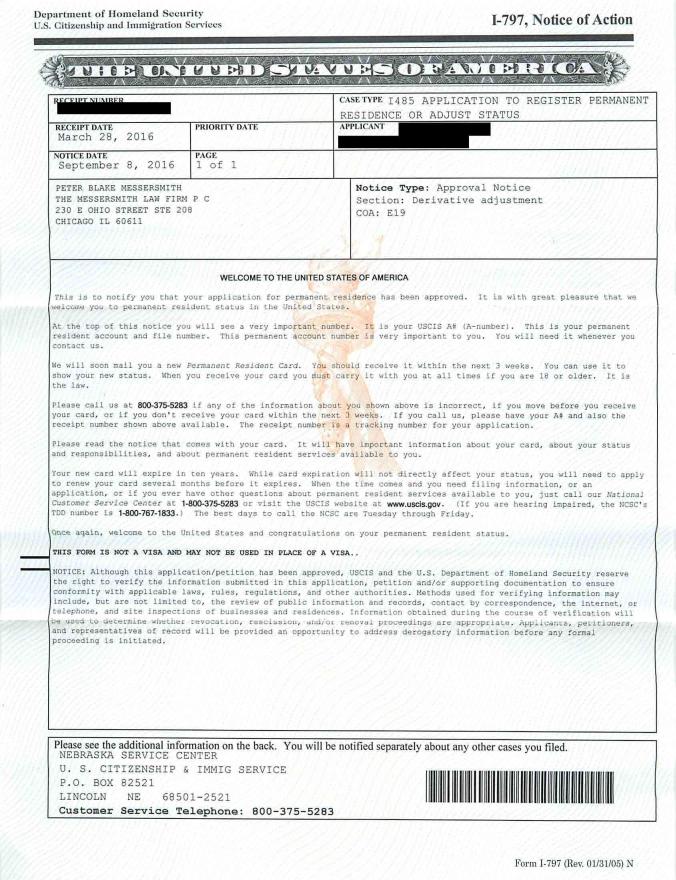
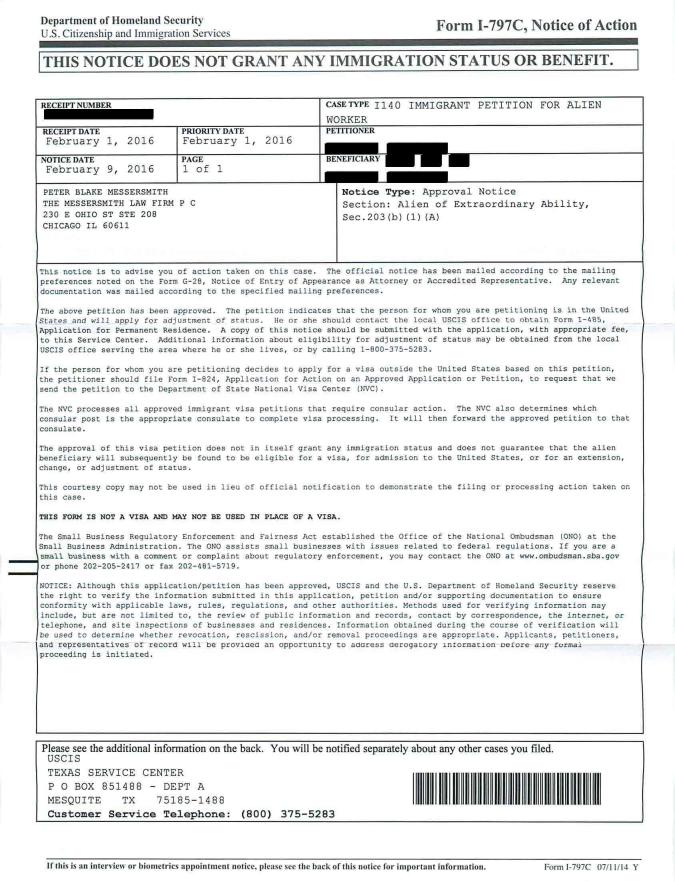
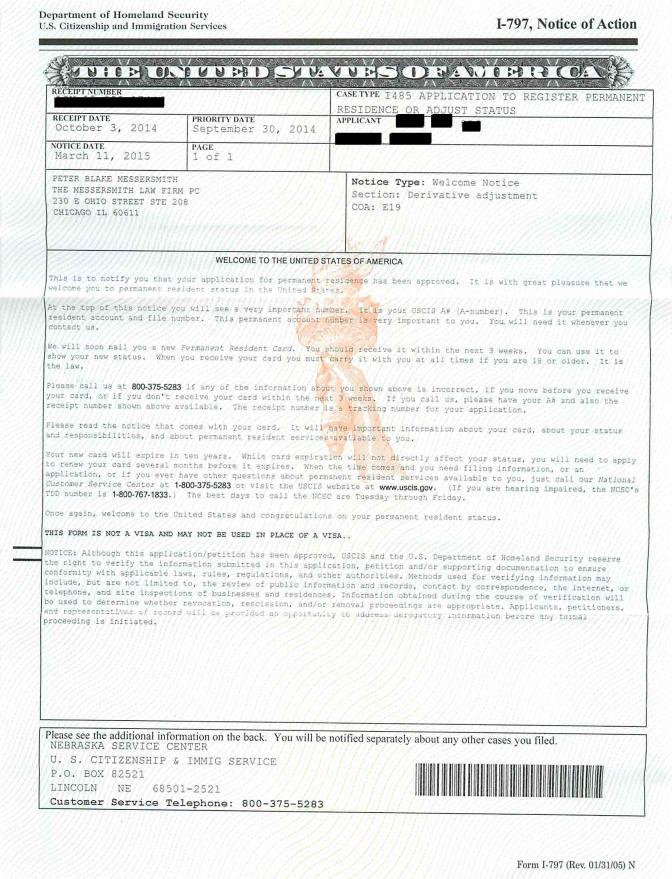
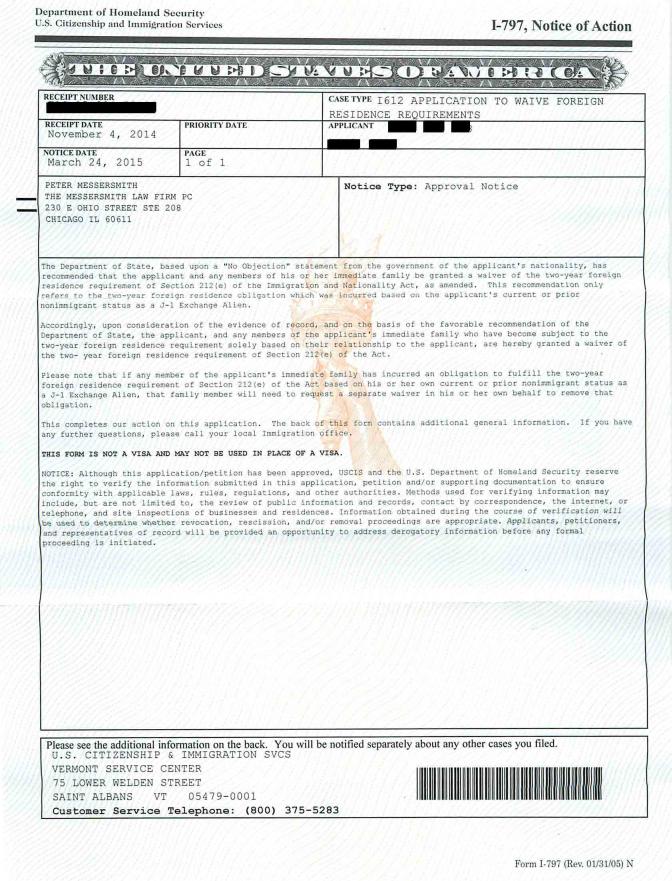
Thousands of Approved Cases

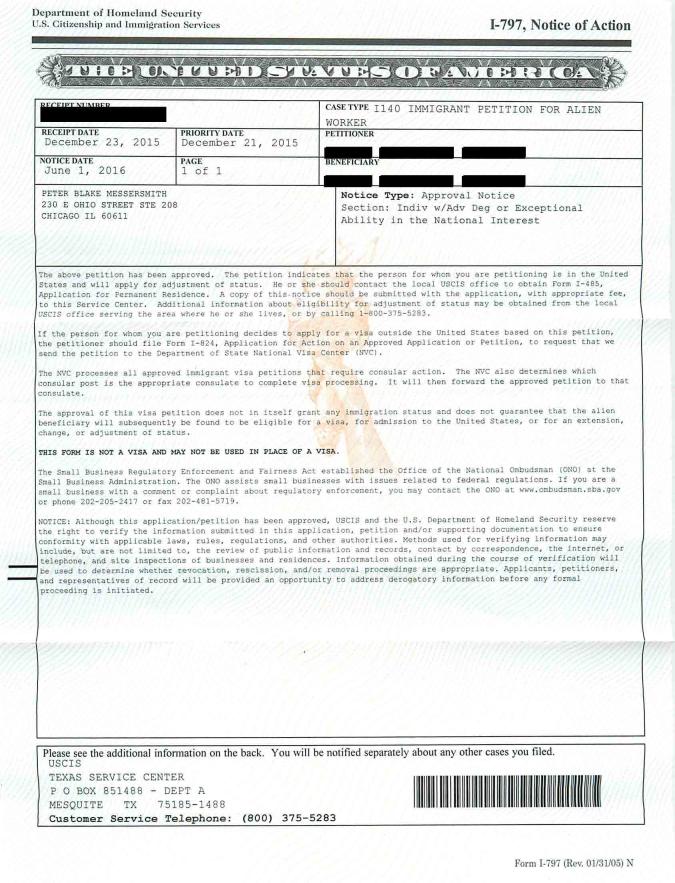
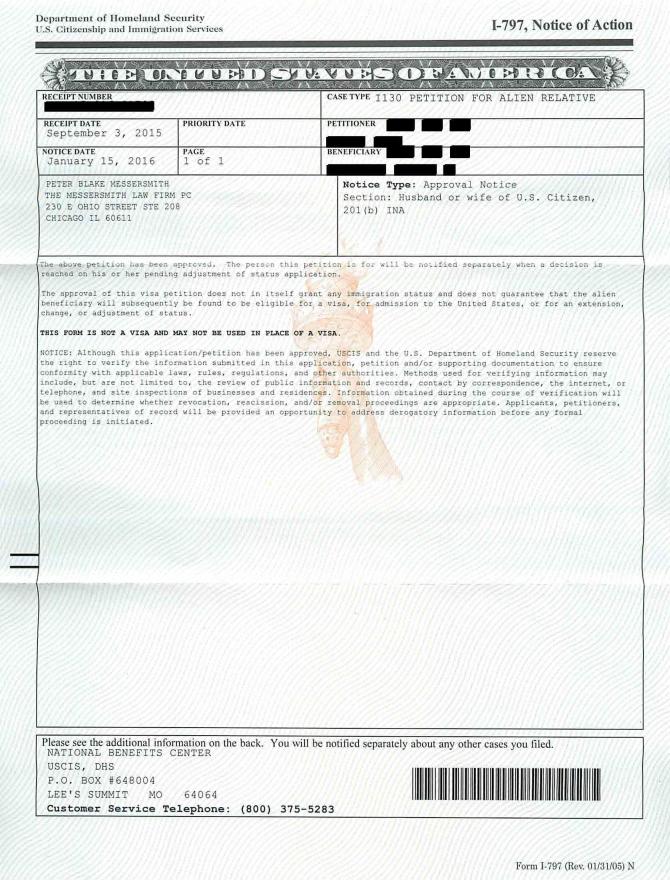
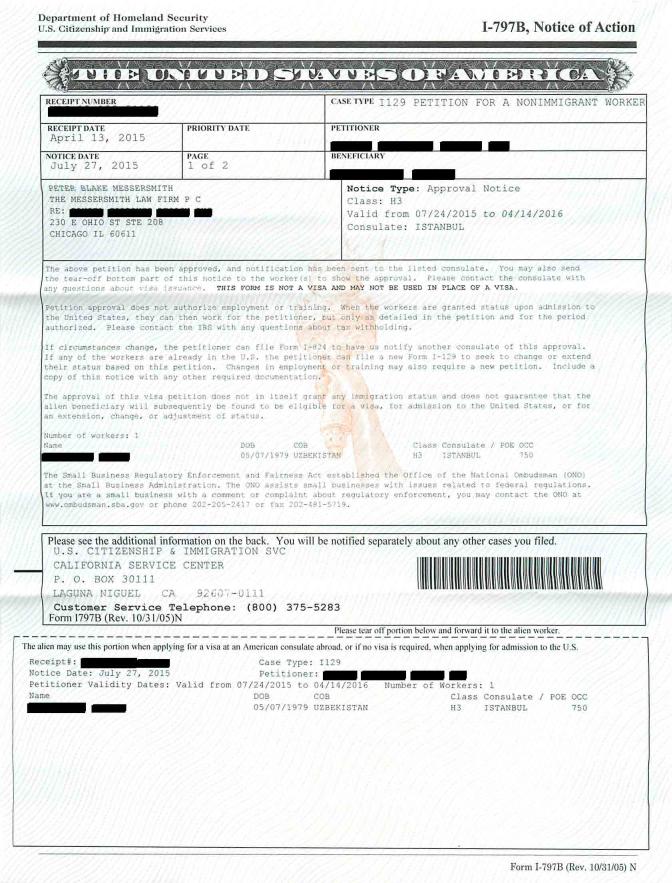
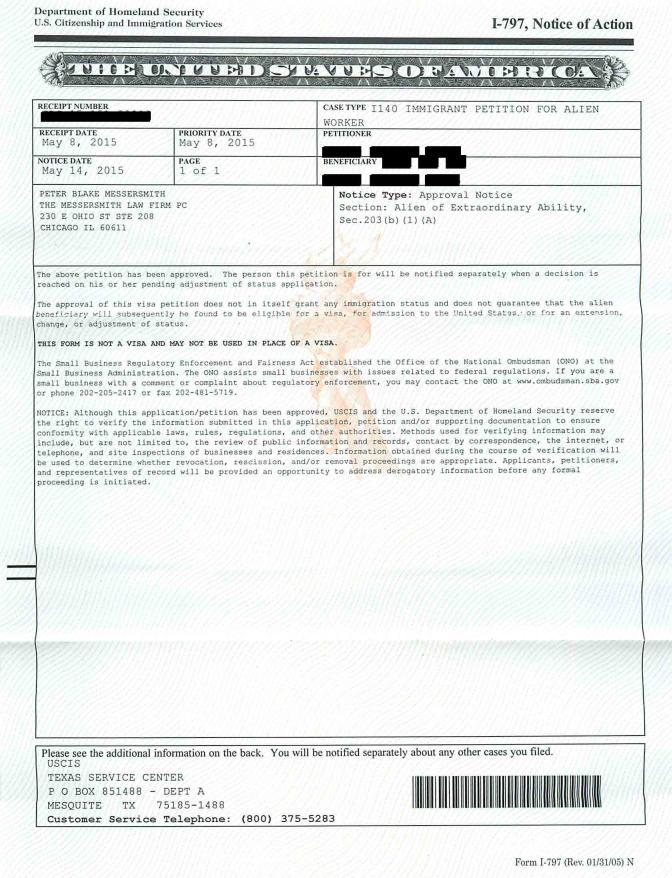
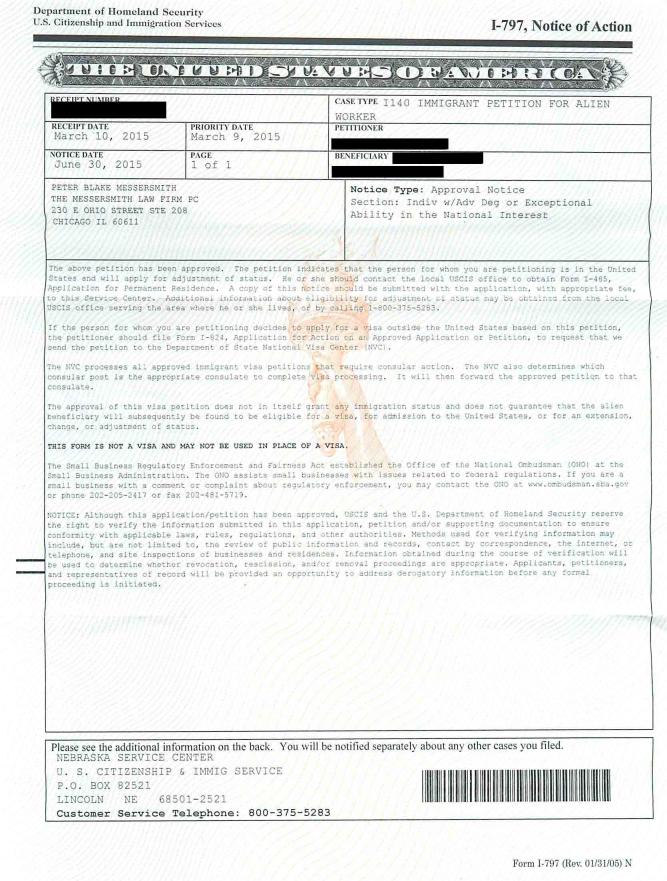
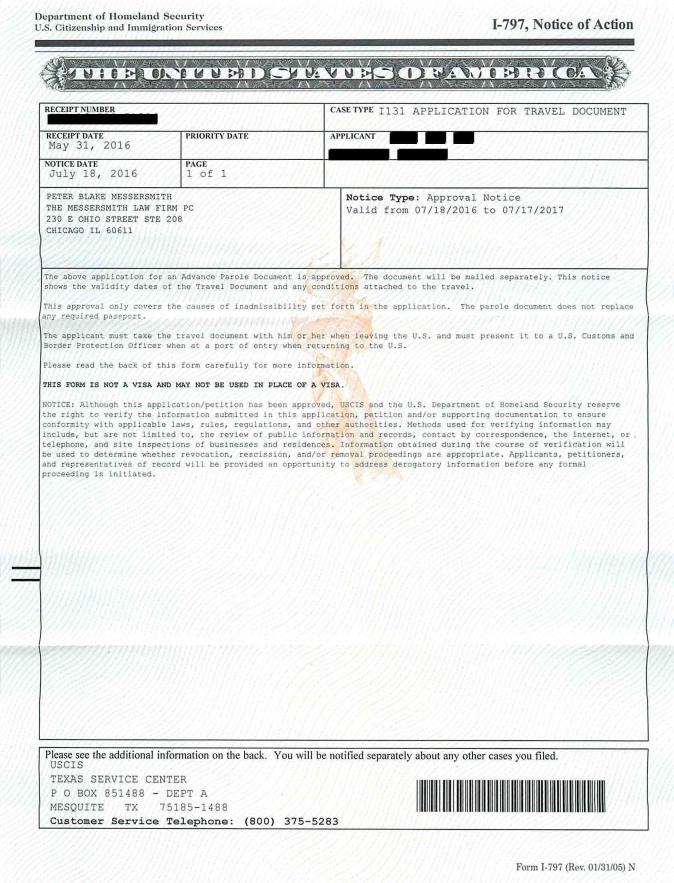
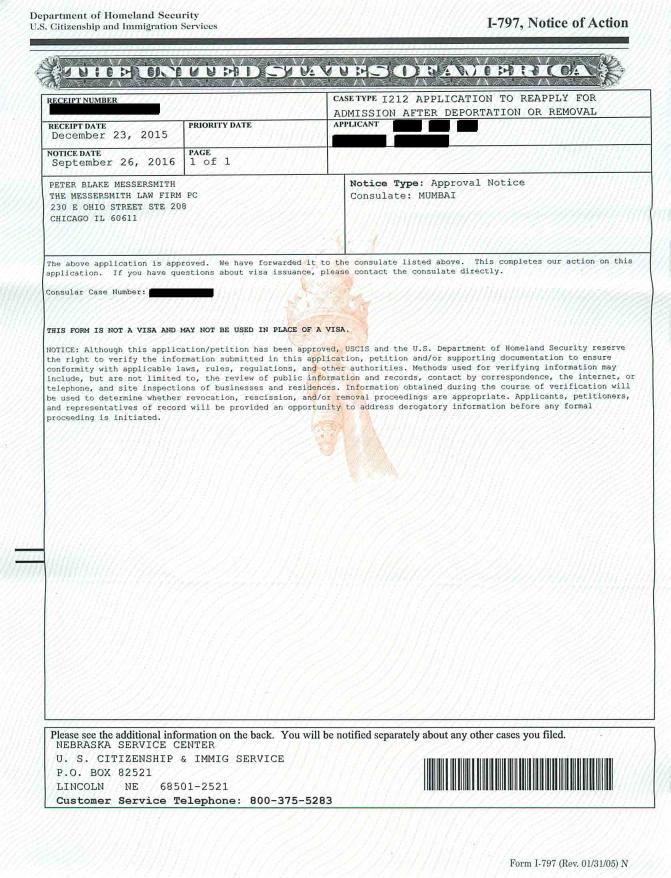
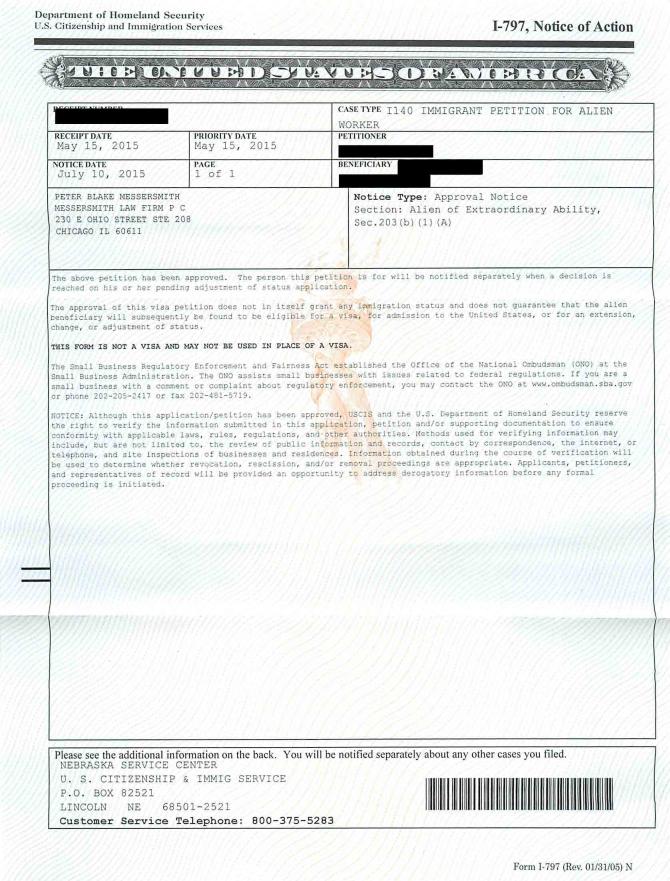
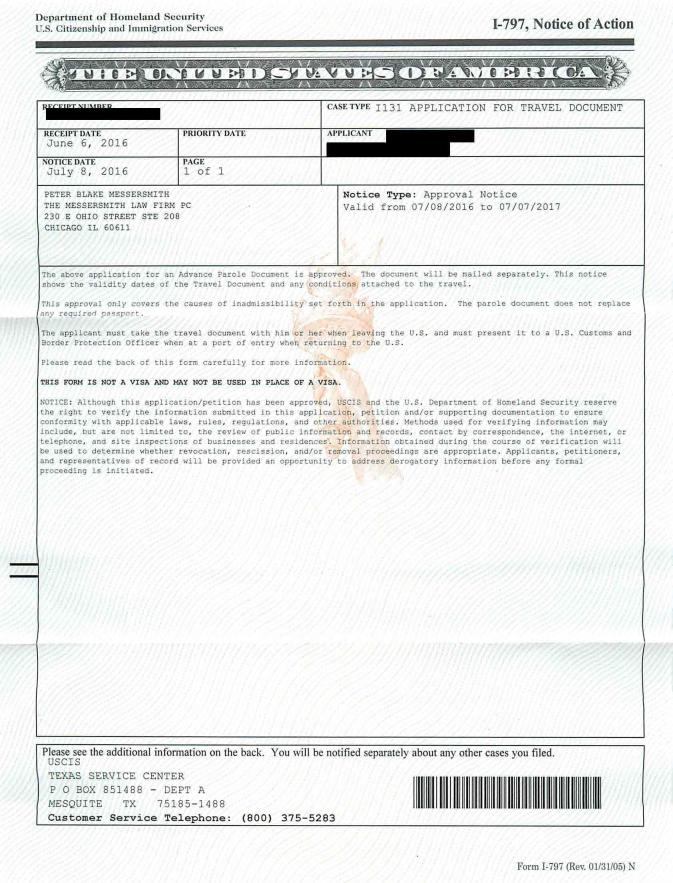
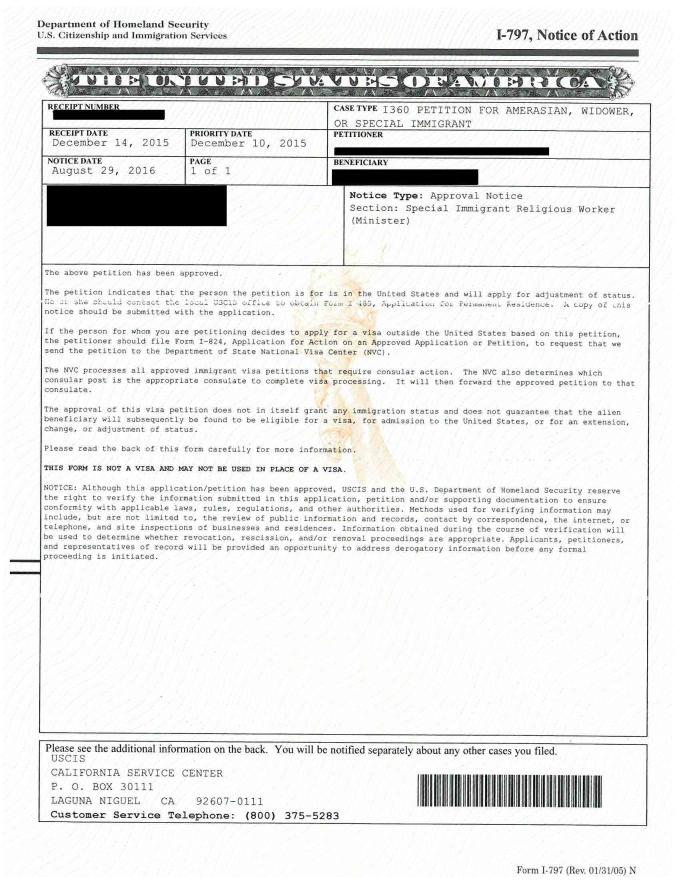
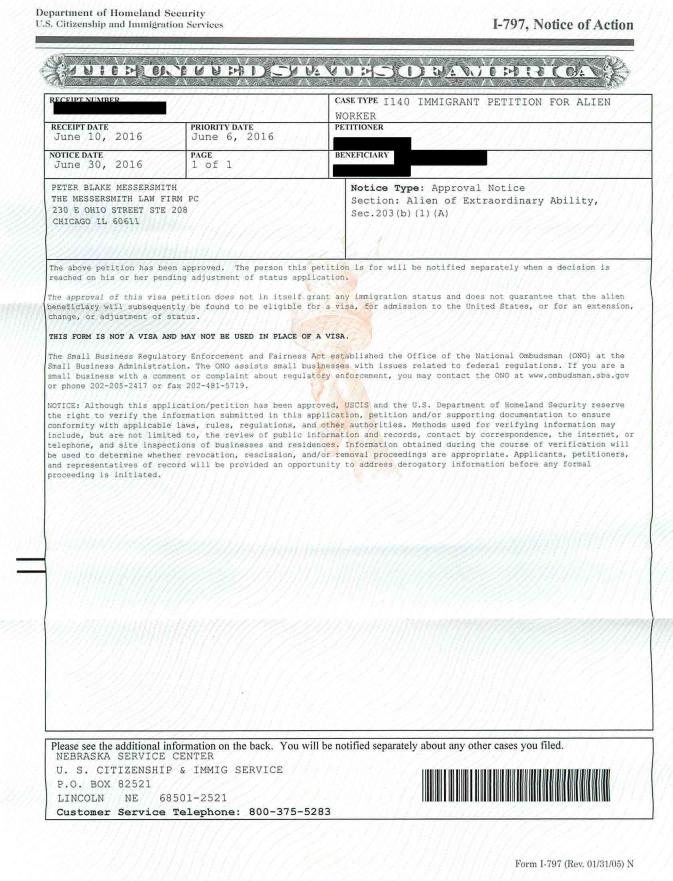
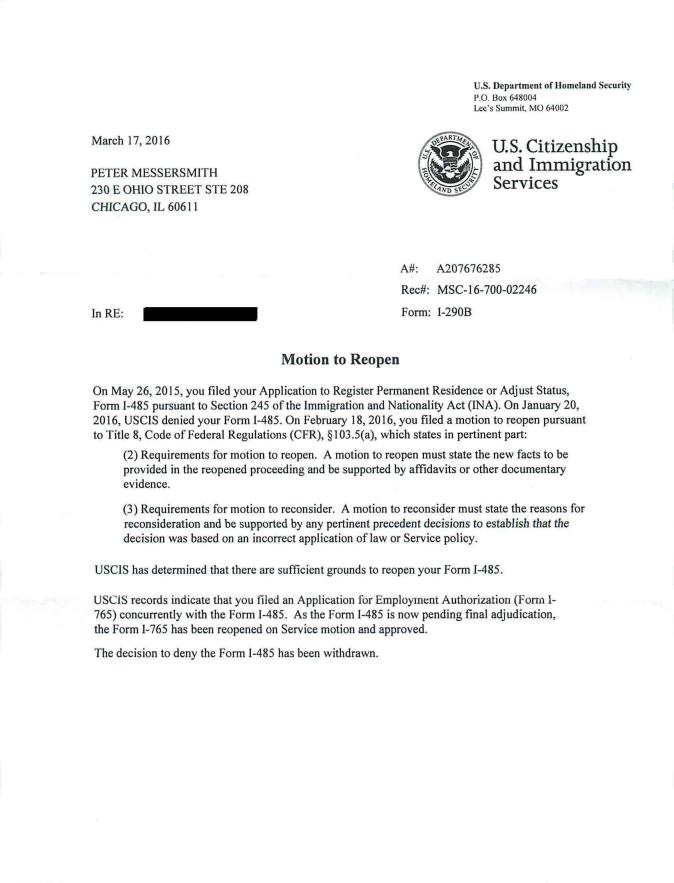
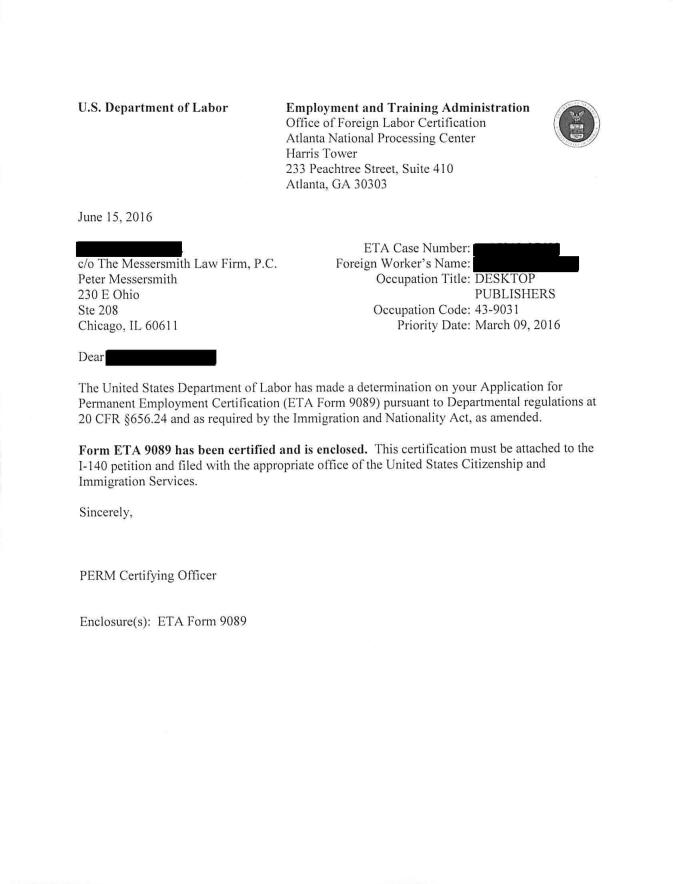
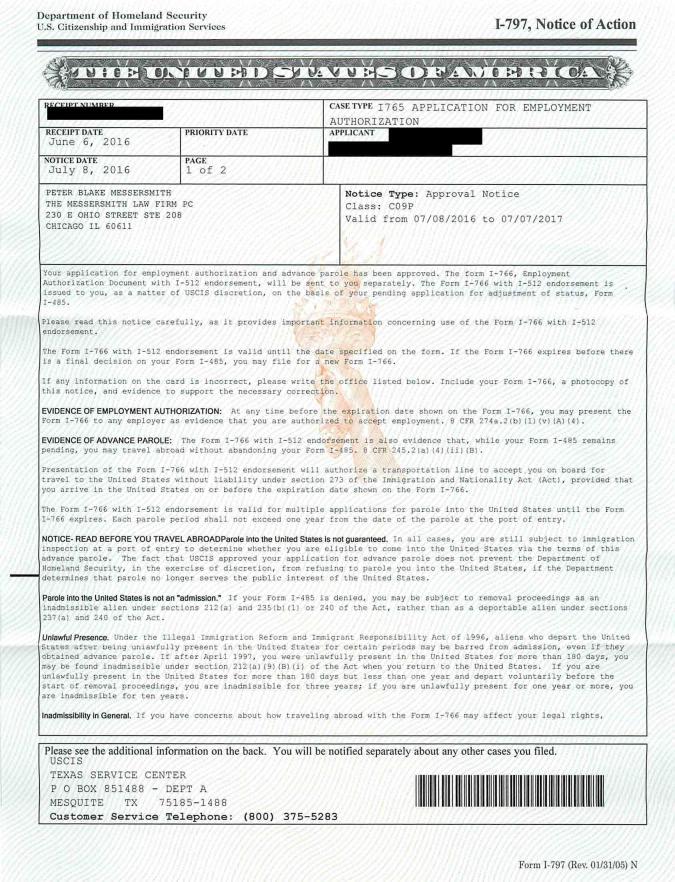
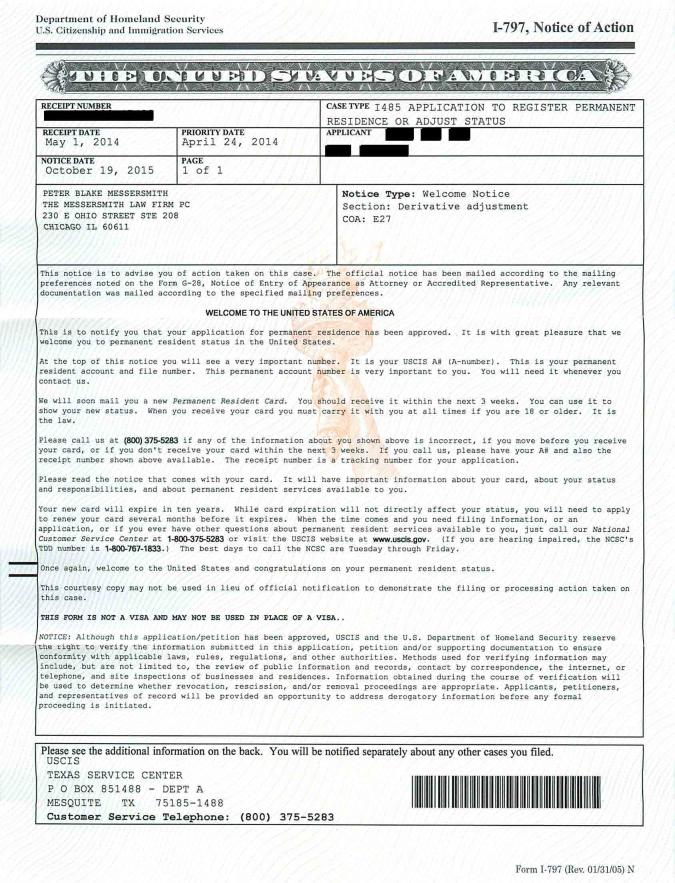
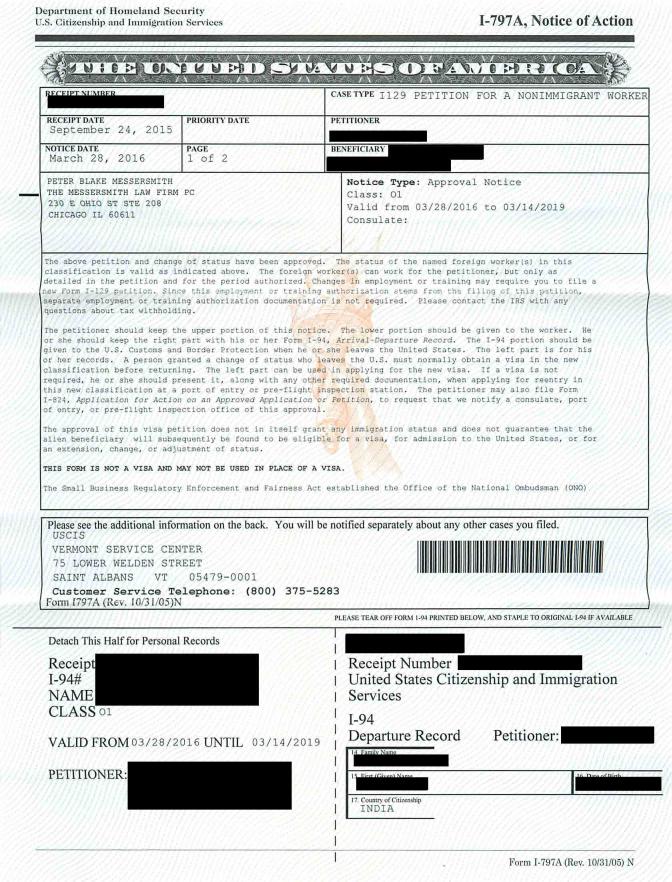
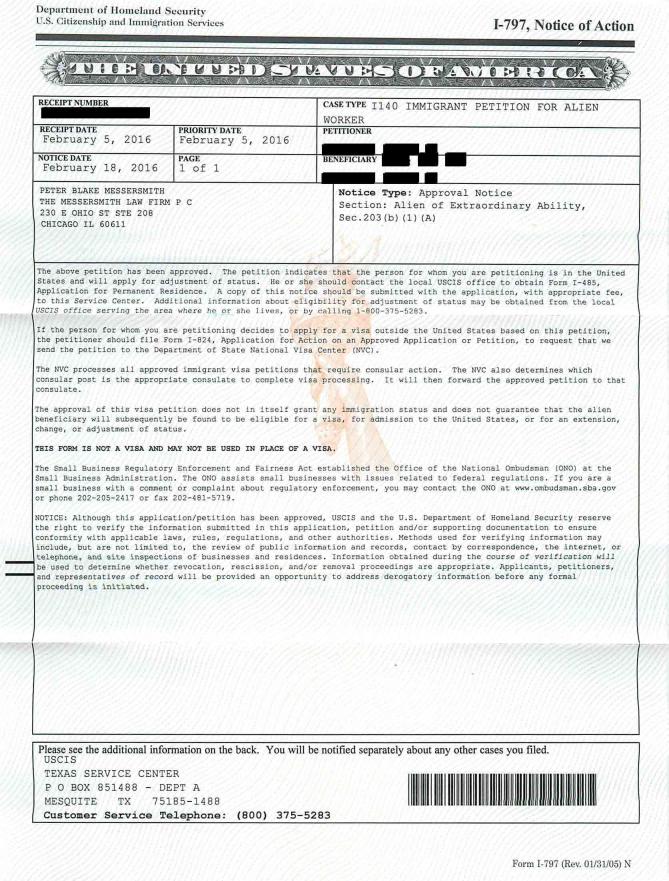
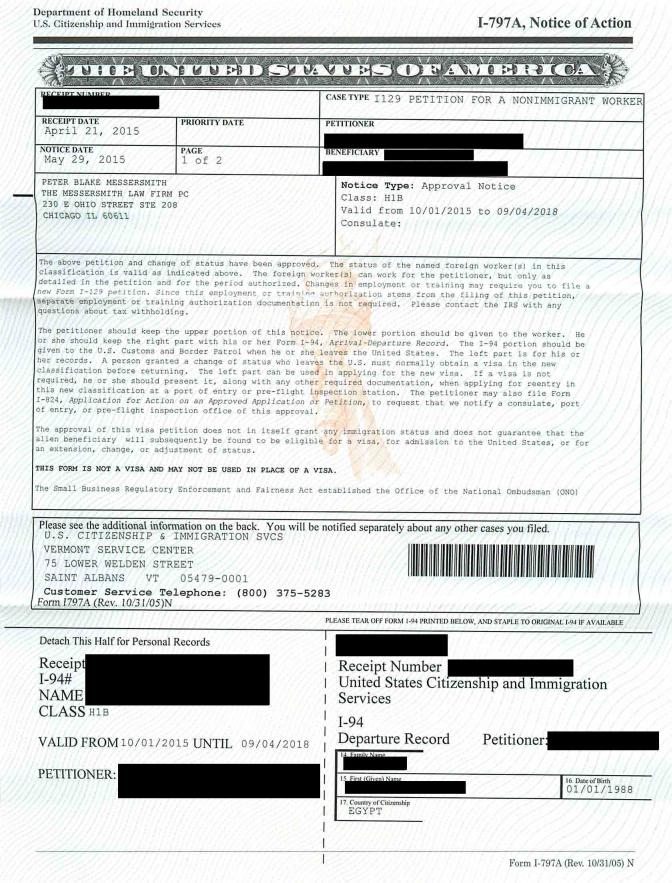
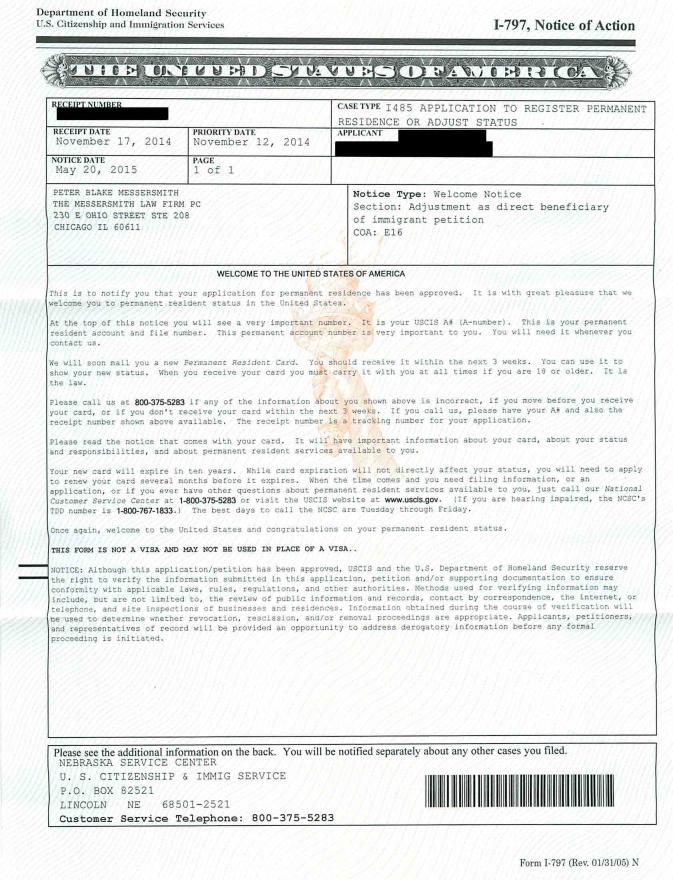
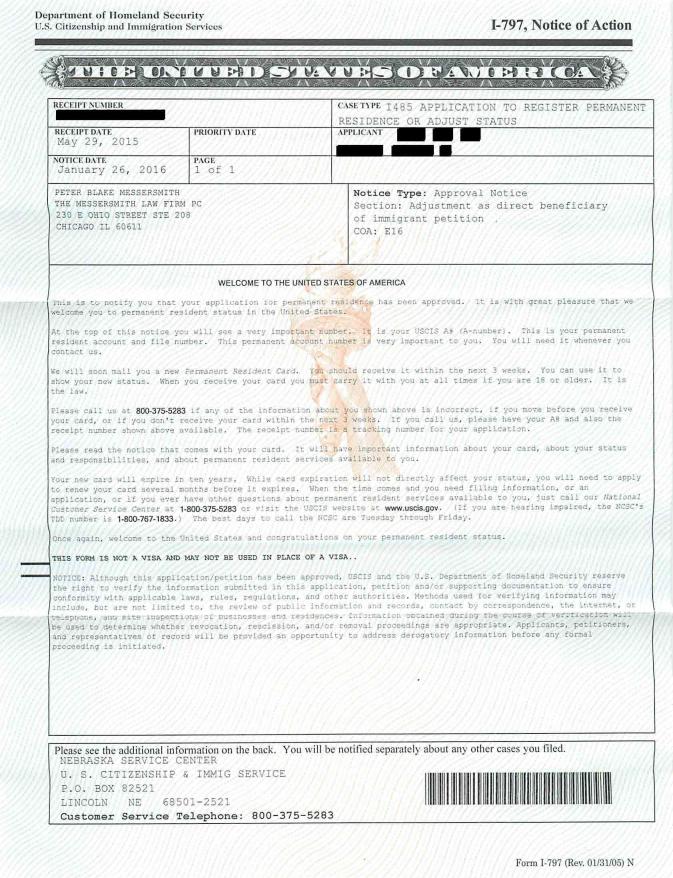
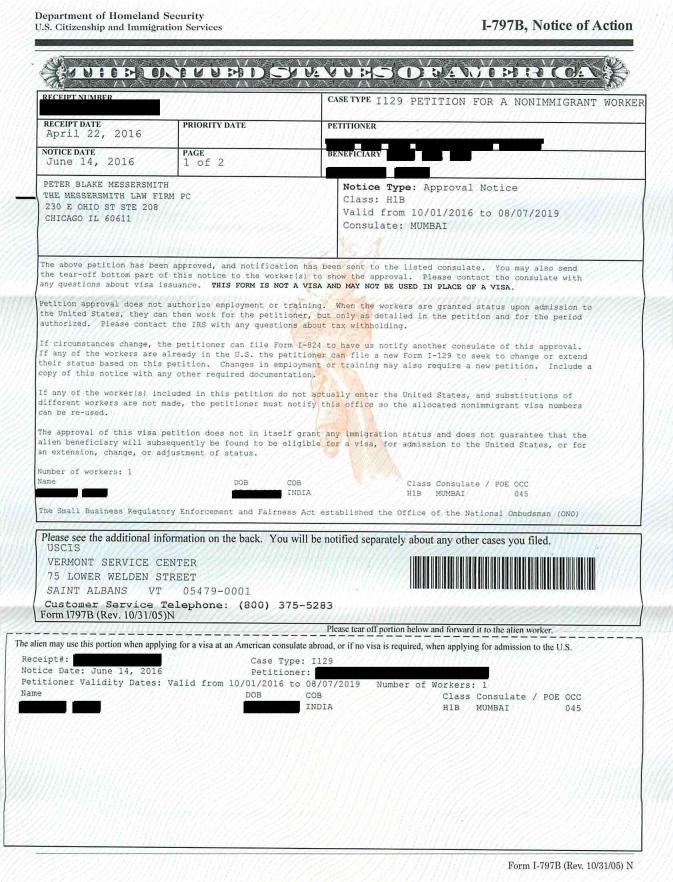
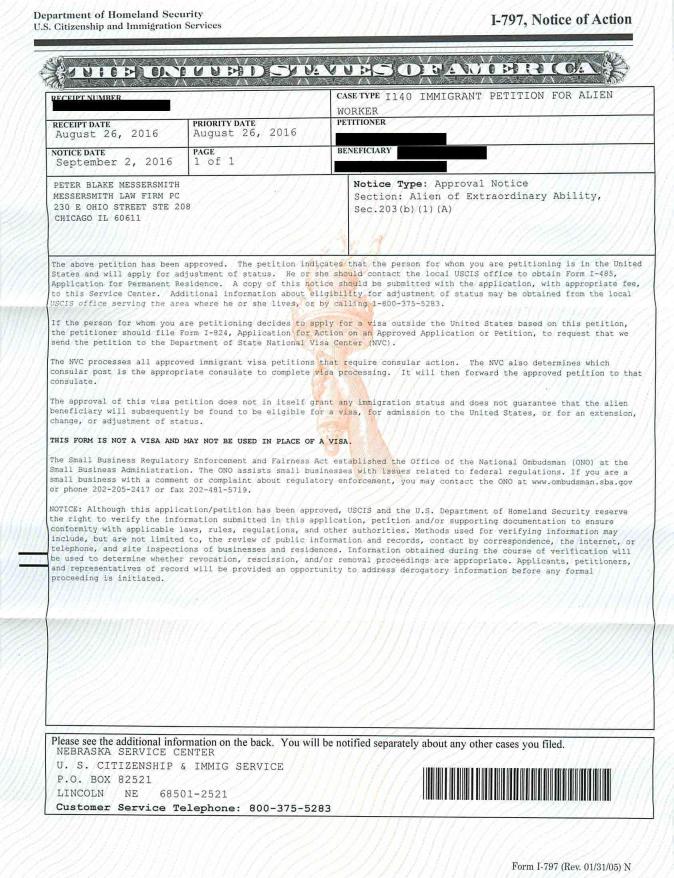
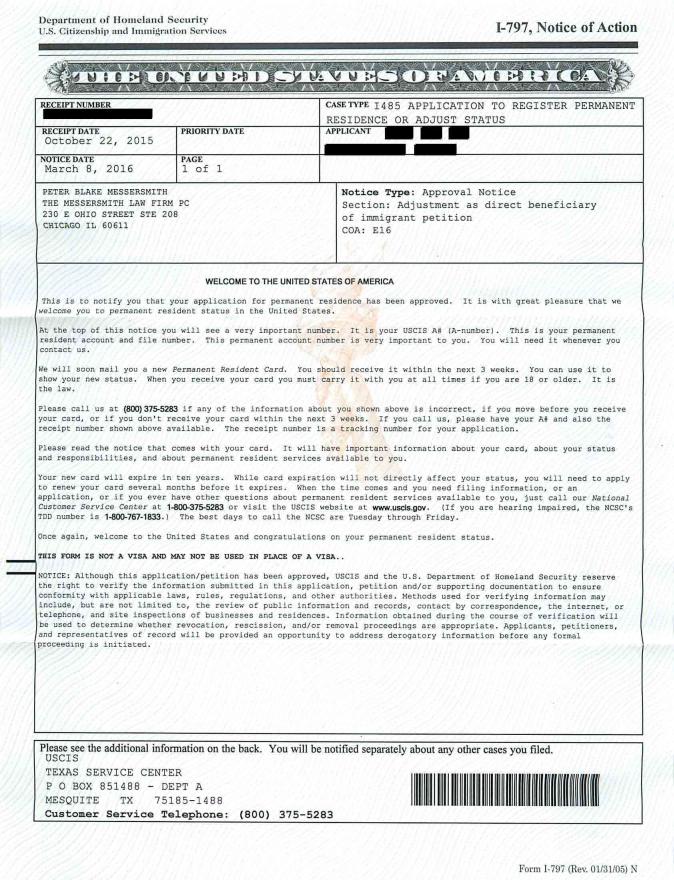
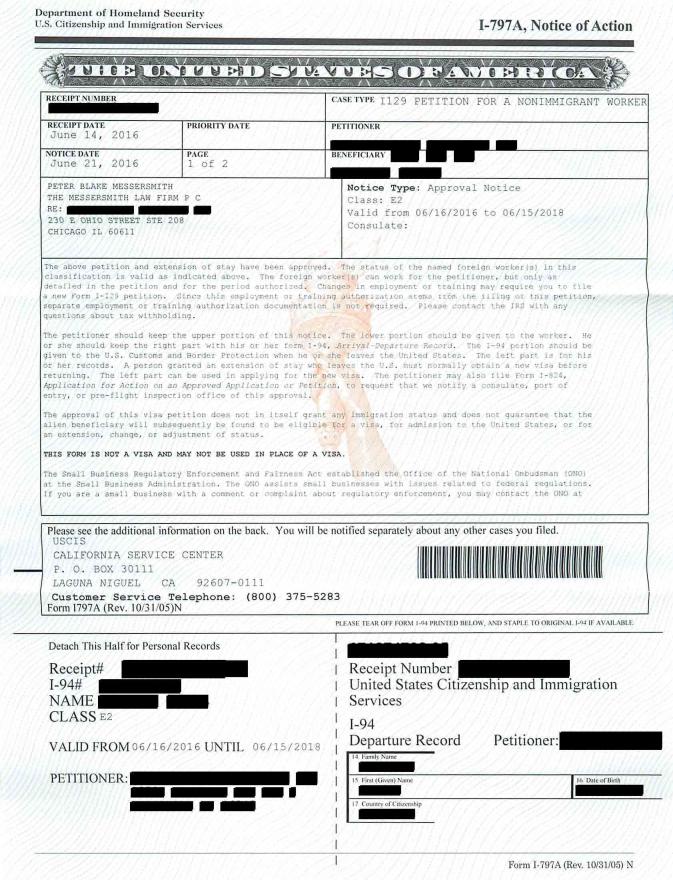
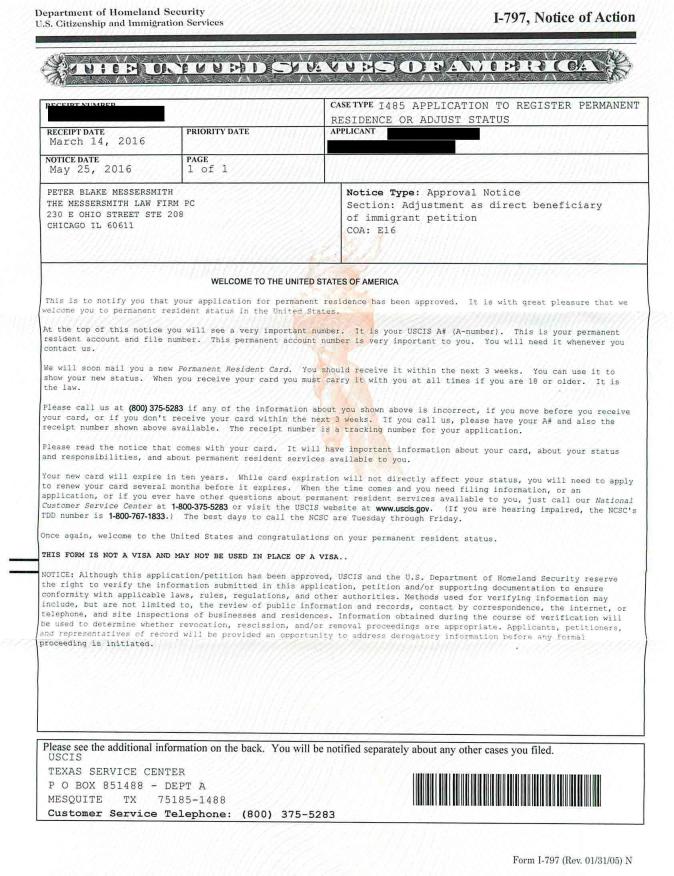
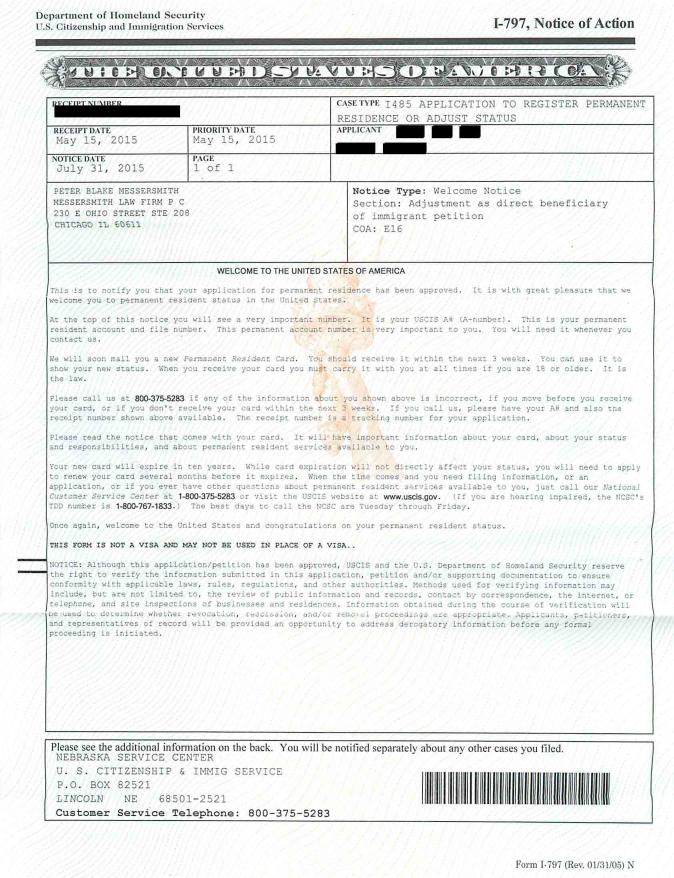
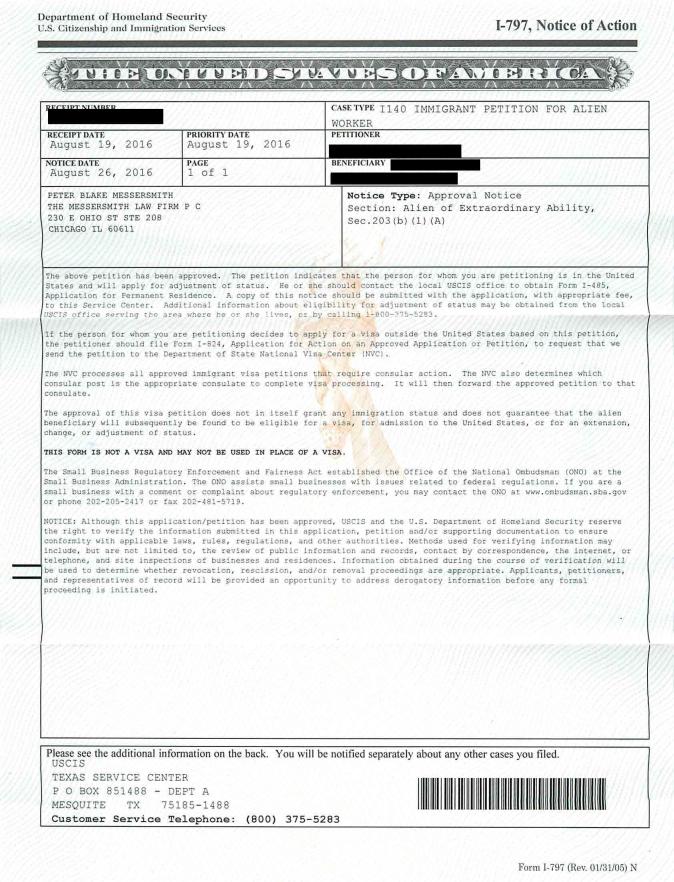
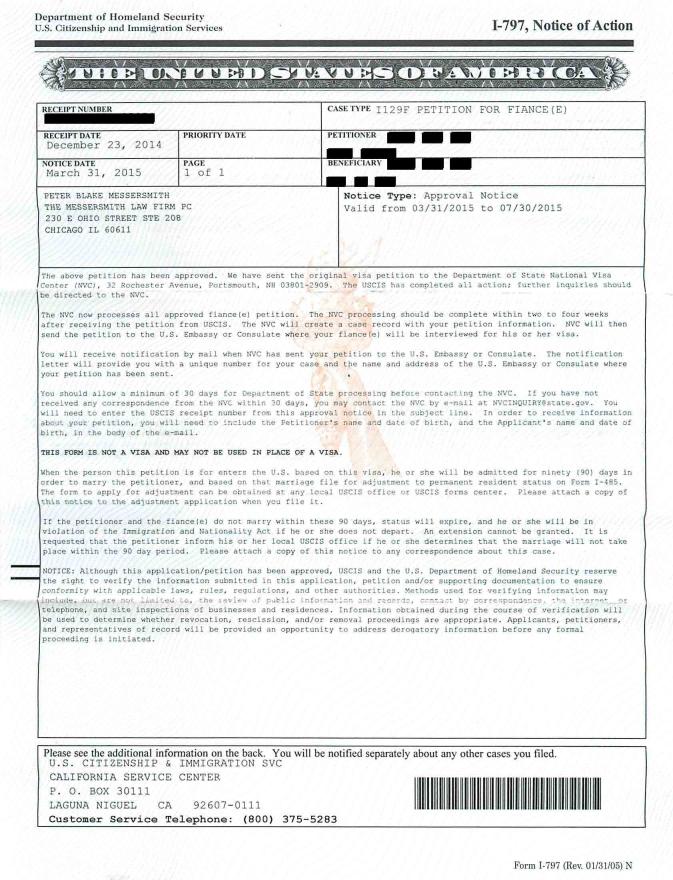
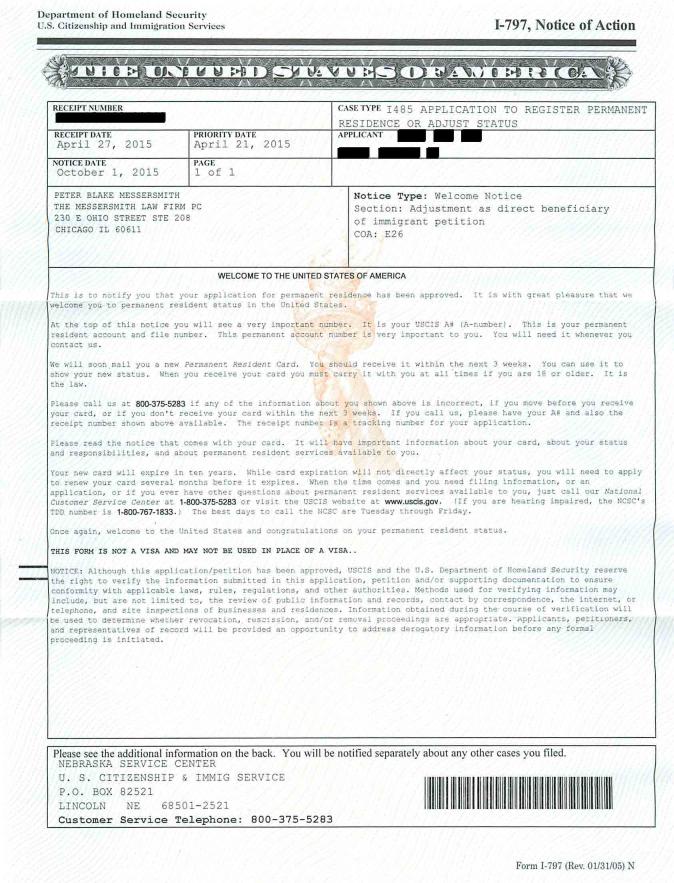
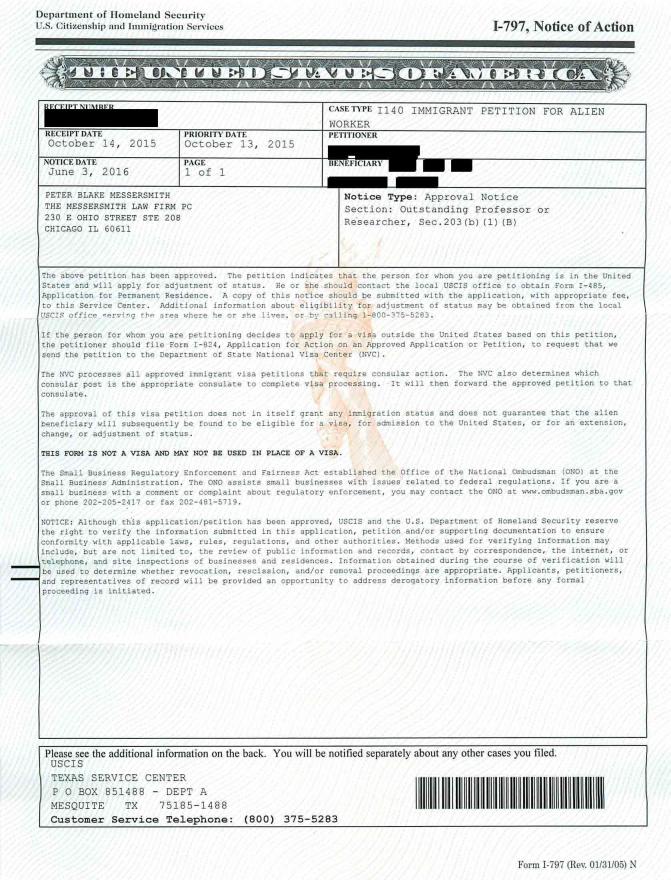
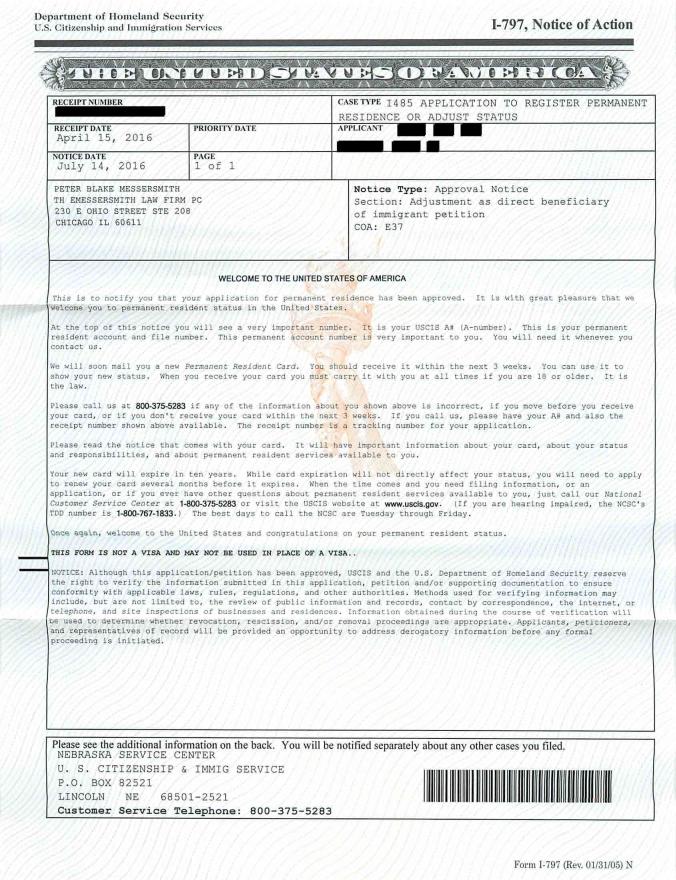
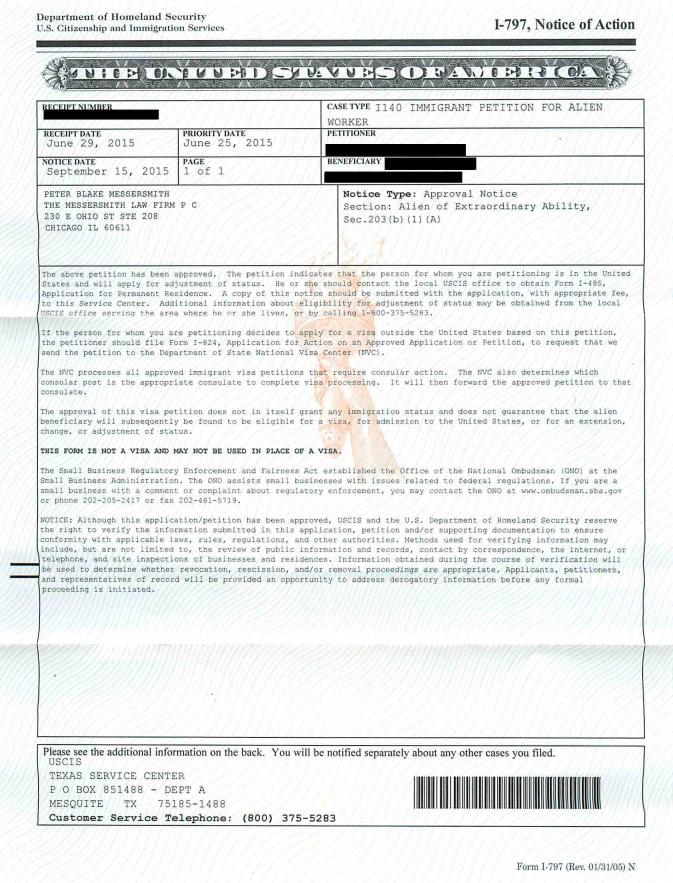
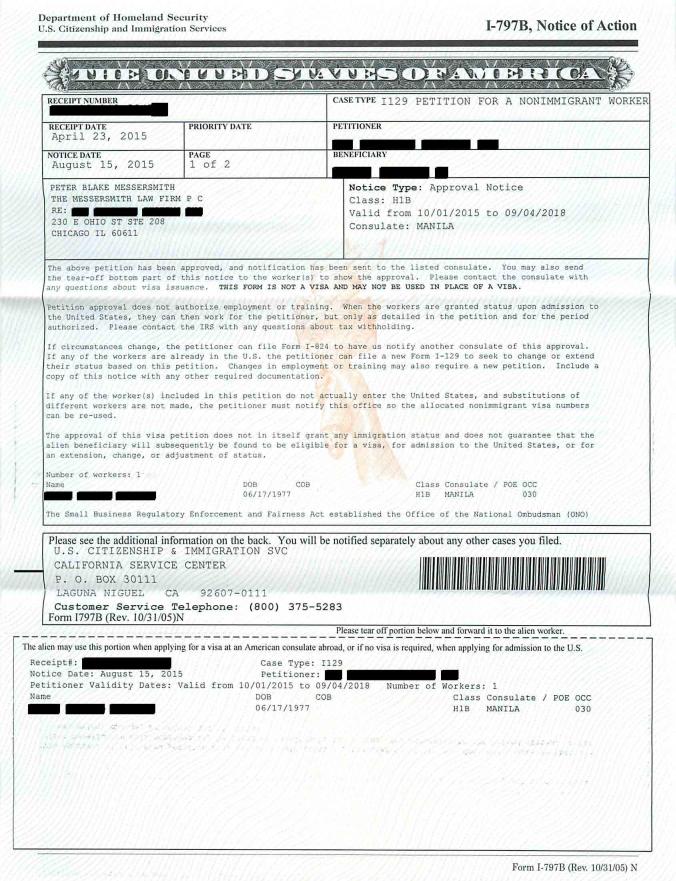
Scroll through fifty recent approval notices below or click here to view thousands.

Customer Testimonials

Real Testimonials from Past Clients