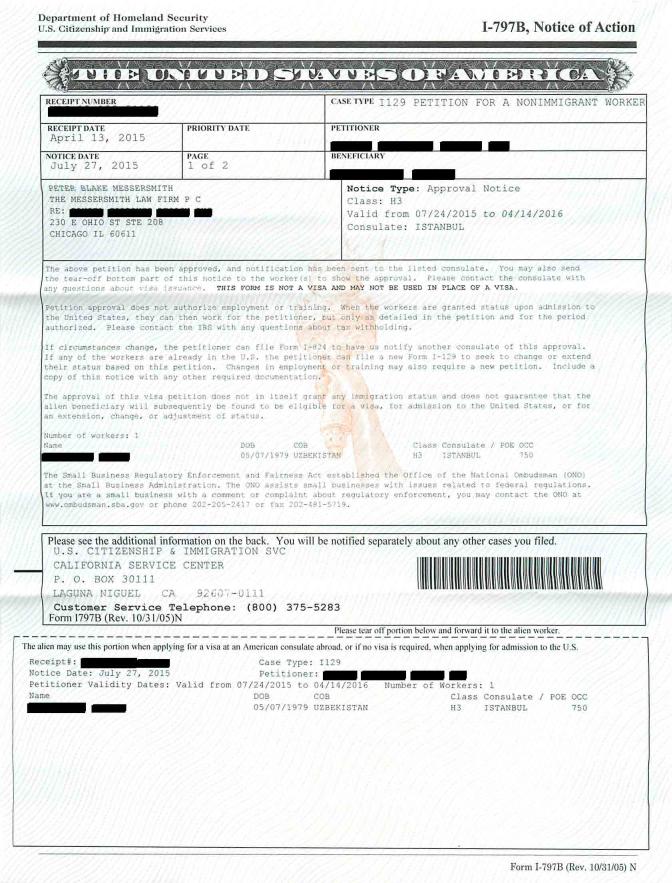
To qualify for an H-3 visa, the petitioner and trainee usually must show several core things. People often ask about H-3 visa requirements, who qualifies for an H-3 trainee visa, H-3 training program requirements, training not available in home country, or can an H-3 trainee work in the United States.
1) The case must involve a real training program
The H-3 visa is for a structured training program, not ordinary employment. A strong H-3 case usually includes a clear plan showing what the trainee will learn, how the training is organized, how long each phase will last, and how the training relates to the trainee’s background and future career. USCIS treats H-3 as a true training category, not a workaround for temporary labor.
2) The training must not be available in the trainee’s home country
One of the most important H-3 requirements is proving that the proposed training is not available in the trainee’s own country. A strong petition should explain why the training must take place in the United States and why comparable training cannot be obtained abroad.
3) The trainee cannot be coming primarily for productive employment
A major H-3 issue is whether the case looks too much like regular work. USCIS policy says the trainee will not engage in productive employment unless it is incidental and necessary to the training. In other words, the training cannot mainly be a job in the normal operation of the business.
4) The trainee cannot be placed in a normal operations position regularly filled by U.S. workers
USCIS also says the trainee will not be placed in a position in the normal operation of the business in which U.S. workers are regularly employed. This is one of the most important ways officers separate a real H-3 training case from a disguised employment case.
5) The training must help the person pursue a career outside the United States
A strong H-3 petition should show that the training will benefit the trainee in pursuing a career outside the United States. This is a core H-3 requirement.
6) The training field must be eligible for H-3
USCIS describes H-3 training as available in fields such as agriculture, commerce, communications, finance, government, transportation, and the professions.
7) Some categories are excluded or treated differently
USCIS states that physicians are not eligible for H-3 classification to receive graduate medical education or training. USCIS also treats special education exchange visitors as a distinct H-3 category with separate requirements.
Common evidence used to prove H-3 visa requirements
Strong H-3 filings often include:
- a detailed training schedule
- phase-by-phase training objectives
- an explanation of why the training is not available in the trainee’s home country
- evidence showing the trainee will not fill a normal employee role
- an explanation of how the training supports the trainee’s career abroad
- information about the company, trainers, facilities, and training methods
Why these H-3 requirements matter
Most H-3 problems happen because the case does not clearly prove:
- a real structured training program
- training unavailable in the home country
- nonproductive employment
- work that is only incidental to training
- a real career benefit outside the United States