People often search for this issue as I-601A provisional waiver, provisional unlawful presence waiver, unlawful presence waiver, 212(a)(9)(B) waiver, or the 3-year and 10-year bars. Form I-601A is used in certain immigrant visa cases to request a provisional waiver of unlawful presence before leaving the United States for consular processing, typically based on showing extreme hardship to a qualifying U.S. citizen or lawful permanent resident spouse or parent.

I-601A Provisional Waiver — Unlawful Presence Waiver (212(a)(9)(B)) and Extreme Hardship
I-601A Provisional Waiver — Unlawful Presence Waiver (212(a)(9)(B)) and Extreme Hardship

I-601A Details
Most visa refusals or other application denials are simple denials that do not carry any adverse affects beyond that particular application being denied. However, in some cases, a denial come with other serious repercussions that come with bars to enter the United States. Some of these bars are temporary and could last 5, 10, 15, or 20 years and others carry lifetime bars.
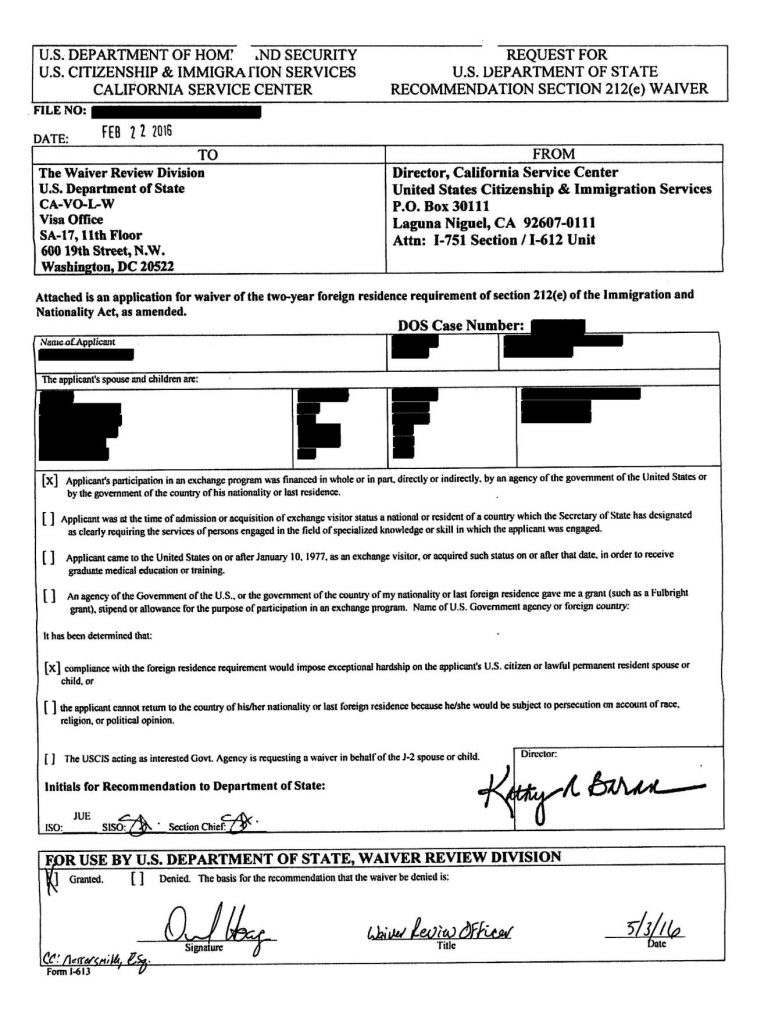
Form I-601A gives you a path to apply for a permanent waiver of the INA 212(a)(9)(B)(i)(I) or INA 212(a)(9)(B)(i)(II) (unlawful presence) bar in the United States if you would like to enter the US with an immigrant visa.
Applications for this hardship waiver are made on Form I-601A. If you are in the United States and know that the only inadmissibility issue you have is due to an overstay then you can file an I-601A waiver and then process your immigrant visa at the Embassy.
I-601A filings are made with USCIS and generally take about 6 months to get a response. The I-601 is a five step process.
Step 1. Apply for permanent residency. This can be an employment based or a family based green card filing.
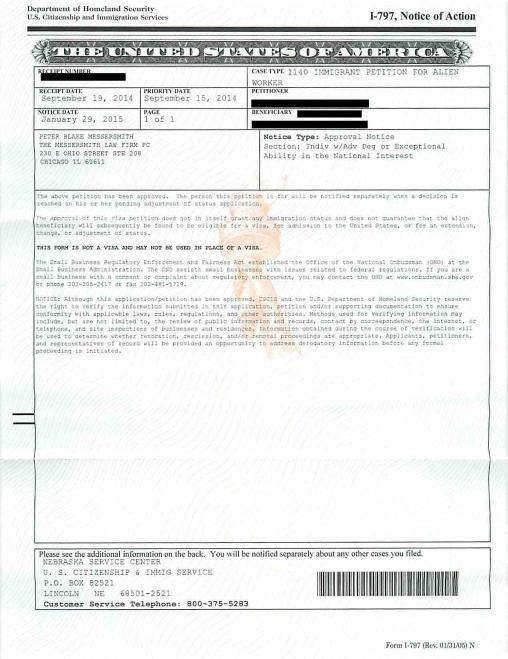
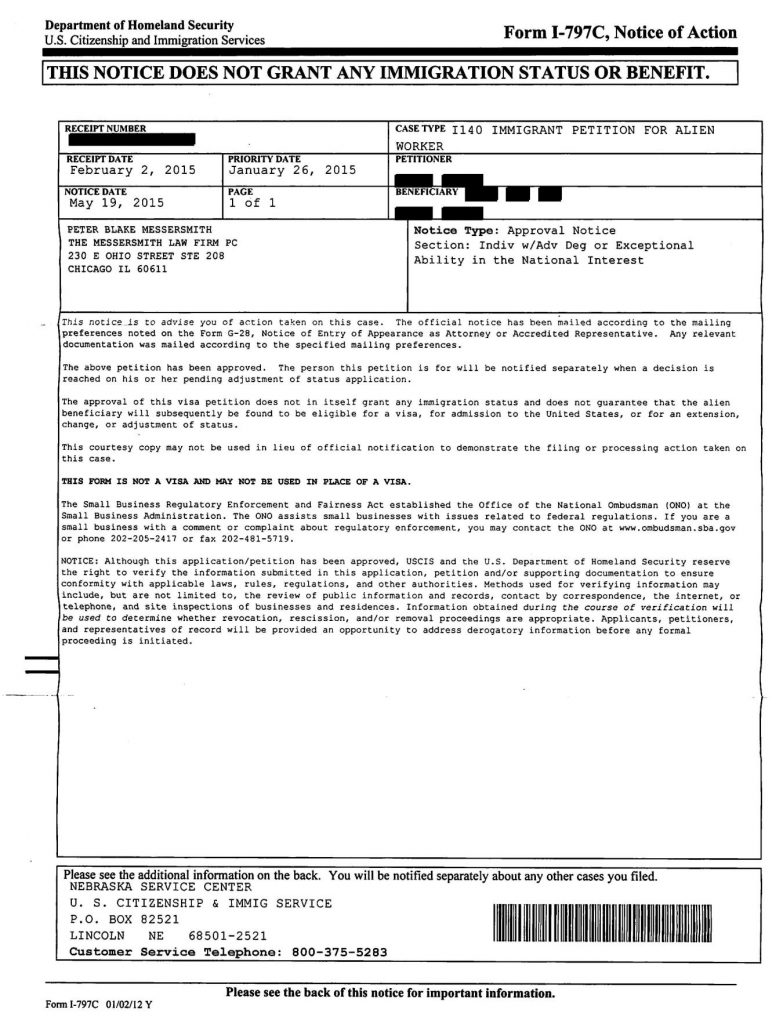
Step 2. Get your I-140, I-130, I-360, or DV lottery application approved.
Step 3. Seek consular processing of your green card
Step 4. File your I-601A and get it approved.
Step 5. Pursue consular processing at the Embassy. Reenter the US with your immigrant visa and get your green card!

For Whom Is an I-601A Appropriate?
If you are in the United States but are unable for adjustment of status solely because of INA 212(a)(9)(B)(i)(I) or INA 212(a)(9)(B)(i)(II) (unlawful presence), you can file an I-601A to process a waiver of this inadmissibility while you are in the United States. Then after your I-601A is approved, you can pursue consular processing to obtain your immigrant visa (permanent residency). This process, made available in 2013 and expanded in 2016, was developed to shorten the time that U.S. citizens and lawful permanent resident family members are separated from their relatives while those relatives are obtaining immigrant visas to become lawful permanent residents of the United States.

I-601A Requirements
Most I-601A cases turn on three key points:
- I-601A waives unlawful presence only (the 3-year and 10-year bars under INA 212(a)(9)(B)); it does not waive every ground of inadmissibility.
- The applicant must have a qualifying relative for purposes of the hardship analysis, typically a U.S. citizen or lawful permanent resident spouse or parent.
- The applicant must prove extreme hardship to that qualifying relative if the waiver is denied (often framed as hardship from separation, relocation, or both).
Strong hardship packages are evidence-driven and commonly include:
- Medical and mental health documentation
- Financial hardship evidence (income, expenses, debts, loss of employment, caregiving costs)
- Family and caregiving responsibilities
- Education and career impacts
- Country-conditions evidence relevant to relocation
What the I-601A provisional waiver does (and does not) cover
A common reason I-601A cases go wrong is misunderstanding the scope.
- What I-601A covers: unlawful presence inadmissibility under INA 212(a)(9)(B) (the 3-year and 10-year bars), in eligible cases.
- What I-601A does not cover: other inadmissibility grounds such as fraud or willful misrepresentation (212(a)(6)(C)(i)), certain criminal grounds, prior removal/deportation bars that may require an I-212, or other issues that can lead to a visa refusal at the interview.
Because consular processing can uncover additional issues, the safest approach is to identify all potential inadmissibility grounds before filing and before traveling for the immigrant visa interview.
After I-601A approval: what happens next
Many people search “after I-601A approval” because approval is not the final step.
In general, the process is:
- The applicant completes consular processing and attends the immigrant visa interview abroad.
- The provisional waiver helps address unlawful presence, but the applicant can still be refused if other inadmissibility issues exist (for example, misrepresentation, certain criminal issues, or prior removal-related issues).
- Careful planning and document preparation for the interview is essential, including a clean timeline and consistent records.
Because each case is fact-specific, the safest strategy is to prepare for consular processing as a separate step and confirm there are no hidden inadmissibility problems before departure.
Frequently asked questions about the I-601A provisional waiver
What is the I-601A provisional waiver?
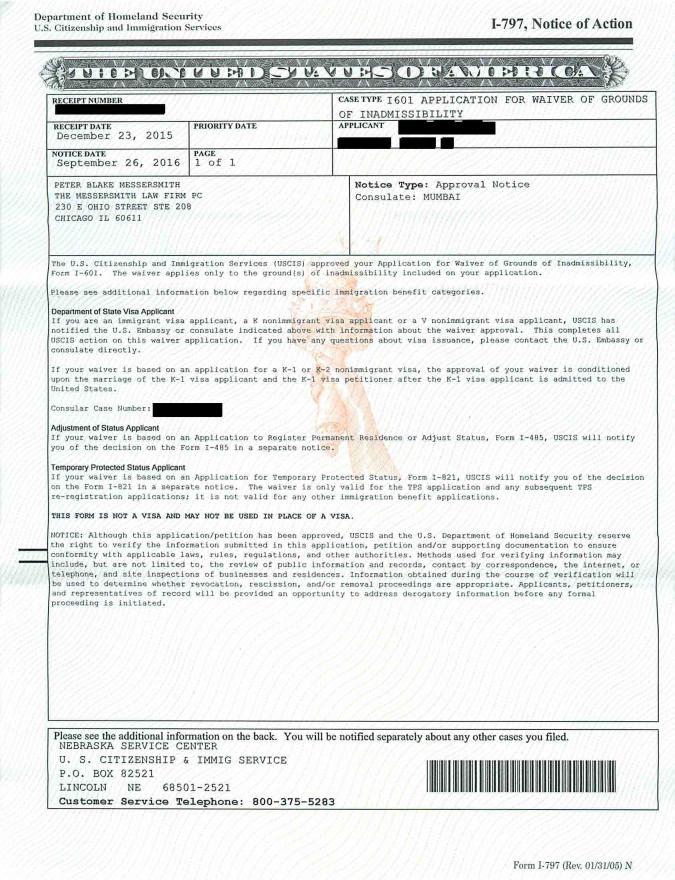
Form I-601A is used in certain immigrant visa cases to request a provisional waiver of unlawful presence before leaving the U.S. for consular processing.
What does I-601A waive?
I-601A generally covers unlawful presence inadmissibility under INA 212(a)(9)(B) (the 3-year and 10-year bars), in eligible cases.
What does I-601A not waive?
I-601A does not waive every inadmissibility ground. Other issues such as misrepresentation (212(a)(6)(C)(i)), certain criminal grounds, or removal-related bars may require different strategies or additional filings.
Who is a qualifying relative for I-601A?
Many I-601A cases are based on extreme hardship to a U.S. citizen or lawful permanent resident spouse or parent.
What is “extreme hardship” for I-601A?
Extreme hardship is a case-specific standard usually proven through an organized evidence package showing why hardship goes beyond ordinary separation.
Do I have to be in the U.S. to file I-601A?
I-601A is generally filed while the applicant is in the United States and planning consular processing.
After I-601A approval, what happens?
The applicant proceeds to the immigrant visa interview abroad. Approval helps address unlawful presence, but other inadmissibility issues can still cause a refusal.
What is the difference between I-601 and I-601A?
I-601A is a provisional waiver for unlawful presence in certain consular cases. I-601 is used for broader waiver situations depending on posture and grounds.