People often inquire about this issue as K-3 visa, K3 spouse visa, visa for spouse of a U.S. citizen, Form I-129F for K-3, or K-3 vs CR-1. The K-3 visa is a nonimmigrant visa category designed to allow certain spouses of U.S. citizens to enter the United States while immigrant visa processing continues, and eligible children may apply as K-4 dependents. Many cases involve choosing the best path (K-3 vs CR-1), preparing the I-130/I-129F filings correctly, and planning for work authorization and next steps after entry.

K-3 Visa (Spouse Visa) — Form I-129F, K-4 Children, and K-3 vs CR-1
K-3 Visa (Spouse Visa) — Form I-129F, K-4 Children, and K-3 vs CR-1

K3 Visa Details
The K3 visa permits the spouse of a US citizen to enter the United States and remain in the US while their permanent residence (green card) application to be approved. The K3 visa holder may obtain an EAD while in the US.
The K3 visa process is rather long and arduous. However, we will be happy to see you and your spouse through the process and make sure that things go as smoothly as possible. Mishandling of the K3 visa application may result in lost time, visa denials or arrest and deportation of the spouse where the USCIS suspects fraud. If you are not yet married, you may want to apply for a K1 visa.
Children of the K3 visa applicant may obtain a K4 visa to enter the US together.

For Whom Is a K3 Visa Appropriate?
Spouses of US citizens who are waiting abroad for an immigrant visa.

K3 Visa Requirements
A person may receive a K3 visa if that person:
- has concluded a valid marriage with a citizen of the United States;
- has a relative petition filed by the US. citizen spouse for the person;
- seeks to enter the United States to await the approval of the petition and subsequent lawful permanent resident status, and,
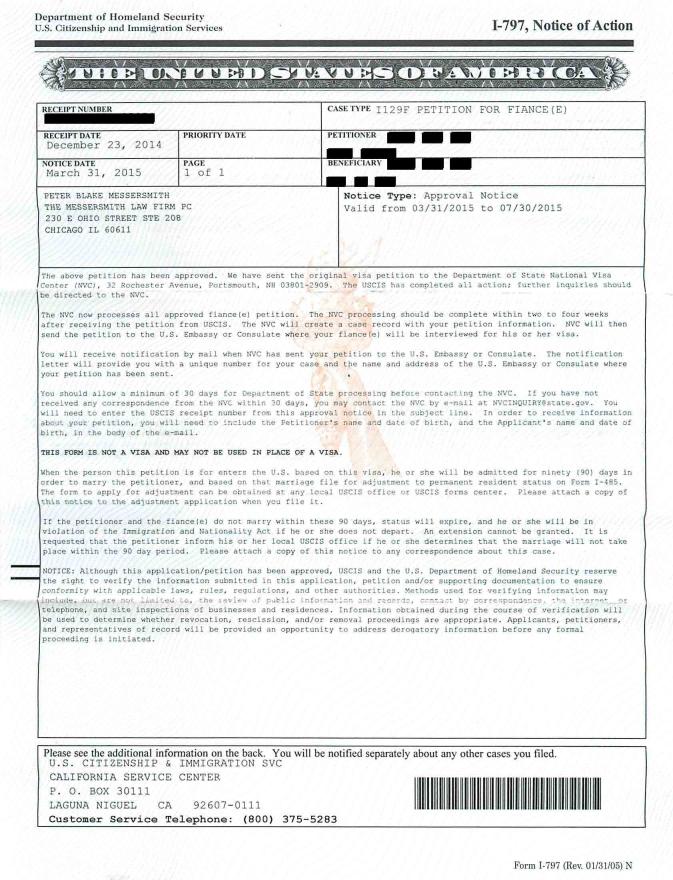
- has an approved Petition for Alien fiance, forwarded to the American consulate abroad where the alien wishes to apply for the K3 visa. The consulate must be in the country in which the marriage to the US. citizen took place if the United States has a consulate which issues immigrant visas in that country. If the marriage took place in the United States, the designated consulate is the one with jurisdiction over the current residence of the alien spouse.
K-3 vs CR-1 (which spouse visa is better?)
“K-3 vs CR-1” is one of the most common spouse-visa questions. A K-3 is a nonimmigrant spouse visa that can allow entry while immigrant processing continues. A CR-1 is an immigrant spouse visa that allows the spouse to enter the U.S. as a permanent resident.
In general:
- K-3 is discussed as a faster interim option in some cases, but outcomes and usefulness depend on processing posture.
- CR-1 is commonly preferred when the spouse will enter the U.S. as a permanent resident.
- The best option depends on timing, prior immigration history, the couple’s goals, and the expected processing path.
Choosing the right strategy early can prevent delays and wasted filings.
K-4 visa for children and K-3 work permit (EAD)
K-3 cases often involve questions about children and employment.
- K-4 children: eligible children may apply as K-4 dependents tied to the K-3 parent’s case.
- Work authorization: some K-3 holders may apply for employment authorization (EAD) after entry, depending on posture and eligibility.
Because families often need a clear plan for school, travel, and employment, it is important to map out the post-entry steps early.
Frequently asked questions about the K-3 visa
What is a K-3 visa?
A K-3 visa is a nonimmigrant visa category for certain spouses of U.S. citizens designed to allow entry while immigrant processing continues.
What forms are used for a K-3 visa?
K-3 cases commonly involve an underlying I-130 immigrant petition and Form I-129F used for the K-3 process.
K-3 vs CR-1: which is better?
CR-1 is an immigrant spouse visa that allows entry as a permanent resident. K-3 is a nonimmigrant spouse visa. The best option depends on timing and case posture.
Can children come with a K-3 visa?
Eligible children may apply as K-4 dependents.
Can a K-3 spouse work in the United States?
Some K-3 holders may apply for employment authorization (EAD) after entry depending on posture and eligibility.
What happens after entering on a K-3?
Many cases involve continuing immigrant processing and planning the next steps for permanent residence depending on the case path.
News Related to K3 VISA
| Date | Title | Details | ||
|---|---|---|---|---|
| January 15, 2025 | USCIS Policy Manual | This part provides guidance on various aspects of family-based immigration, including the K-3 visa process. | ||
| February 5, 2024 | Department of State's Foreign Affairs Manual (FAM) | This section provides detailed guidance on the policies and procedures related to the issuance of K-3 visas to foreign-citizen spouses of U.S. citizens. |