L-1 Visa — L-1A Managers and Executives, L-1B Specialized Knowledge, New Office, and L-2 Spouse Work Authorization

L-1 Visa — L-1A Managers and Executives, L-1B Specialized Knowledge, New Office, and L-2 Spouse Work Authorization

L-1 Visa — L-1A Managers and Executives, L-1B Specialized Knowledge, New Office, and L-2 Spouse Work Authorization

People often inquire about this issue as L-1 visa, L1 visa, L-1A visa, L-1B visa, intracompany transferee visa, L-1 visa requirements, L-1 specialized knowledge, L-1 new office, or L-2 spouse work authorization. The L-1 visa allows a qualifying company to transfer an employee from a related foreign office to a U.S. parent, branch, affiliate, or subsidiary in a managerial, executive, or specialized knowledge role. The most common L-1 problems involve proving the qualifying corporate relationship, showing one continuous year of employment abroad, documenting managerial or executive capacity for L-1A, proving specialized knowledge for L-1B, planning a new office case, or using a blanket L petition correctly.

L-1 cases are commonly used by multinational companies, growing international businesses, and foreign companies opening or expanding U.S. operations through managers, executives, or specialized knowledge employees.

L1 Visa Details

The L1 visa is for executives or employees with specialized skills of multinational companies who are being transferred from an office overseas to a US office. The visa may also be used by a manager or executive to open a new office in the US. The L1 visa is initially valid for three years and can be extended to a total stay of five years. There is no prevailing wage requirement for the L1 visa.

Although the L1 visa was deigned for large multinational corporations, it may also be used by smaller companies.

A petitioner which meets the following requirements may file a blanket petition seeking continuing approval of itself and some or all of its parent, branches, subsidiaries, and affiliates as qualifying organizations if:

  1. The petitioner and each of those entities are engaged in commercial trade or services;
  2. The petitioner has an office in the United States that has been doing business for one year or more;
  3. The petitioner has three or more domestic and foreign branches, subsidiaries, or affiliates; and
  4. The petitioner and the other qualifying organizations have obtained approval of petitions for at least ten “L” managers, executives, or specialized knowledge professionals during the previous 12 months; or have US. subsidiaries or affiliates with combined annual sales of at least $25 million; or have a United States work force of at least 1,000 employees.

Spouses and children of the L1 visa holder may obtain an L2 visa to enter and remain in the US. L2 Spouses may apply for an EAD. L2 spouses and children may attend school in the US.

For Whom Is an L1 Visa Appropriate?

Foreign nationals with specialized knowledge or managers being transferred to the US. to supervise work of other supervisory, professional or managerial employees, or who manages an essential function, department or subdivision.

L1 Visa Requirements

An alien who within the preceding three years has been employed abroad for one continuous year by a qualifying organization may be admitted temporarily to the United States to be employed by a parent, branch, affiliate, or subsidiary of that employer in a managerial or executive capacity, or in a position requiring specialized knowledge.

L-1 visa requirements (who qualifies for an intracompany transferee visa?)

To qualify for an L-1 visa, the company and employee usually must show several core things. People often ask about L-1 visa requirements, who qualifies for an L-1 visa, L-1A requirements, L-1B requirements, one year employed abroad, or intracompany transferee visa.

1) There must be a qualifying relationship between the U.S. company and the foreign company

A strong L-1 case usually starts with the correct qualifying corporate relationship. USCIS treats qualifying organizations such as a parent, branch, subsidiary, or affiliate as a core part of L-1 eligibility.

2) The employee must have worked abroad for one continuous year within the last three years

One of the most common L-1 question relates to the one year employed abroad requirement. USCIS says the beneficiary must have been employed abroad continuously for one year within the three years preceding admission to the United States in a managerial, executive, or specialized knowledge capacity.

3) The employee must be coming to the United States to work for a qualifying organization

The employee must be coming to the United States to render services to the same employer or to a related qualifying organization in the United States. USCIS frames the L category around an international organization transferring an employee to a related U.S. entity.

4) L-1A is for managers and executives

The L-1A visa is for employees coming to the United States to work in a managerial or executive capacity. USCIS separately defines and analyzes managerial and executive roles.

5) L-1B is for specialized knowledge employees

The L-1B visa is for employees with specialized knowledge of the company’s products, services, research, systems, techniques, equipment, management, or other interests and their application in international markets, or an advanced level of knowledge of the company’s processes and procedures. USCIS treats specialized knowledge as the core L-1B issue.

6) New office L-1 cases have extra planning issues

USCIS allows certain L-1 filings for a new U.S. office, but these cases require more careful planning because the company must show how the new office will support a managerial, executive, or specialized knowledge role within the required timeline.

7) Blanket petitions are a separate L-1 strategy

Another major topic is the blanket L petition. Blanket processing is a distinct intracompany transfer strategy used by qualifying organizations.

Common evidence used to prove L-1 visa requirements

Strong L-1 filings often include:

  • corporate ownership and control documents
  • evidence of the qualifying parent, branch, subsidiary, or affiliate relationship
  • payroll or employment records proving one year abroad
  • detailed job descriptions for the foreign role and the U.S. role
  • organizational charts
  • evidence supporting managerial, executive, or specialized knowledge capacity
  • business records showing the companies are doing business in the United States and at least one other country

Why these L-1 requirements matter

Most L-1 problems happen because the case does not clearly prove:

  • the qualifying corporate relationship
  • one continuous year of employment abroad
  • the difference between L-1A managerial/executive capacity and L-1B specialized knowledge
  • whether the U.S. role and business structure really support the requested classification

L-1A vs L-1B, new office, and blanket petition

The L-1 visa has two main tracks. L-1A is for managers and executives. L-1B is for employees with specialized knowledge. A company may also use the L-1 new office route when opening a qualifying U.S. office, and some organizations may use a blanket L petition for intracompany transfers.

L-1A visa for managers and executives

The L-1A visa is for an employee coming to the United States to work in a managerial or executive capacity for a qualifying organization. In many cases, this is the category used for senior personnel transferring to lead U.S. operations, oversee a department or function, or direct the management of the organization. USCIS also allows new office L-1A filings for certain companies opening a new U.S. office.

L-1B visa for specialized knowledge employees

The L-1B visa is for an employee with specialized knowledge of the company’s products, services, research, systems, techniques, equipment, management, or other interests and their application in international markets, or an advanced level of knowledge of the company’s processes and procedures. This category is often used when the U.S. company needs a transferred employee with company-specific knowledge that is not easy to replace.

L-1A vs L-1B

The difference between L-1A and L-1B usually comes down to the employee’s role:

  • L-1A focuses on managerial or executive capacity
  • L-1B focuses on specialized knowledge

A transfer case should be built around the category that matches the actual foreign role and the intended U.S. role.

L-1 new office

A new office L-1 case applies when a qualifying foreign company is opening a new office in the United States. USCIS requires evidence that sufficient physical premises have been secured for the new office, and new office petitions have additional documentation requirements. For L-1A new office cases, USCIS also looks at whether the new operation will support a managerial or executive position within the required time. USCIS materials also list separate new office evidence requirements for L-1B specialized knowledge cases.

Blanket L petition

A blanket L petition allows certain qualifying organizations to seek continuing approval for intracompany transferee classifications across the organization, including the petitioner, its parent, and qualifying branches, subsidiaries, and affiliates. USCIS provides Form I-129S for employees seeking classification based on a blanket L petition.
How long can L-1 status last?

USCIS states that L-1A status may be granted for up to 7 years in total, while L-1B status may be granted for up to 5 years in total.

L-2 spouse work authorization

Certain L-2 spouses are employment authorized incident to status. USCIS policy and I-9 guidance explain that an unexpired Form I-94 showing L-2S can serve as evidence of employment authorization for an L-2 spouse.

Common L-1 questions

Common questions include:

  • What is the difference between L-1A and L-1B?
  • What counts as specialized knowledge?
  • Can a small company use L-1 new office?
  • Who can use a blanket L petition?
  • How long can L-1A or L-1B last?
  • Can an L-2 spouse work in the United States?

Frequently asked questions about the L-1 visa

What is the L-1 visa?

The L-1 visa is for an intracompany transferee coming to the United States to work for a qualifying organization in a managerial, executive, or specialized knowledge role.

What is the difference between L-1A and L-1B?

L-1A is for managers and executives. L-1B is for employees with specialized knowledge.

Who qualifies for an L-1 visa?

A qualifying L-1 case generally requires a qualifying relationship between the U.S. company and the foreign company, and the employee must have worked abroad continuously for one year within the three years preceding admission in a managerial, executive, or specialized knowledge capacity.

What is specialized knowledge for L-1B?

USCIS describes specialized knowledge as special knowledge of the petitioning organization’s product, service, research, equipment, techniques, management, or other interests and their application in international markets, or an advanced level of knowledge of the organization’s processes and procedures.
What is an L-1 new office case?

A new office L-1 case is used when a qualifying foreign company is opening a new office in the United States and seeks to transfer an eligible manager, executive, or specialized knowledge employee to help establish the operation.

What is a blanket L petition?

A blanket L petition allows certain qualifying organizations to use blanket approval procedures for intracompany transferees, and USCIS uses Form I-129S for blanket L cases.

How long can L-1 status last?

L-1A managers and executives may remain in L-1 status for up to 7 years, while L-1B specialized knowledge employees may remain for up to 5 years.

Can an L-2 spouse work in the United States?

Yes. USCIS says certain L-2 spouses are employment authorized incident to status.

Can family members come with an L-1 beneficiary?

Yes. The spouse and unmarried children under 21 of an L-1 beneficiary may accompany or follow to join in L-2 status.

What forms are commonly used in L-1 cases?

USCIS commonly uses Form I-129 for L-1 petitions and Form I-129S for blanket L petitions.
USCIS Memo Relating to L1 VISA
DateTitleDetails
April 14, 2016Matter of Z-A-, Inc.Matter of Z-A-Inc requires USCIS to take into account relevant evidence in the record before adjudicating an L-1 visa petition.
August 17, 2015L-1B Adjudications PolicyThis policy memorandum provides guidance on the adjudication of the L-1B visa for transfer employees who possess “specialized knowledge.”
Top Notch Immigration Services
You will receive top notch immigration services at The Messersmith Law Firm. We guarantee personalized legal services, a high rate of success, and very reasonable fees. At The Messersmith Law Firm, you will always get more than what you pay for. While the majority of our clients are referred to our law firm, we are open to take new cases if we feel we can help you achieve your goals. We have no doubt that you will refer everyone you know to us once your case is approved! Our goal is to get your case approved in the shortest amount of time possible yet strive to keep our fees reasonable!
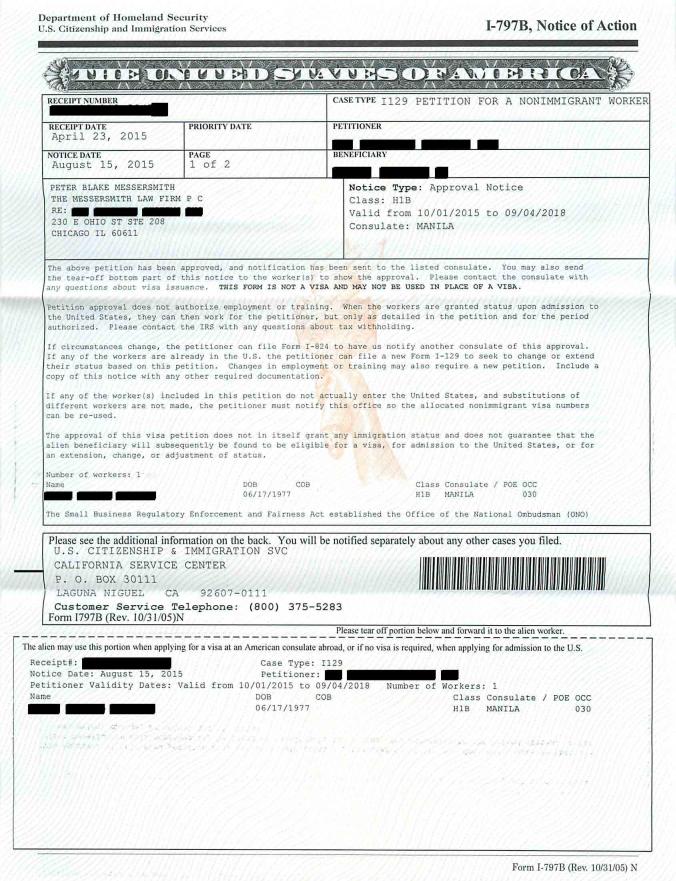
Thousands of Approved Cases

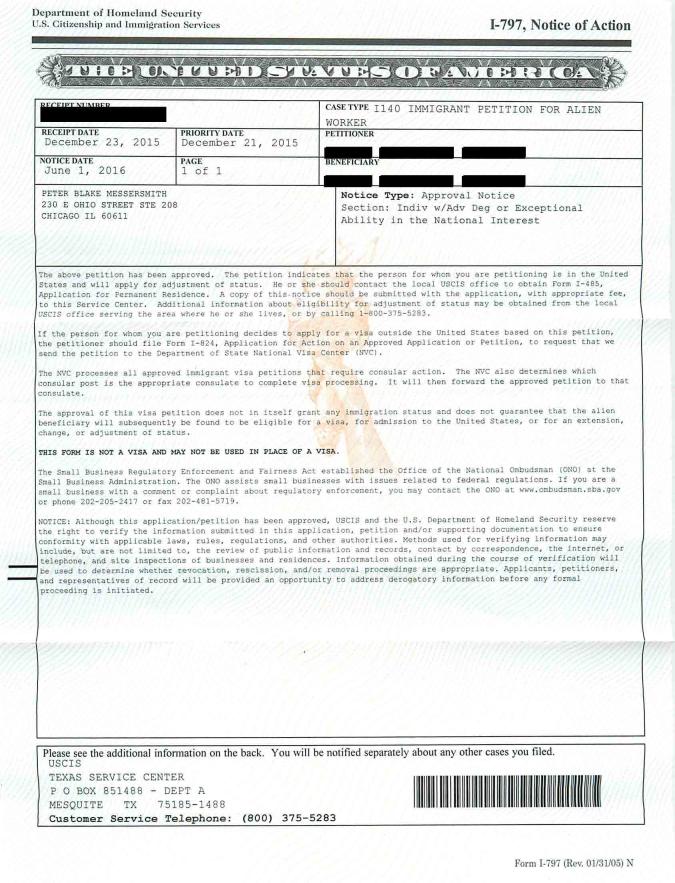
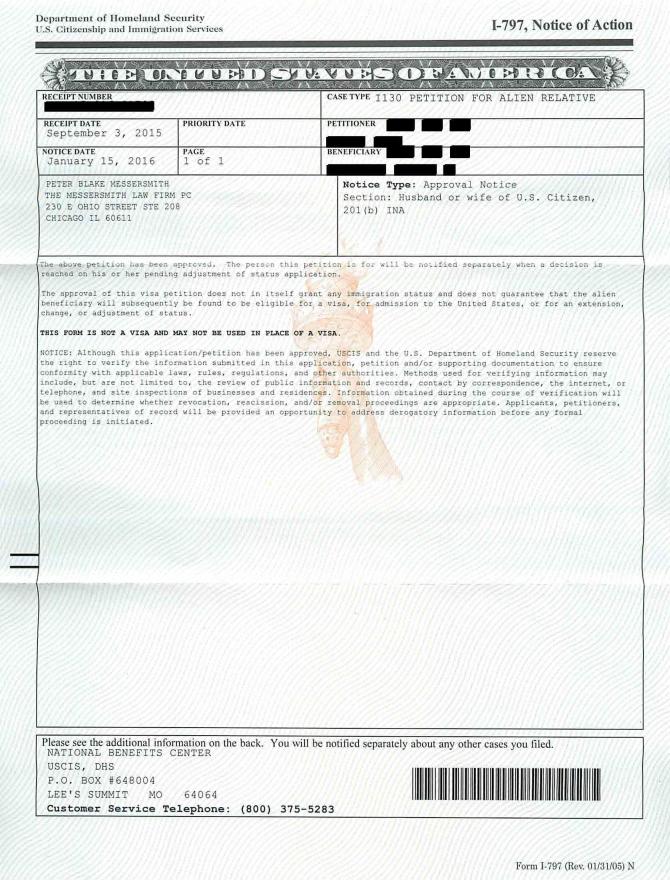
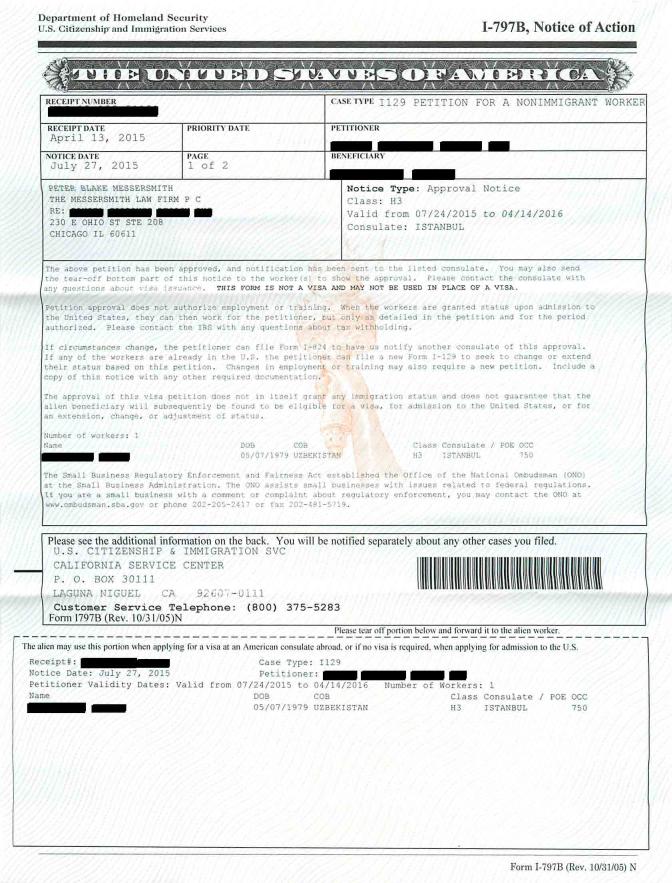
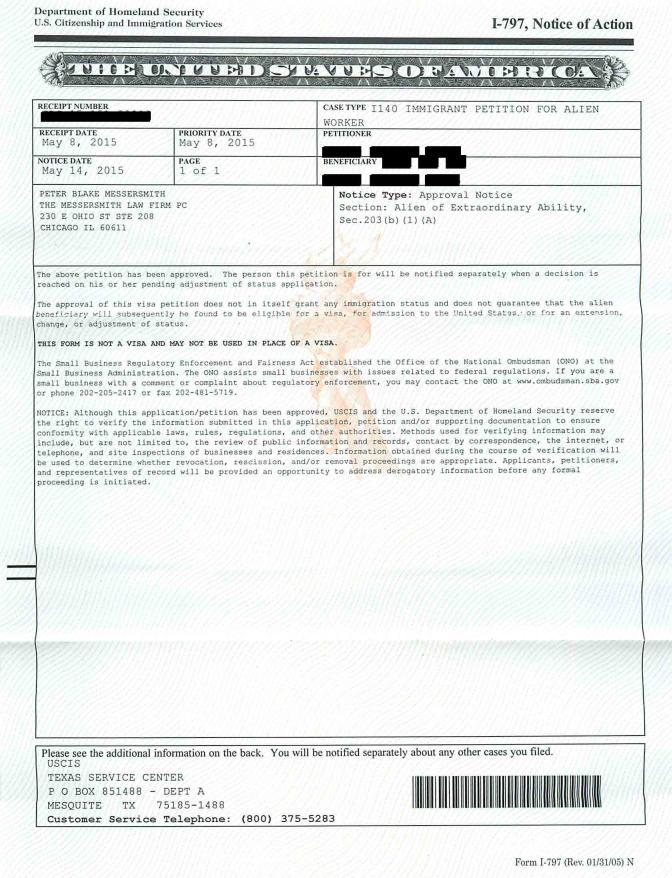
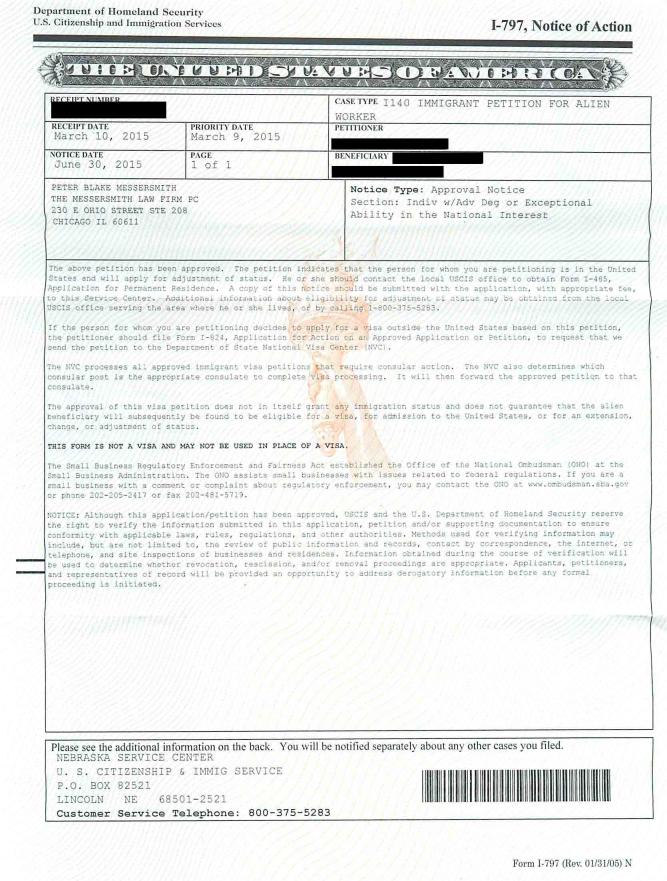
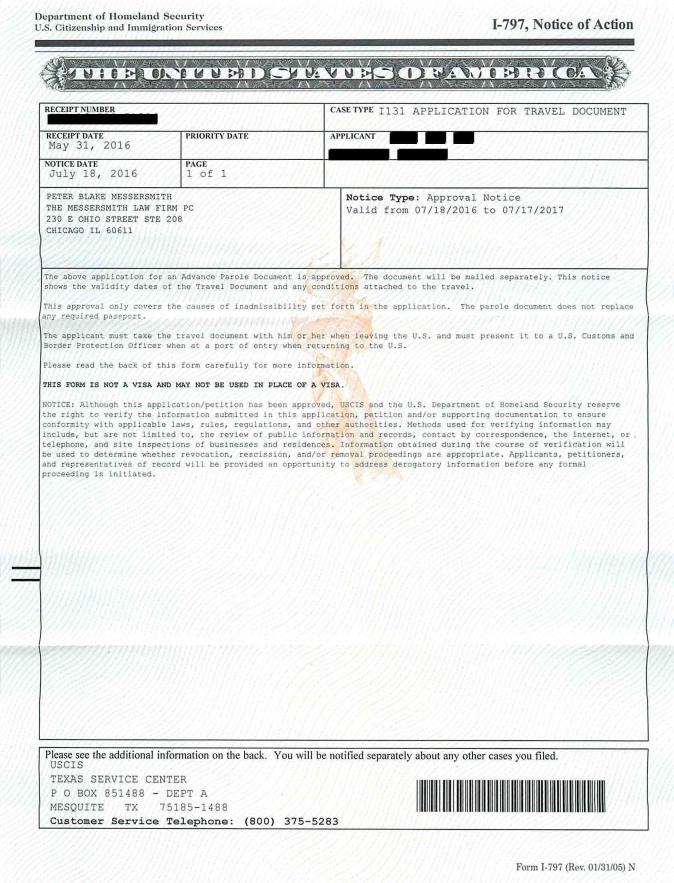
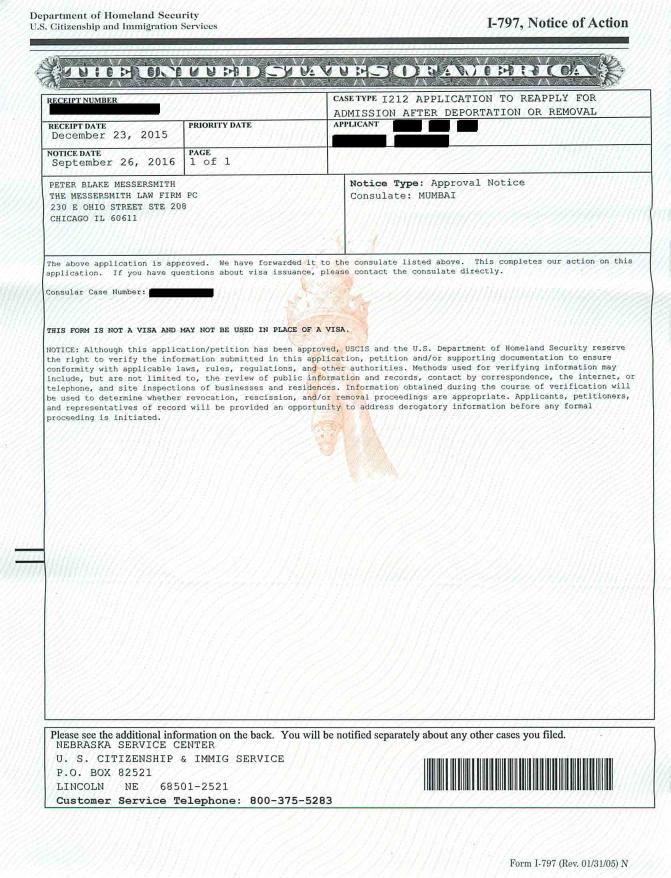
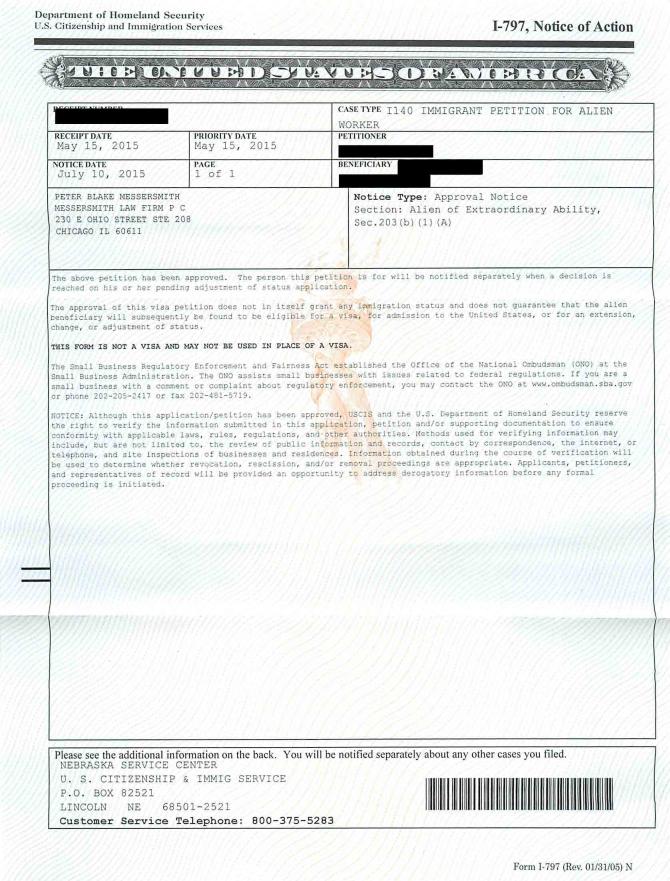
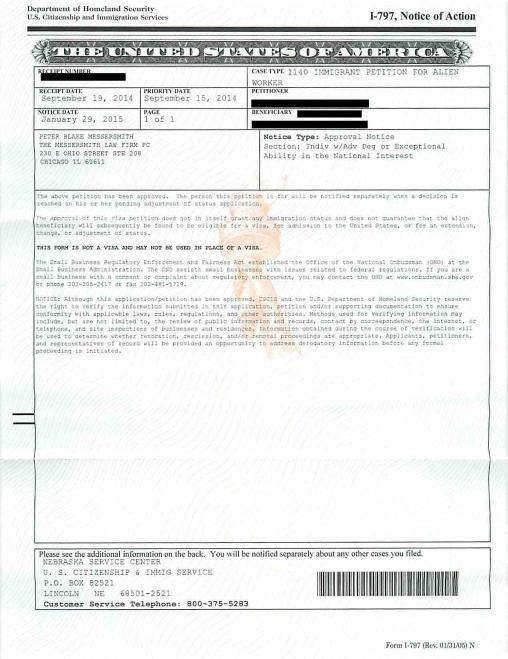
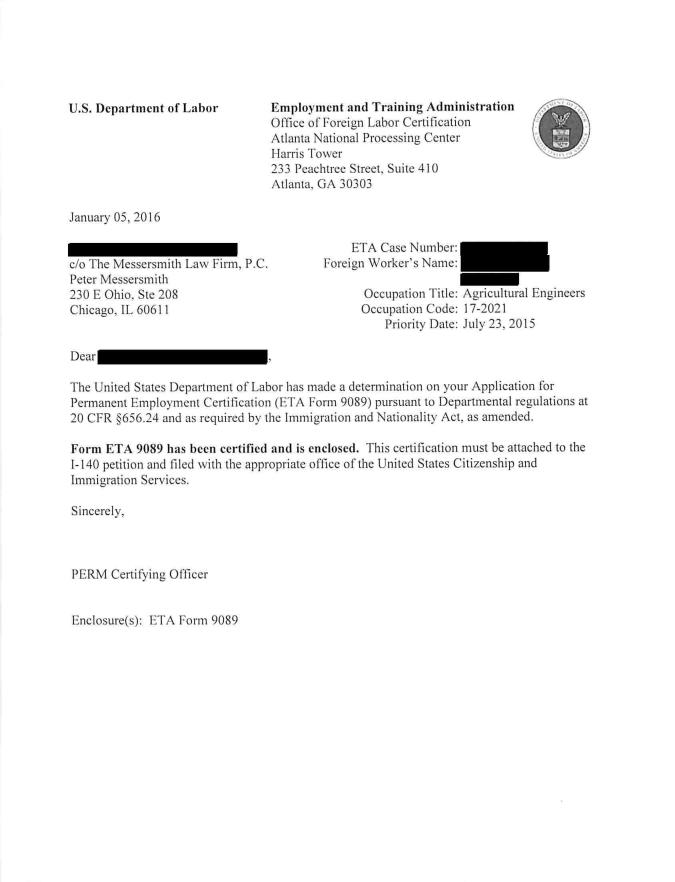
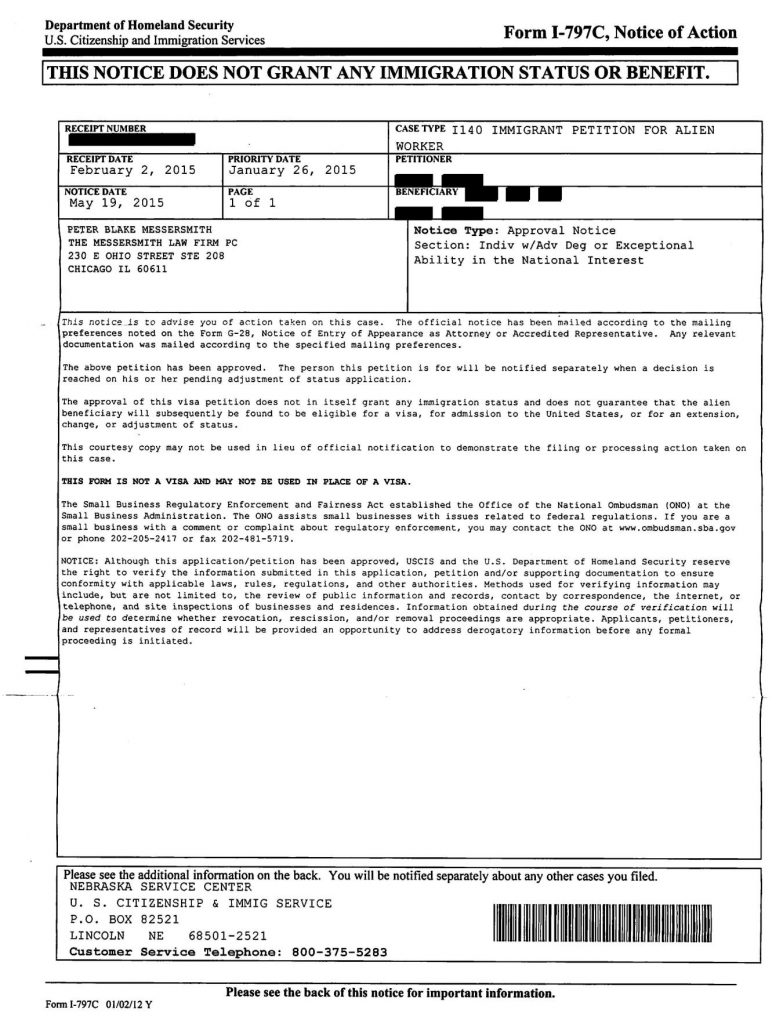
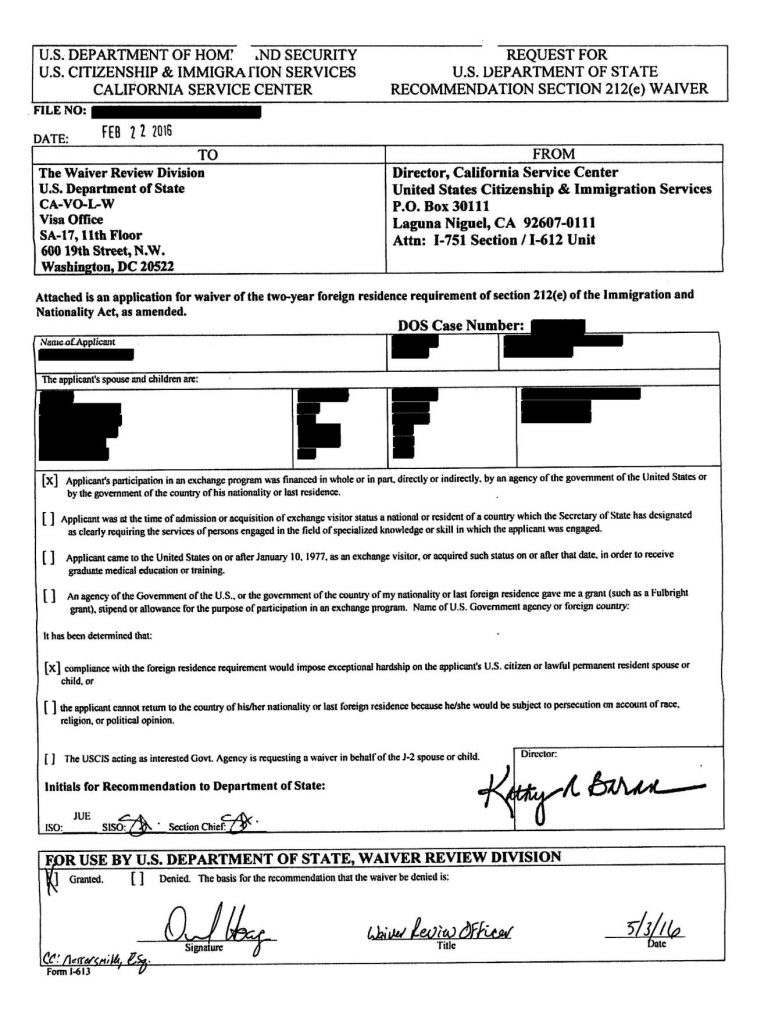
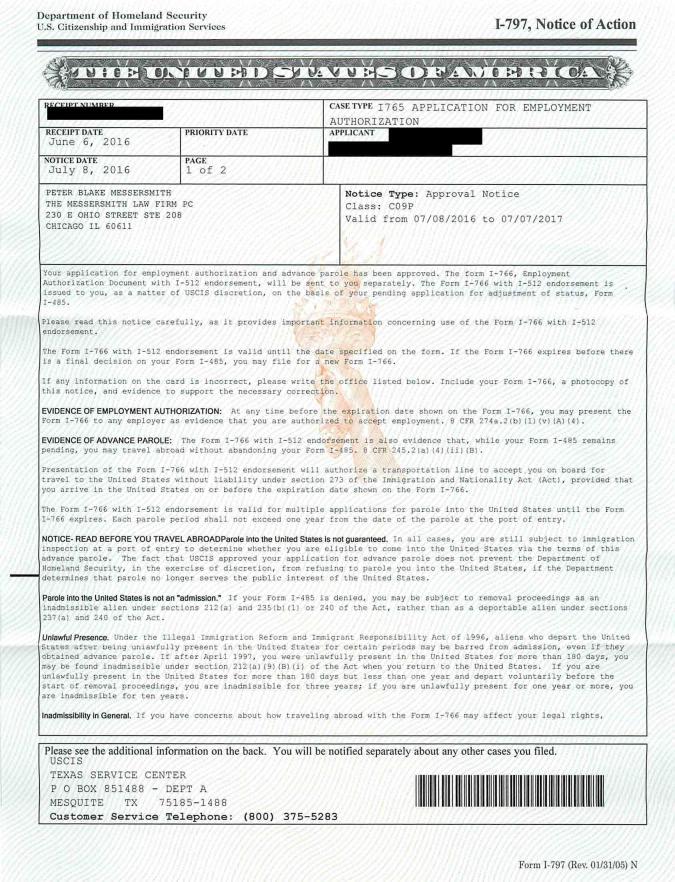
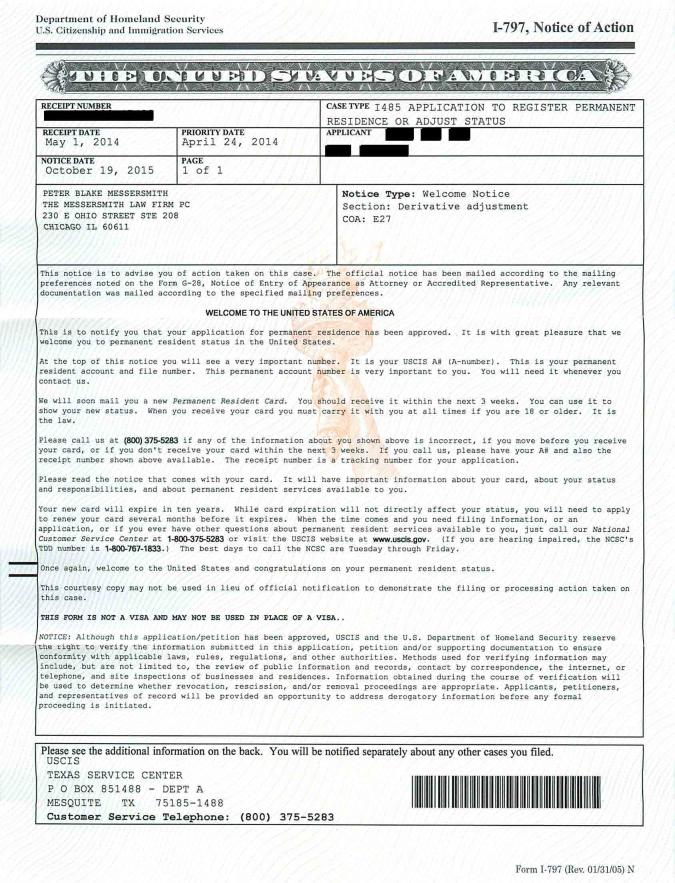
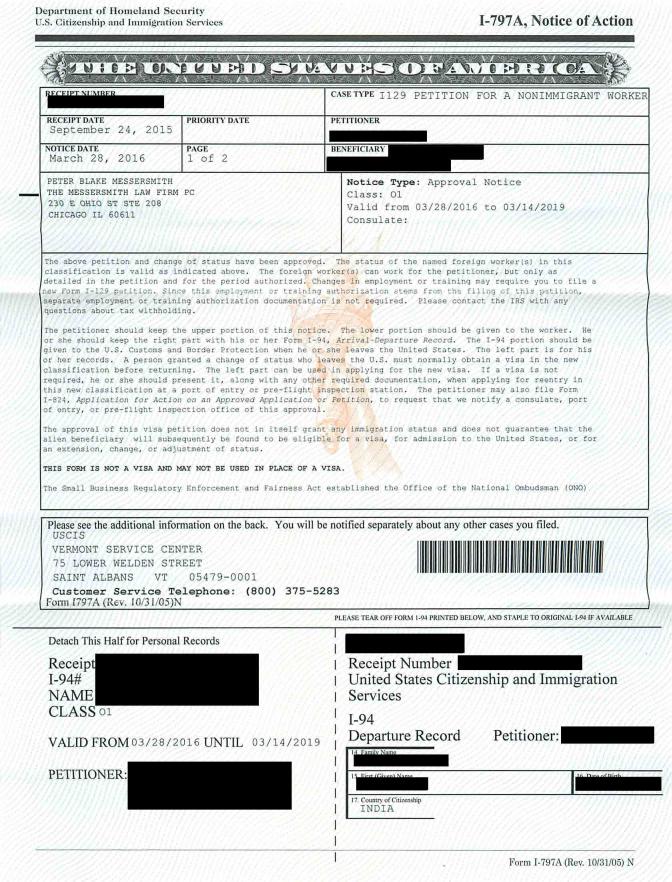
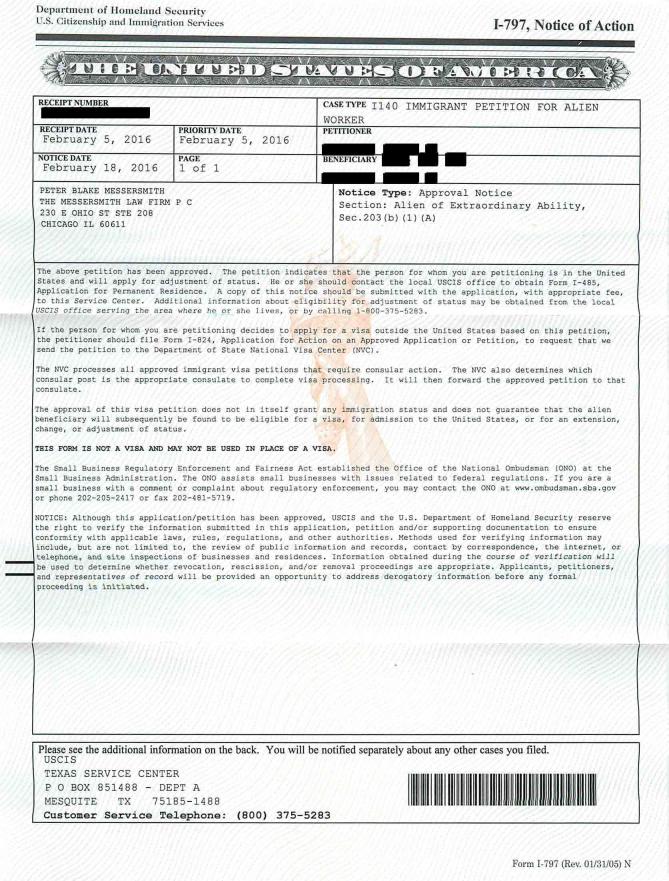
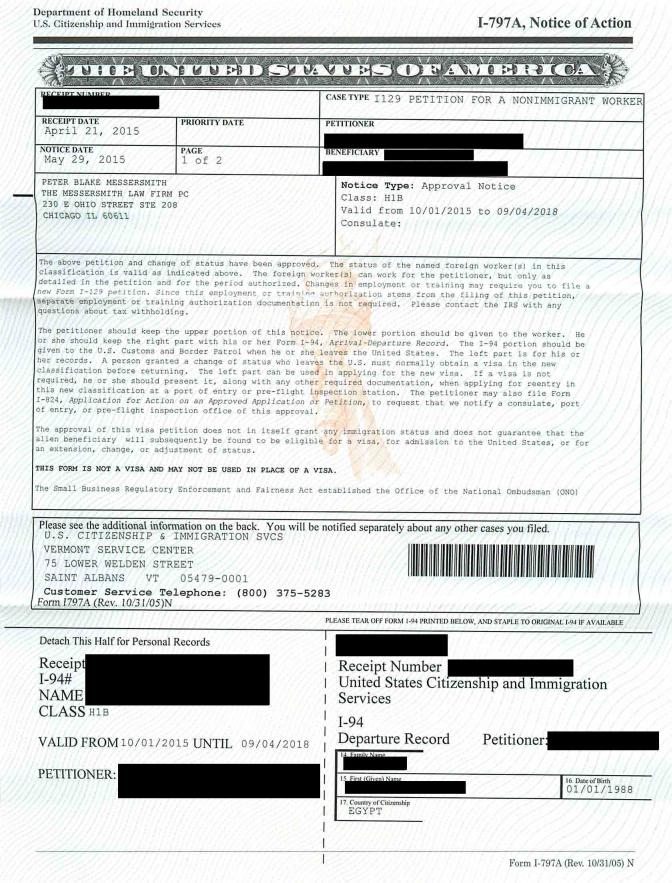
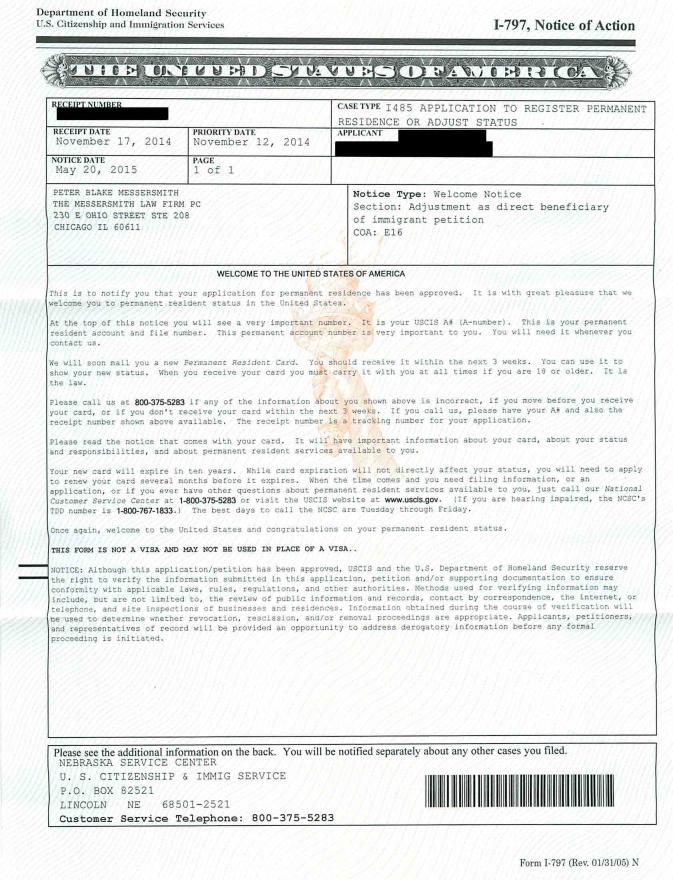
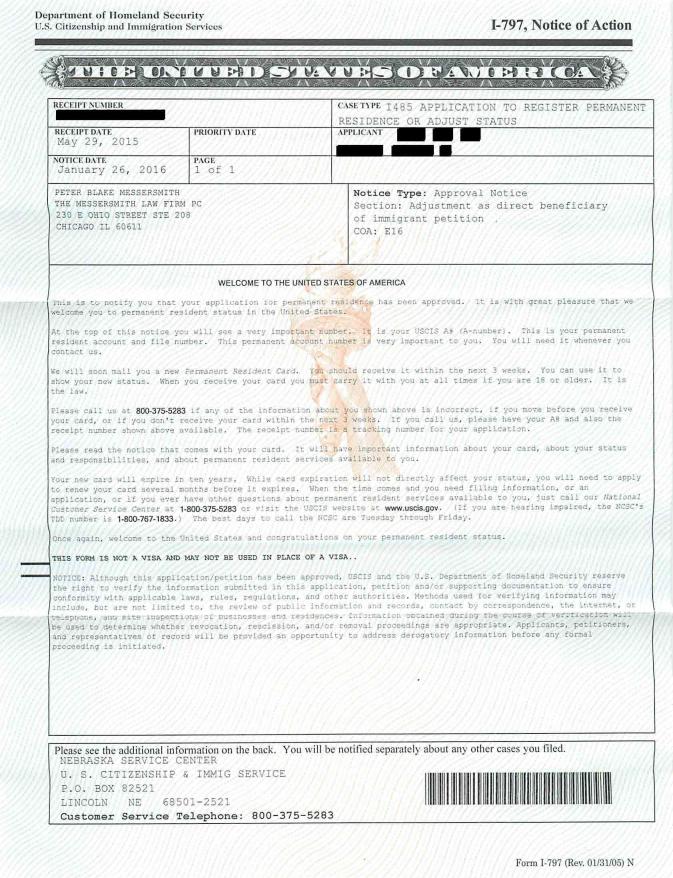
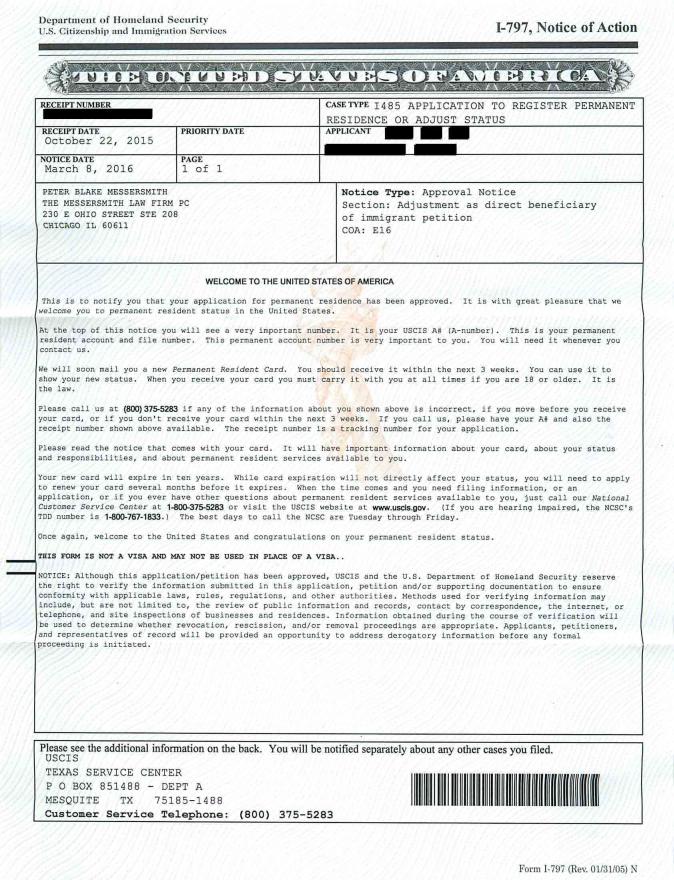
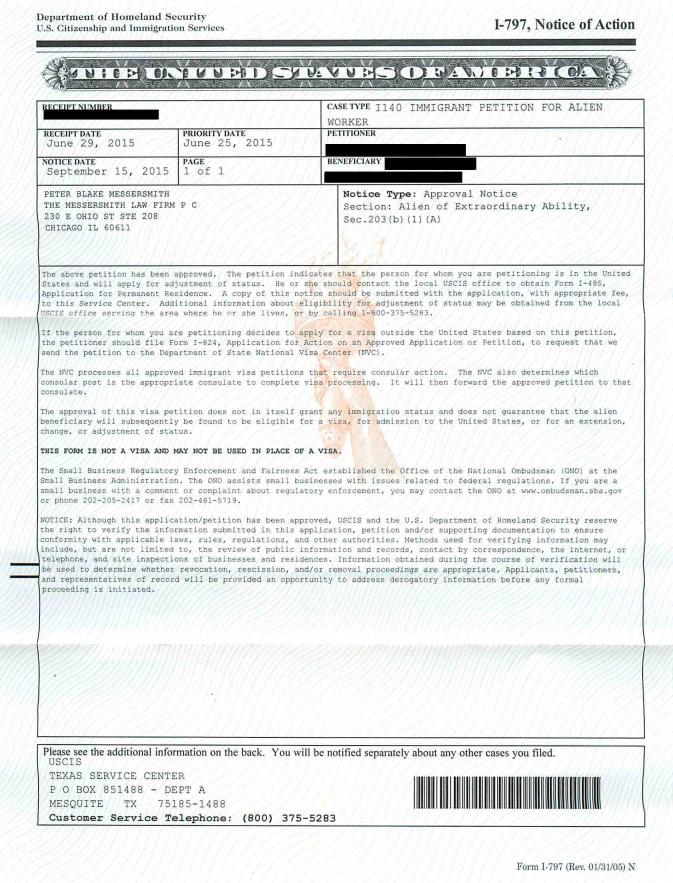
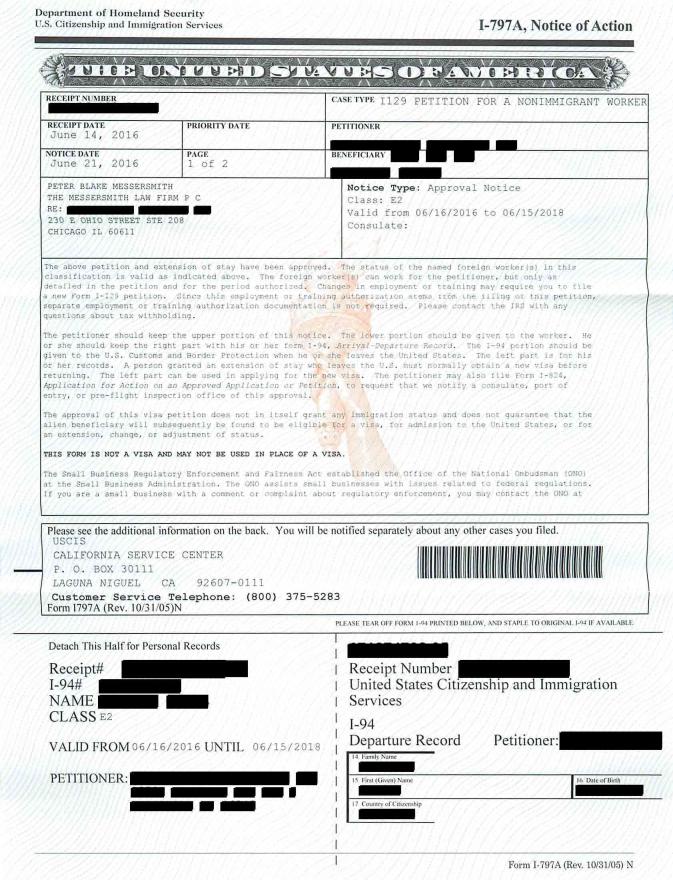
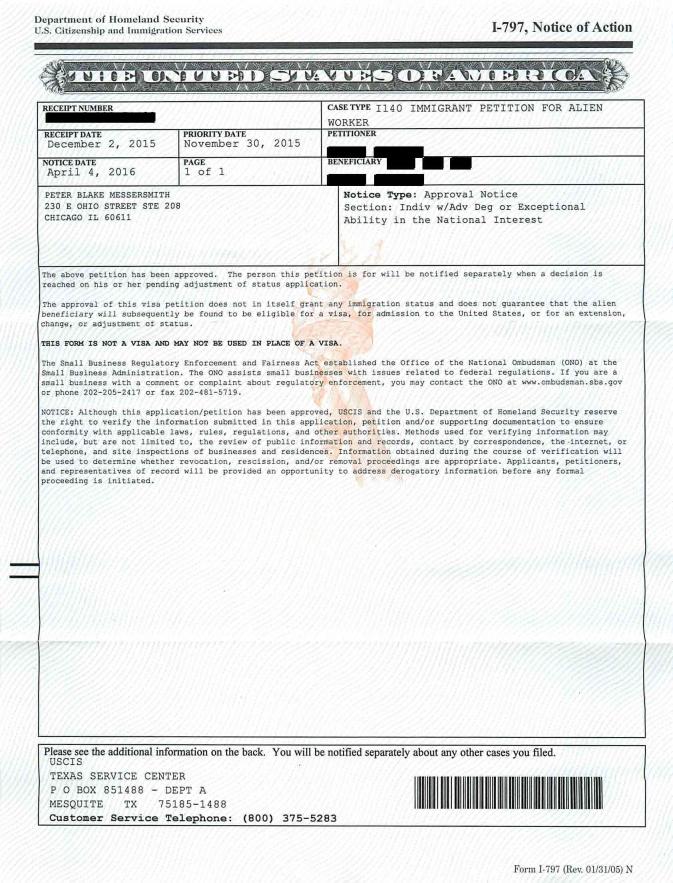
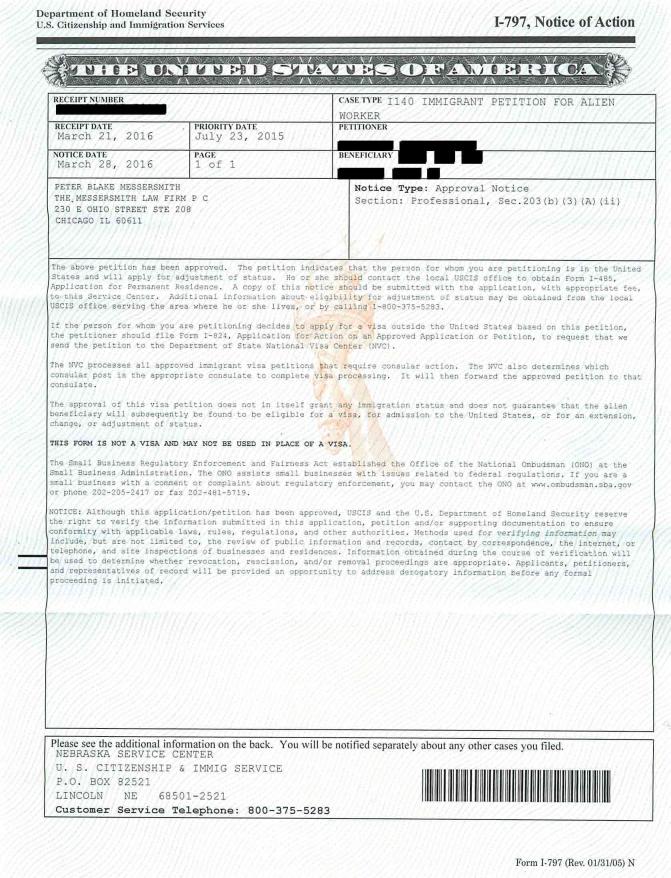
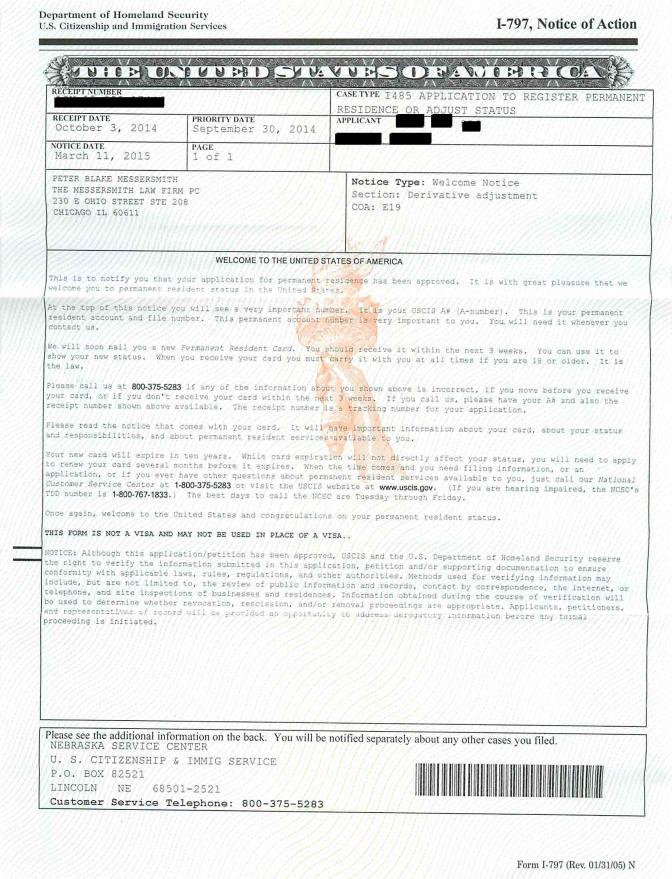
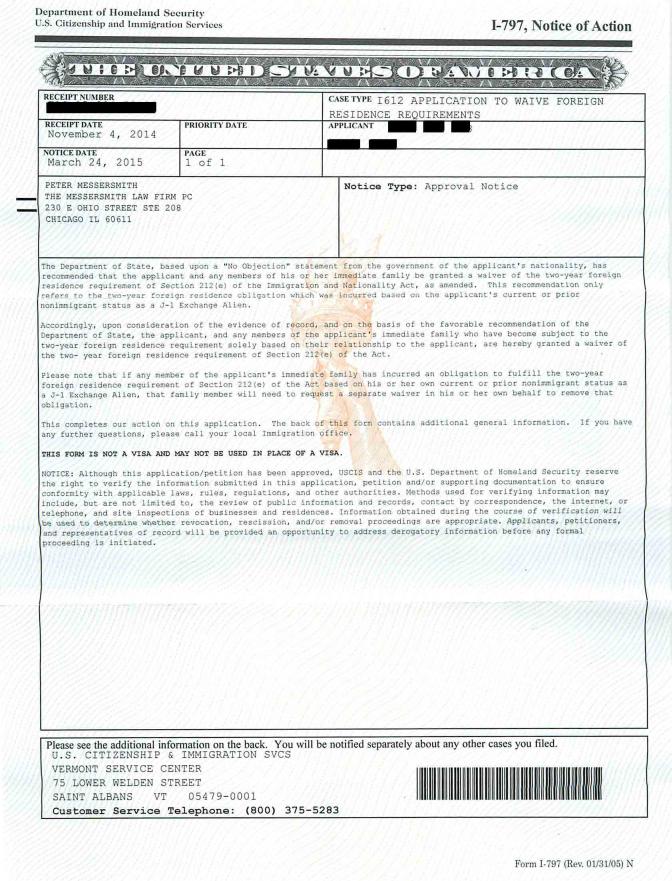
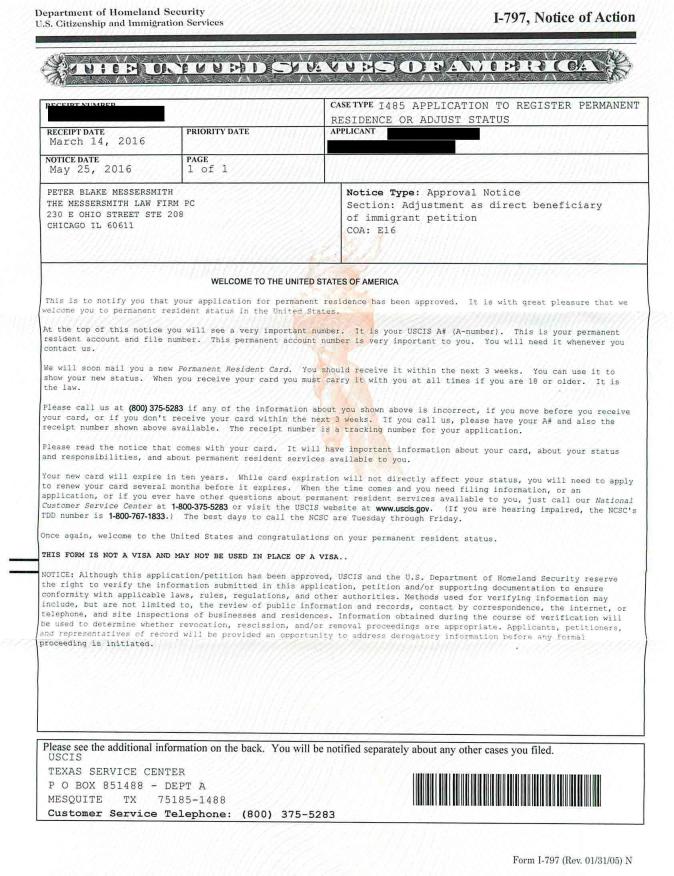
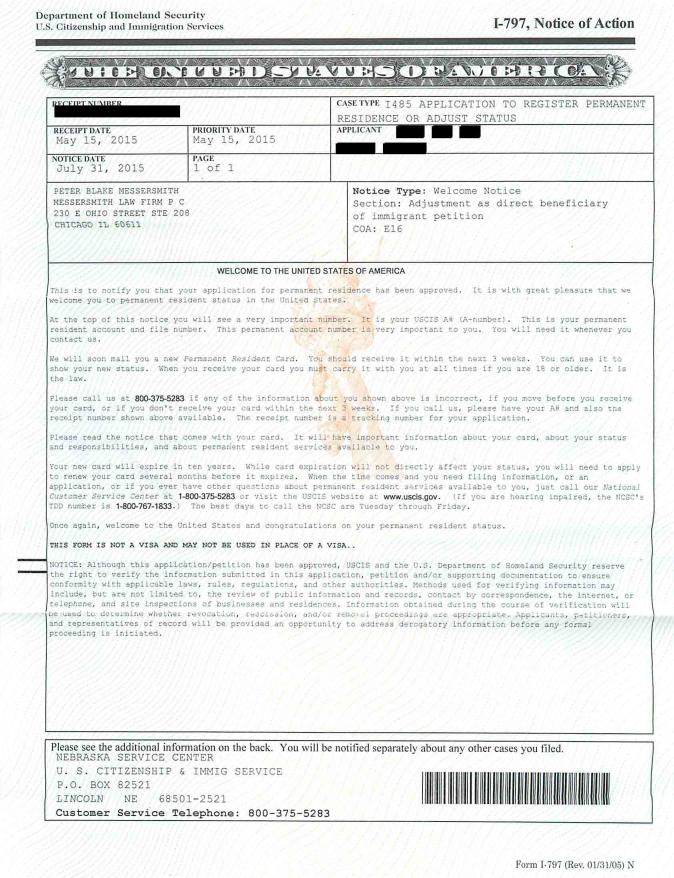
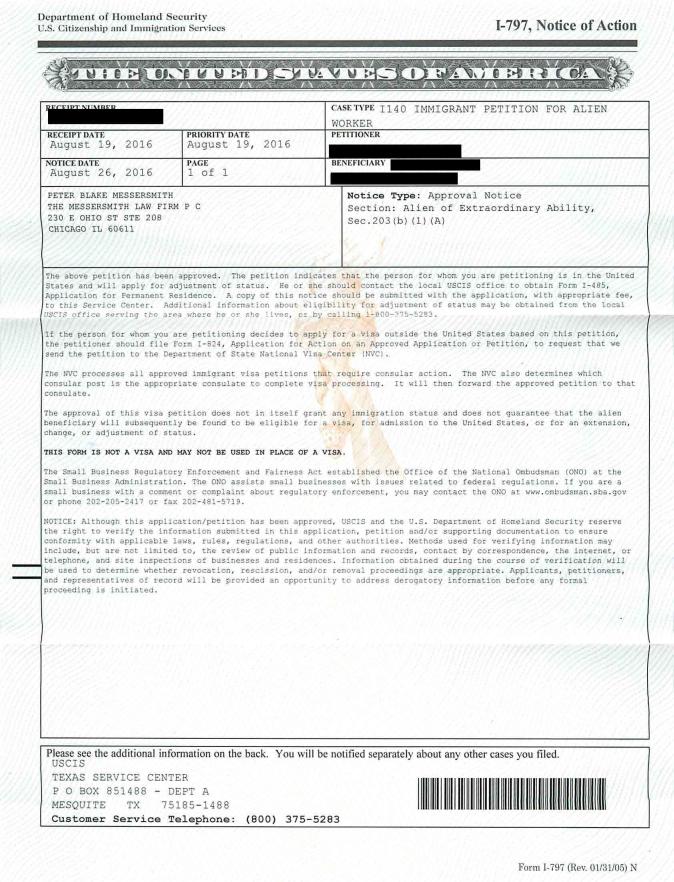
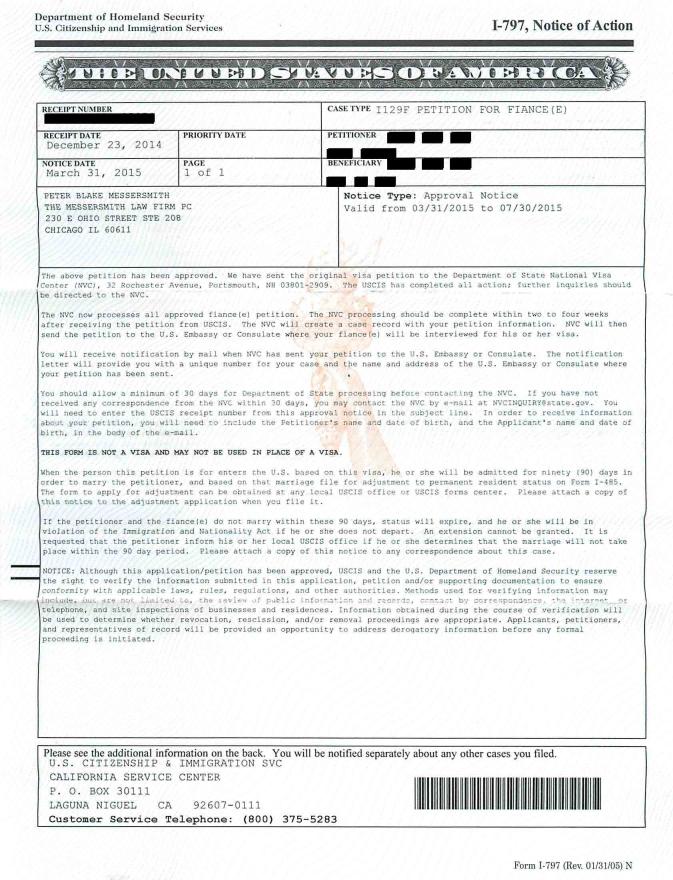
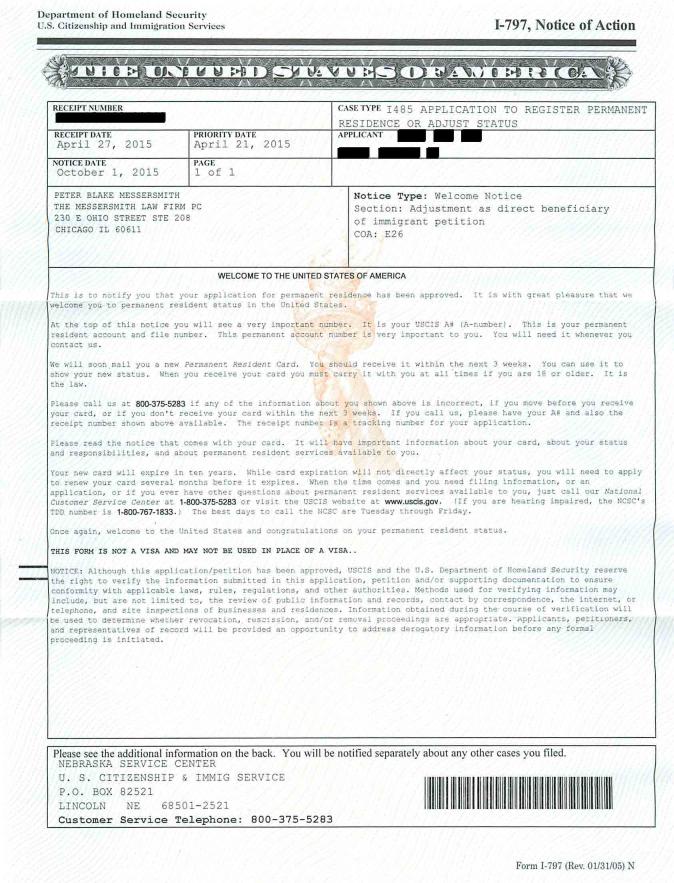
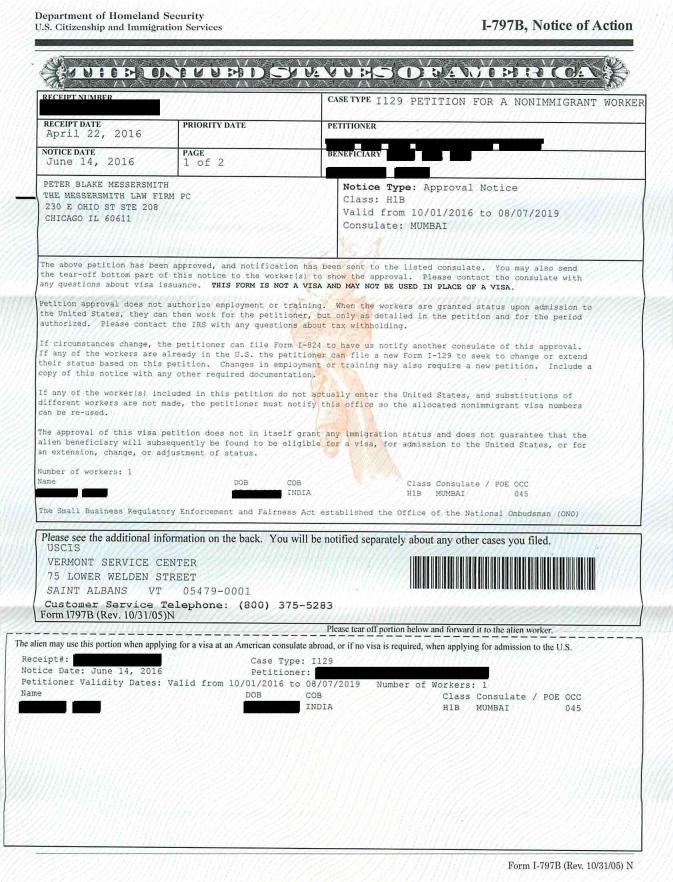
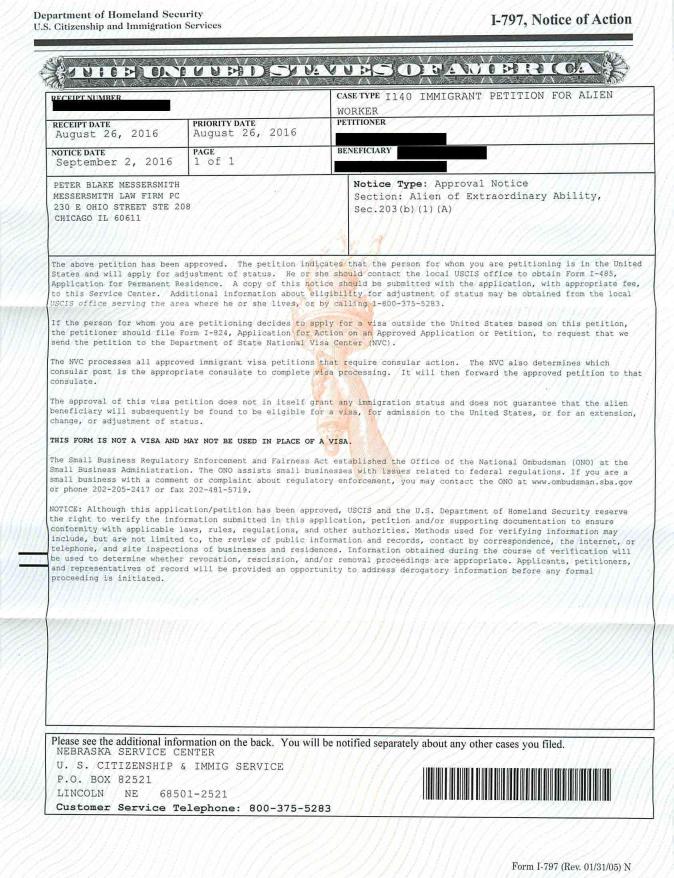
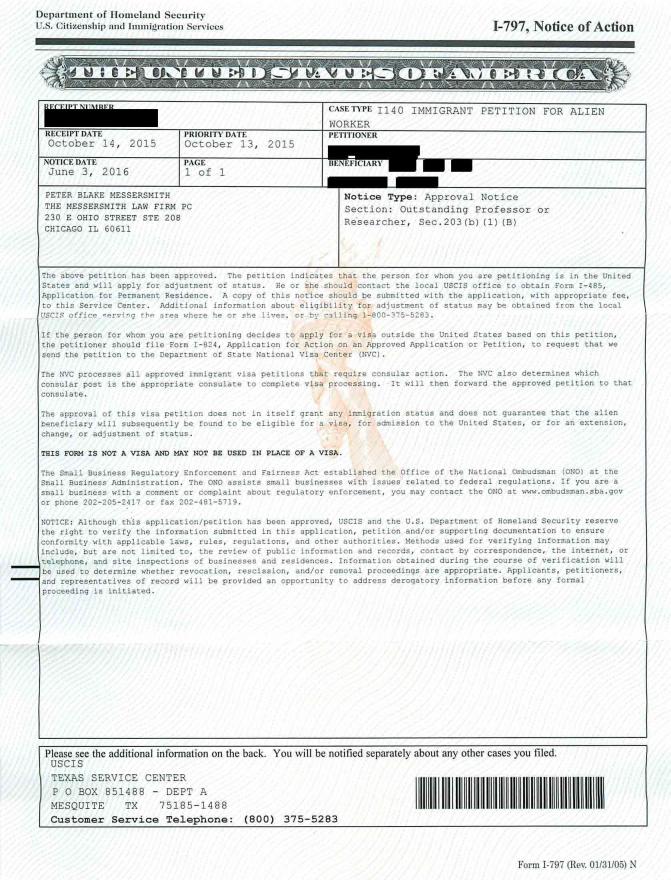
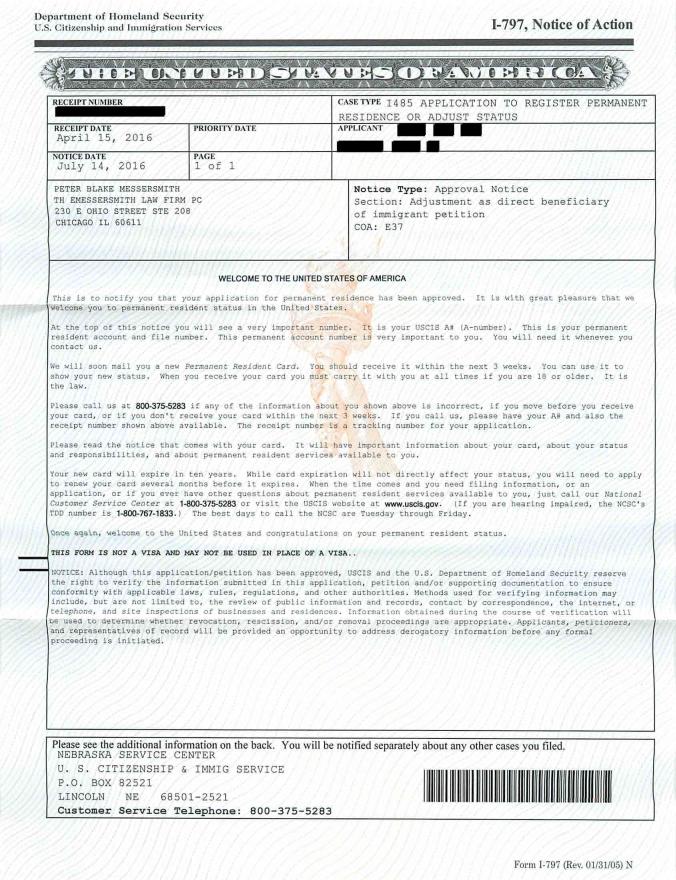
Scroll through fifty recent approval notices below or click here to view thousands.

Customer Testimonials

Real Testimonials from Past Clients