P-1 Visa — P-1A Athletes, P-1B Entertainment Groups, and P-1S Essential Support Personnel

P-1 Visa — P-1A Athletes, P-1B Entertainment Groups, and P-1S Essential Support Personnel

P-1 Visa — P-1A Athletes, P-1B Entertainment Groups, and P-1S Essential Support Personnel

People often inquire about this issue as P-1 visa, P1 visa, P-1A visa, P-1B visa, internationally recognized athlete visa, internationally recognized entertainment group visa, P-1S essential support personnel, or P-1 visa requirements. The P-1 visa is for internationally recognized athletes, athletic teams, and members of internationally recognized entertainment groups who come to the United States to perform at a specific competition, event, tour, or production. P-1 cases also include essential support personnel who are an integral part of the performance or event and whose support services cannot be readily performed by another worker.

P-1 cases often involve individual athletes, sports teams, bands, singers, dancers, touring entertainment groups, and essential support workers connected to a specific athletic competition, concert tour, performance schedule, or production.

P1 Visa Details

The P1 visa is designated for entertainers, circus artists, and athletes who are coming to the US temporarily to perform at a specific competition or event. An athlete who wishes to remain in the US for a longer period of time should apply for an O1 visa.

Entertainers, circus artists, and athletes who wish to qualify for the visa must show two of the following:

  • A written consultation by an appropriate labor organization;
  • Significant participation in a prior season with a major United States sports league;
  • Participation in international competition with a national team;
  • Significant participation in a prior season for a US college or university in intercollegiate competition;
  • A written statement from an official of the governing body of the sport which details how the alien or team is internationally recognized;
  • A written statement from a member of the sports media or a recognized expert in the sport which details how the alien or team is internationally recognized;
  • The individual or team is ranked, if the sport has international rankings; or
  • The alien or team has received a significant honor or award in the sport.

Spouses and children of the P1 visa holder may obtain a P4 visa to enter and remain in the US. The P4 visa holder may attend school but if he or she wishes to work, he or she must change his or her status to obtain a work visa.

For Whom Is an P1 Visa Appropriate?

  • Internationally recognized athletes or athletic teams entering the US to participate in an event of international standing
  • Entertainers and entertainment companies recognized internationally as outstanding to tour the US or participate in events
  • Distinguished circus artists who wish to work in the US

P1 Visa Requirements

A P1 classification applies to an alien who is coming temporarily to the United States:

  1. To perform at a specific athletic competition as an athlete, individually or as part of a group or team, at an internationally recognized level of performance, or
  2. To perform with, or as an integral and essential part of the performance of, an entertainment group that has been recognized internationally as being outstanding in the discipline for a sustained and substantial period of time, and who has had a sustained and substantial relationship with the group (ordinarily for at least 1 year) and provides functions integral to the performance of the group.

P-1 visa requirements

To qualify for a P-1 visa, the petition must match the correct category from the beginning. P-1A is for internationally recognized athletes and athletic teams. P-1B is for members of internationally recognized entertainment groups. A separate support category, P-1S, is used for essential support personnel. The evidence should be organized around the correct standard for the category being requested.

P-1A visa requirements for athletes

P-1A applies to an athlete who is internationally recognized and is coming to the United States temporarily to perform at a specific athletic competition, as an athlete with a foreign team or franchise, or as part of other qualifying athletic activity. P-1A may also apply to an athletic team that is internationally recognized. The petition should clearly explain the athlete’s record of achievement and the specific competition, season, event, or tour in the United States.

P-1B visa requirements for entertainment groups

P-1B applies to a member of an entertainment group that has been internationally recognized as outstanding for a sustained and substantial period of time. In most cases, at least 75 percent of the members must have had a sustained and substantial relationship with the group for at least one year. The petition should be built around the group’s recognition, the group’s history, and the beneficiary’s qualifying role in the group.

International recognition

A strong P-1 case usually depends on showing international recognition through awards, rankings, media coverage, major competitions, distinguished events, major contracts, critical reviews, chart success, box office success, or other category-appropriate evidence. The petition should show why the athlete or group is recognized at a high level and why the U.S. activity fits that reputation.

Specific athletic competition, event, tour, or production

The petition should be tied to a specific competition, season, event, performance schedule, tour, or production in the United States. Dates, venues, competitions, contracts, and itineraries should line up clearly with the requested classification and period of stay.

P-1S essential support personnel

Essential support personnel are classified separately as P-1S. These workers must be an integral part of the performance of a P-1 athlete or entertainment group and must perform support services that cannot readily be performed by a U.S. worker. Support cases should explain exactly what the worker does and why that role is essential to the athlete, team, or group.

Petition filing and supporting documents

A P-1 petition is generally filed by a U.S. employer, a U.S. sponsoring organization, a U.S. agent, or a foreign employer through a U.S. agent, depending on the structure of the case. Supporting documents often include contracts, itineraries, media coverage, awards, rankings, expert letters, and consultation materials where required.

P-4 family members

The spouse and unmarried children under 21 of a P-1 beneficiary may accompany or follow to join in P-4 status.

P-1 visa for athletes, entertainment groups, and essential support personnel

The P-1 visa is used for athletes, athletic teams, entertainment groups, and essential support workers coming to the United States for specific competitions, tours, performances, events, or productions. The petition should clearly match the correct category and explain why the athlete, group, or support worker qualifies for that classification.

P-1 visa for athletes

P-1A is commonly used for individual athletes who are internationally recognized and are coming to the United States for a specific competition, season, event, or other qualifying athletic activity. The petition should describe the athlete’s record of achievement, the level of recognition in the sport, and the exact competition or event in the United States.

P-1 visa for sports teams

P-1A may also be used for athletic teams with an internationally recognized reputation. Team cases should explain the team’s achievements, league or competition level, media recognition, and the specific schedule or events that support the request for classification.

P-1 visa for entertainment groups

P-1B is used for members of entertainment groups that have been internationally recognized as outstanding for a sustained and substantial period of time. These cases often involve bands, musical groups, dance groups, performance groups, and other touring entertainment organizations. The petition should describe the group’s history, achievements, recognition, and the beneficiary’s role within the group.

P-1 visa for singers, bands, dancers, and performers

Many P-1B cases involve singers, bands, dancers, and other performers coming to the United States for concerts, tours, live appearances, or performance schedules. The petition should explain the group’s international recognition and connect that record to the planned U.S. performances.

Internationally recognized athlete or entertainment group

A strong P-1 case should clearly show why the athlete or group is internationally recognized. Common evidence may include awards, rankings, major contracts, media coverage, critical reviews, reputation in the field, participation in distinguished events, and other proof of recognition at a high level.

Specific competition, event, tour, or production

The petition should be tied to a specific athletic competition, season, event, concert tour, performance schedule, or production in the United States. Dates, venues, contracts, and itineraries should line up with the requested stay and the role of the athlete, group, or support worker.

P-1S essential support personnel

Essential support personnel are classified separately as P-1S. These workers must be an integral part of the athlete’s or entertainment group’s performance and must provide support services that cannot readily be performed by another worker. A strong support petition should describe the exact services, the worker’s prior experience with the athlete or group, and why the support role is essential.

Common P-1 support roles

Depending on the facts, P-1S cases may involve support workers connected to athletic events, tours, performances, productions, and other event-based activity. The petition should focus on the actual duties and explain why the support worker is necessary to the success of the athlete’s or group’s U.S. activity.

P-4 dependents

The spouse and unmarried children under 21 of a P-1 beneficiary may accompany or follow to join in P-4 status.

Frequently asked questions about the P-1 visa

What is the P-1 visa?

The P-1 visa is for internationally recognized athletes, athletic teams, and members of internationally recognized entertainment groups who come to the United States for a specific competition, event, tour, or production.

What is the difference between P-1A and P-1B?

P-1A is for internationally recognized athletes and athletic teams. P-1B is for members of internationally recognized entertainment groups.

Who qualifies for a P-1 visa?

A qualifying P-1 case must show international recognition in the correct category and must be tied to a specific athletic competition, event, tour, or production in the United States.

What is P-1S essential support personnel?

P-1S is the classification for essential support personnel who are an integral part of the performance of a P-1 athlete or entertainment group and whose support services cannot readily be performed by another worker.

Can a P-1 visa be used for sports teams?

Yes. P-1A may be used for athletic teams with an internationally recognized reputation.

Can a P-1 visa be used for entertainment groups?

Yes. P-1B may be used for members of an internationally recognized entertainment group that has been recognized as outstanding for a sustained and substantial period of time.

How long can P-1 status last?

P-1A athletes may be admitted for the time needed to complete the event, competition, or activity, up to 5 years initially, with extensions available. P-1B entertainment group members are generally admitted for the time needed to complete the event, tour, or activity, up to 1 year initially, with extensions available.

Can family members come with a P-1 beneficiary?

Yes. The spouse and unmarried children under 21 of a P-1 beneficiary may accompany or follow to join in P-4 status.

Can P-4 family members work in the United States?

No. P-4 dependents may study in the United States, but they may not work in P-4 status.
Who can file a P-1 petition?

A P-1 petition may be filed by a U.S. employer, a U.S. sponsoring organization, a U.S. agent, or a foreign employer through a U.S. agent, depending on the case structure.
USCIS Memo Relating to P1 VISA
DateTitleDescription
December 31, 2011Clarifying Guidance on Definition of Internationally Recognized for the P-1 ClassificationThis policy memorandum provides guidance for P-1B visa applications in regards to “internationally recognized entertainment groups.”

Top Notch Immigration Services

You will receive top notch immigration services at The Messersmith Law Firm. We guarantee personalized legal services, a high rate of success, and very reasonable fees. At The Messersmith Law Firm, you will always get more than what you pay for. While the majority of our clients are referred to our law firm, we are open to take new cases if we feel we can help you achieve your goals. We have no doubt that you will refer everyone you know to us once your case is approved! Our goal is to get your case approved in the shortest amount of time possible yet strive to keep our fees reasonable!
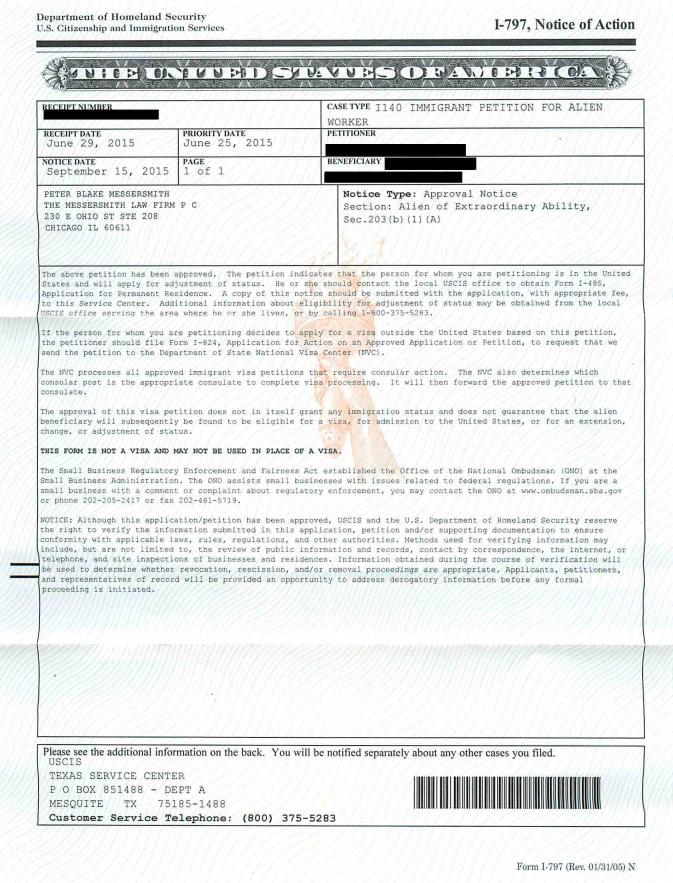
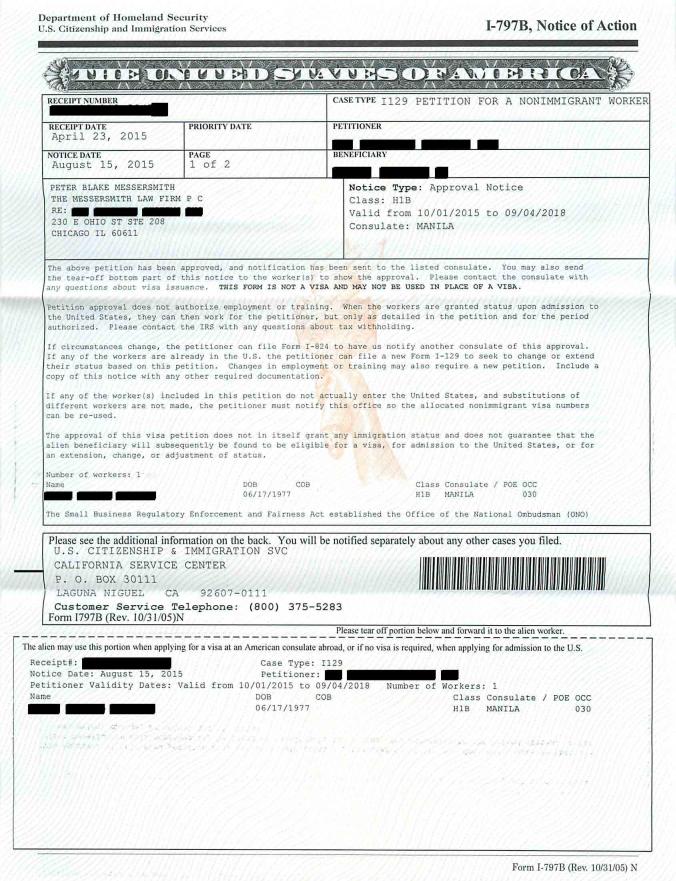
Thousands of Approved Cases

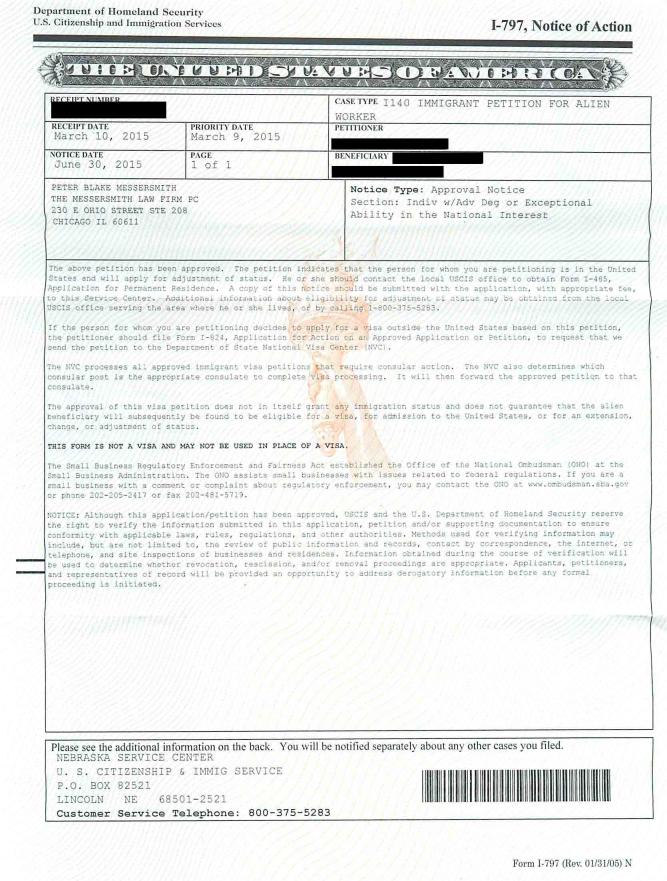
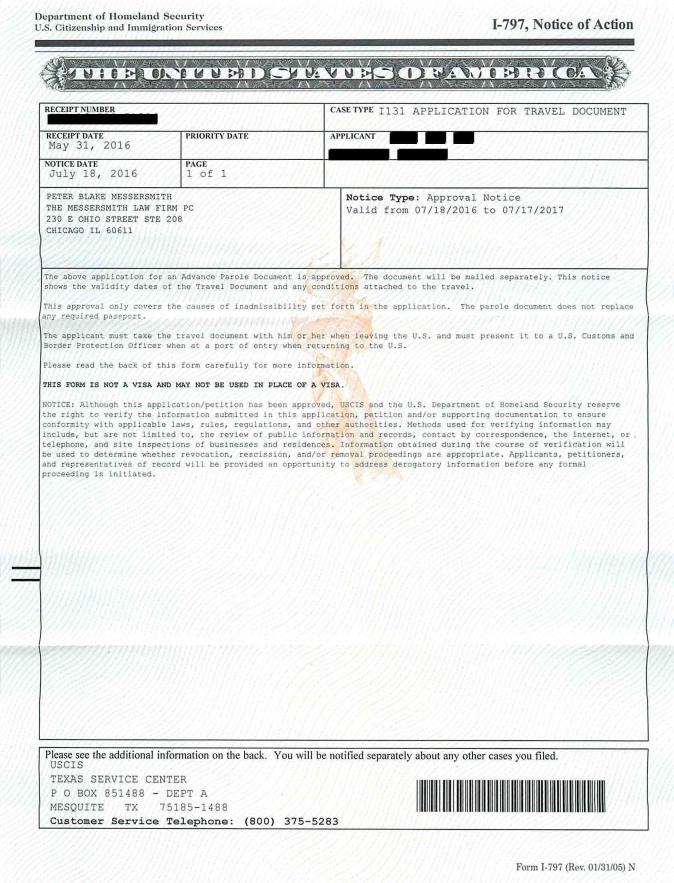
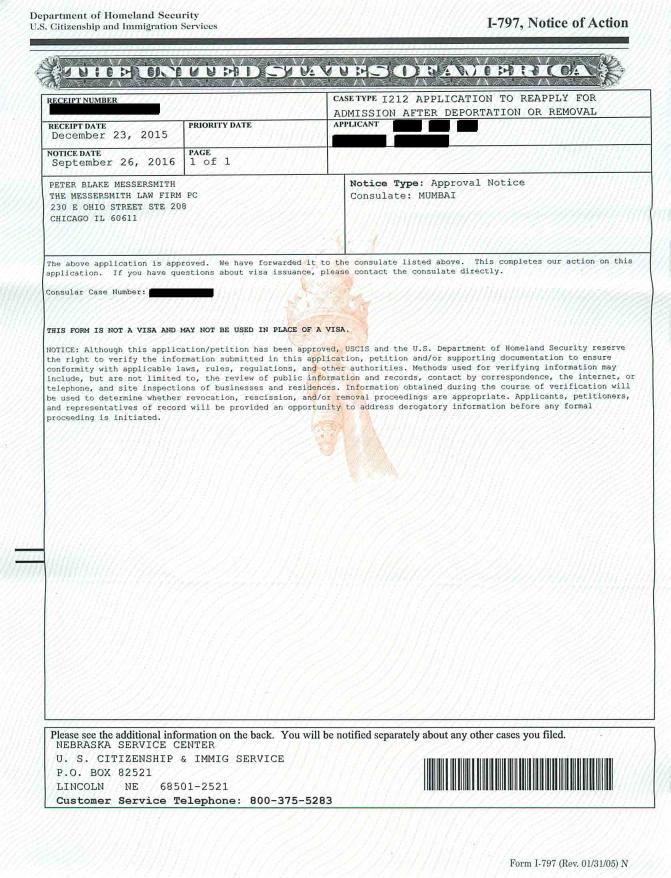
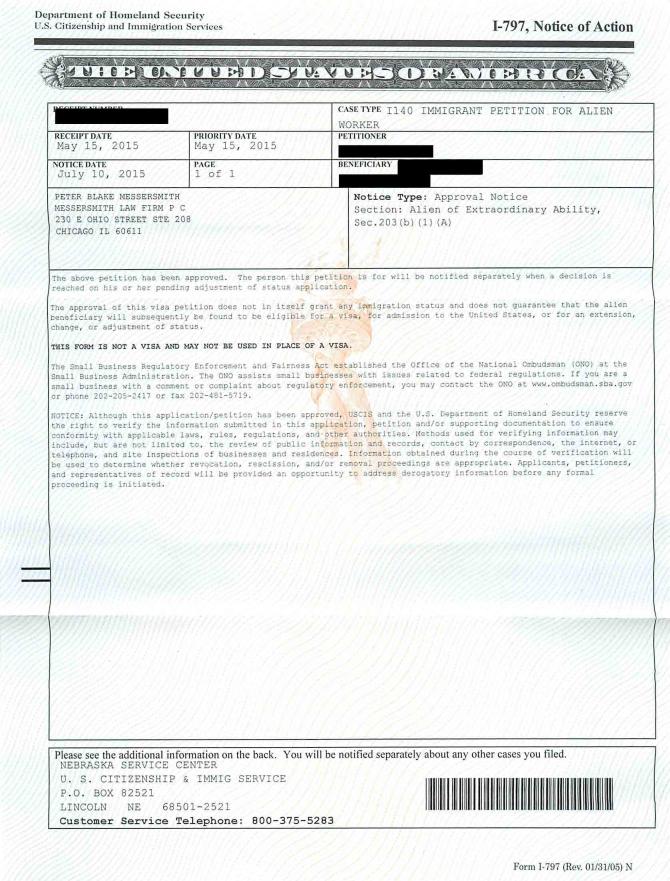
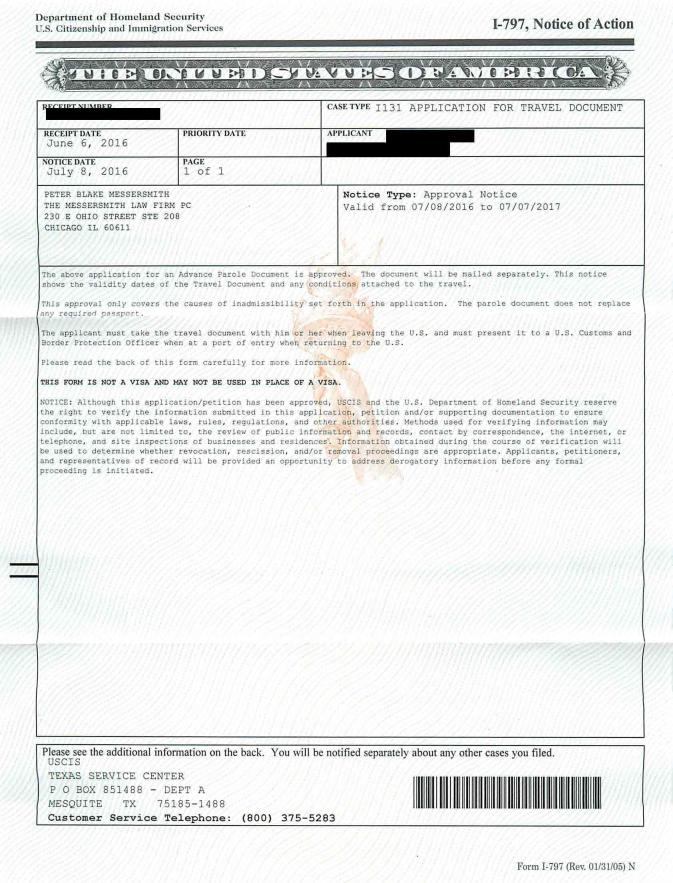
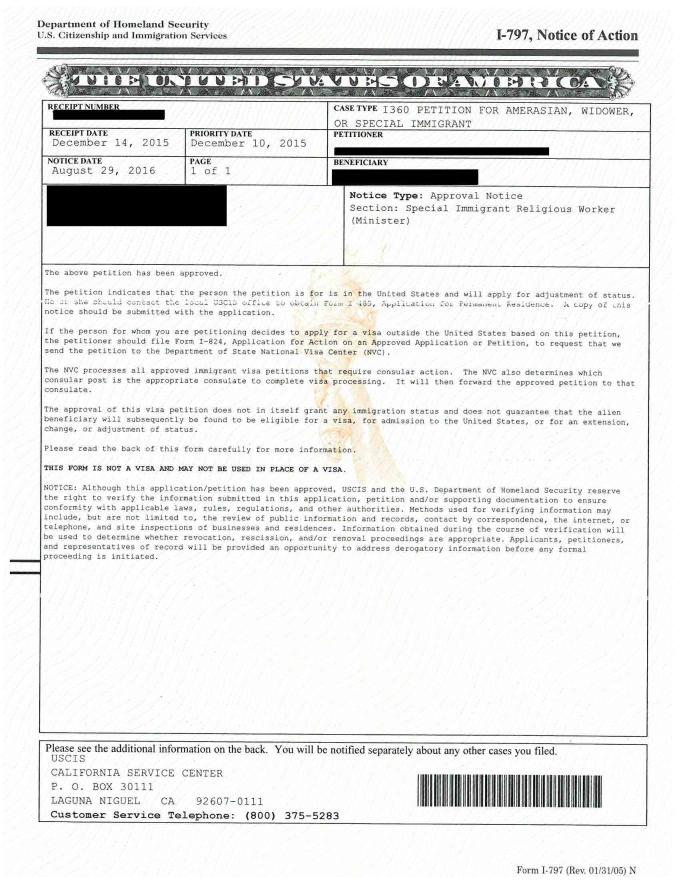
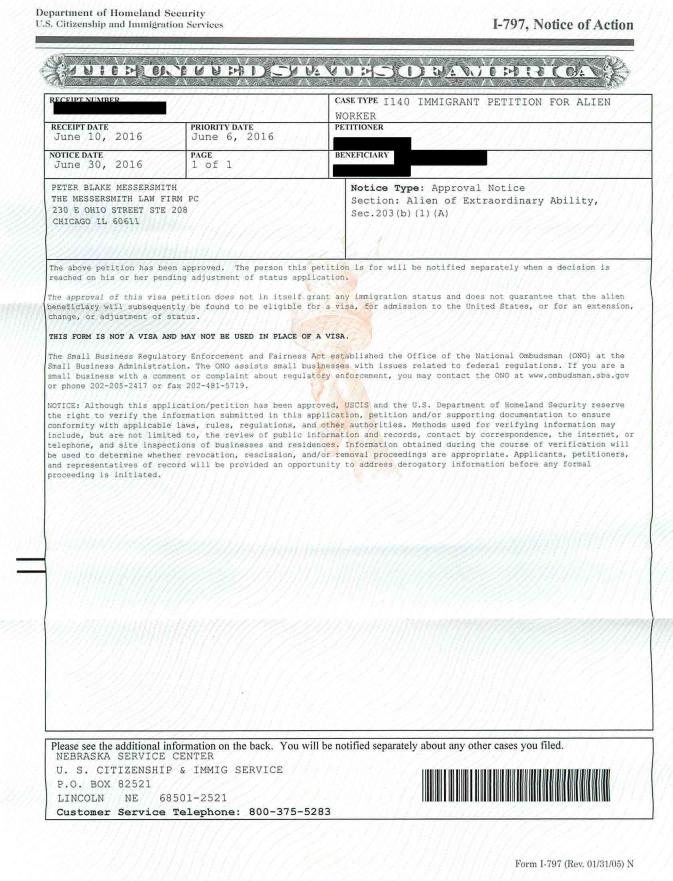
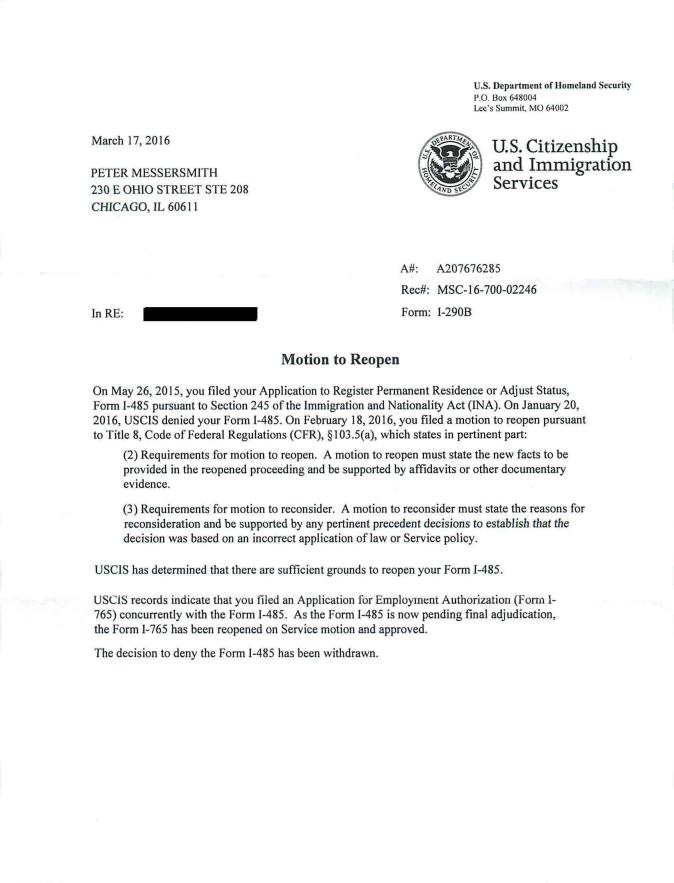
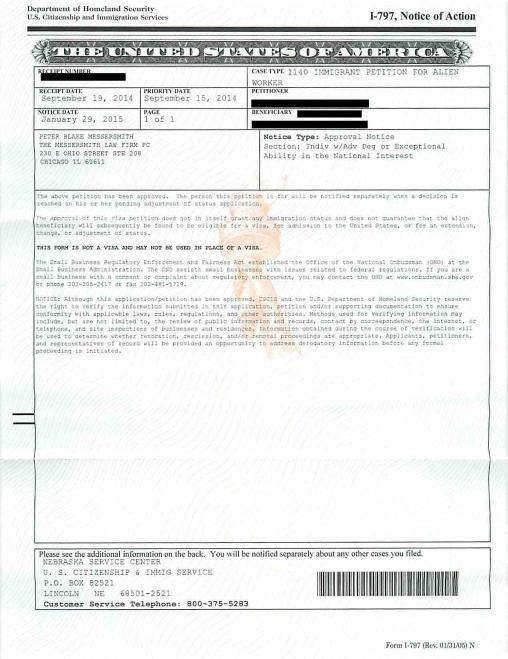
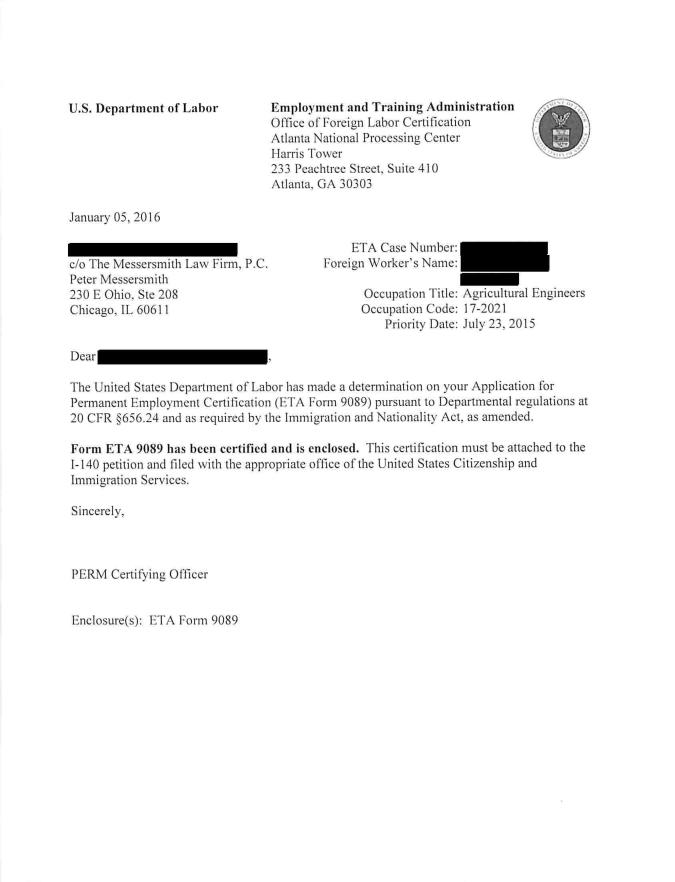
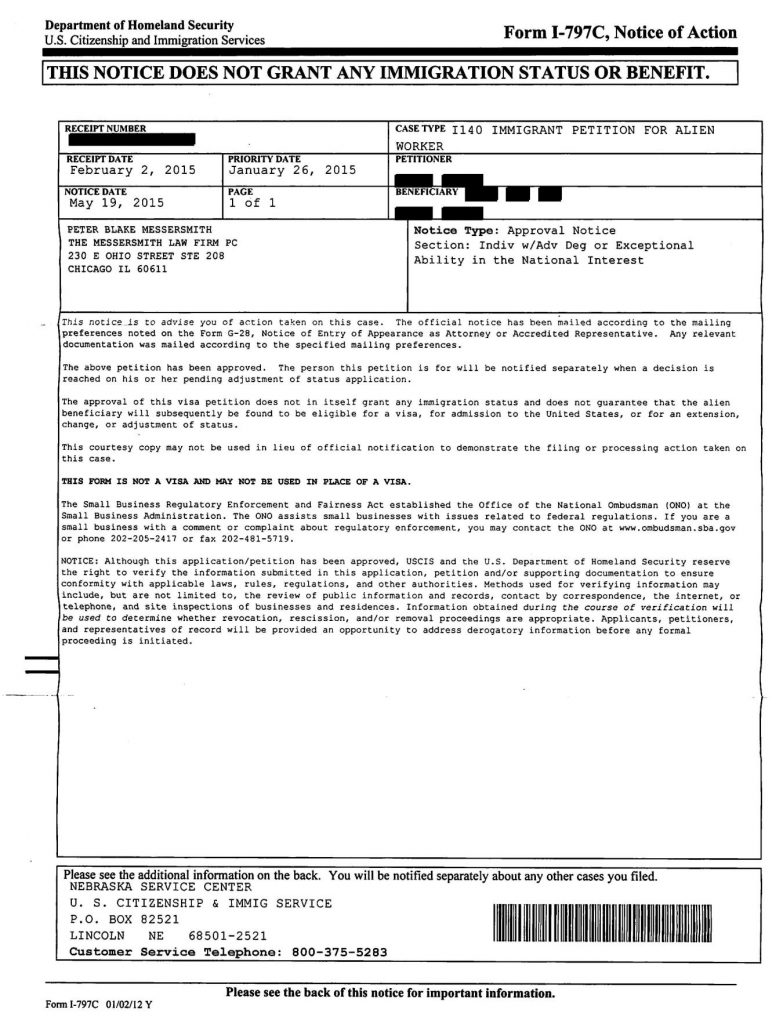
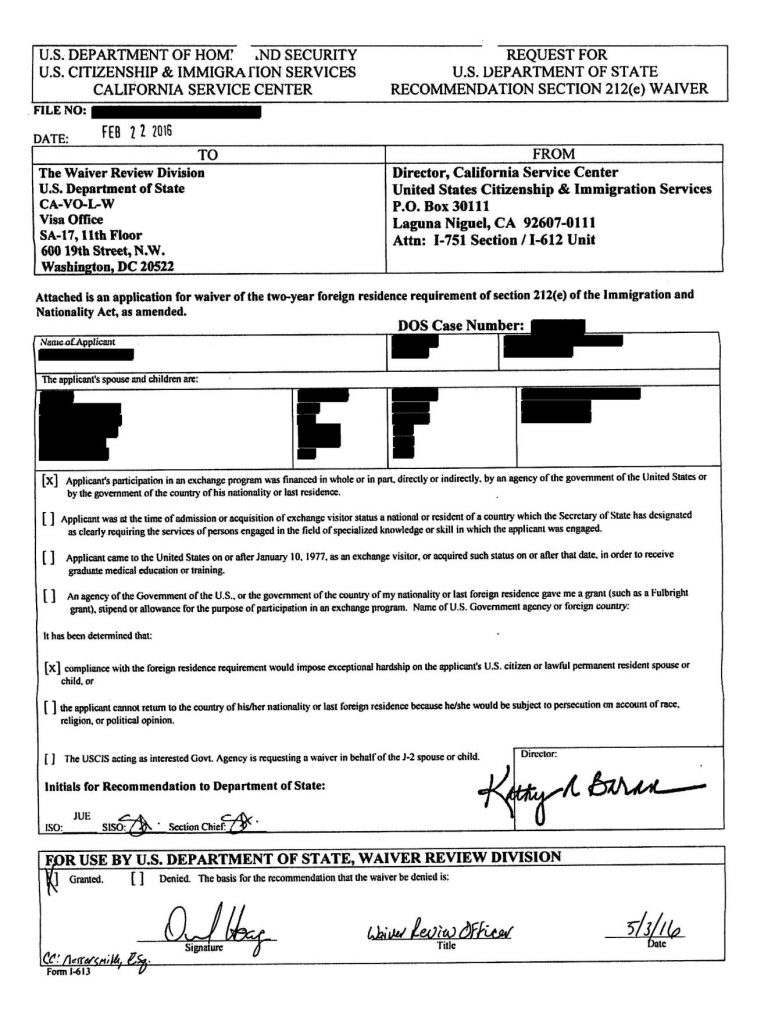
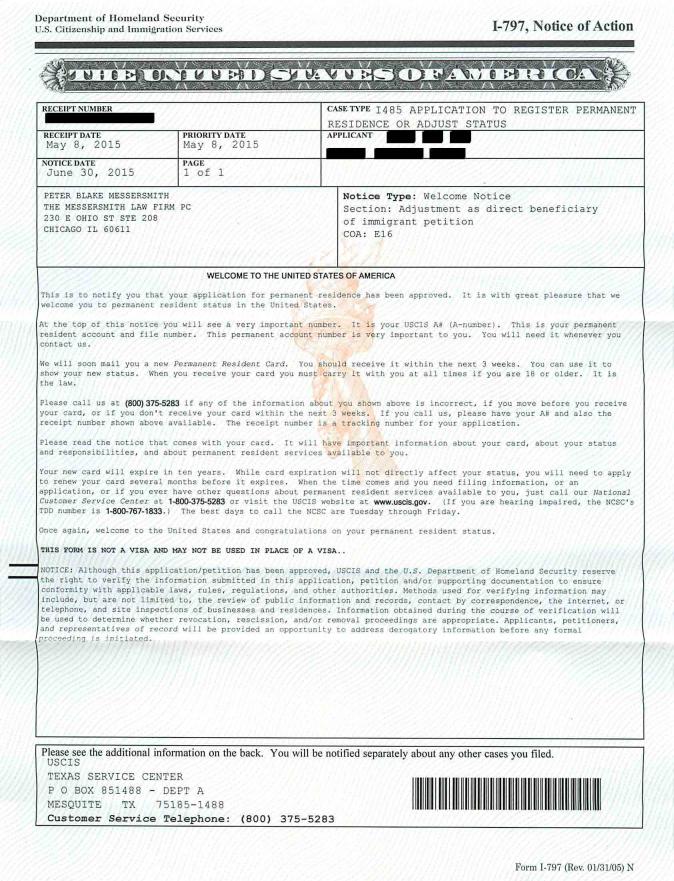
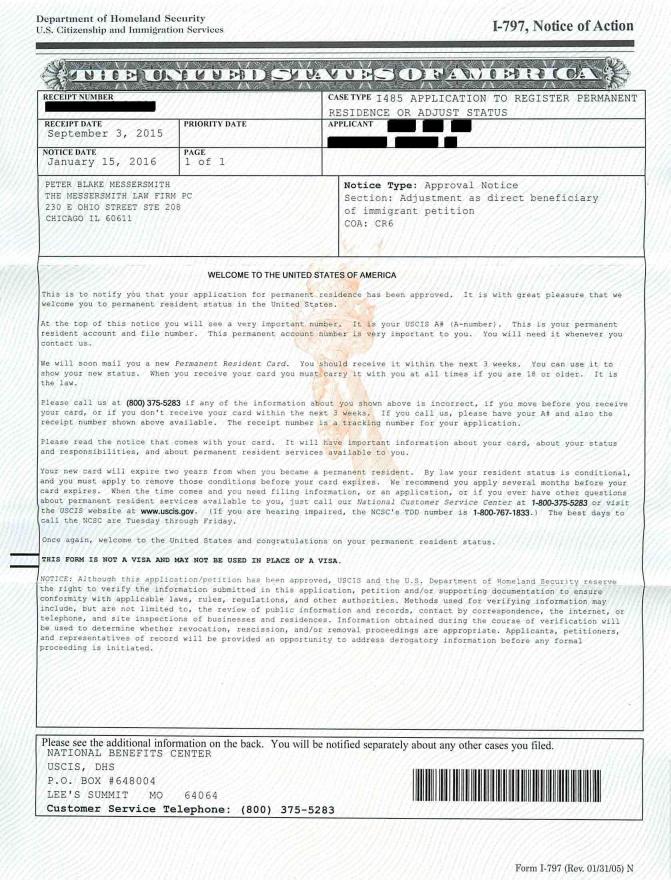
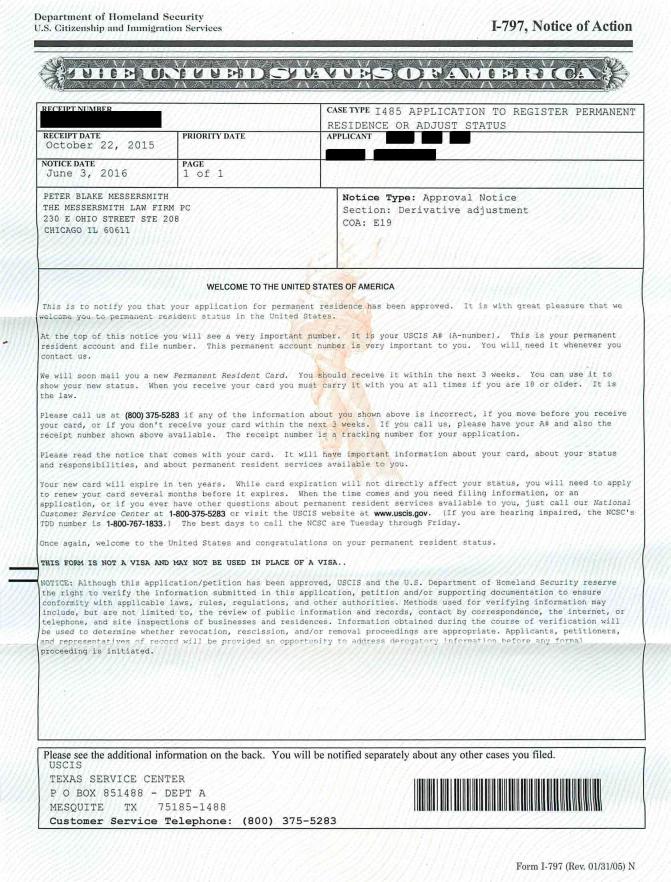
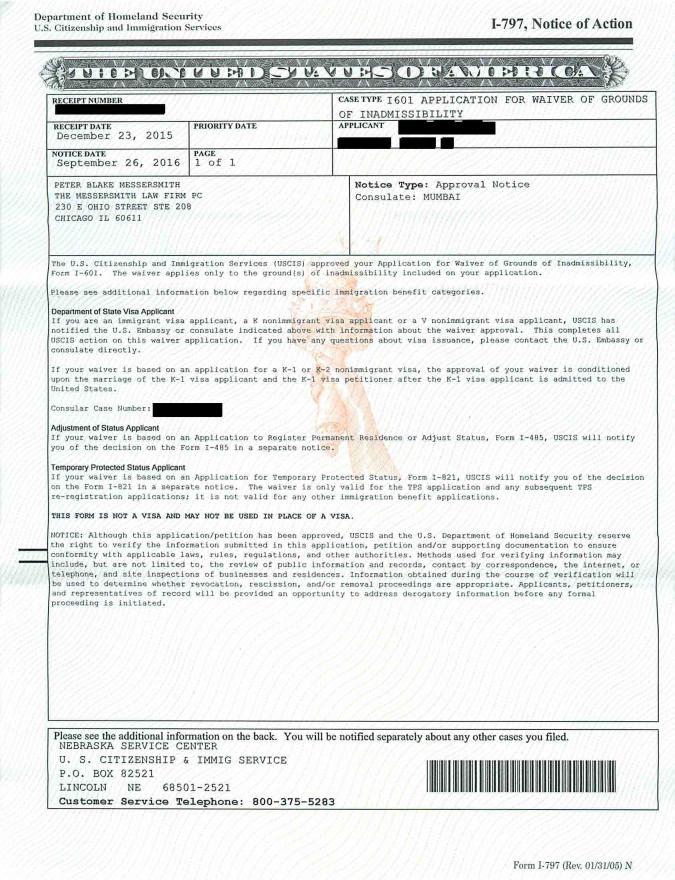
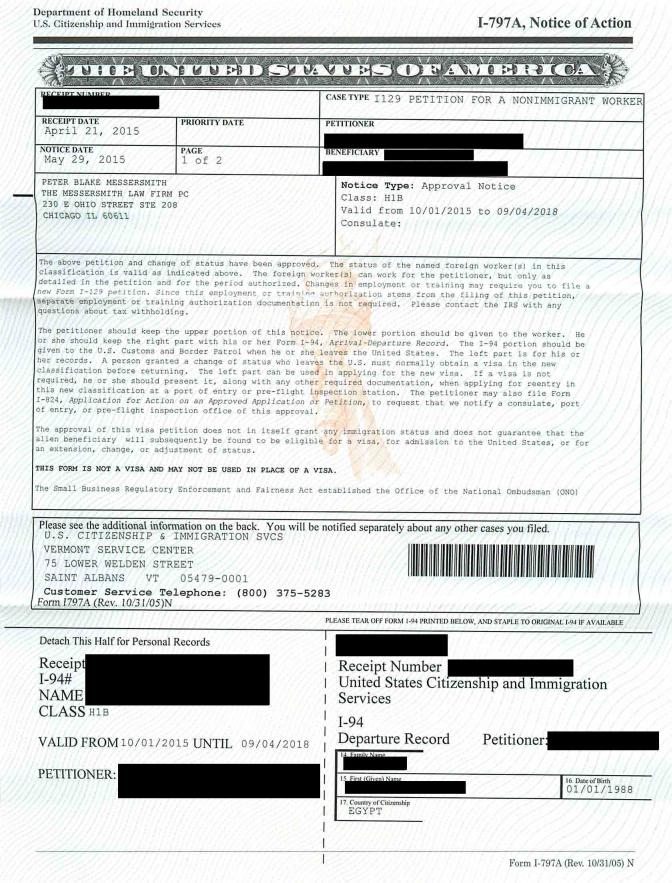
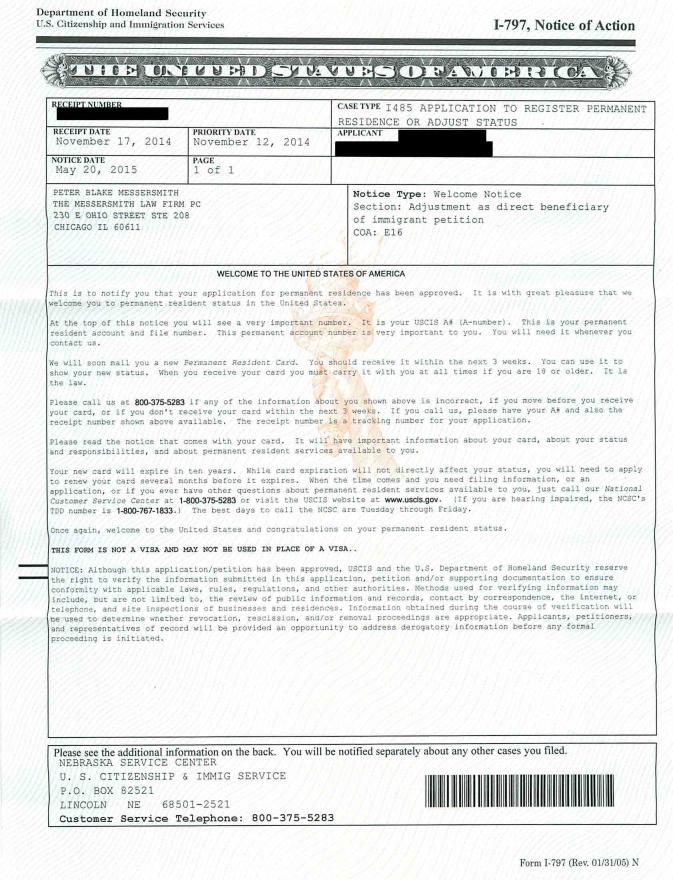
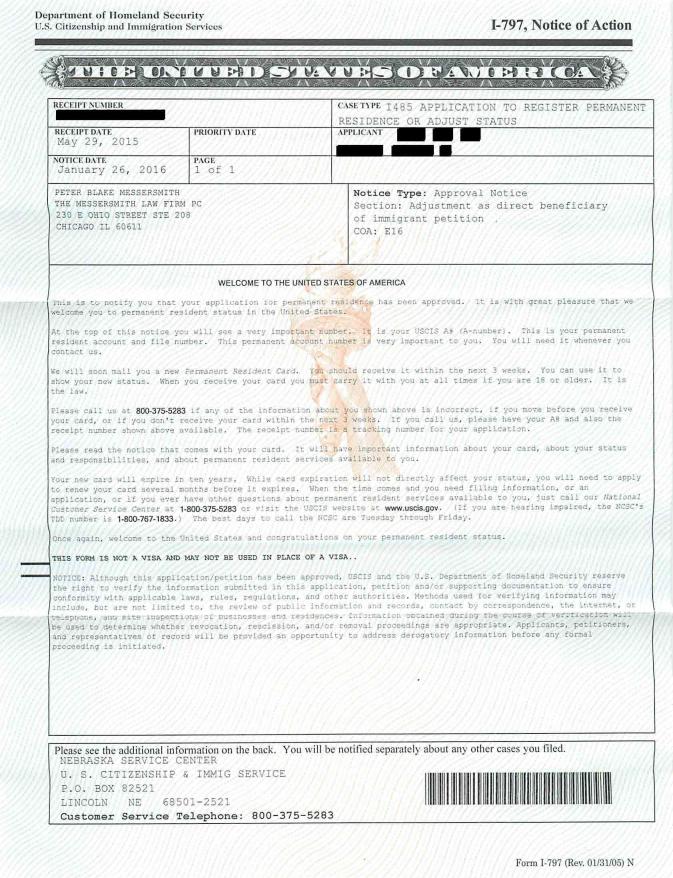
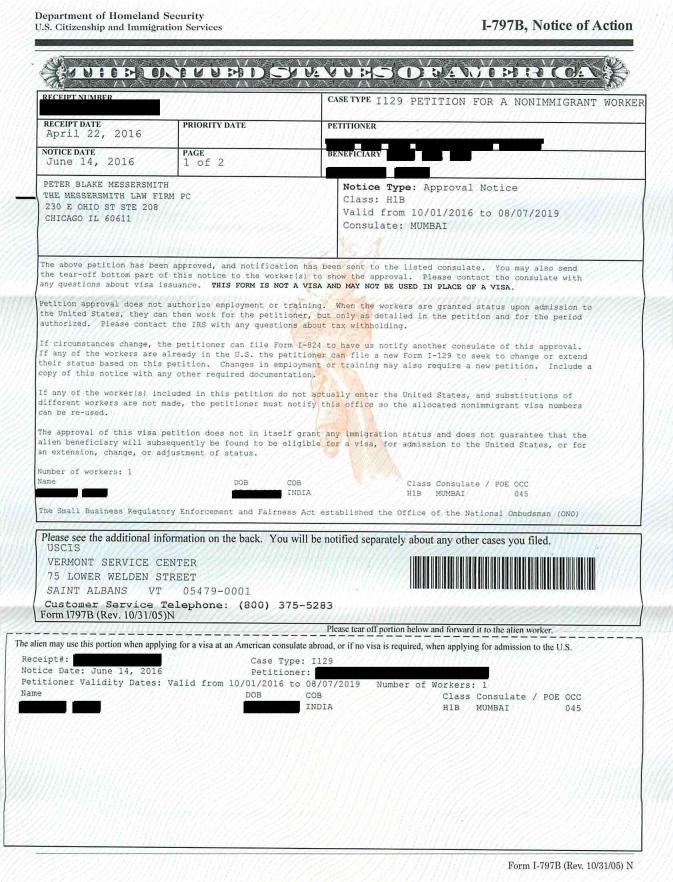
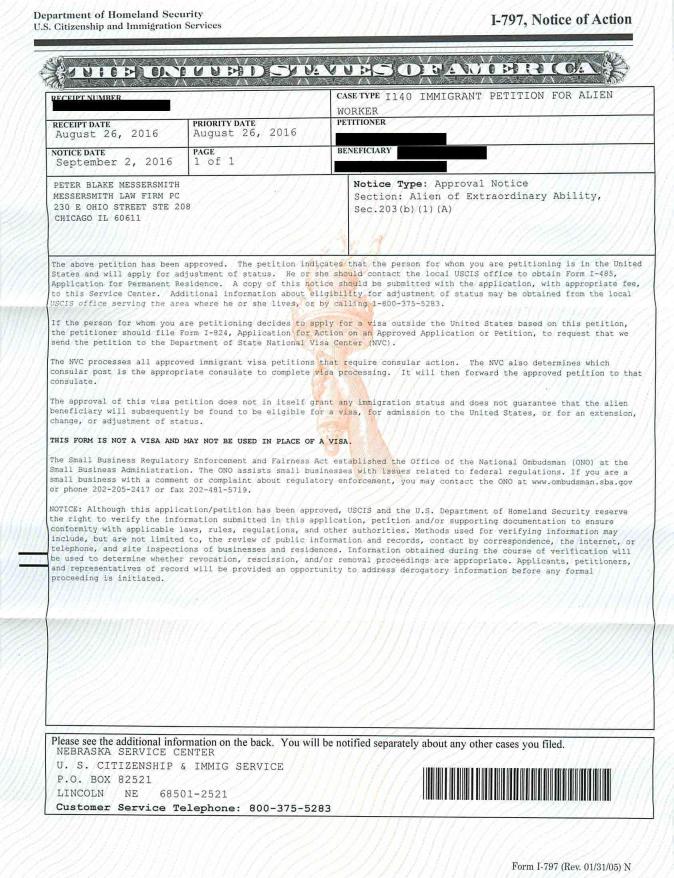
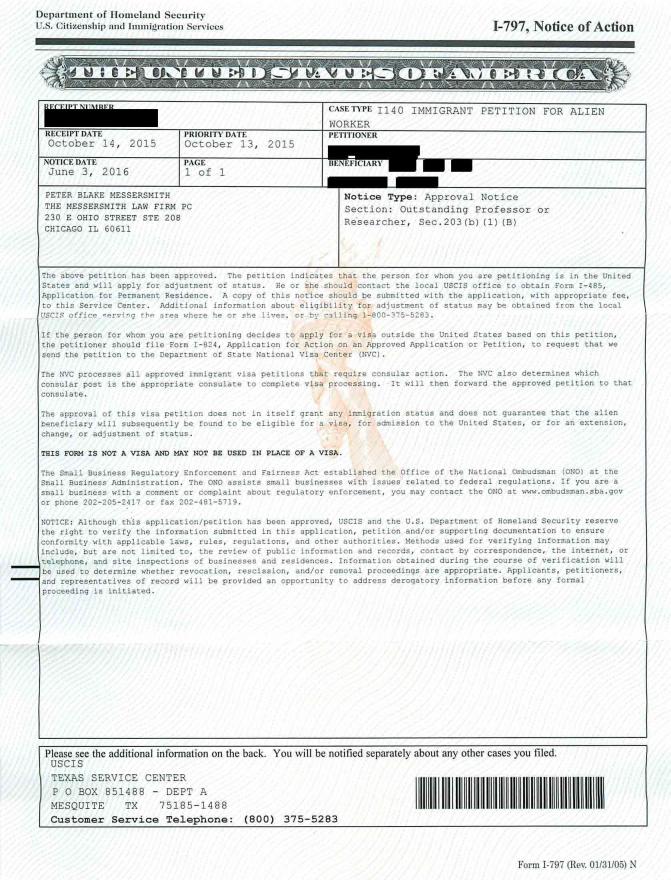
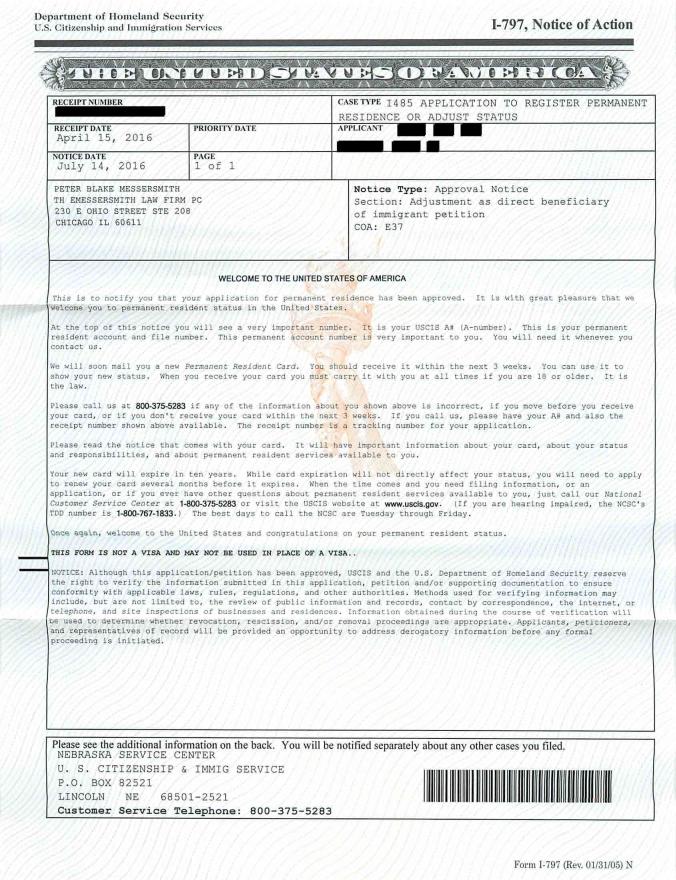
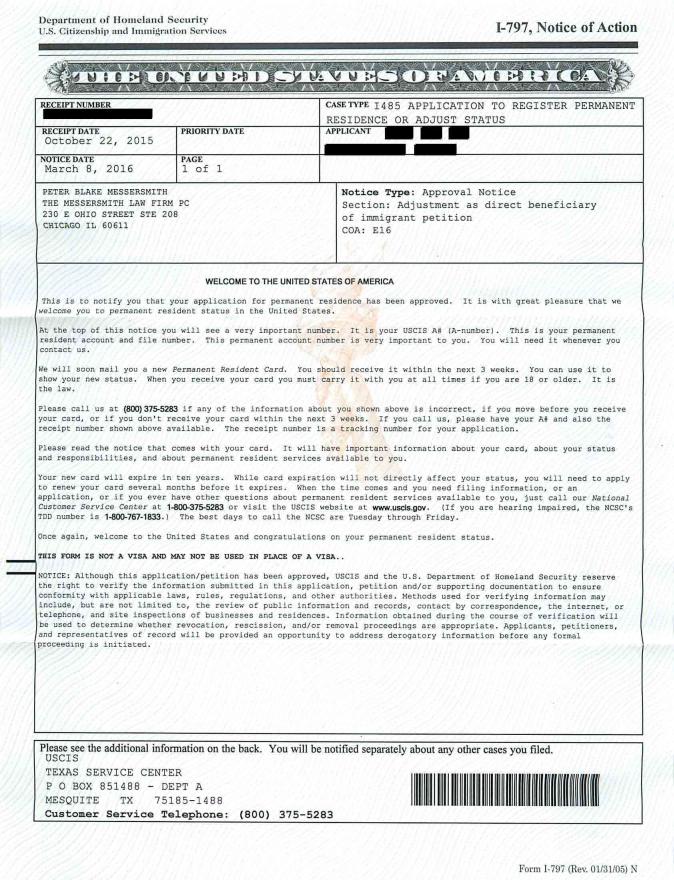
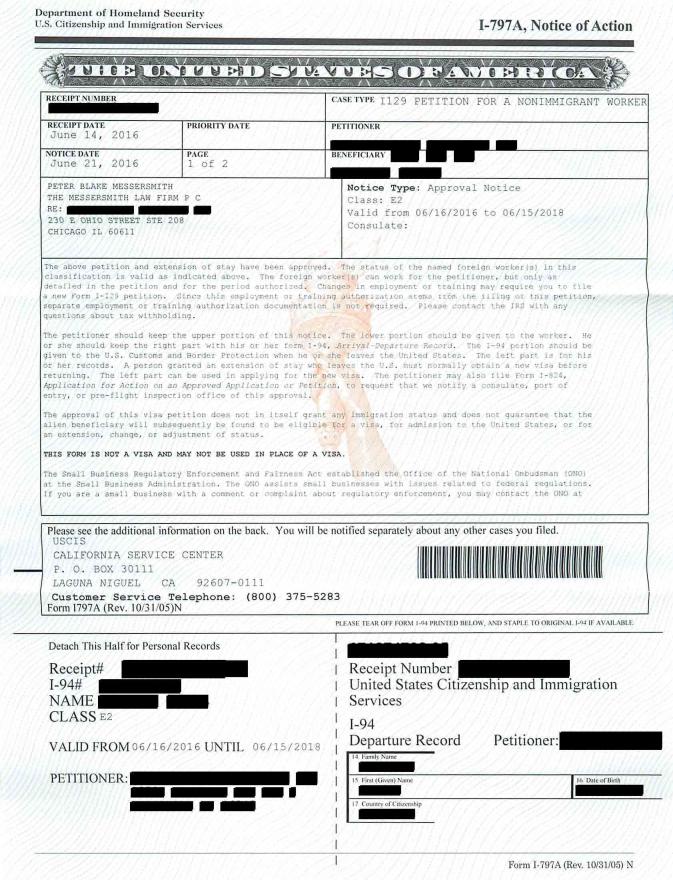
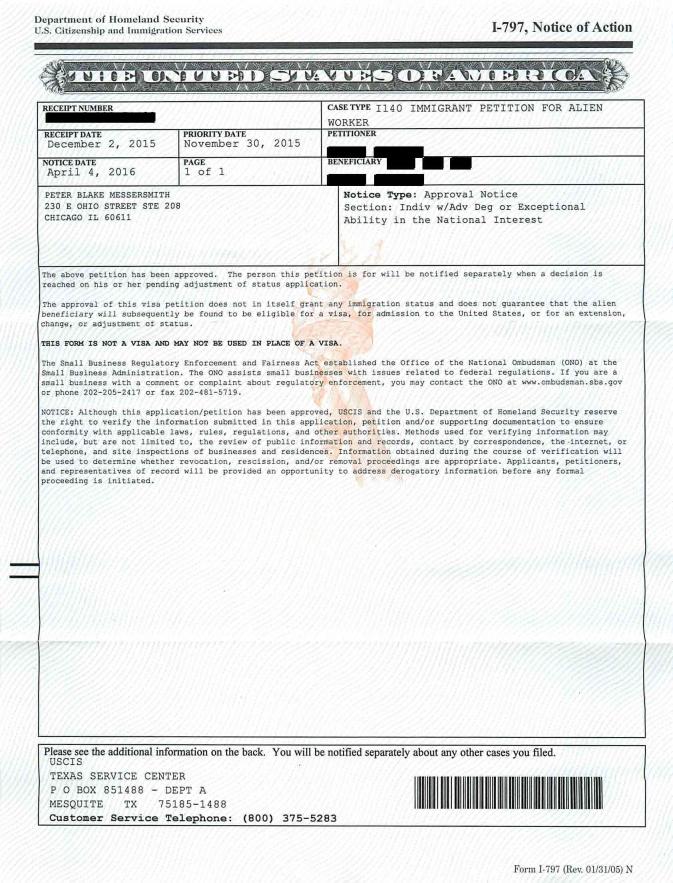
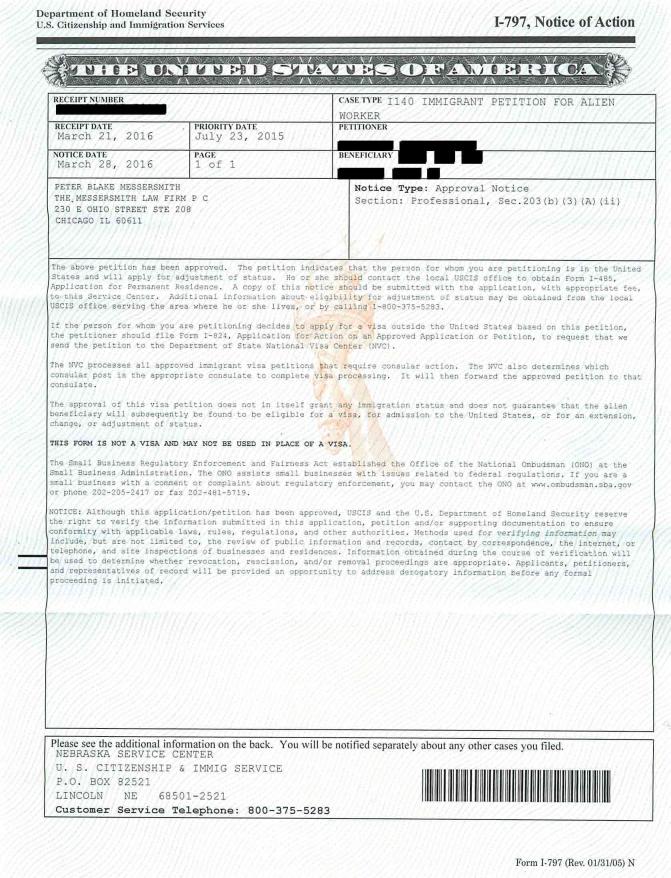
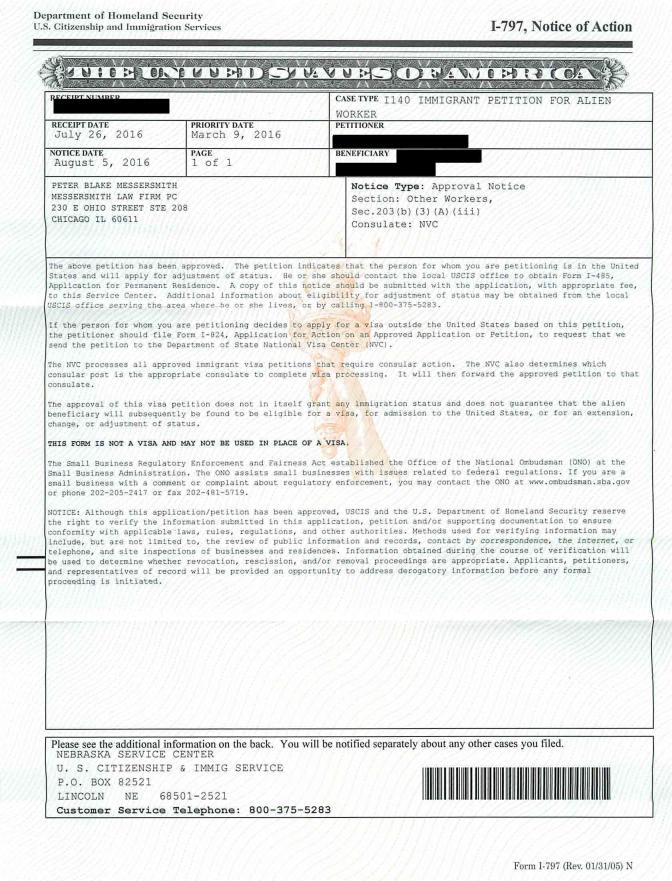
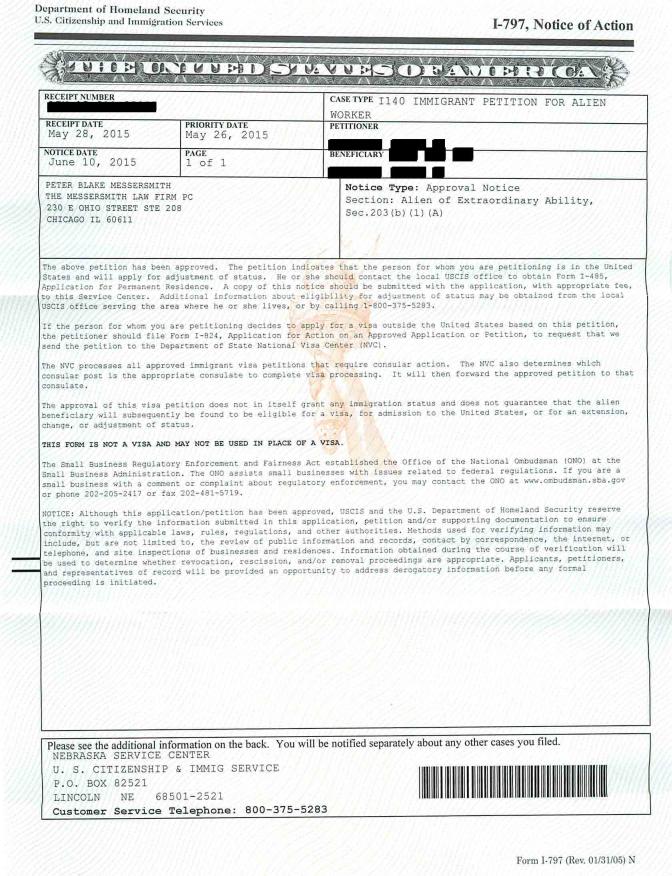
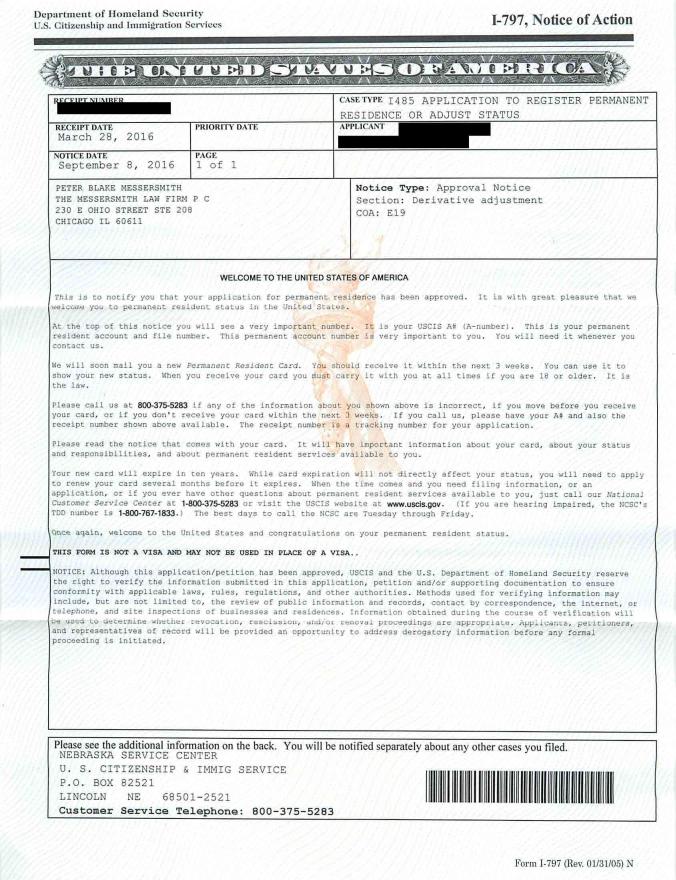
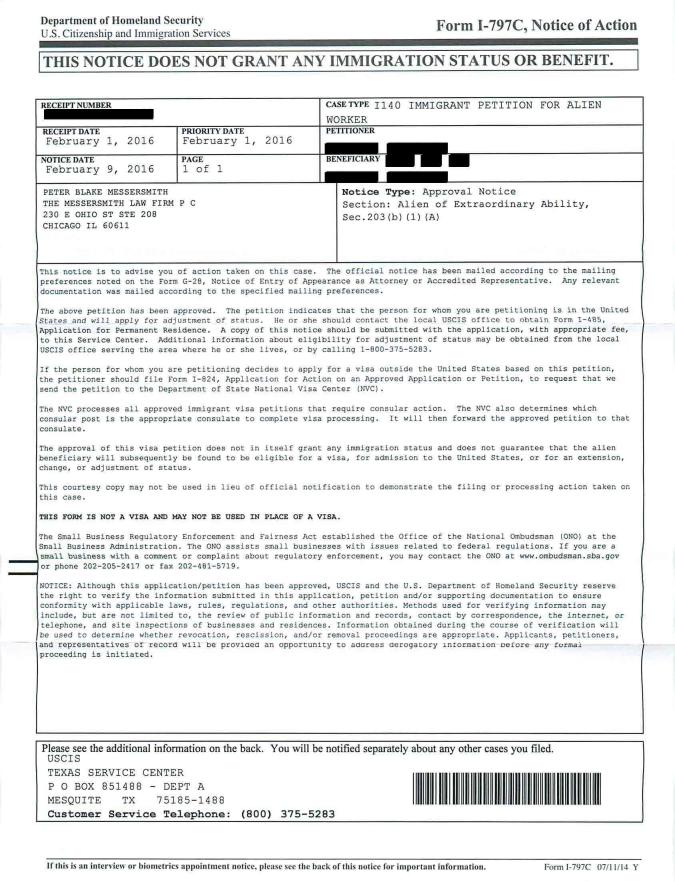
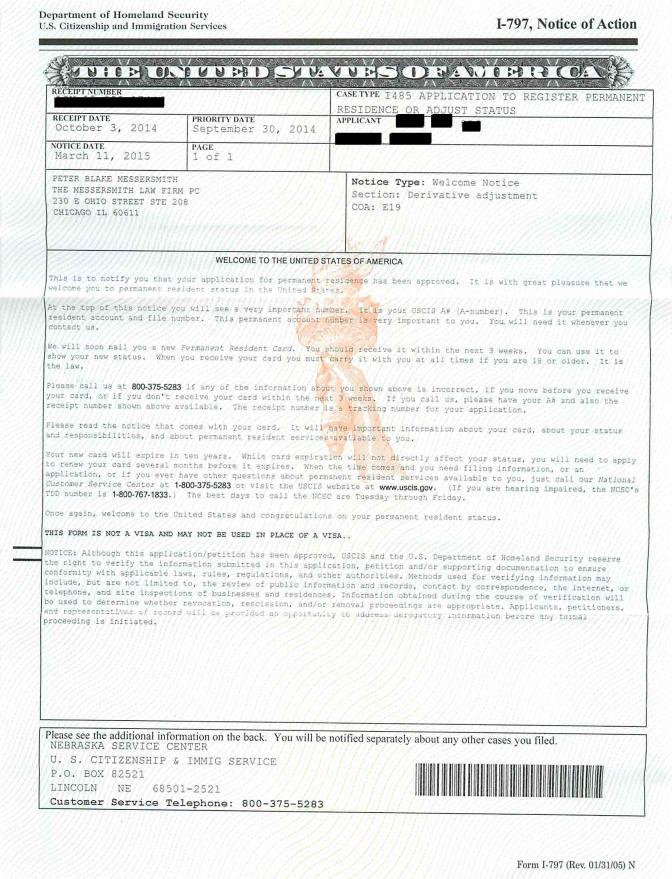
Scroll through fifty recent approval notices below or click here to view thousands.

Customer Testimonials

Real Testimonials from Past Clients