P-2 Visa — Artists and Entertainers in Reciprocal Exchange Programs

P-2 Visa — Artists and Entertainers in Reciprocal Exchange Programs

P-2 Visa — Artists and Entertainers in Reciprocal Exchange Programs

People often search for this issue as P-2 visa, P2 visa, P-2 visa requirements, reciprocal exchange program visa, P-2 artist visa, P-2 entertainer visa, or performer reciprocal exchange visa. The P-2 visa is for artists and entertainers who come to the United States temporarily to perform individually or as part of a group under a reciprocal exchange program between a U.S. organization and an organization in another country. A strong P-2 case usually depends on a formal reciprocal exchange agreement, comparable skills between the U.S. and foreign participants, similar terms and conditions of employment, and the required labor consultation.

P-2 cases often involve musicians, bands, singers, dancers, performers, touring artists, and other entertainment professionals participating in approved reciprocal exchange programs.

P2 Visa Details

The P2 visa is designated for artists or entertainers individually or as part of a group entering the US temporarily as a part of an exchange program. There should be two organizations involved in this exchange program: one in the US and one abroad.

Artists and entertainers who wish to qualify for the visa must show the following:

  • A written consultation by an appropriate labor organization;
  • A copy of the formal reciprocal exchange agreement between the US organization(s) sponsoring the alien and the organization(s) in a foreign country which will receive the US artist or entertainer;
  • A statement from the sponsoring organization describing the reciprocal exchange of US artists or entertainers as it relates to the specific petition for which classification is sought;
  • Evidence the alien and the US artist or entertainer subject to the reciprocal exchange agreement are artists with comparable skills and that the terms and conditions of employment are similar; or
  • Evidence that an appropriate labor organization in the US was involved in negotiating, or has concurred with, the reciprocal exchange of US and foreign artists or entertainers.

Spouses and children of the P2 visa holder may obtain a P4 visa to enter and remain in the US. The P4 visa holder may attend school but if he or she wishes to work, he or she must change his or her status to obtain a work visa.

For Whom Is an P2 Visa Appropriate?

Artists, entertainers and entertainment troupes or bands entering the US through a government recognized reciprocal exchange program and their support personnel.

P2 Visa Requirements

A P2 classification applies to an alien who is coming temporarily to the United States to perform as an artist or entertainer, individually or as part of a group, or to perform as an integral part of the performance of such a group, and who seeks to perform under a reciprocal exchange program which is between an organization or organizations in the United States and an organization or organizations in one or more foreign states, and which provides for the temporary exchange of artists and entertainers, or groups of artists and entertainers.

P-2 visa requirements

To qualify for a P-2 visa, the petition must show that the beneficiary is coming to the United States temporarily to perform as an artist or entertainer, individually or as part of a group, under a reciprocal exchange program between a U.S. organization and one or more organizations in another country. A strong P-2 case is built around the reciprocal exchange agreement, the nature of the performance activity, comparable skills, similar terms and conditions of employment, and the required labor consultation.

Reciprocal exchange program

A P-2 case must be based on a real reciprocal exchange program. The petition should explain the exchange arrangement clearly and show that the U.S. and foreign organizations are participating in a qualifying exchange of artists or entertainers.

Formal reciprocal exchange agreement

The petition should include a formal reciprocal exchange agreement. The agreement should identify the participating organizations and support the exchange of artists or entertainers under the program.

Comparable skills

A P-2 case should show that the artists or entertainers coming to the United States have skills and experience comparable to those of the artists or entertainers taking part in the reciprocal exchange from the United States side. Comparable skills are a central part of the P-2 standard.

Similar terms and conditions of employment

The petition should also show that the U.S. and foreign participants will be working under similar terms and conditions of employment. The case should explain the exchange in a way that makes the balance and reciprocity of the arrangement clear.

Artist or entertainer

P-2 is for artists and entertainers, individually or as part of a group. The case should describe the beneficiary’s role, the performances or events involved, and how the beneficiary fits within the reciprocal exchange program.

Labor consultation

A written consultation from an appropriate labor organization is generally part of a P-2 filing. The petition should be organized so that the consultation materials match the reciprocal exchange program and the planned U.S. activity.

Petition filing

A P-2 petition may be filed by the U.S. labor organization that negotiated the reciprocal exchange agreement, the sponsoring organization, or a U.S. employer. The petition structure should match the actual exchange arrangement and performance plan.

P-2 support personnel

Support personnel connected to a P-2 artist or entertainer may require separate classification when the facts support it. The petition should explain the support role carefully and match the filing structure to the actual performance activity in the United States.

P-4 family members

The spouse and unmarried children under 21 of a P-2 beneficiary may accompany or follow to join in P-4 status.

P-2 visa for artists, entertainers, and reciprocal exchange programs

The P-2 visa is used for artists and entertainers who come to the United States under a qualifying reciprocal exchange program. These cases are usually built around performances, tours, appearances, productions, and other entertainment activity that is part of the exchange arrangement between the U.S. organization and the foreign organization.

P-2 visa for musicians and bands

P-2 cases often involve musicians, bands, singers, and other performers who are traveling to the United States through a reciprocal exchange program. The petition should explain the performance schedule, the exchange structure, and the beneficiary’s role in the program.

P-2 visa for dancers and performance groups

Dancers, dance groups, and other performance-based entertainers may also use P-2 when the activity is tied to a qualifying reciprocal exchange arrangement. The case should connect the planned U.S. performances to the underlying exchange program and show how the beneficiary fits within that structure.

P-2 visa for touring artists and performers

P-2 can be used for touring artists and entertainers when the U.S. activity is part of the reciprocal exchange program. The petition should clearly describe the tour dates, venues, itinerary, and the relationship between the performances and the exchange agreement.

P-2 visa for individual performers and group performers

P-2 may apply to an individual artist or entertainer or to a performer who is part of a group. The petition should describe whether the case is for one performer or multiple performers and should make the exchange arrangement clear for each beneficiary included in the filing.

Reciprocal exchange performances in the United States

The petition should tie the beneficiary’s work to specific events, performances, productions, appearances, or tours in the United States. Dates, venues, contracts, and schedules should match the exchange arrangement and the requested period of stay.

Comparable skills and exchange balance

A strong P-2 case should explain why the foreign artist or entertainer has skills and experience comparable to the U.S. artists or entertainers participating in the reciprocal exchange. The petition should also make the reciprocal nature of the arrangement easy to understand.

Labor consultation and supporting documents

A P-2 filing is usually supported by the reciprocal exchange agreement, labor consultation materials, performance contracts, itineraries, and documents showing the artist’s or entertainer’s role in the exchange program. The filing should present these materials in a way that makes the exchange structure clear.

P-2 extensions

P-2 status may be extended when needed to continue or complete the same event, performance, tour, or activity. If more time is needed, the extension filing should show how the continued activity fits within the approved exchange arrangement.

P-4 dependents

The spouse and unmarried children under 21 of a P-2 beneficiary may accompany or follow to join in P-4 status. P-4 dependents may study in the United States, but they may not work in P-4 status.

Frequently asked questions about the P-2 visa

What is the P-2 visa?

The P-2 visa is for artists and entertainers who come to the United States temporarily to perform individually or as part of a group under a reciprocal exchange program.

Who qualifies for a P-2 visa?

A qualifying P-2 case must show that the beneficiary is an artist or entertainer performing under a reciprocal exchange program between a U.S. organization and an organization in another country.

What is a reciprocal exchange program for P-2?

A reciprocal exchange program is an arrangement between a U.S. organization and a foreign organization that provides for the temporary exchange of artists or entertainers.

What does comparable skills mean for P-2?

The petition should show that the foreign artists or entertainers have skills and experience comparable to those of the U.S. artists or entertainers taking part in the exchange.

Is a labor consultation required for P-2?

Yes. A written consultation from an appropriate labor organization is generally part of a P-2 filing.

Can P-2 be used for musicians, bands, singers, and performers?

Yes. P-2 is commonly used for musicians, bands, singers, dancers, touring artists, and other entertainers who are part of a qualifying reciprocal exchange program.

How long can P-2 status last?

P-2 status may be approved for the time needed to complete the event, performance, tour, or activity, up to 1 year initially, with extensions available to continue or complete the same activity.

Can family members come with a P-2 beneficiary?

Yes. The spouse and unmarried children under 21 of a P-2 beneficiary may accompany or follow to join in P-4 status.

Can family members come with an L-1 beneficiary?

Yes. The spouse and unmarried children under 21 of an L-1 beneficiary may accompany or follow to join in L-2 status.

Can P-4 family members work in the United States?

No. P-4 dependents may study in the United States, but they may not work in P-4 status.

Top Notch Immigration Services

You will receive top notch immigration services at The Messersmith Law Firm. We guarantee personalized legal services, a high rate of success, and very reasonable fees. At The Messersmith Law Firm, you will always get more than what you pay for. While the majority of our clients are referred to our law firm, we are open to take new cases if we feel we can help you achieve your goals. We have no doubt that you will refer everyone you know to us once your case is approved! Our goal is to get your case approved in the shortest amount of time possible yet strive to keep our fees reasonable!
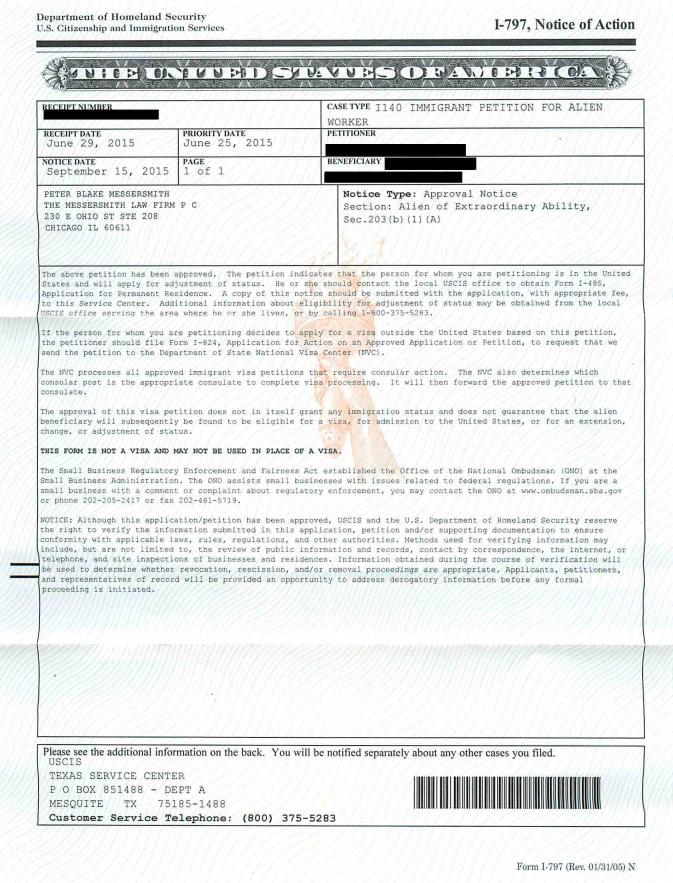
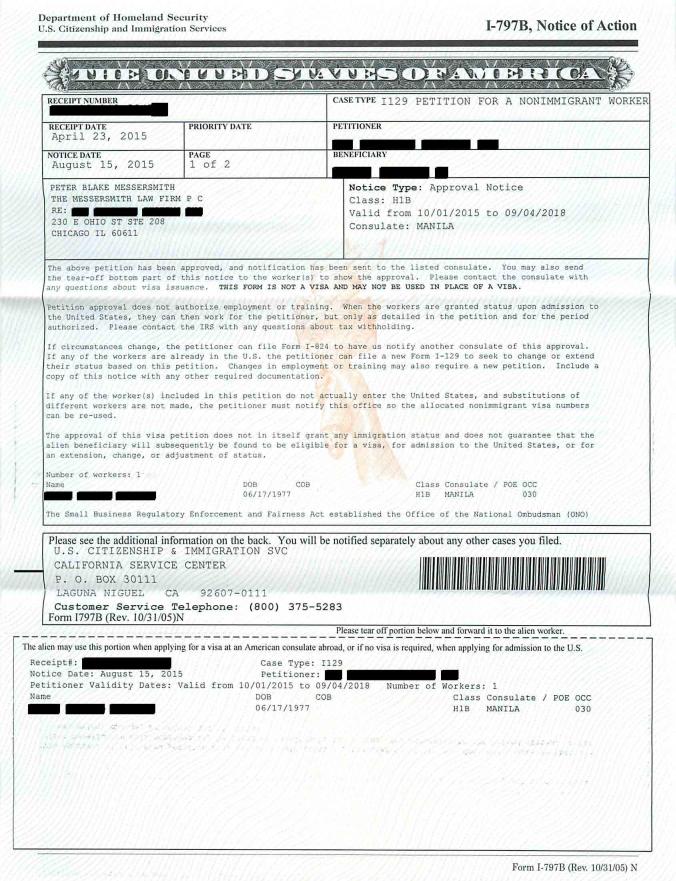
Thousands of Approved Cases

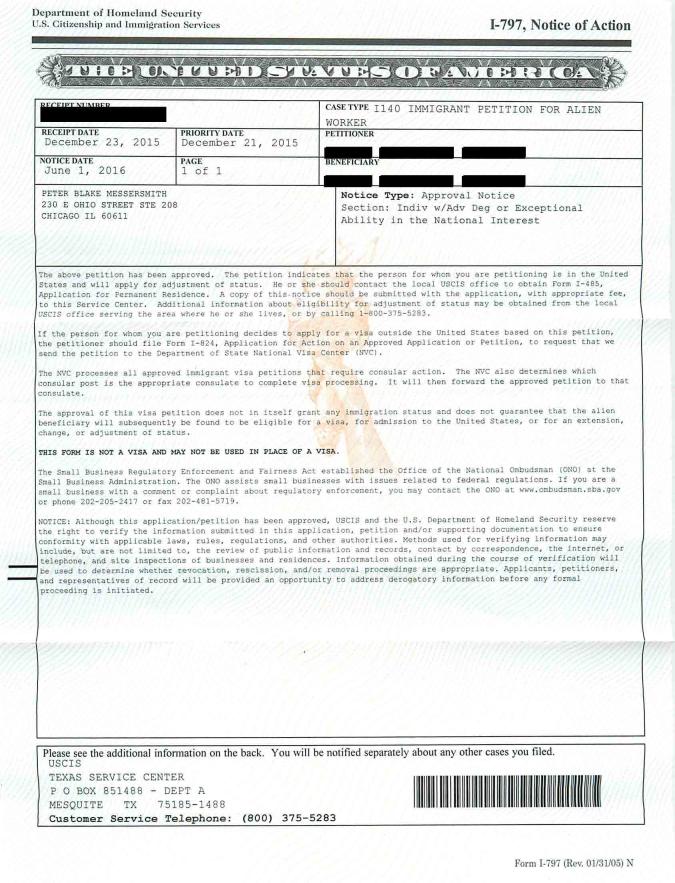
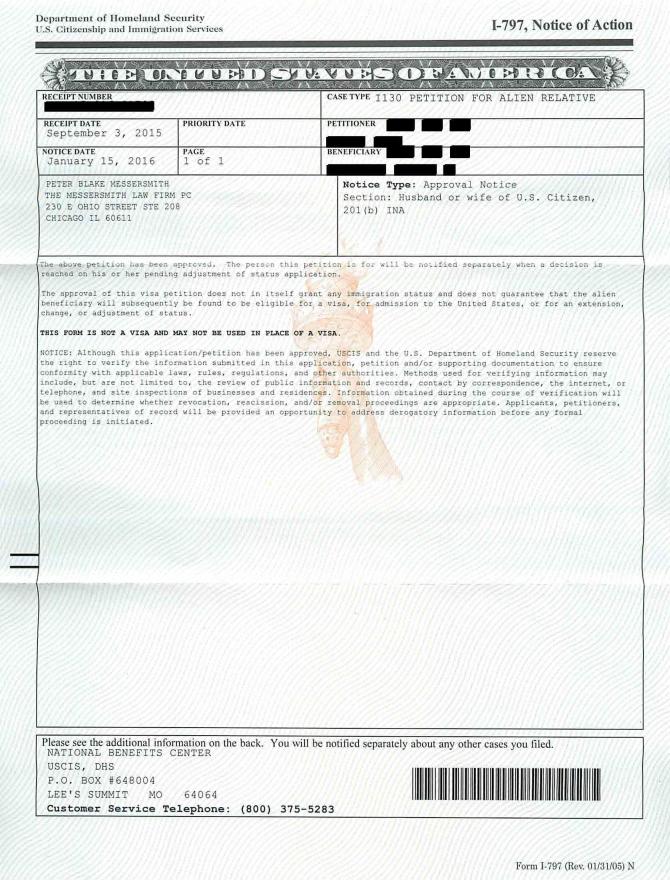
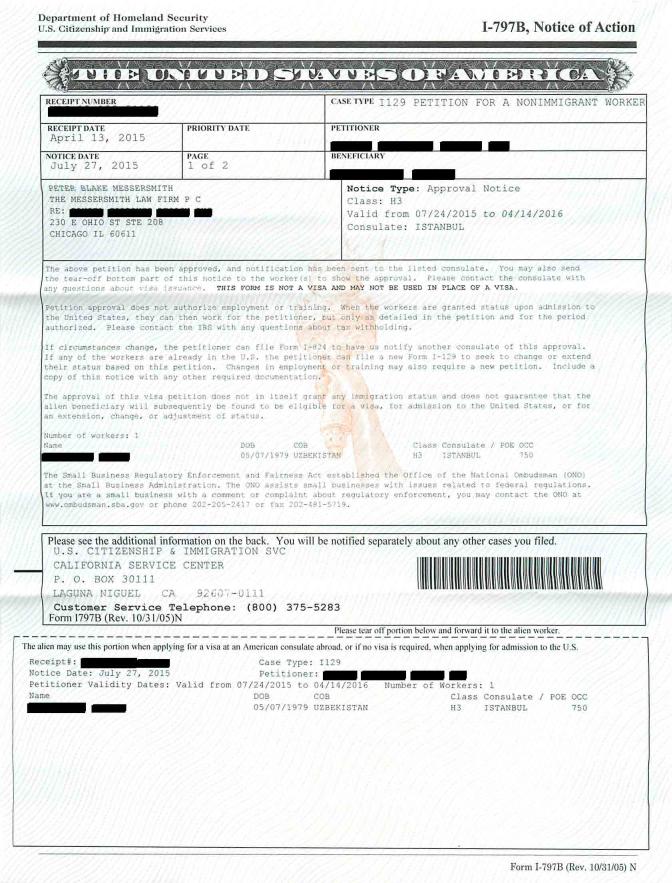
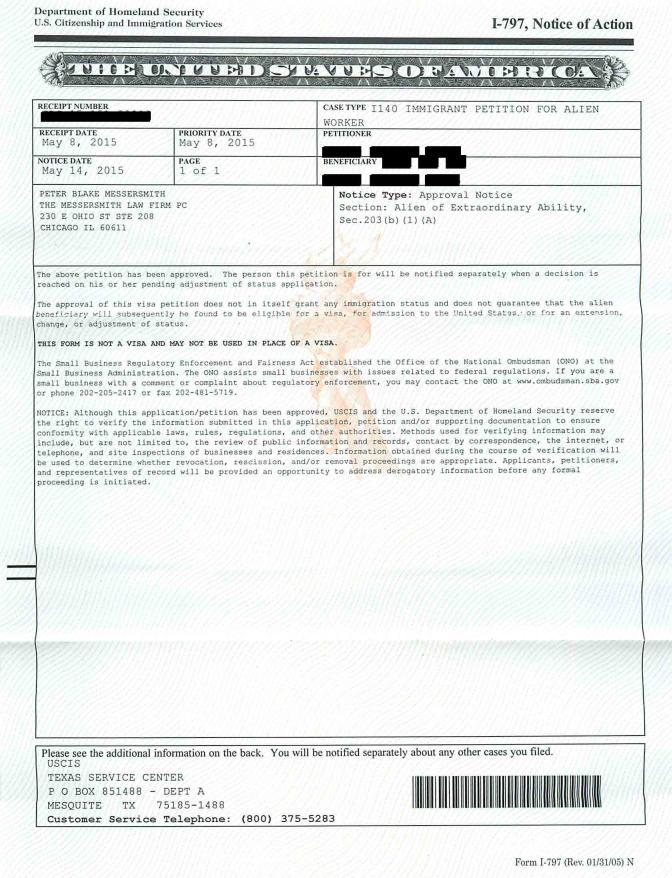
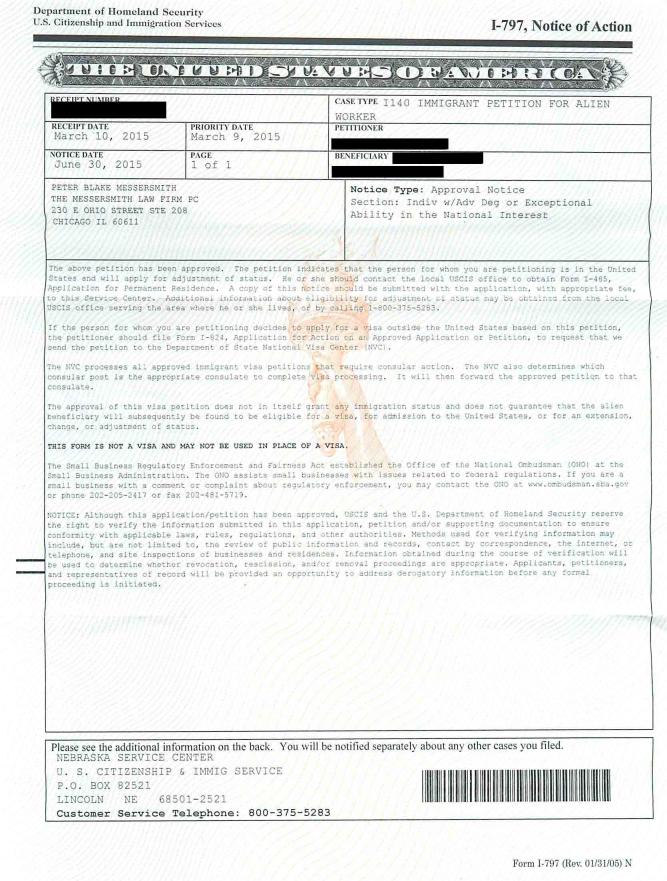
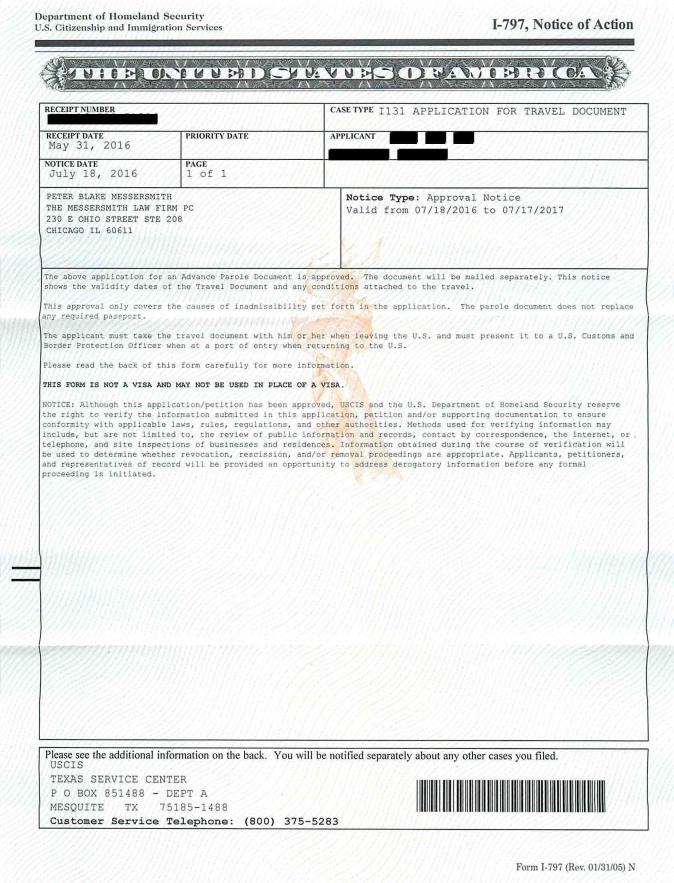
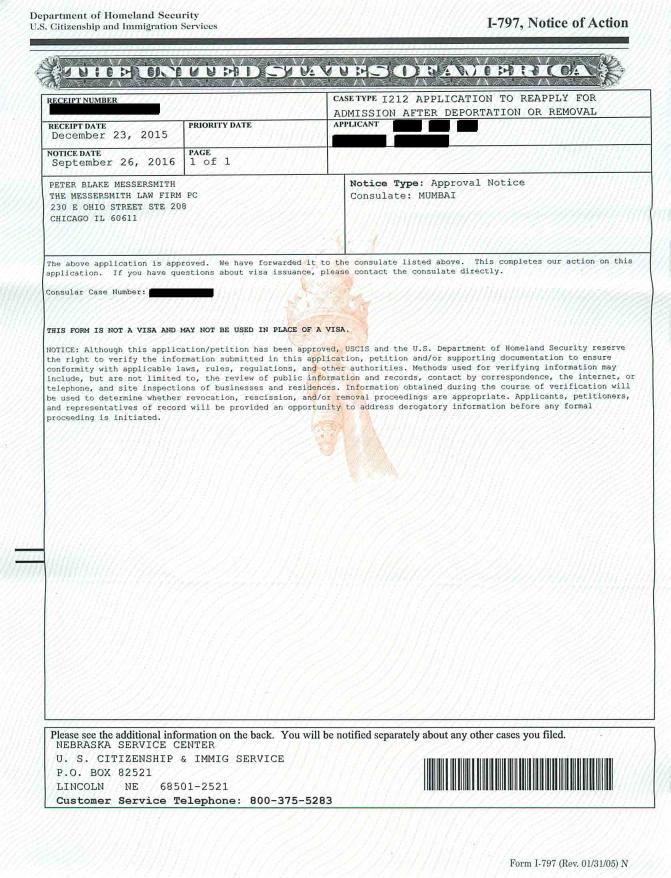
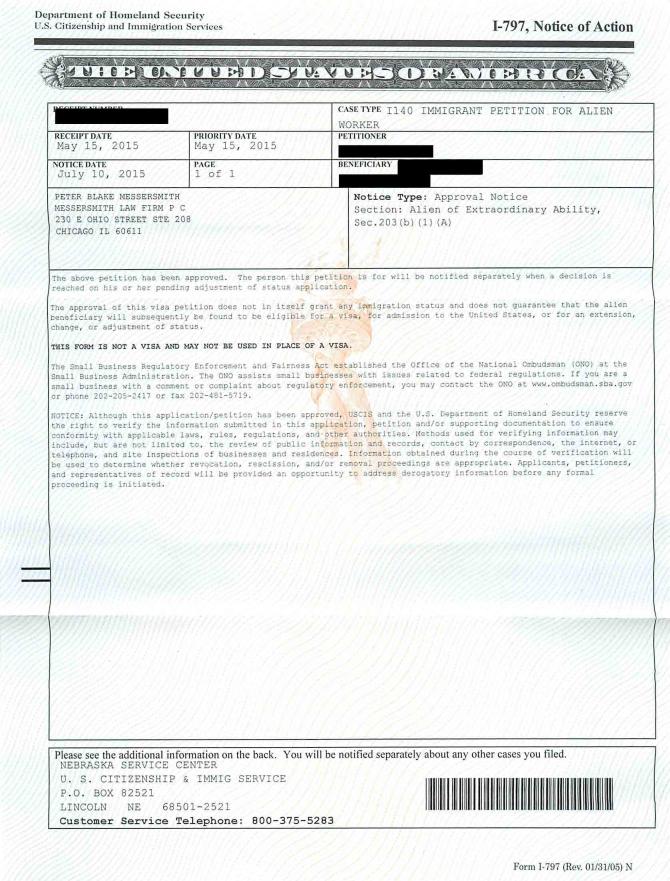
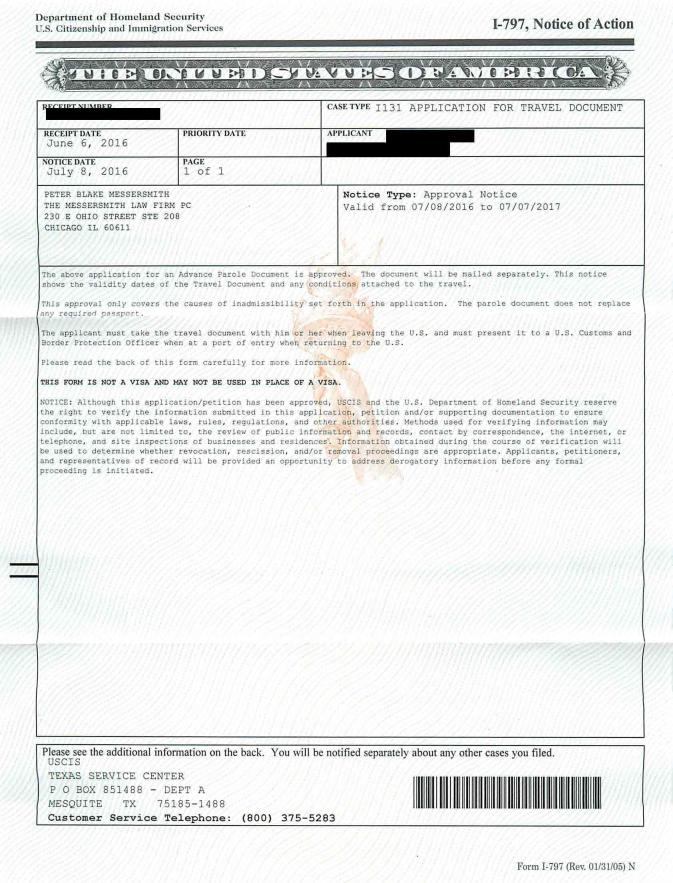
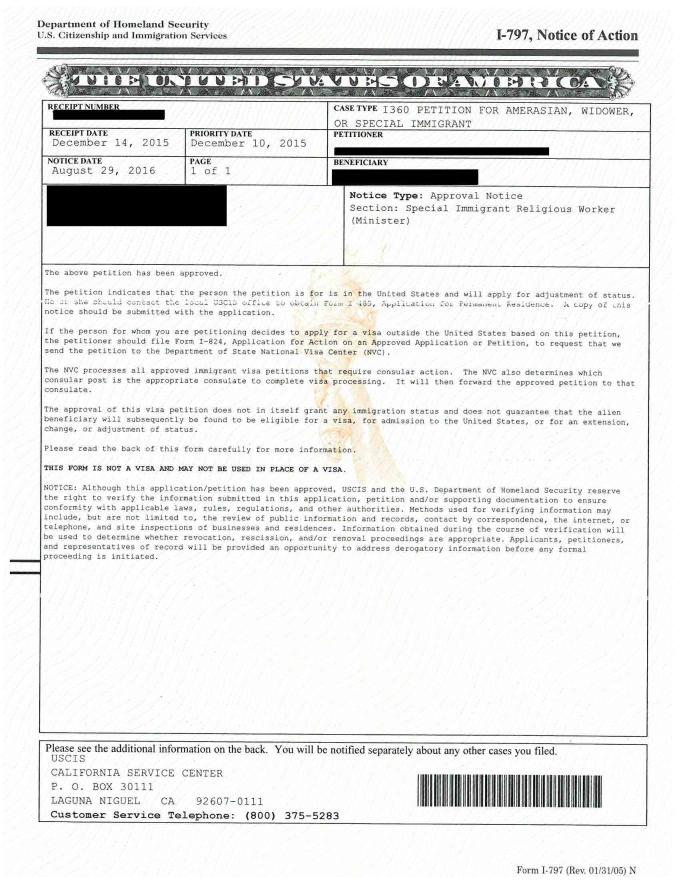
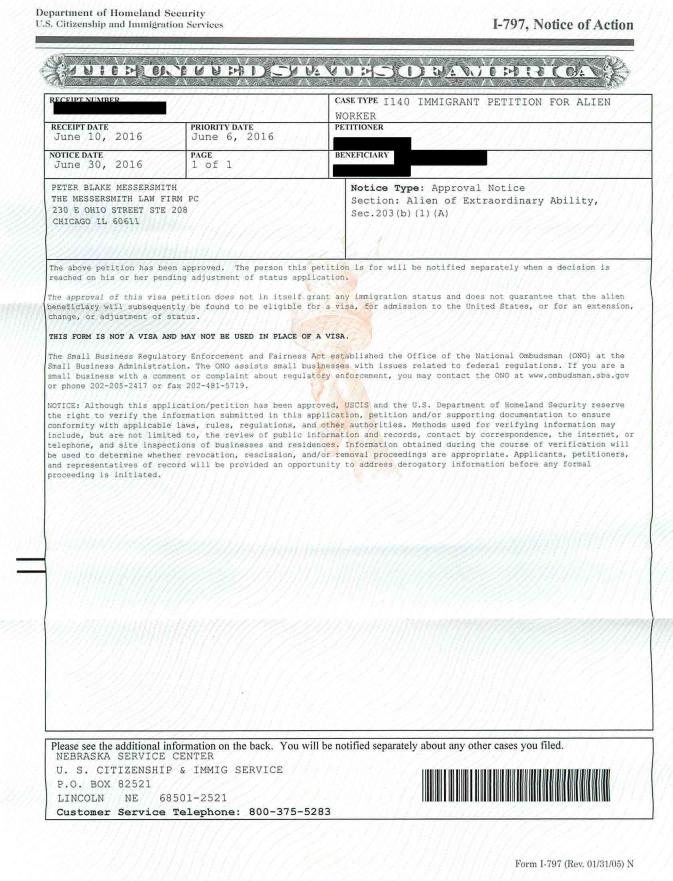
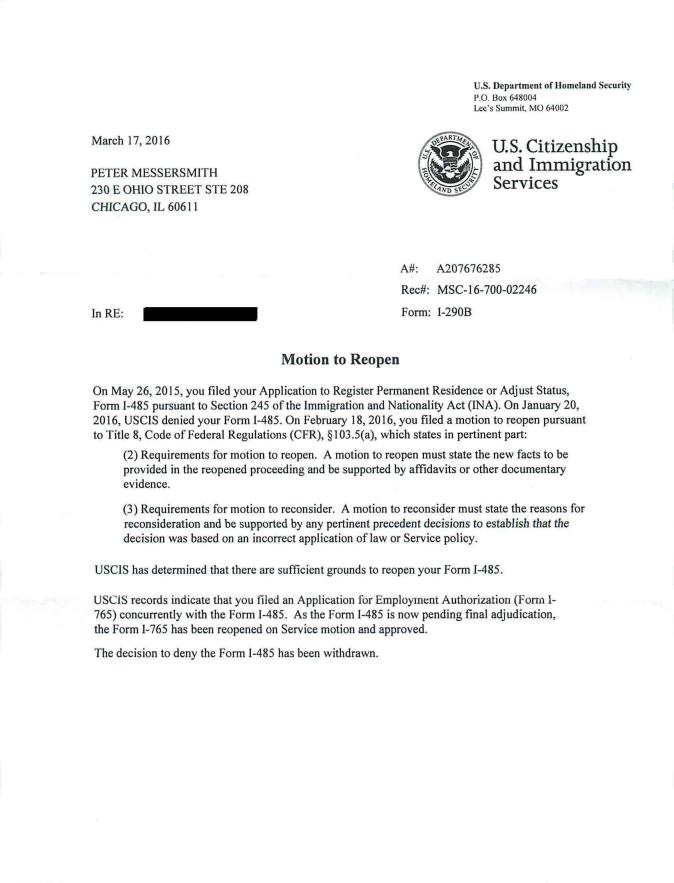
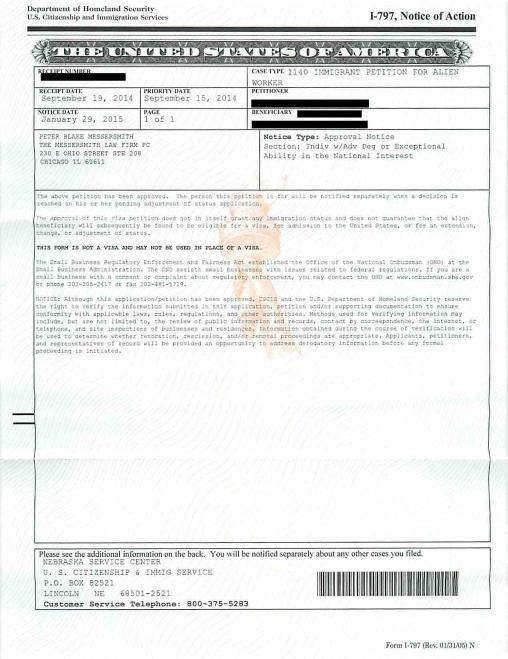
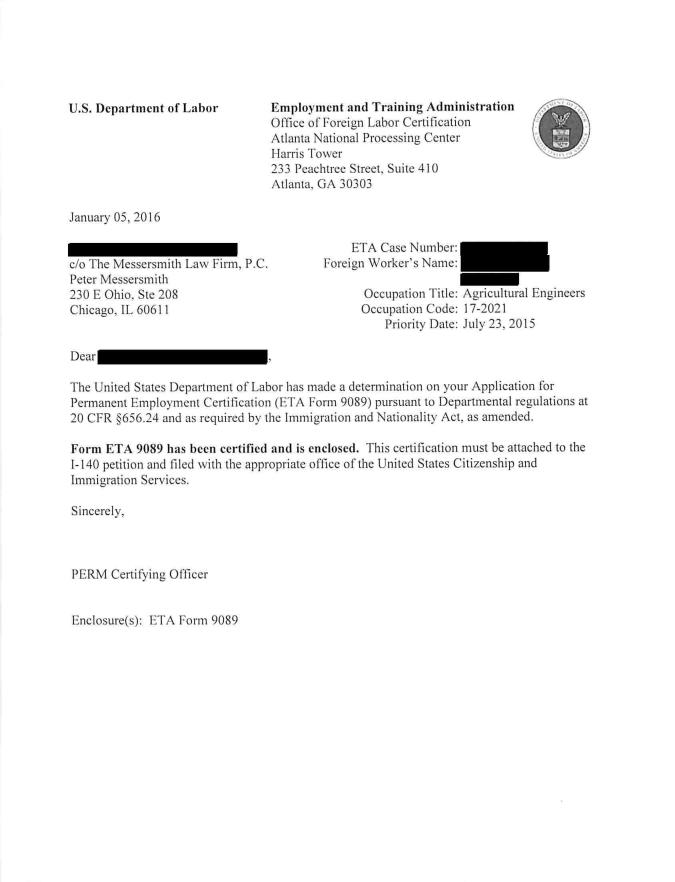
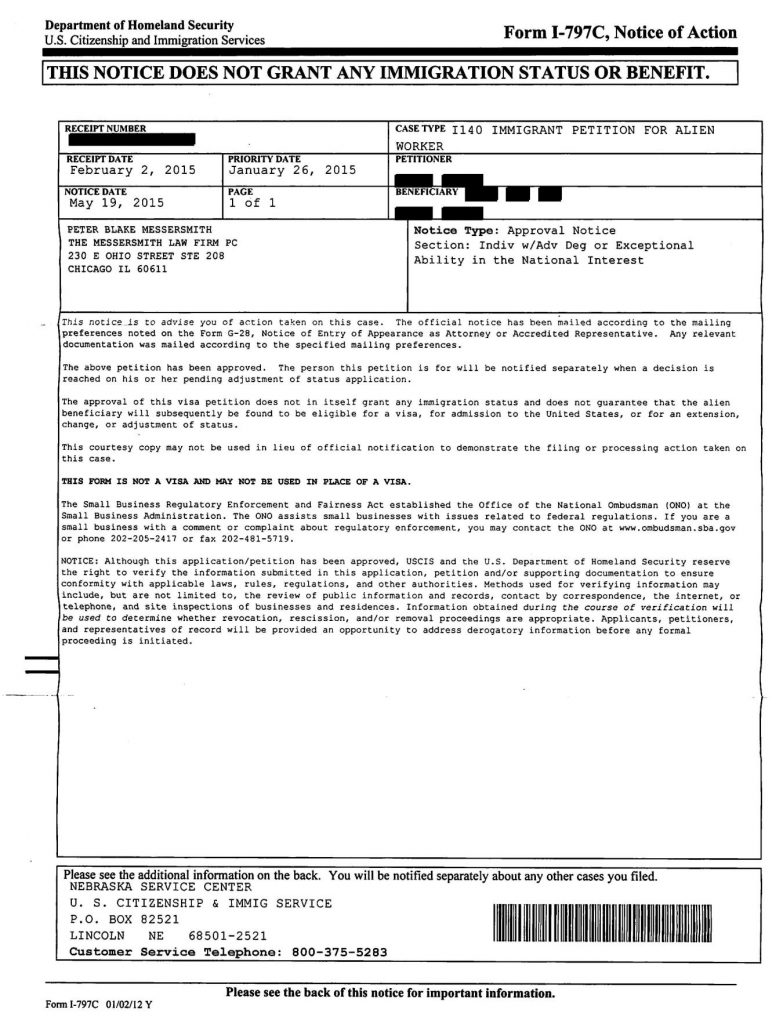
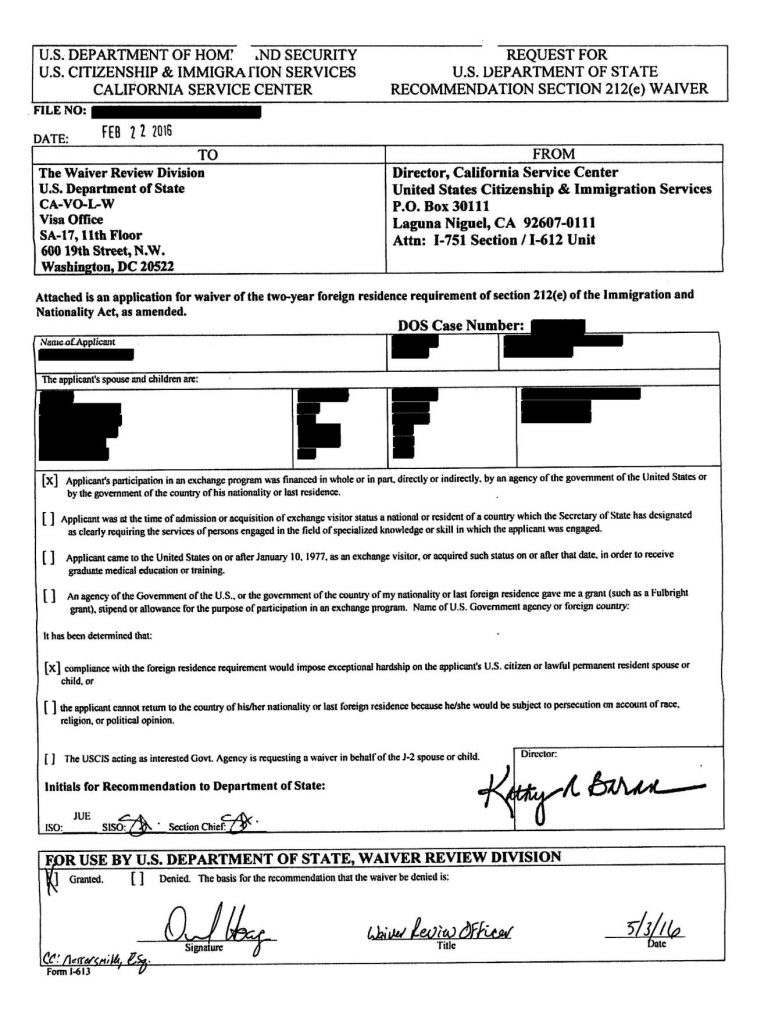
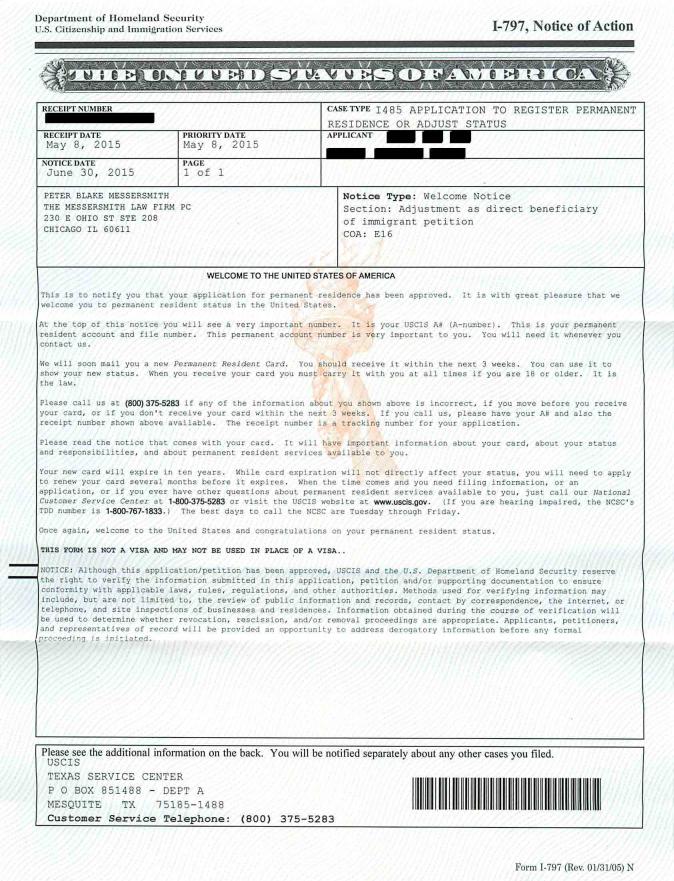
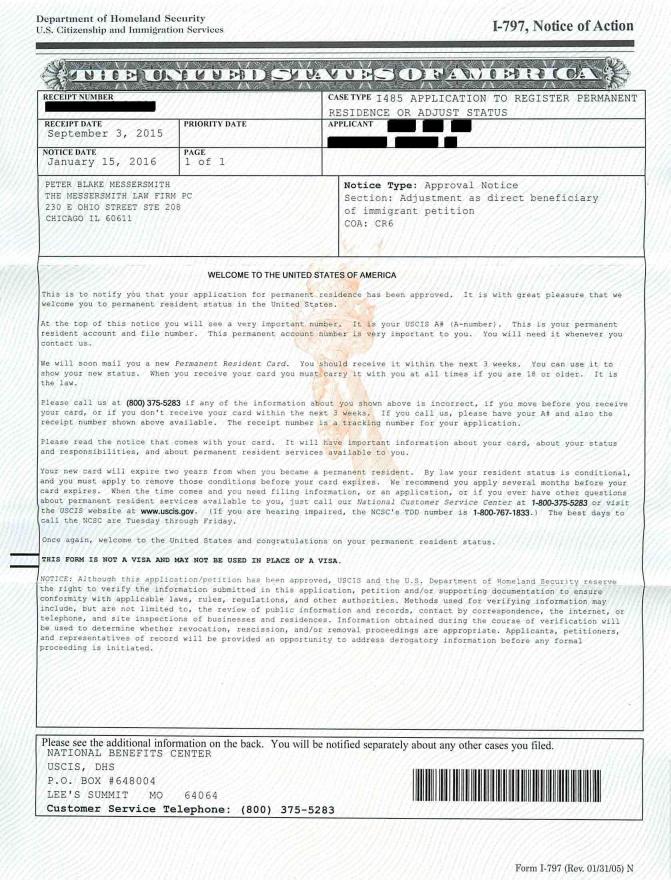
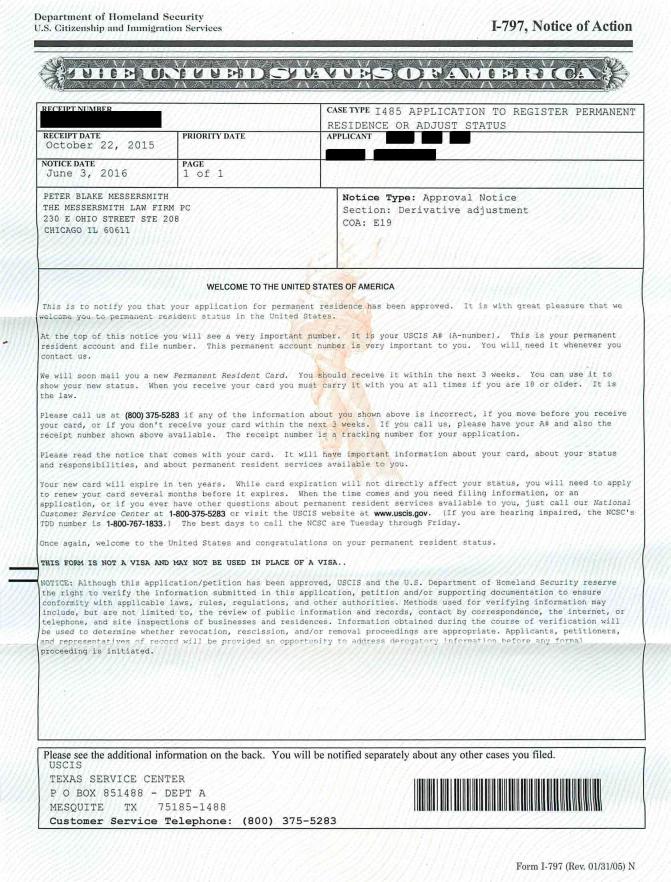
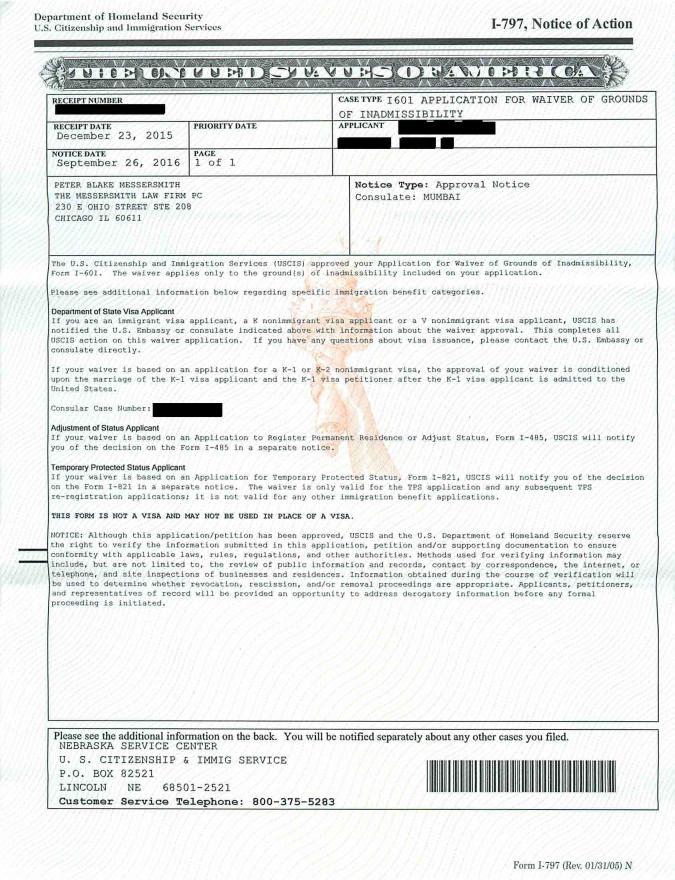
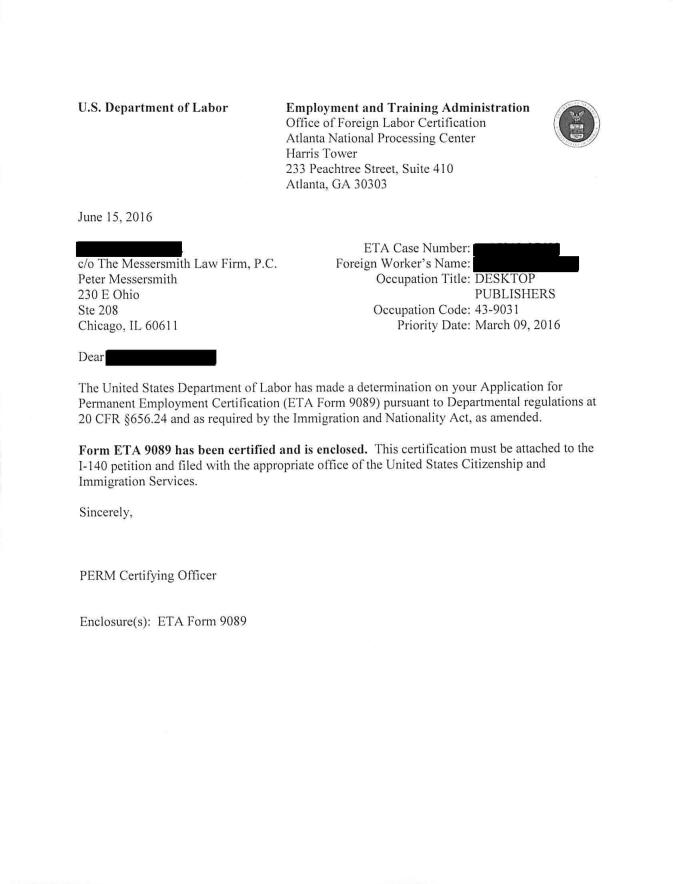
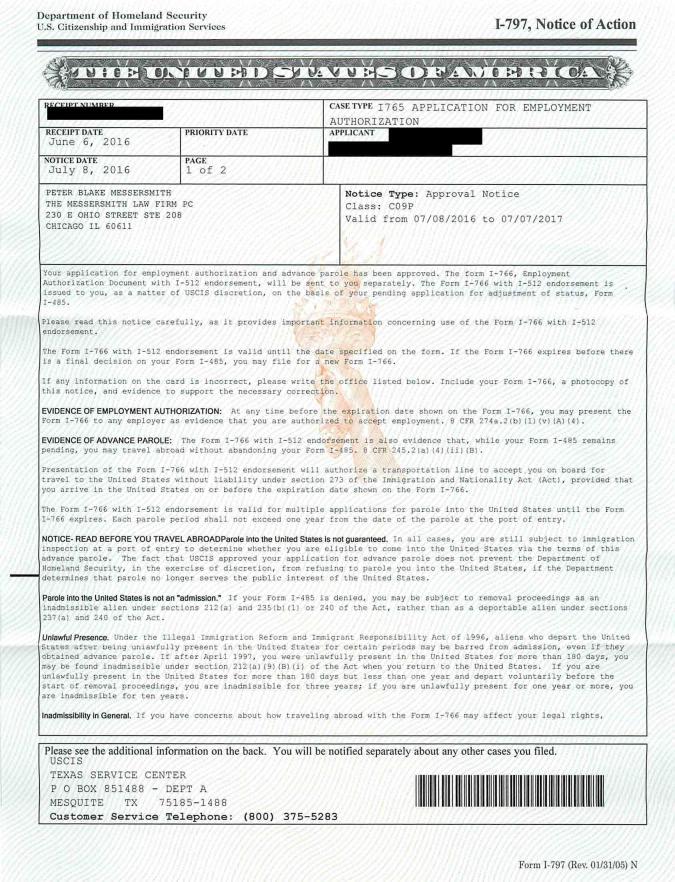
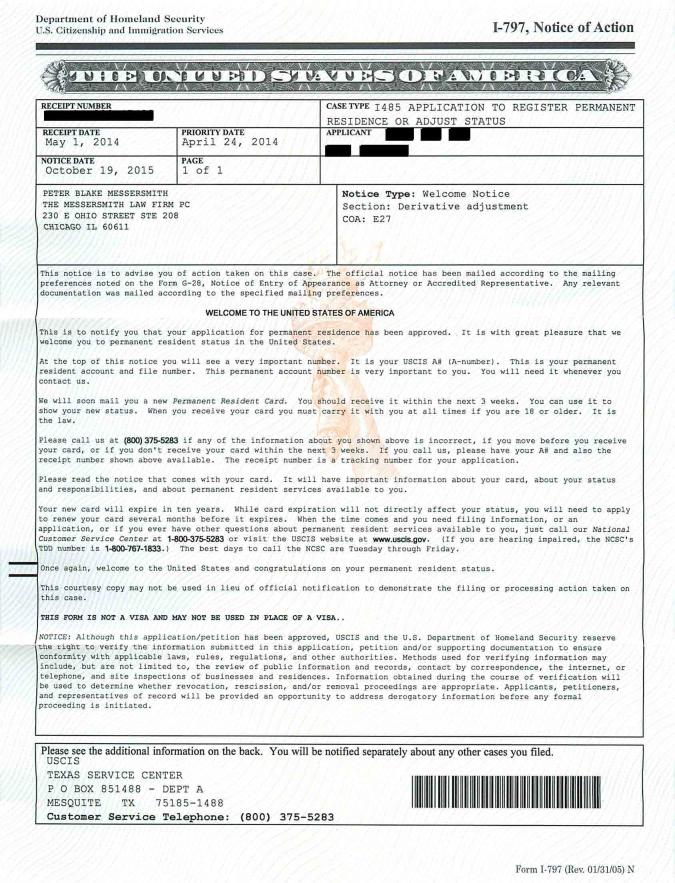
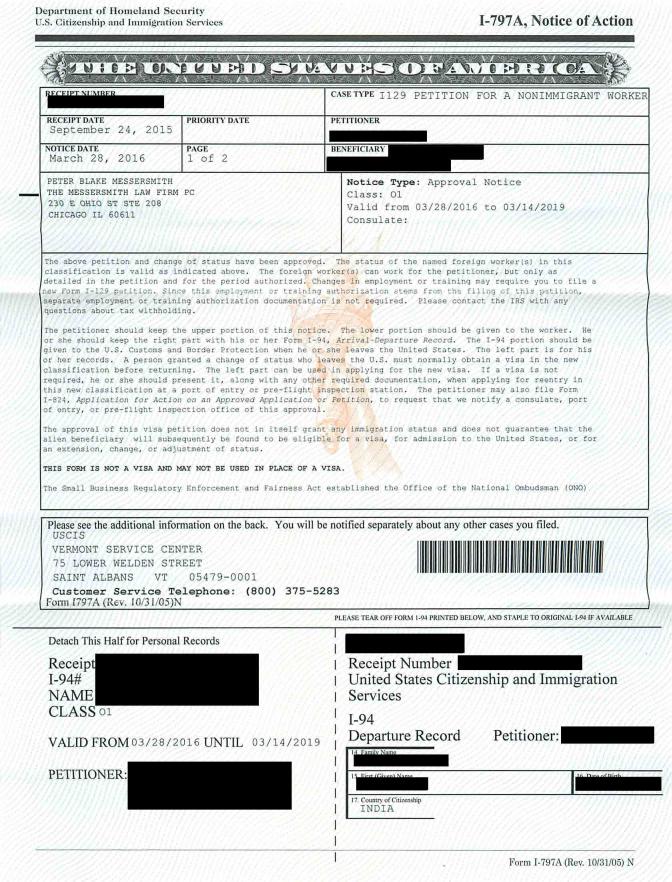
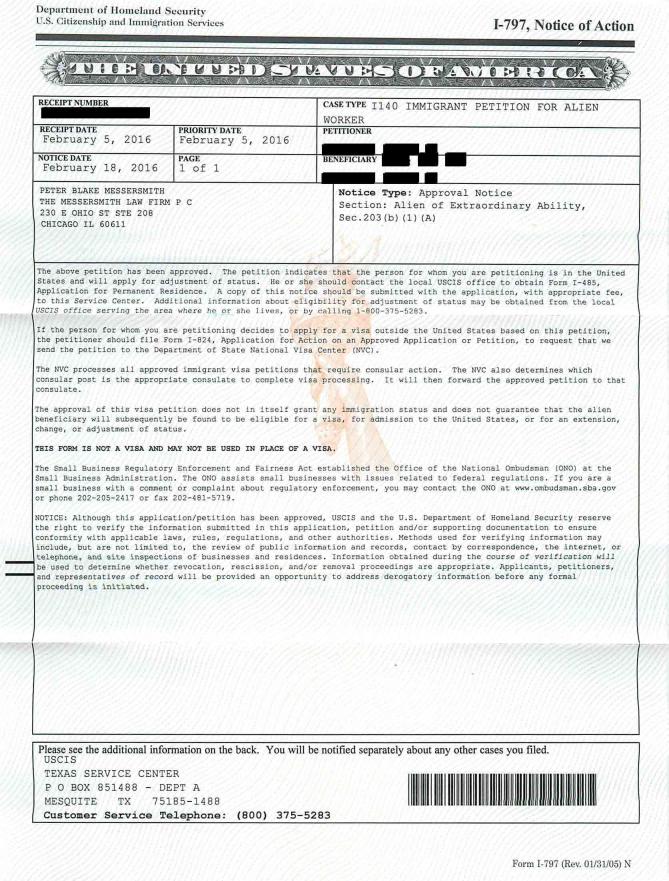
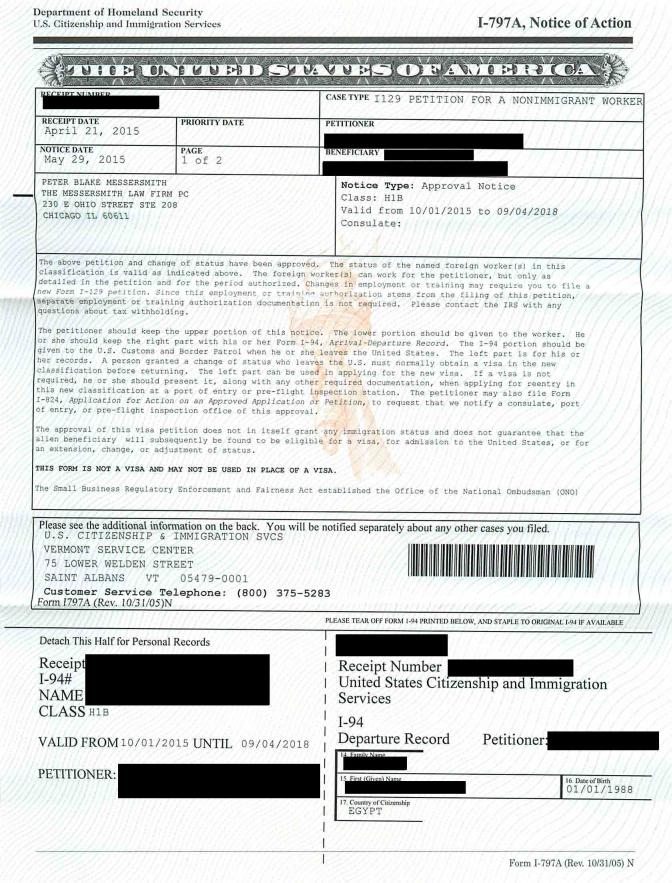
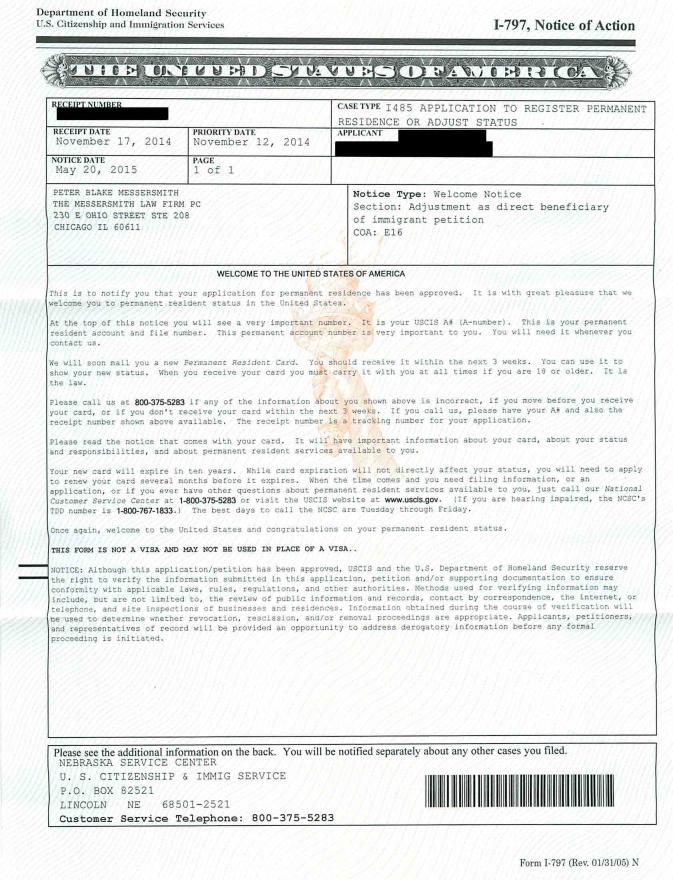
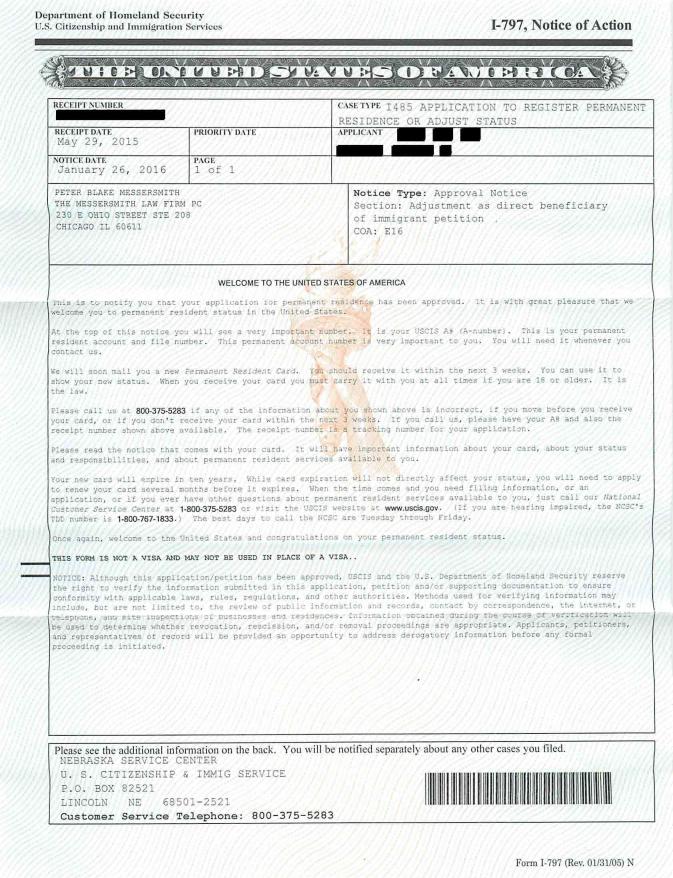
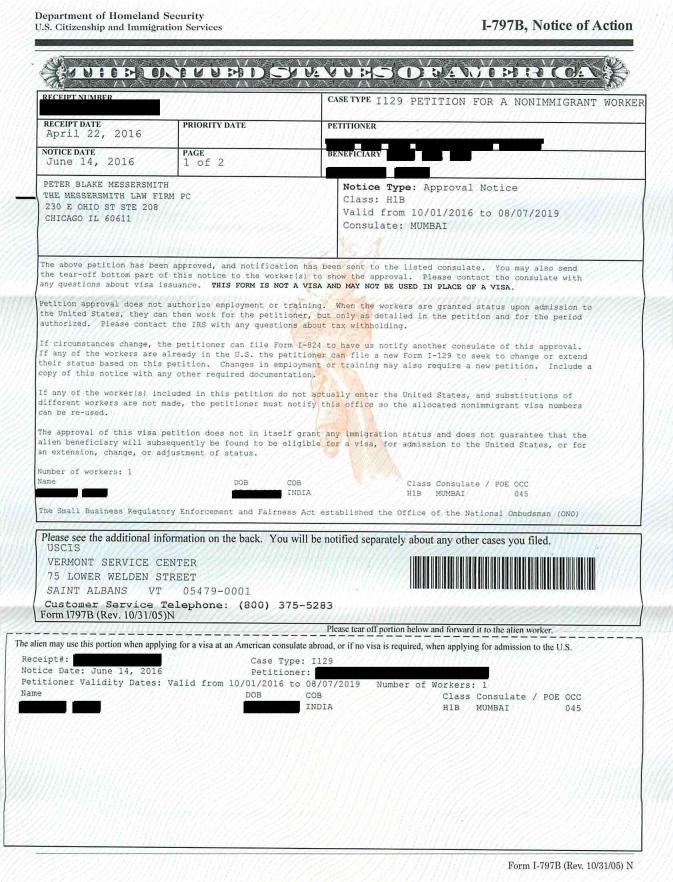
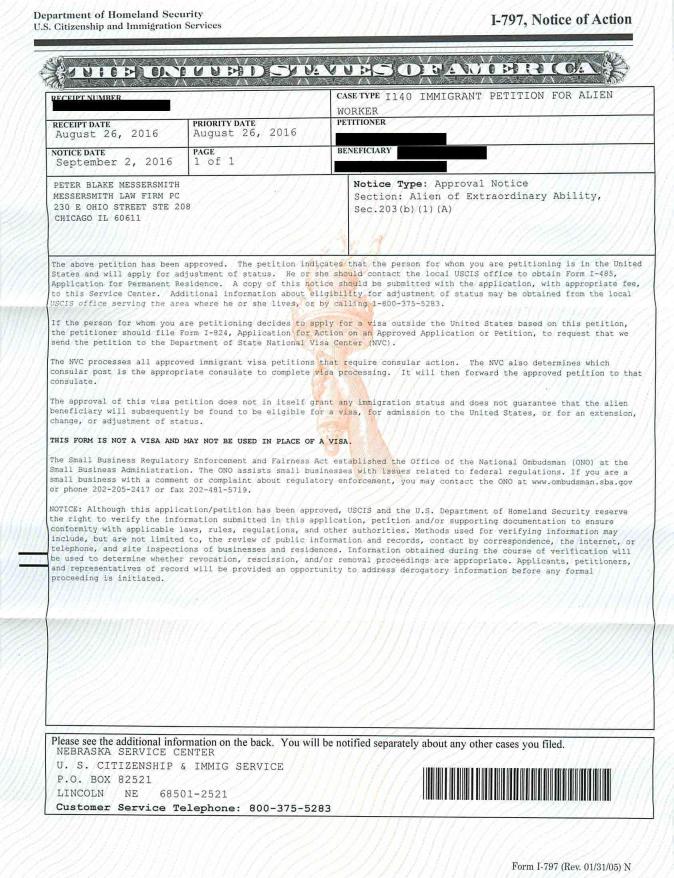
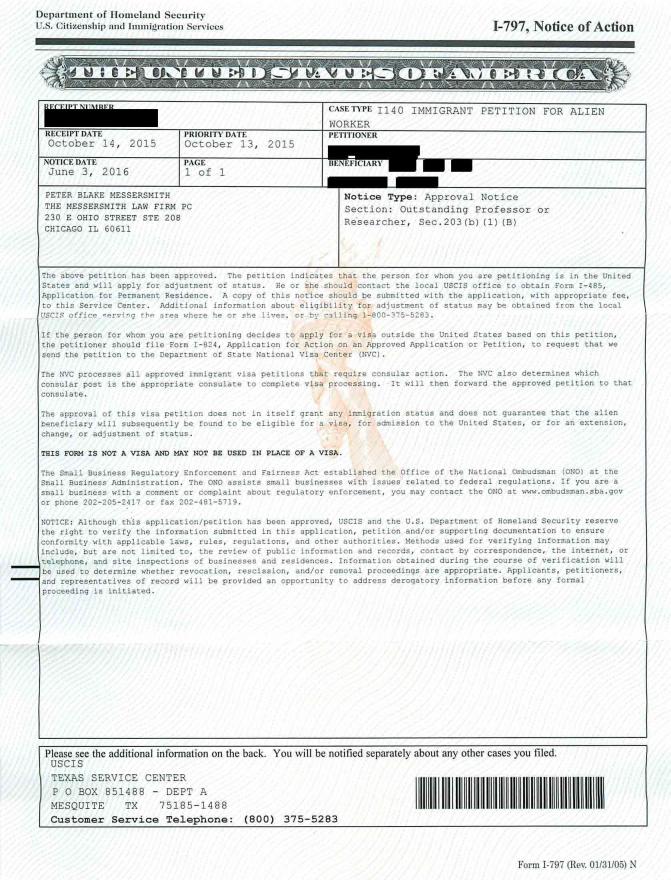
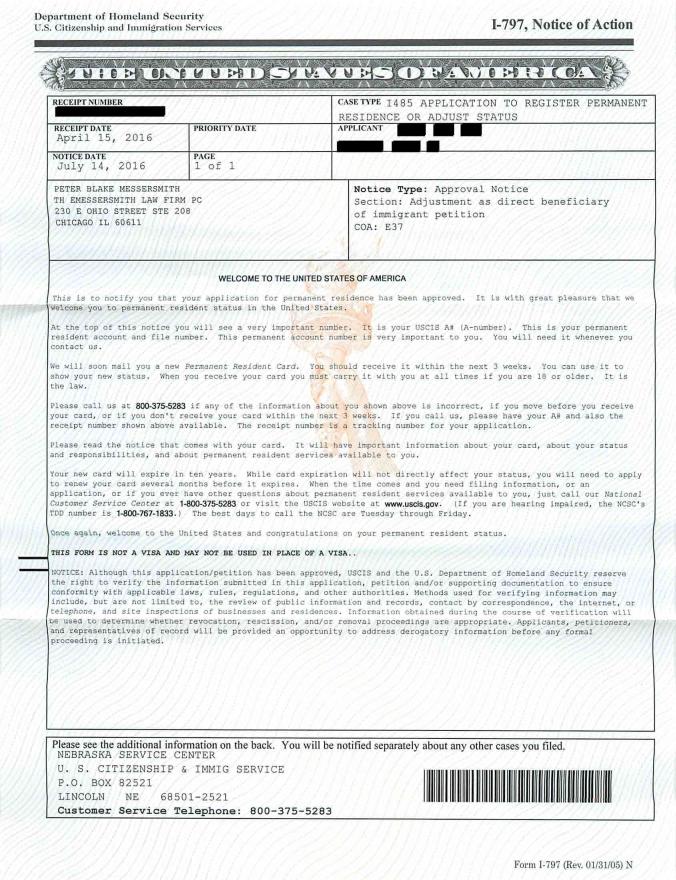
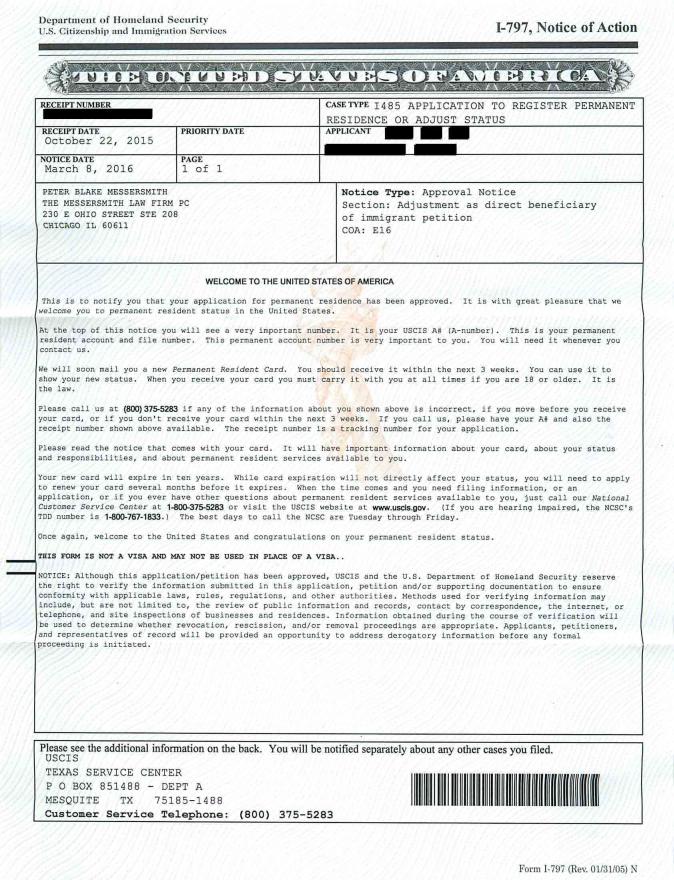
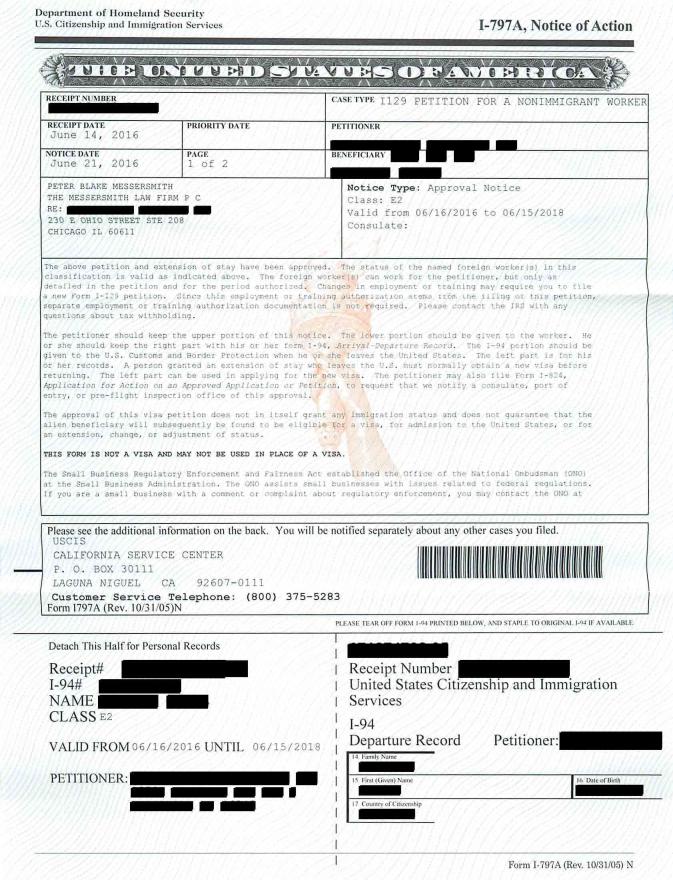
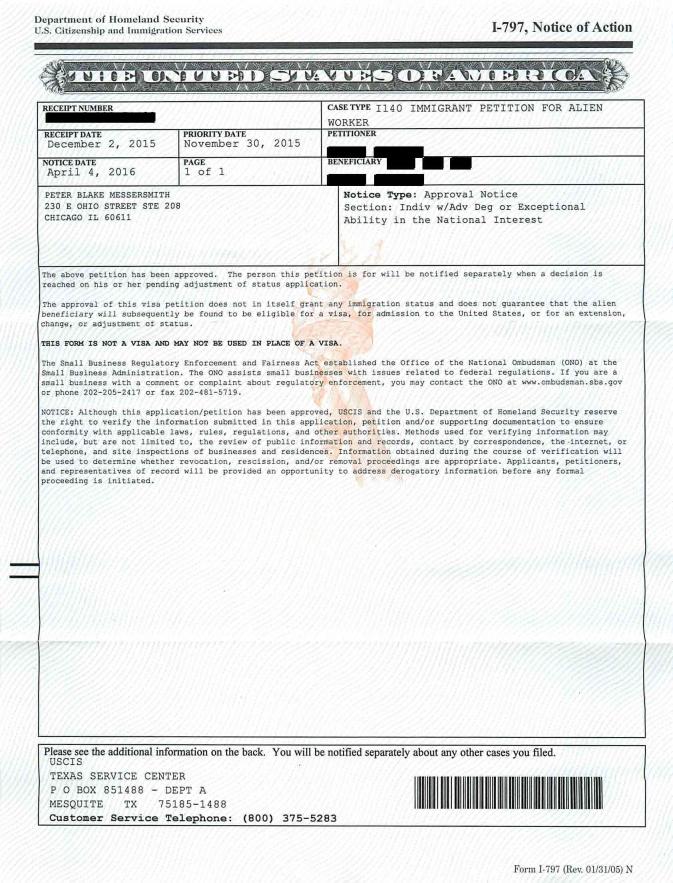
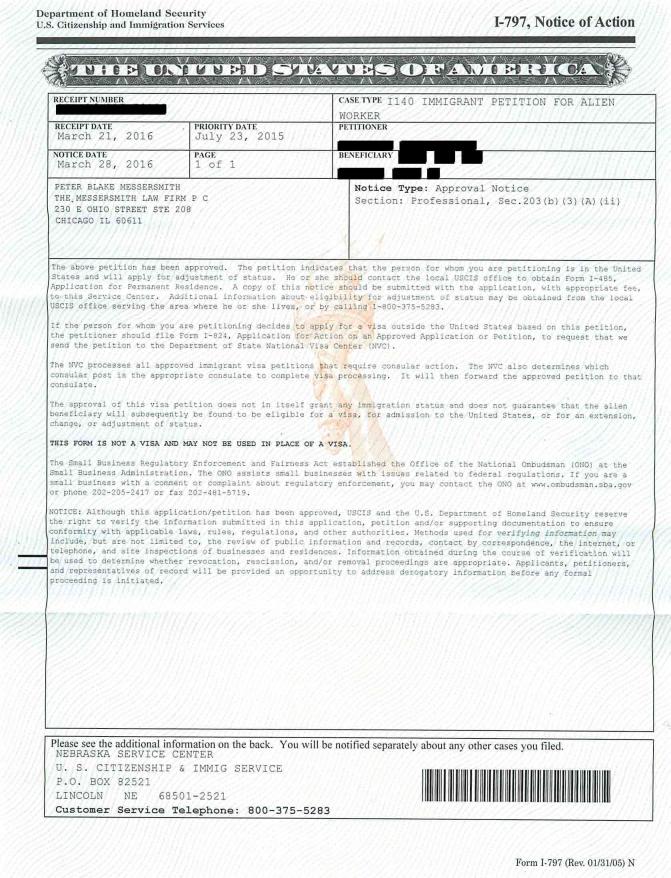
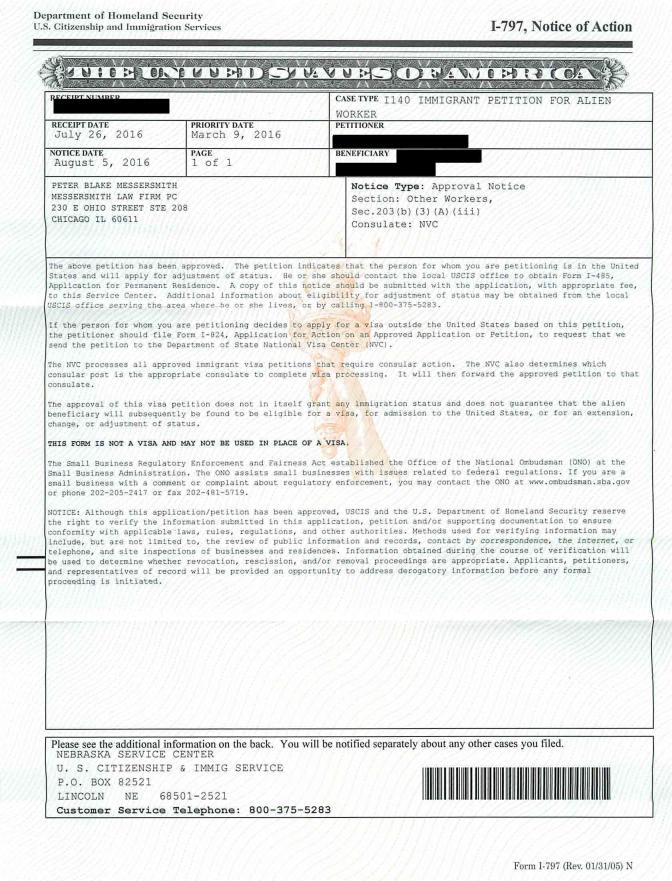
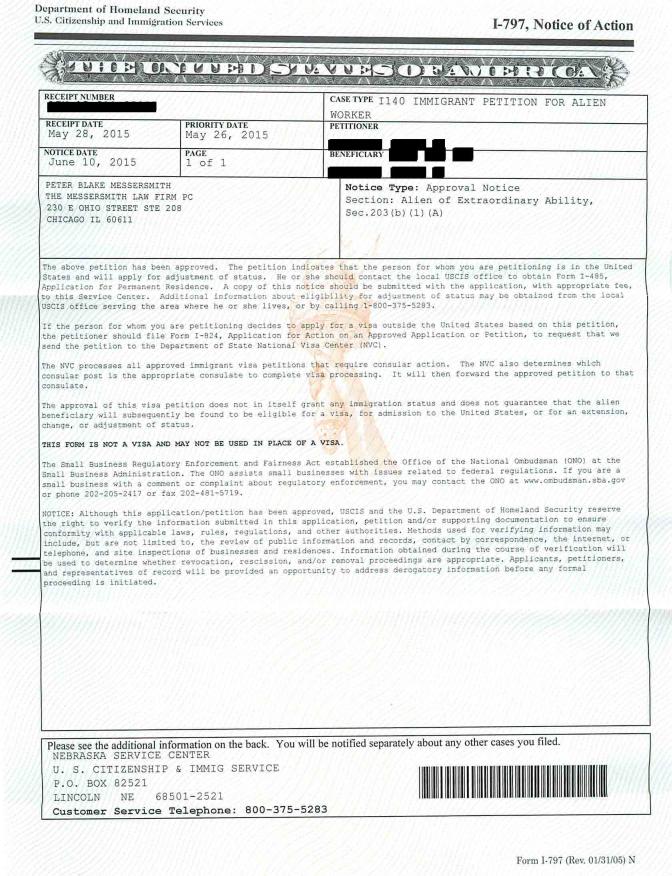
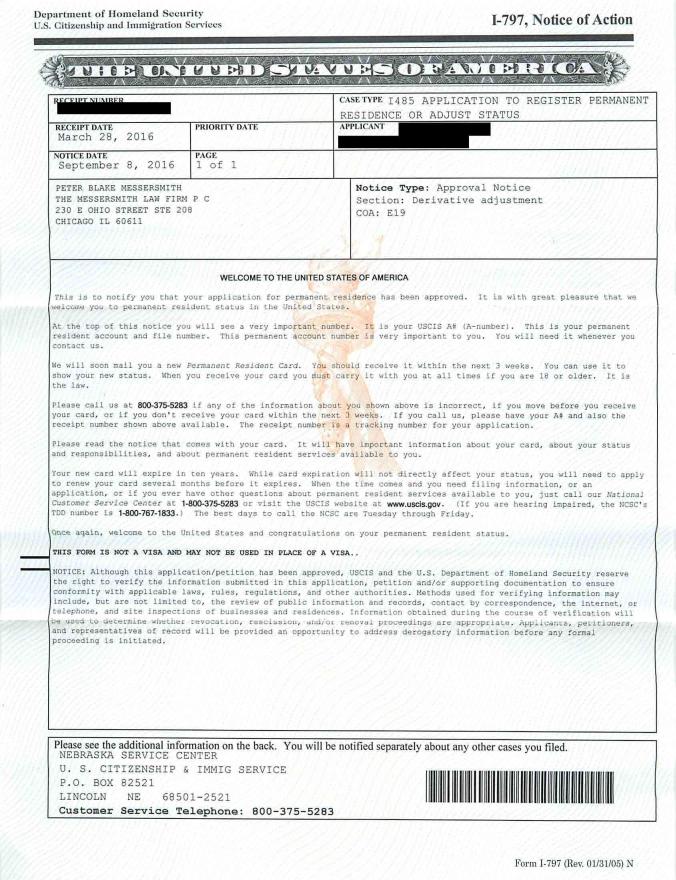
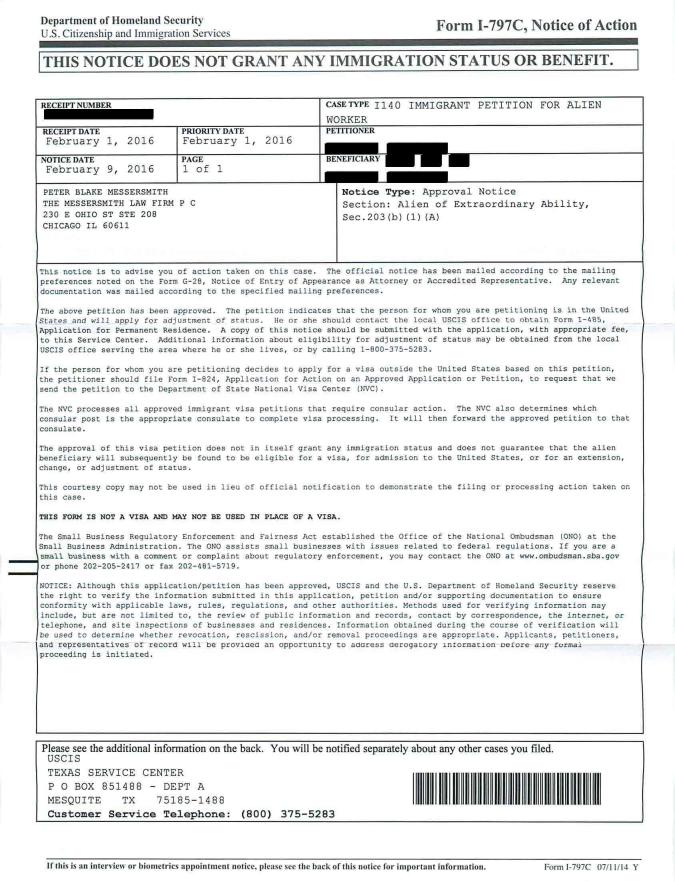
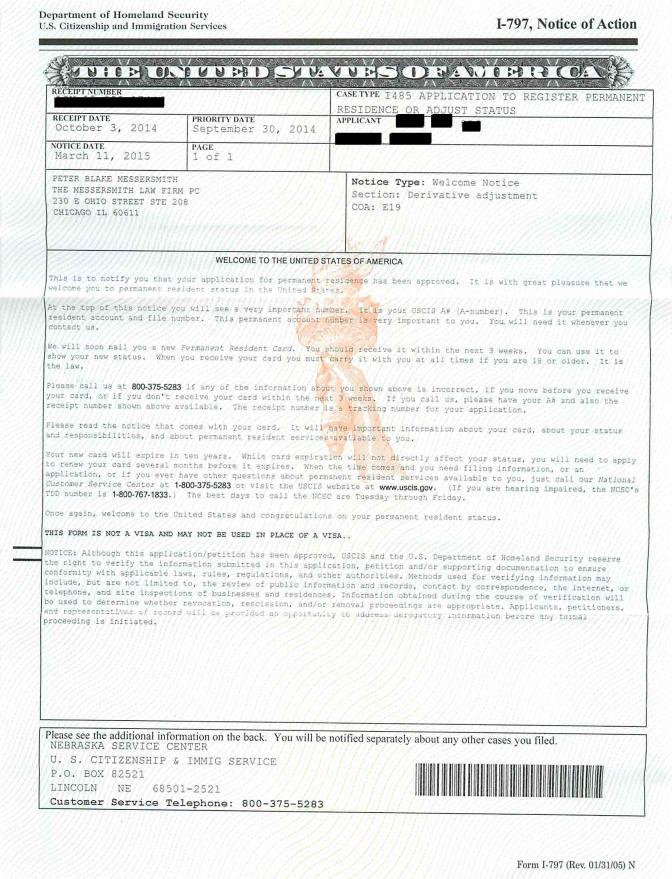
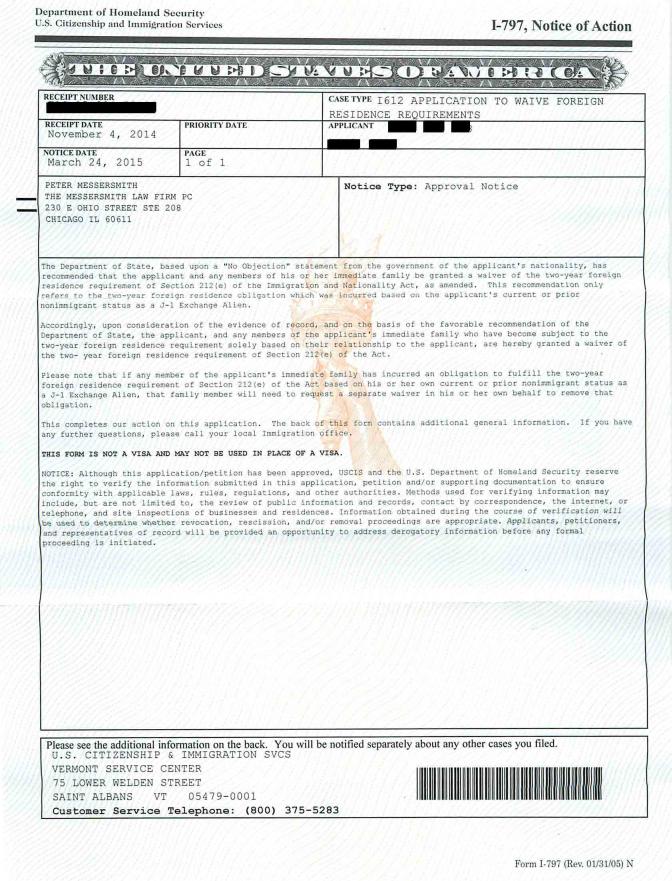
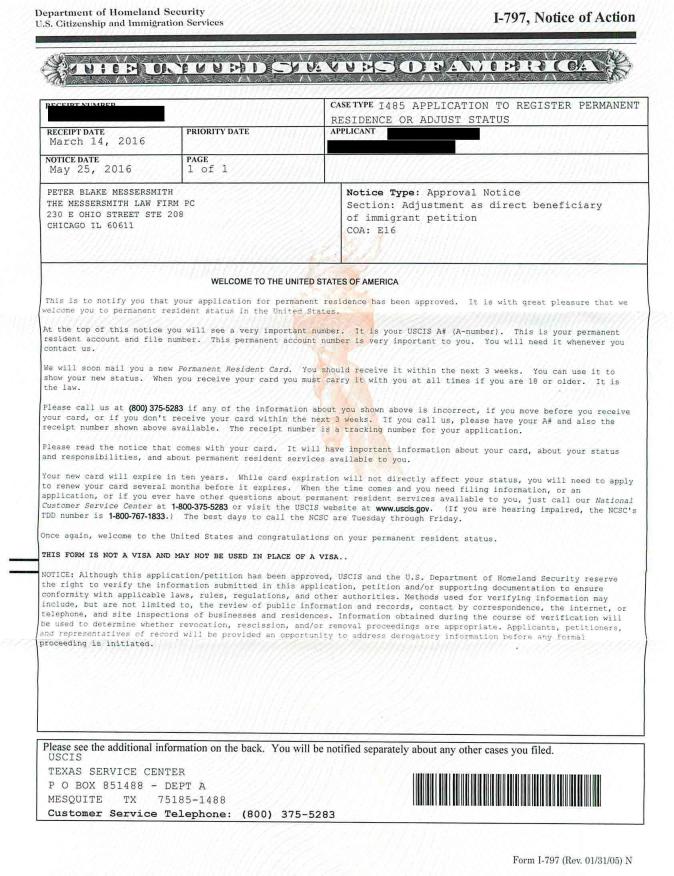
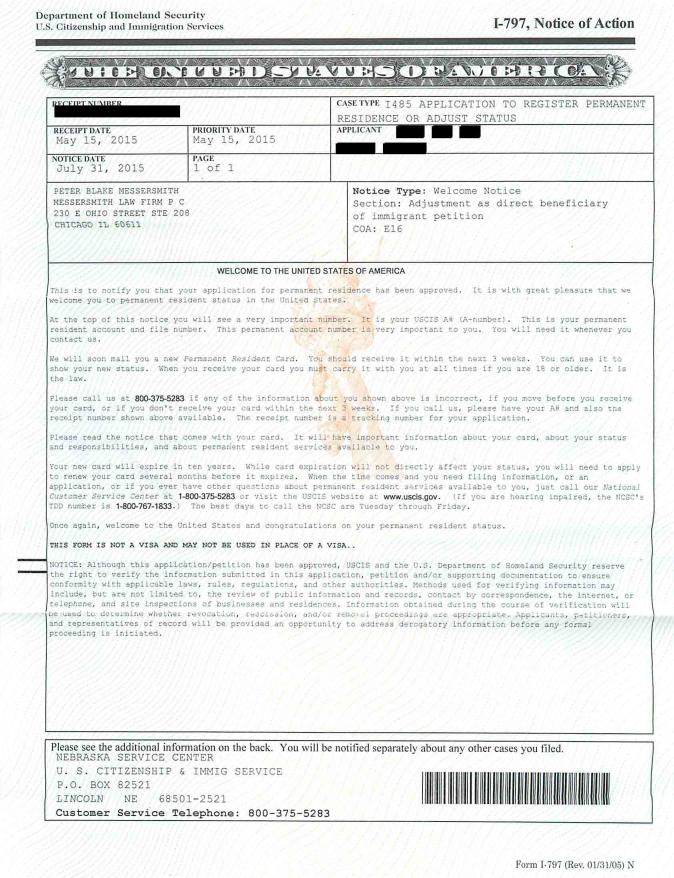
Scroll through fifty recent approval notices below or click here to view thousands.

Customer Testimonials

Real Testimonials from Past Clients