NIW Green Card for Researchers and Scientists

NIW Green Card for Researchers and Scientists

NIW Green Card for Researchers and Scientists

People often inquire about this issue as NIW, NIW green card, national interest waiver, EB2 NIW, NIW requirements, NIW for researchers, NIW for scientists, NIW self-petition, NIW no job offer, or NIW no labor certification. The NIW green card is an EB2 national interest waiver option for researchers and scientists whose work has substantial merit and national importance and who are well positioned to advance that work in the United States. A strong NIW case is often attractive because it may be filed as a self-petition and does not require a permanent job offer or labor certification when the legal standard is met.

NIW cases for researchers and scientists often involve professors, postdoctoral researchers, research scientists, engineers, physicians, public health professionals, and other experts whose work can be shown to benefit the United States through research, innovation, technology, education, health, or other nationally important activity.

NIW - National Interest Waiver Details

The National Interest Waiver (NIW) is part of the second employment-based category (EB2) for aliens of exceptional ability in sciences, arts or business and advanced degreed professionals (M.A., M.S., M.E., M.D. or Ph.D.). Ph.D. students also qualify. An alien may apply for permanent residence status (Green Card) and seek a waiver of the offer of employment by establishing that his or her admission to permanent residence would be in the national interest.

The national interest waiver is a good option for those who do not wish to wait several years for labor certification or those who do not wish to be tied to a specific employer during labor certification. The national interest waiver applicant sponsors him or herself and is not required to have a job. NIW applicants may make additional green card applications while their NIW petition is pending. Furthermore, if the NIW applicant is employed, the employer will not have knowledge of a pending NIW application.

The National Interest Waiver also applies to physicians. Physicians who agree to work full time in a designated health professional shortage area or in VA hospital and where a federal agency or State department of public health has determined that the physicians work is in the public interest for an aggregate of five years (not including time in J1 visa status) can obtain an NIW green card.

For Whom Is a NIW - National Interest Waiver Appropriate?

Foreign nationals with exceptional ability, or an advanced degree, who can show that their activities will substantially benefit the US national interest.

Foreign national physicians who agree to work full time in a health professional shortage area.

NIW - National Interest Waiver Requirements

For non-physicians, the applicant must show the following:

  • That the foreign national’s proposed endeavor has both substantial merit and national importance;
  • That the foreign national is well positioned to advance the proposed endeavor ; and
  • That, on balance, it would be beneficial to the United States to waive the requirements of a job offer and thus of a labor certification.

For physicians, the applicant must show the following:

  • The physician must agree to work full-time (40 hours a week) in a clinical practice for a total of five years.
  • The clinical practice  must be located within an area that is designated as a Medically Underserved  Area (MUA), a Primary Medical Health Professional Shortage Area (HPSA), a Mental Health Professional Shortage Area (MHPSA), or within a Veterans Affairs (VA) facility.
  • A physician serving in a MUA, MHPSA, or HPSA must provide  services in a medical specialty for which the area is designated.
  • A physician must accumulate the required five years of medical service within the six-year period beginning on the date the NIW is approved

NIW requirements for researchers and scientists

To qualify for a national interest waiver, the applicant must first qualify for the underlying EB2 category and then show that the case meets the national interest waiver standard. For researchers and scientists, a strong NIW case usually depends on the proposed endeavor, the importance of the work, the applicant’s track record, and whether the evidence shows that waiving the job offer and labor certification requirements would benefit the United States.

EB2 qualification

A strong NIW case must first qualify under EB2. That usually means the applicant qualifies as an advanced degree professional or as a person of exceptional ability. The filing should explain the applicant’s degree history, training, expertise, and professional background clearly.

Proposed endeavor

The petition should clearly define the proposed endeavor in the United States. In researcher and scientist cases, the proposed endeavor often involves continued research, innovation, technical development, clinical work, scientific leadership, teaching tied to research impact, public health work, engineering advancement, or another field-specific contribution.

Substantial merit

The proposed endeavor must have substantial merit. The filing should explain why the work matters in practical terms and how it contributes to science, technology, medicine, engineering, education, public health, industry, or another important area.

National importance

The proposed endeavor must also have national importance. The petition should show why the work matters beyond one employer or one local setting and why it has broader importance for the United States.

Well positioned to advance the proposed endeavor

The applicant must be well positioned to advance the proposed endeavor. A strong filing should explain the applicant’s record, skills, publications, citations, peer review, achievements, experience, funding, leadership, and other evidence showing that the person is capable of moving the work forward.

On balance, a waiver should benefit the United States

The petition should explain why it would benefit the United States to waive the job offer and labor certification requirements. A strong filing should connect this point to the nature of the work, the applicant’s qualifications, and the practical reasons the waiver is justified.

No job offer required

One of the most important features of NIW is that a permanent job offer is not required. The filing should still explain the applicant’s future work in the United States, but the case does not depend on a sponsoring employer in the same way many other employment-based green card categories do.

No labor certification required

NIW does not require PERM labor certification. This is one of the main reasons researchers and scientists explore the category, especially when their work has broader national value that does not fit neatly into a traditional employer-sponsored labor certification framework.

Self-petition

NIW may be filed as a self-petition. The applicant does not need a permanent employer sponsor to file the immigrant petition, although the case still needs strong evidence and a clear explanation of the proposed endeavor and its national importance.

Dhanasar framework

A strong NIW petition should be organized around the current legal framework for national interest waiver cases. The filing should clearly explain:

  • the proposed endeavor and its merit
  • why the endeavor has national importance
  • why the applicant is well positioned to advance it
  • why it is beneficial on balance to waive the job offer and labor certification requirements

Common evidence in NIW cases for researchers and scientists

Strong NIW filings often include:

  • degrees and academic records
  • publication lists
  • citation evidence
  • peer review activity
  • recommendation letters
  • research impact evidence
  • grants, funding, or project involvement
  • patents, technology development, or innovation evidence where relevant
  • evidence explaining the proposed endeavor
  • documents showing the national importance of the work

NIW for researchers, scientists, professors, and postdoctoral researchers

The NIW green card is often a strong option for researchers and scientists whose work has broad value to the United States and who can show that they are well positioned to continue advancing that work. Many NIW cases involve professors, postdoctoral researchers, research scientists, engineers, physicians, public health professionals, and other experts whose proposed work can be tied to science, technology, medicine, education, infrastructure, health, energy, or other nationally important areas.

NIW for researchers

Researcher cases often focus on the applicant’s field of work, the importance of the proposed research, and the applicant’s ability to continue advancing the endeavor in the United States. A strong filing should explain the research area clearly and show why the work matters beyond a single employer or institution.

NIW for scientists

Scientist cases often depend on showing that the proposed work has substantial merit and national importance and that the applicant has the background, track record, and evidence needed to move the work forward. The petition should define the scientific field clearly and explain the national value of the proposed endeavor in practical terms.

NIW for professors

Professor cases may be strong when the filing shows that the proposed teaching, scholarship, research leadership, or academic contribution has broader national value and that the applicant is well positioned to continue that work in the United States. The petition should explain the applicant’s academic field and why the endeavor matters beyond one classroom or institution.

NIW for postdoctoral researchers

Postdoctoral researchers often search whether they are strong enough for NIW. A strong postdoc case usually depends on clearly defined future work, a credible proposed endeavor, research impact, publications, citations, peer review, strong training, and evidence showing that the applicant is well positioned to advance the field in the United States.

Proposed endeavor is one of the most important parts of the case

A strong NIW petition should clearly explain what the applicant plans to do in the United States. The proposed endeavor should not be vague or overly broad. It should describe the applicant’s future work in a way that makes the merit, national importance, and practical impact easy to understand.

Substantial merit and national importance should be explained clearly

The filing should explain why the proposed endeavor has substantial merit and national importance. A strong petition should not assume that scientific or academic work automatically meets this standard. It should explain why the work matters for the United States in a broader sense, including effects on science, health, technology, education, engineering, industry, public welfare, or other nationally important areas. USCIS continues to apply the Dhanasar framework and updated NIW guidance in this way.

Well positioned to advance the endeavor

For many researchers and scientists, this is the part of the case where publications, citations, peer review, grants, recommendation letters, patents, presentations, and other evidence become especially important. The petition should explain not just what the applicant has done, but why that record shows the person is well positioned to continue advancing the proposed work in the United States.

Publications and citations in NIW cases

Many NIW cases include scholarly articles and citation evidence. The filing should explain the publication record clearly, identify the applicant’s role in the work, and show what the citations mean in context. Raw numbers alone are not enough. The petition should explain research impact, influence, and field-specific significance.

Peer review and judging can strengthen the case

Peer review can be important in NIW cases because it shows that journals, conferences, or other institutions trusted the applicant to evaluate the work of others. The petition should explain the significance of that role and how it supports the claim that the applicant is well positioned to advance the proposed endeavor.

Recommendation letters should support the endeavor, not just praise the applicant

Strong NIW letters usually do more than describe the applicant as talented. They should help explain the value of the proposed work, the applicant’s qualifications, the impact of the applicant’s prior work, and why the endeavor matters to the United States.

Common evidence in stronger researcher and scientist NIW cases

Strong filings often include:

  • degrees and academic records
  • publication lists
  • citation records
  • peer review evidence
  • grant or funding evidence
  • patents or technical innovation evidence where relevant
  • recommendation letters
  • conference presentations or invited talks
  • evidence of research impact
  • a clear description of the proposed endeavor

Common questions in researcher and scientist NIW cases

Common questions include:

  • What is the proposed endeavor in an NIW case?
  • How do I show national importance for NIW?
  • How do I show that I am well positioned for NIW?
  • Can a postdoc qualify for NIW?
  • Do publications and citations matter for NIW?
  • Is NIW good for professors and researchers?

How strong should an NIW researcher or scientist profile be?

One of the most common NIW questions is whether a researcher or scientist has a strong enough profile to file. Many applicants want to know how many papers, citations, reviews, awards, or other achievements are needed before filing. NIW does not use a fixed minimum number of publications or citations. A strong case depends on the total record and whether the evidence shows that the proposed endeavor has substantial merit and national importance, that the applicant is well positioned to advance it, and that waiving the job offer and labor certification requirements would benefit the United States.

There is no fixed number of papers or citations

NIW does not require a specific number of scholarly articles, citations, reviews, or awards. A case with more publications or citations is not automatically strong, and a case with fewer numbers is not automatically weak. The filing should explain what the numbers mean in the context of the field, the applicant’s career stage, the impact of the work, and the significance of the overall record. The focus should stay on the strength of the endeavor and the applicant’s ability to advance it.

Strong NIW cases usually show a combination of evidence

A strong filing often includes several different forms of evidence working together, such as:

  • scholarly publications
  • citation impact
  • peer review or judging activity
  • original research contributions
  • grants or funding
  • patents or technical innovation where relevant
  • recommendation letters
  • invited talks or presentations
  • evidence of the proposed endeavor
  • documents showing national importance

The strongest cases usually do not rely on only one metric. They present a broader record showing that the applicant is well positioned to continue important work in the United States.

Publications matter, but quality and impact matter more than raw count alone

Publication count can help, but the filing should explain the importance of the work, the role of the applicant in the publications, and the influence of the research on the field or on the proposed endeavor. A smaller number of highly significant publications can be stronger than a larger number of lower-impact publications if the evidence is presented clearly.

Citations matter, but they should be explained in context

Citation evidence can be useful, but it should not be presented as just a number. A strong petition explains how the citation record compares within the field, how the work has been used by others, and why the citation pattern supports the claim that the applicant is well positioned to advance the proposed endeavor.

Peer review and judging can strengthen the case

Peer review is often an important part of NIW filings because it shows that journals, conferences, or other organizations trusted the applicant to evaluate the work of others. The petition should explain the level of responsibility involved and how that experience supports the applicant’s standing in the field.

The proposed endeavor matters as much as the past record

A strong NIW case is not only about what the applicant has already done. It is also about what the applicant plans to do in the United States. The filing should explain the proposed endeavor clearly and connect the applicant’s past work to the future work in a practical and credible way. USCIS continues to focus NIW analysis on the specific proposed endeavor under the Dhanasar framework.

Original contributions can be very important

For many researchers and scientists, one of the most important issues is whether the prior work had meaningful impact. A strong petition should explain why the contributions matter, what changed because of them, who relied on them, and why they support the claim that the applicant is well positioned to continue advancing important work.

Career stage matters

A strong profile should be evaluated in light of the applicant’s field, subfield, and career stage. Early-career researchers, postdoctoral researchers, faculty members, industry scientists, physicians, engineers, and senior investigators may present different types of evidence. The filing should explain why the record is strong for that level and discipline.

There is no single approved NIW profile

There is no one approved template for NIW. Some strong cases are publication-heavy. Others are stronger because of patents, clinical impact, technical development, policy importance, public health significance, or a highly focused proposed endeavor. The strongest filings present one coherent story showing both the value of the work and the applicant’s ability to advance it.

Common profile-strength questions

Common questions include:

  • How many papers are enough for NIW?
  • How many citations are enough for NIW?
  • Is peer review enough for NIW?
  • Do I need major awards for NIW?
  • Is my profile strong enough for NIW as a researcher or scientist?
  • What does an approved NIW profile look like?
  • Can a postdoc qualify for NIW?

Frequently asked questions about NIW for researchers and scientists

What is the NIW green card?

NIW is a national interest waiver under the EB2 category. It allows certain applicants to seek a green card without a permanent job offer or labor certification if the legal standard is met.

Who qualifies for NIW?

A qualifying NIW case must first fit the EB2 category and then show that the proposed endeavor has substantial merit and national importance, that the applicant is well positioned to advance the endeavor, and that it would benefit the United States to waive the job offer and labor certification requirements.

What is the NIW green card?

NIW is a national interest waiver under the EB2 category. It allows certain applicants to seek a green card without a permanent job offer or labor certification if the legal standard is met.

Does NIW require a job offer?

No. NIW does not require a permanent job offer.

Does NIW require labor certification?

No. NIW does not require PERM labor certification.

Can a researcher or scientist self-petition for NIW?

Yes. NIW may be filed as a self-petition if the applicant can meet the legal standard.

What is the proposed endeavor in an NIW case?

The proposed endeavor is the future work the applicant plans to carry out in the United States. In researcher and scientist cases, this often involves continued research, innovation, teaching tied to research impact, engineering work, public health work, clinical work, or other nationally important scientific or technical activity.

What does substantial merit mean for NIW?

Substantial merit means the proposed endeavor has real value in an important area such as science, technology, medicine, engineering, education, public health, energy, infrastructure, or another field that matters in the United States.

What does national importance mean for NIW?

National importance means the proposed endeavor matters beyond one employer or one local setting and has broader importance for the United States.

What does well positioned mean for NIW?

It means the applicant has the background, skills, track record, and evidence needed to continue advancing the proposed endeavor successfully in the United States.

What is the Dhanasar framework?

The Dhanasar framework is the legal standard used in NIW cases. It asks whether the proposed endeavor has substantial merit and national importance, whether the applicant is well positioned to advance it, and whether waiving the job offer and labor certification requirements would benefit the United States on balance.

Can postdoctoral researchers qualify for NIW?

Yes. Postdoctoral researchers can qualify for NIW if the record is strong enough and the filing clearly explains the proposed endeavor, the national importance of the work, and why the applicant is well positioned to advance it.

Can professors qualify for NIW?

Yes. Professors may qualify for NIW if the petition shows that their proposed teaching, scholarship, research leadership, or related work has substantial merit and national importance and that they are well positioned to continue it.

Can engineers and scientists qualify for NIW?

Yes. Many engineers and scientists use NIW when their work can be tied to research, innovation, technical development, infrastructure, public welfare, health, energy, manufacturing, or other nationally important areas.

How many papers are enough for NIW?

There is no fixed minimum number of papers for NIW. A strong case depends on the total record, the significance of the work, and how well the filing shows that the applicant is well positioned to advance an important endeavor.

How many citations are enough for NIW?

There is no fixed minimum number of citations for NIW. Citation evidence should be explained in context, including field norms, career stage, and the impact of the work.

Do publications matter in NIW cases?
Yes. Publications can help show expertise, research activity, and impact, but they are only one part of the overall case.

Does peer review help an NIW case?
Yes. Peer review can help because it shows that journals, conferences, or other institutions trusted the applicant to evaluate the work of others in the field.

Do I need major awards for NIW?

No. Major awards are not required. Many strong NIW cases are approved without major awards if the overall evidence is strong.

What kinds of evidence are common in researcher and scientist NIW cases?

Common evidence includes degrees, publications, citations, peer review, recommendation letters, grants, patents, technical innovation, invited presentations, research impact, and documents explaining the proposed endeavor and its national importance.

What is the difference between NIW and EB1A for researchers and scientists?

NIW is an EB2 national interest waiver category focused on the proposed endeavor and the national interest. EB1A is a separate category focused on extraordinary ability and sustained national or international acclaim at a very high level.

What is the difference between NIW and EB1B?

NIW can be self-petitioned and does not require a permanent job offer. EB1B is an employer-sponsored category for outstanding professors and researchers and requires a qualifying permanent academic or research position.

Is an early-career researcher automatically too weak for NIW?

No. Early-career researchers and postdocs can still have strong NIW cases if the proposed endeavor is well defined, nationally important, and supported by a credible record.

What does an approved NIW profile look like?

There is no single approved NIW profile. Strong cases can look different depending on the field, the proposed endeavor, the applicant’s career stage, and the type of evidence available.

Can NIW lead to a green card without waiting for PERM?

Yes. NIW is itself a path within EB2 and does not require PERM labor certification.

How do I know if my NIW profile is strong enough?

The best way to evaluate NIW strength is to look at the proposed endeavor, the national importance of the work, the applicant’s qualifications, and how well the evidence shows that the applicant is well positioned to advance the endeavor in the United States.

USCIS Memo Relating to National Interest Waiver
DateTitleDetails
March 9, 2016Matter-of-H-V-PMatter of H-V-P- clarifies that, in addition to primary care physicians, medical specialists who agree to practice in any area designated by the Secretary of Health and Human Services as having a shortage of health care professionals may be eligible for the physician national interest waiver.

Top Notch Immigration Services

You will receive top notch immigration services at The Messersmith Law Firm. We guarantee personalized legal services, a high rate of success, and very reasonable fees. At The Messersmith Law Firm, you will always get more than what you pay for. While the majority of our clients are referred to our law firm, we are open to take new cases if we feel we can help you achieve your goals. We have no doubt that you will refer everyone you know to us once your case is approved! Our goal is to get your case approved in the shortest amount of time possible yet strive to keep our fees reasonable!

Thousands of Approved Cases

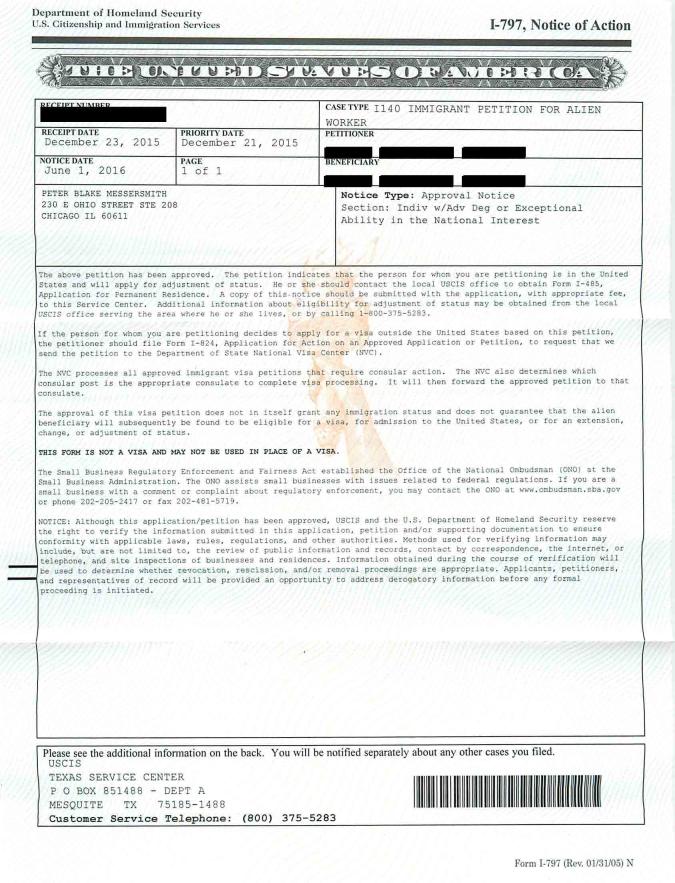
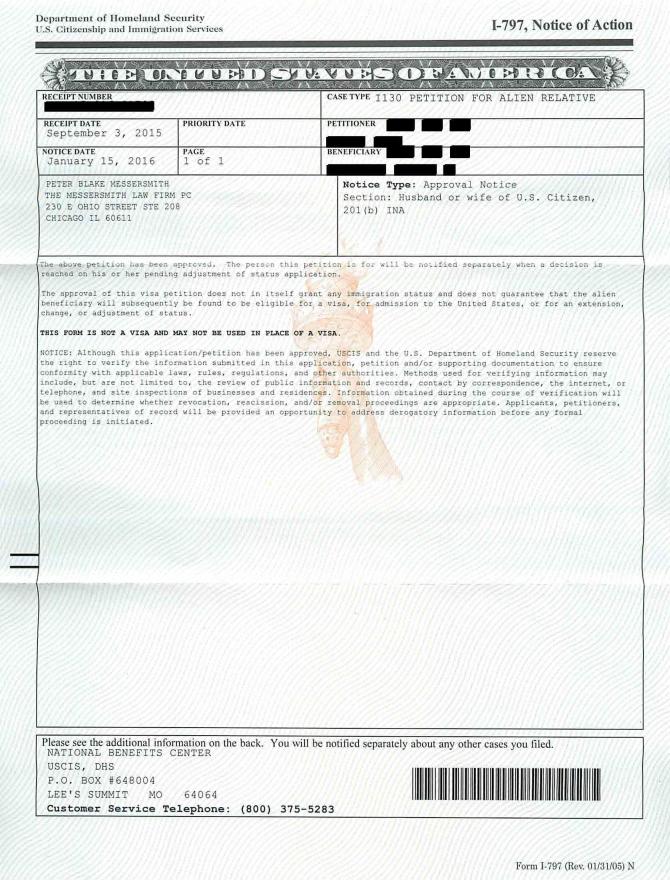
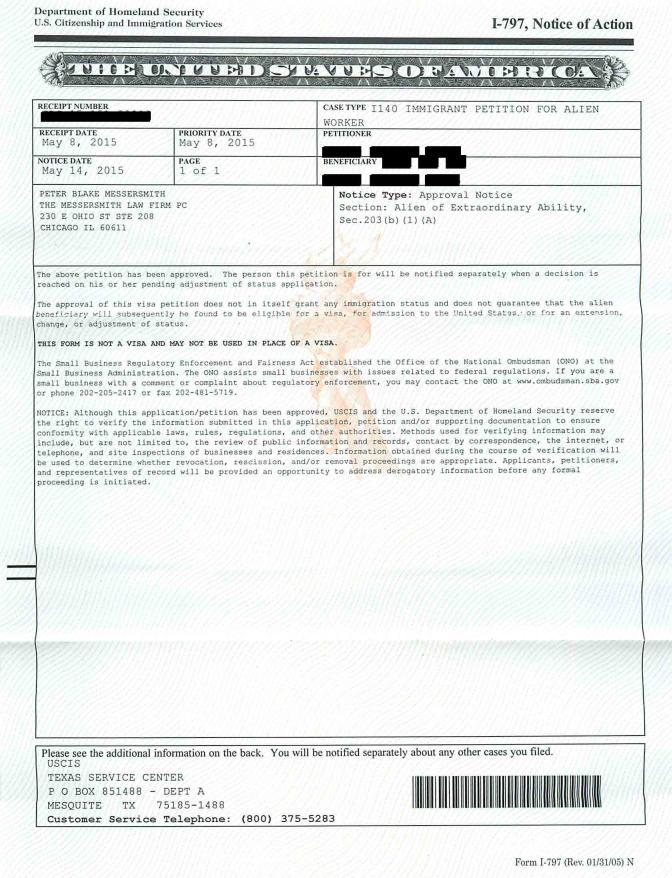
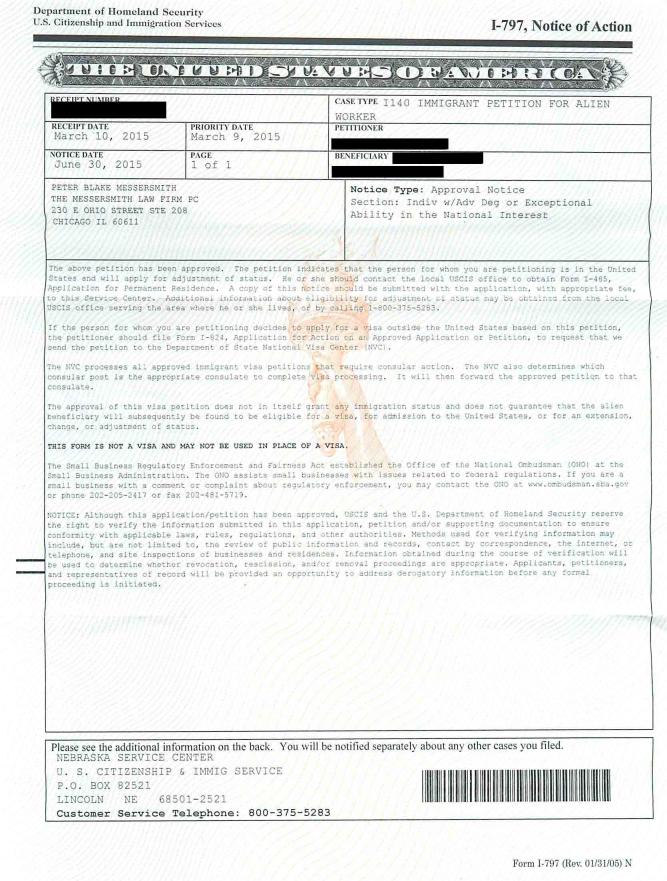
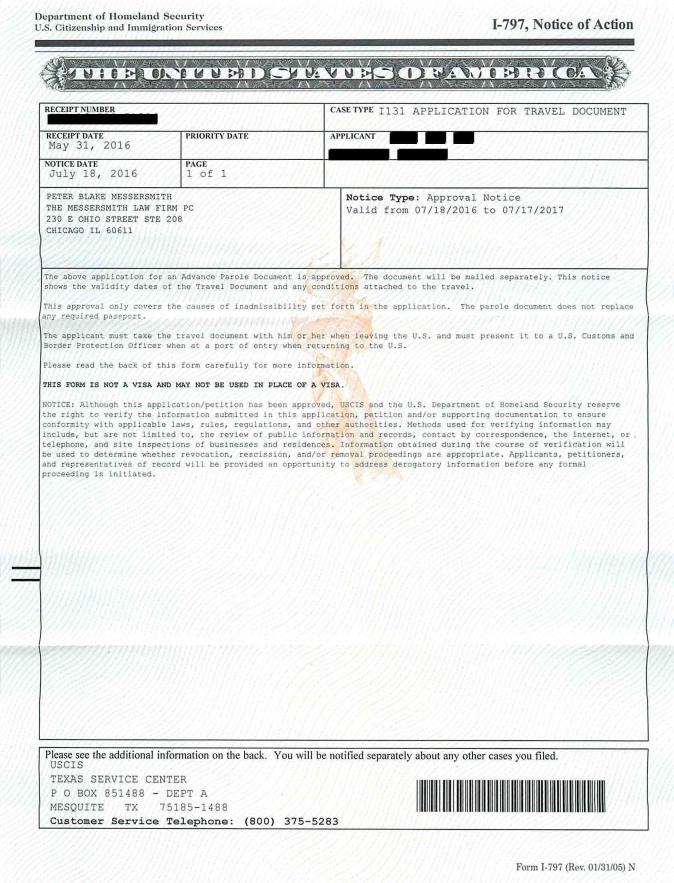
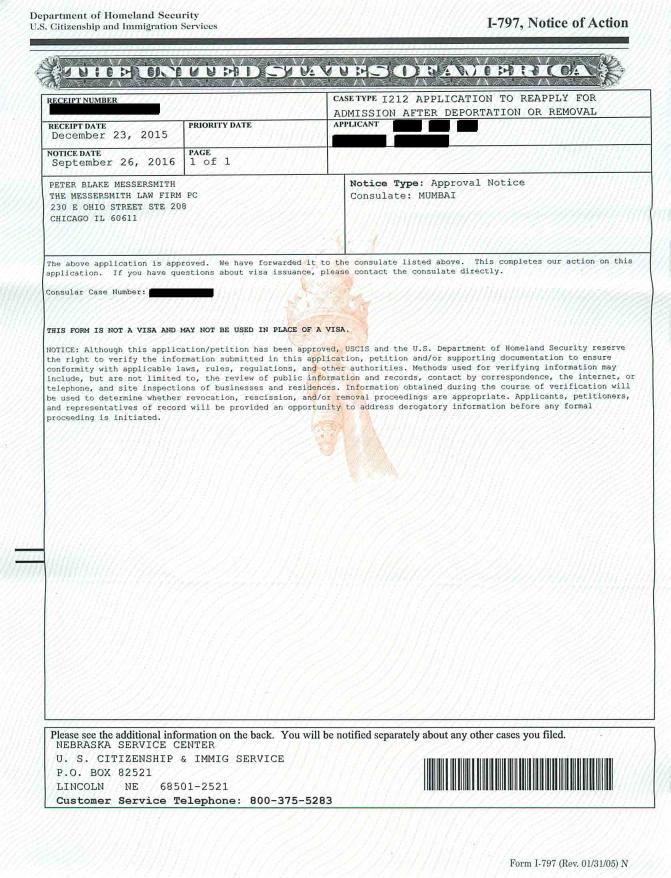
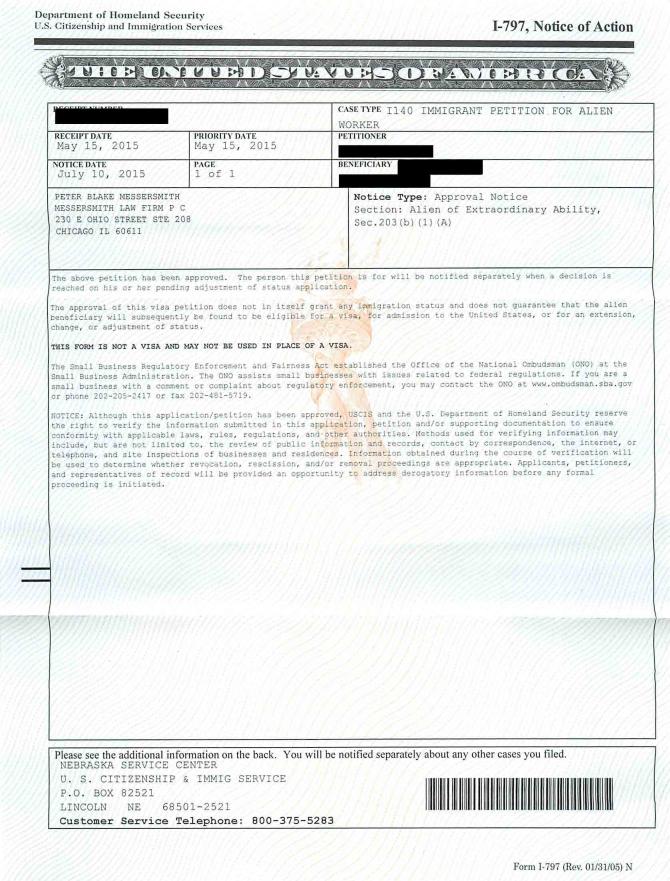
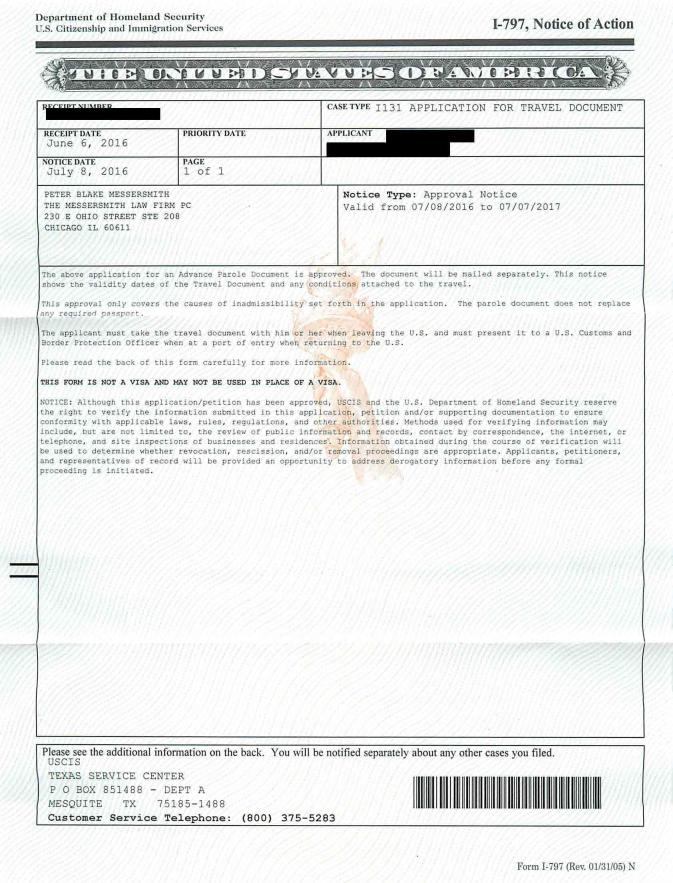
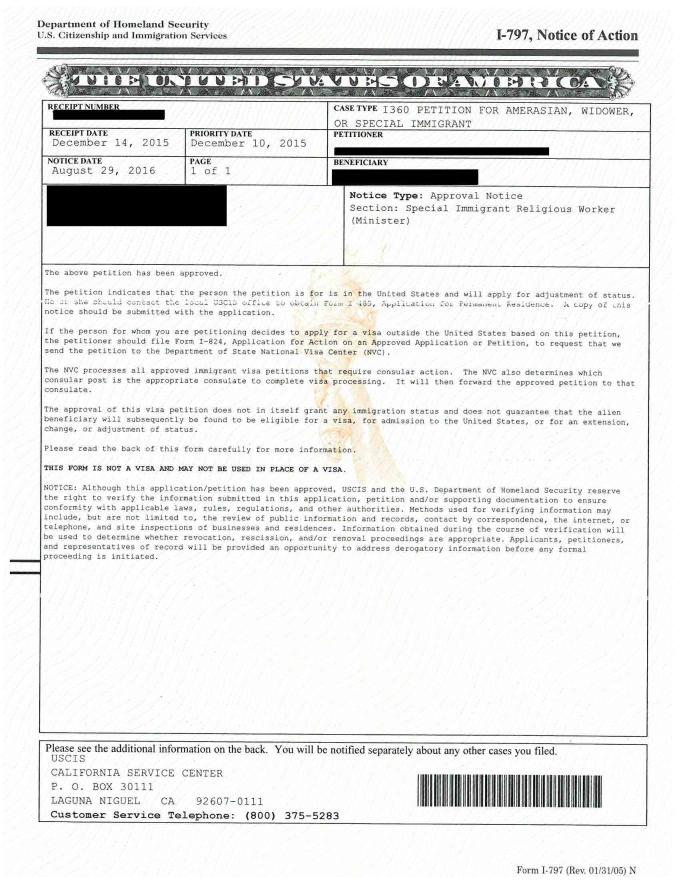
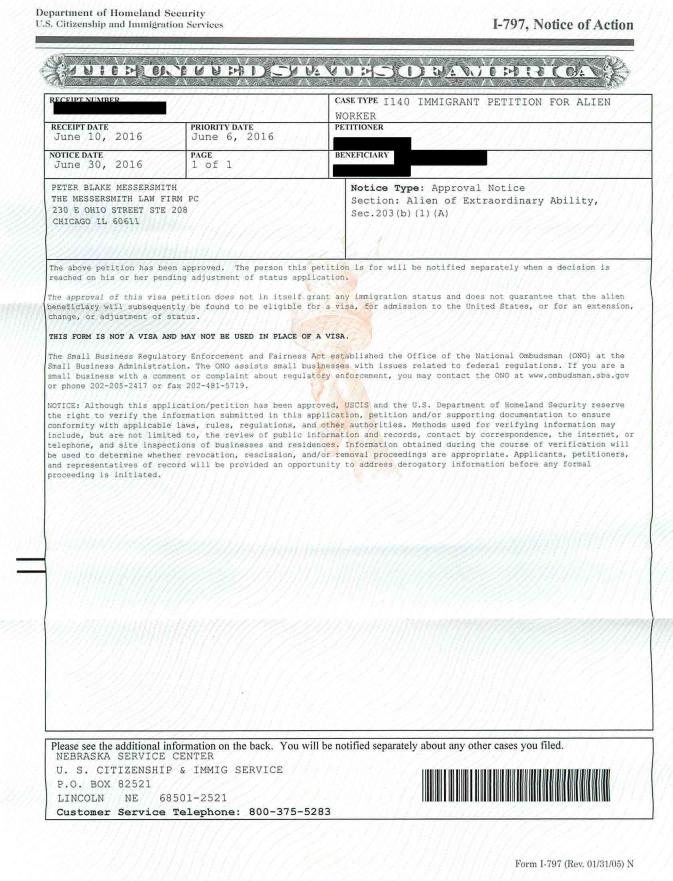
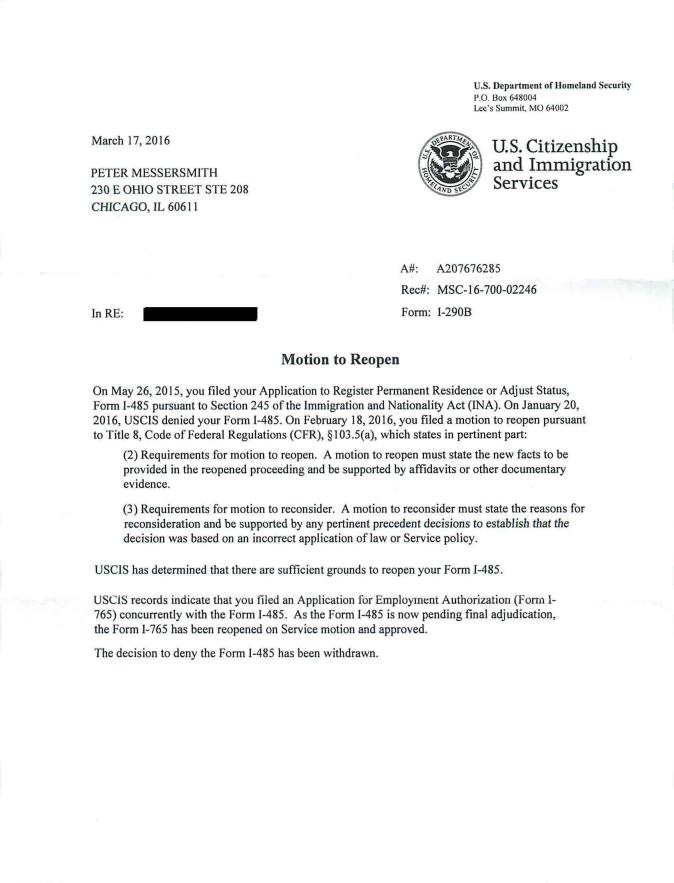
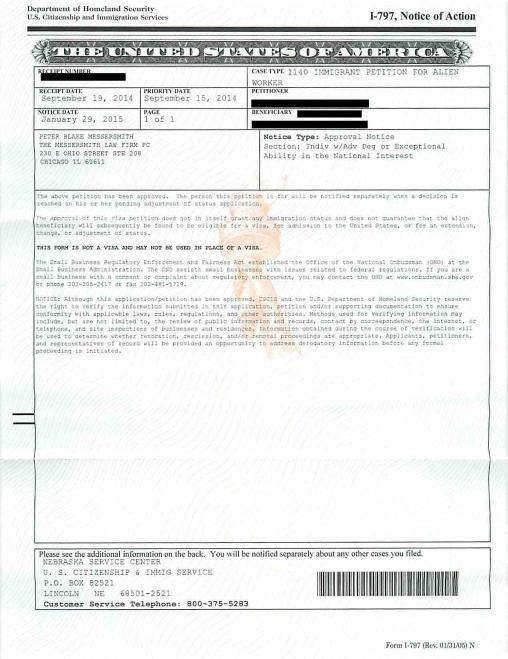
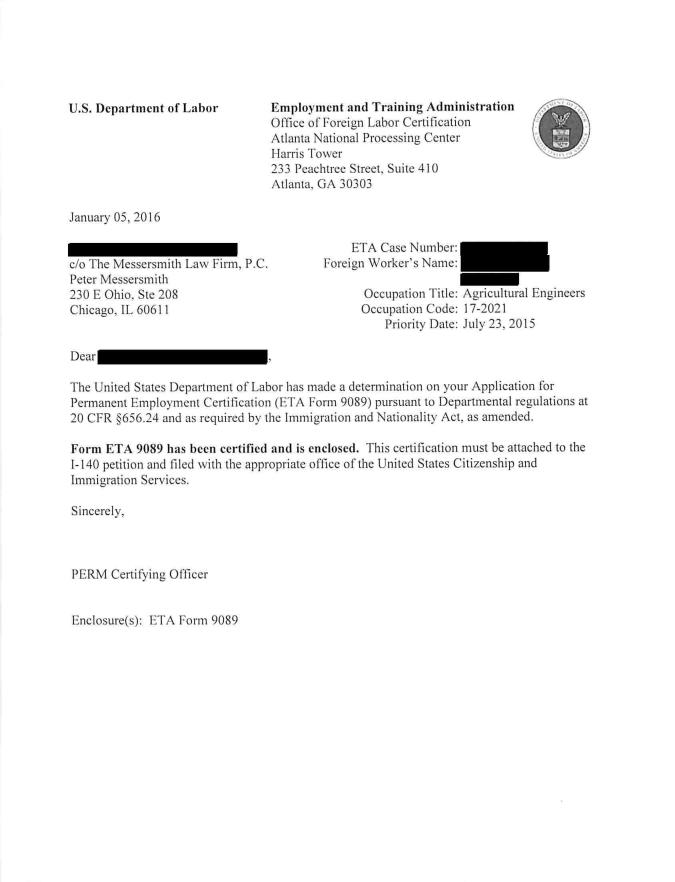
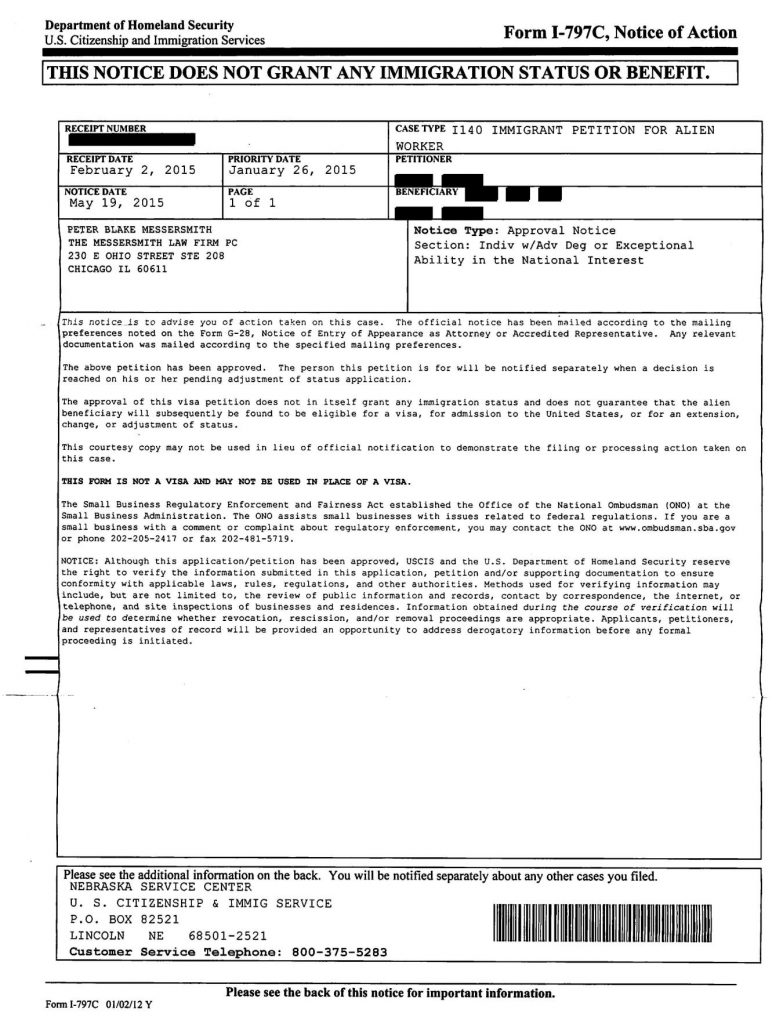
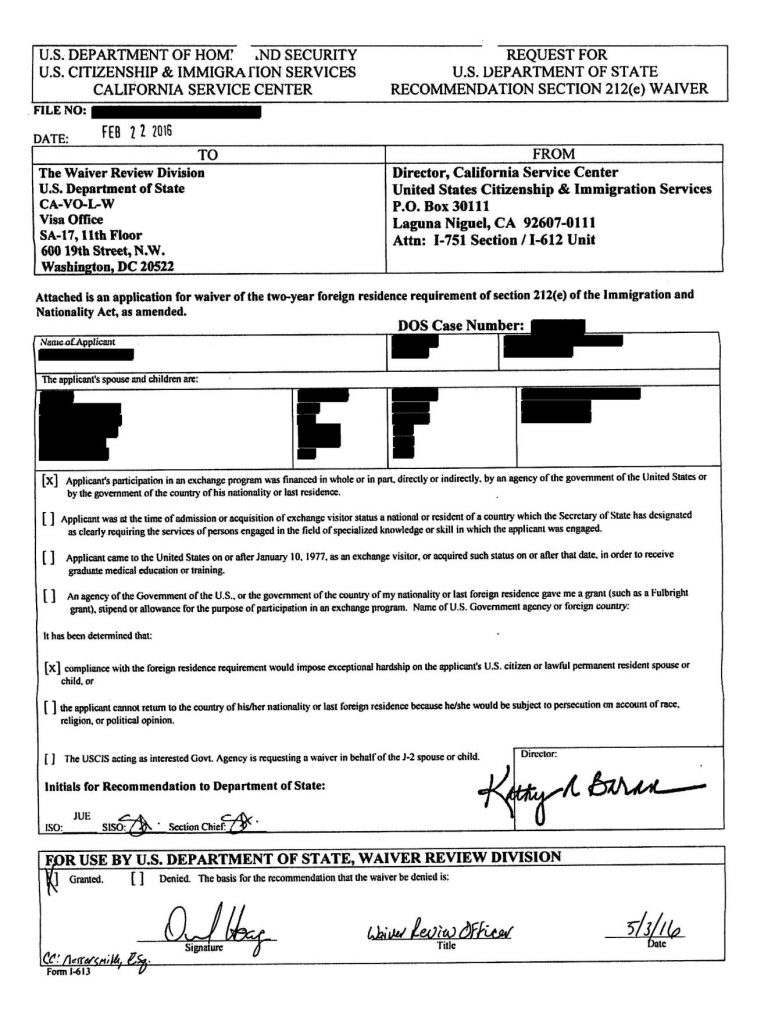
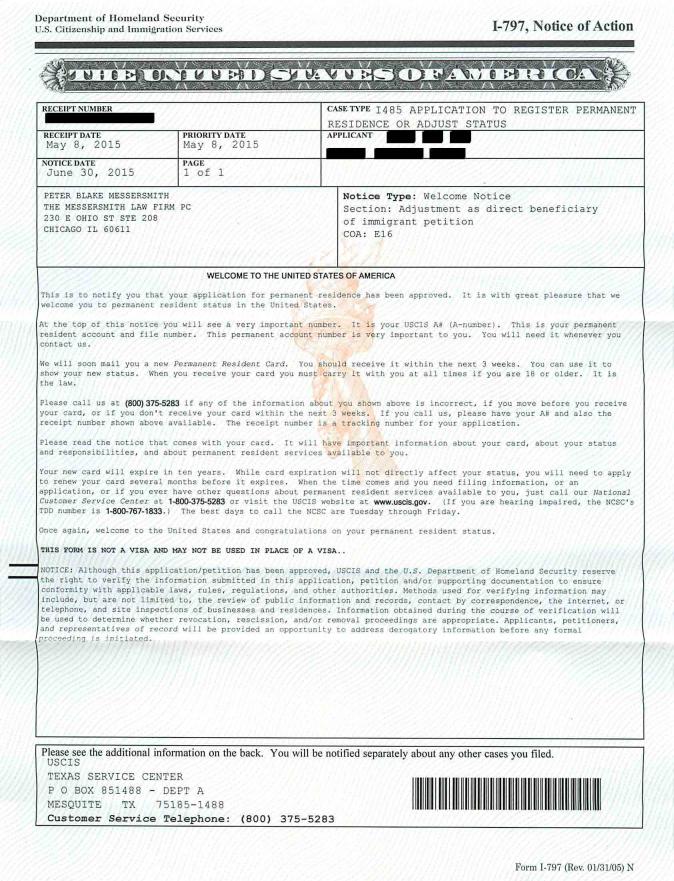
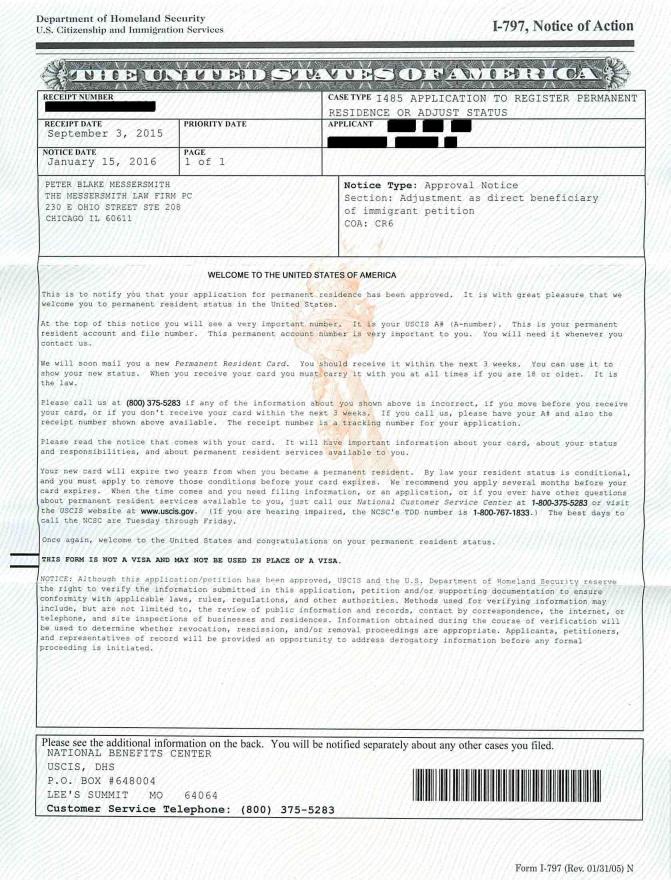
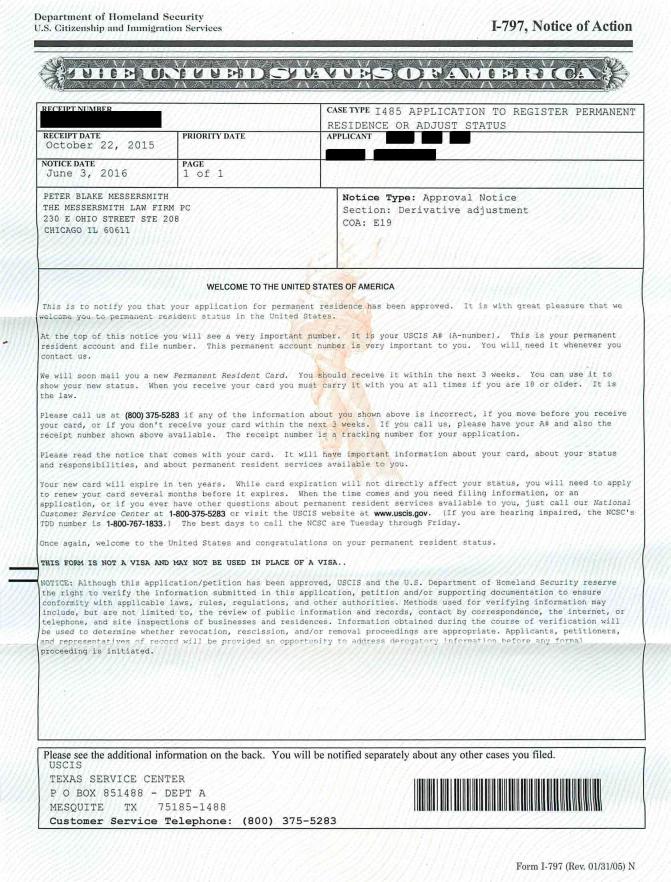
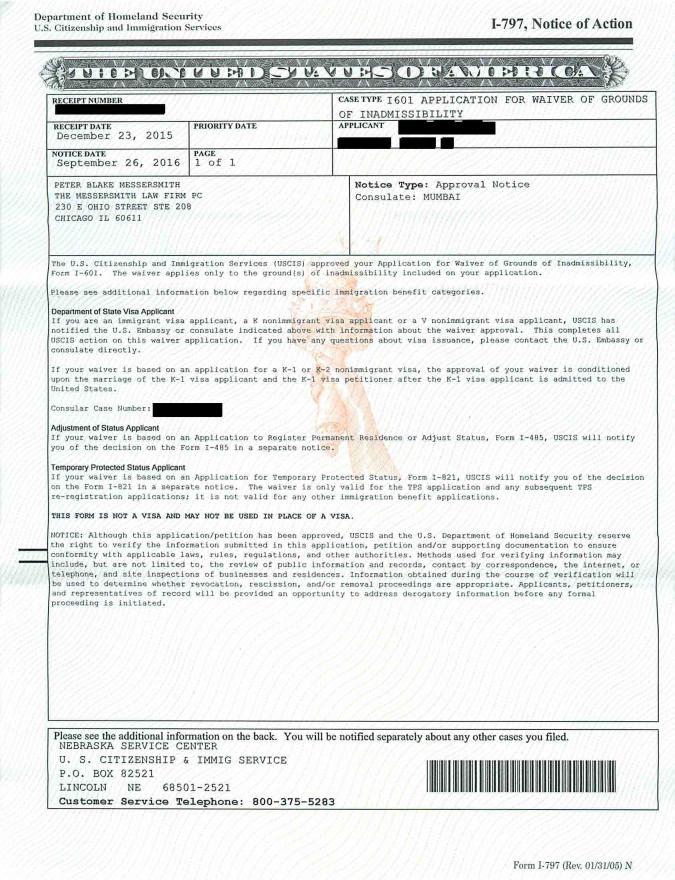
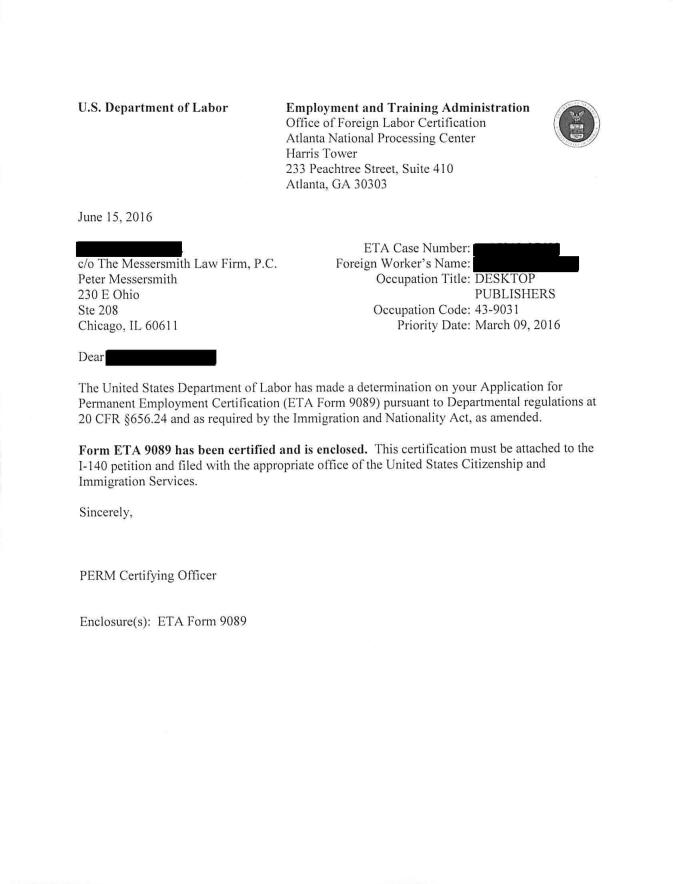
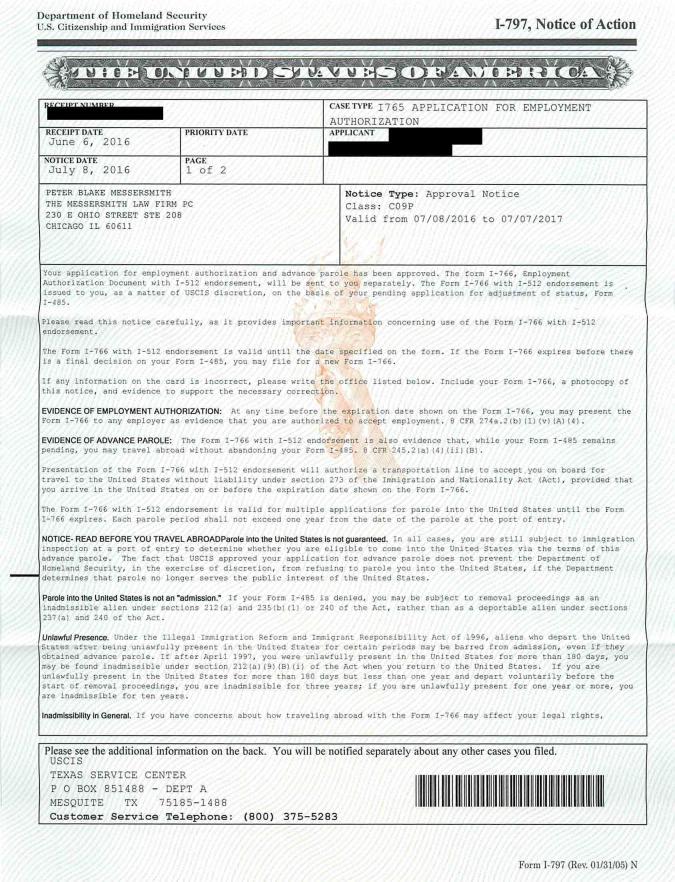
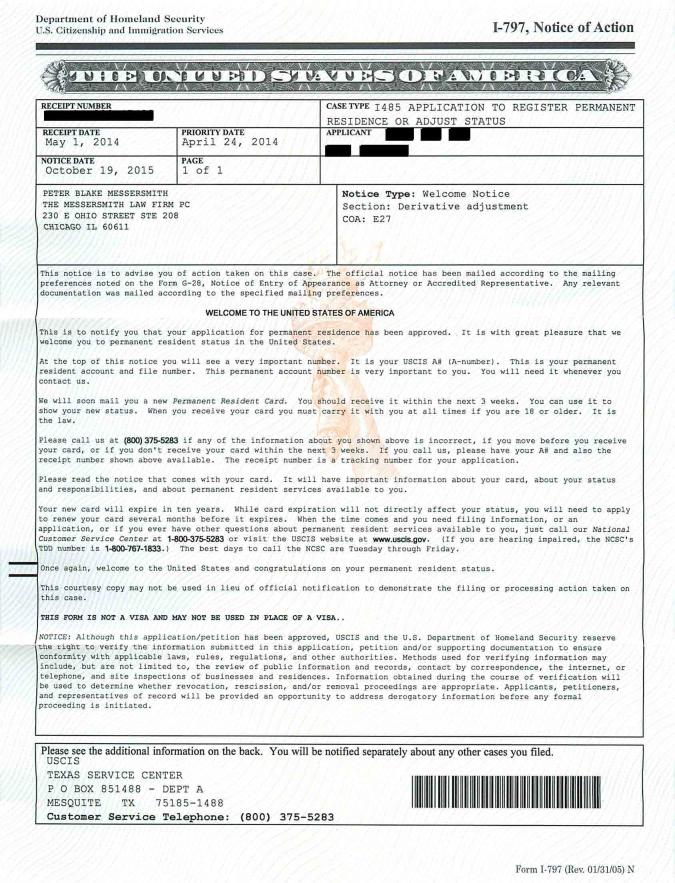
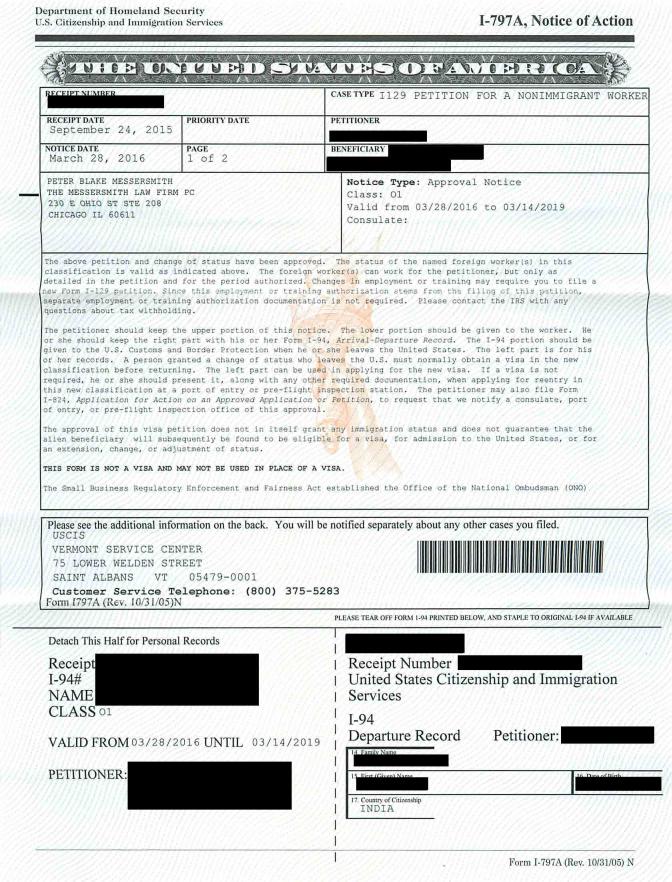
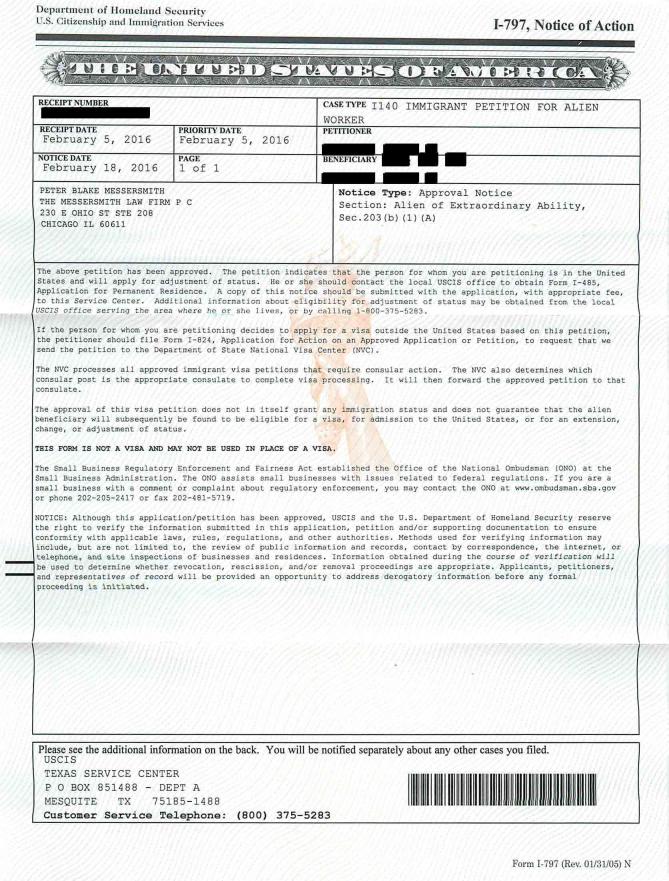
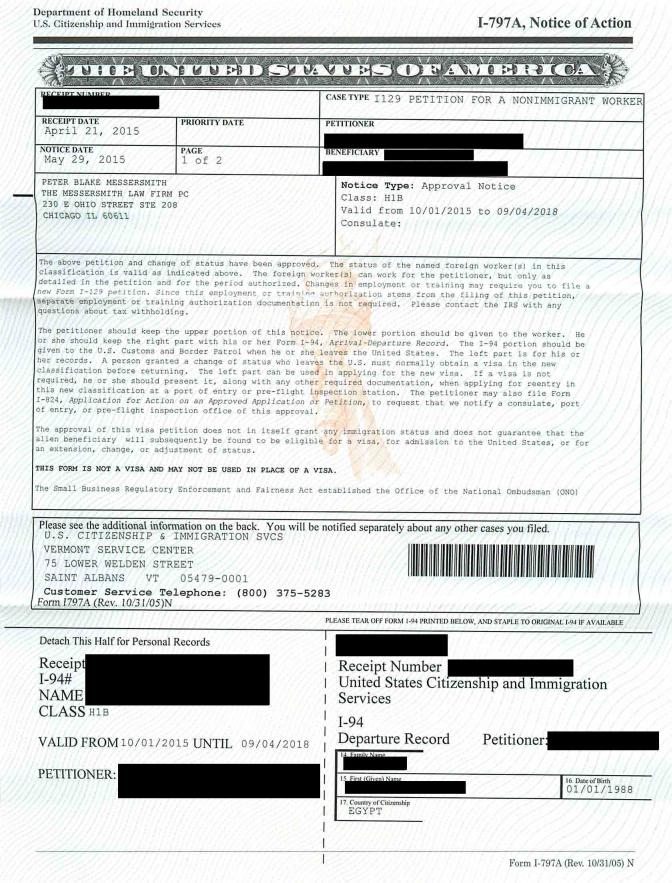
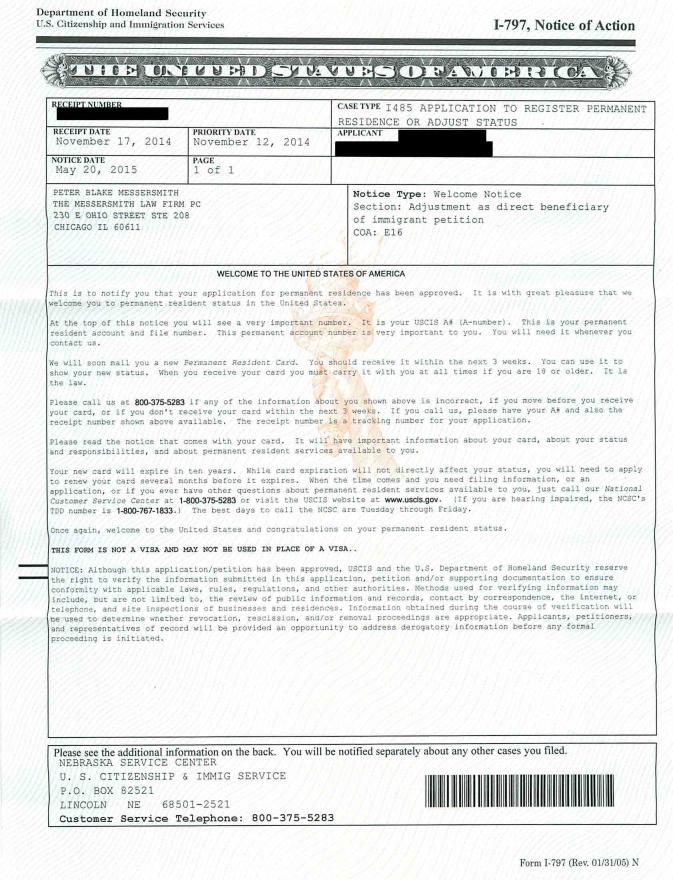
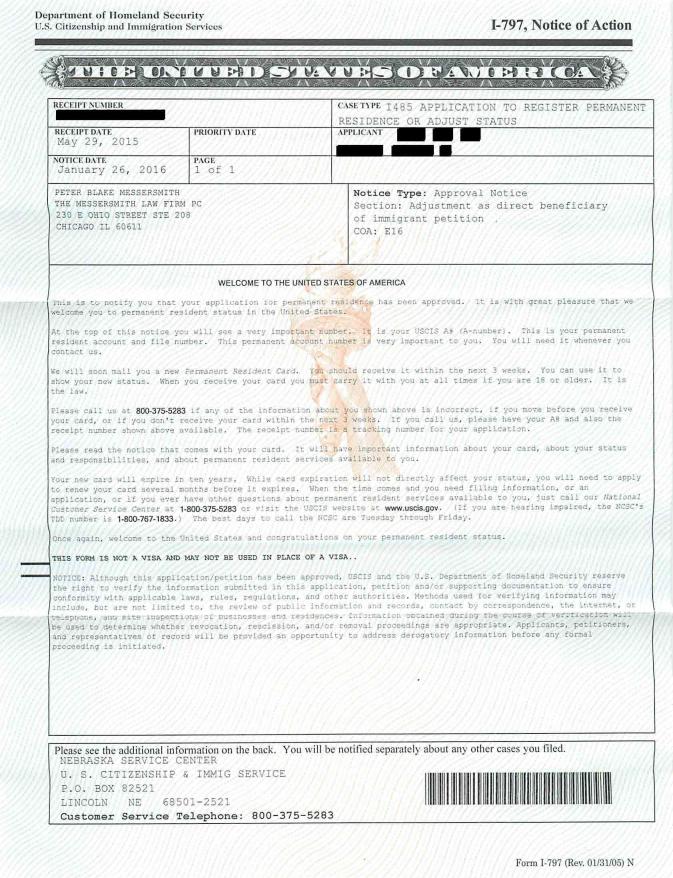
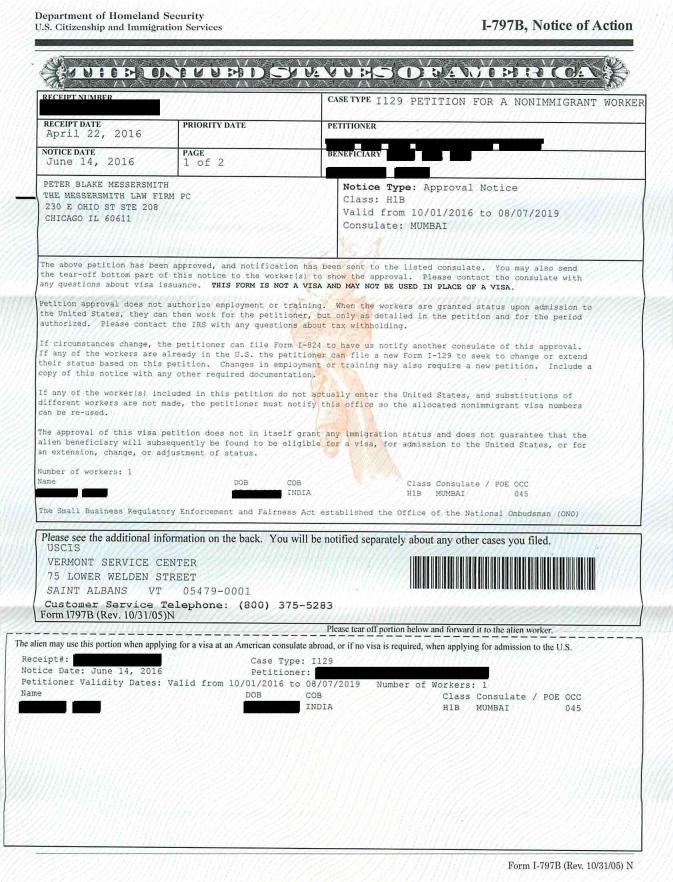
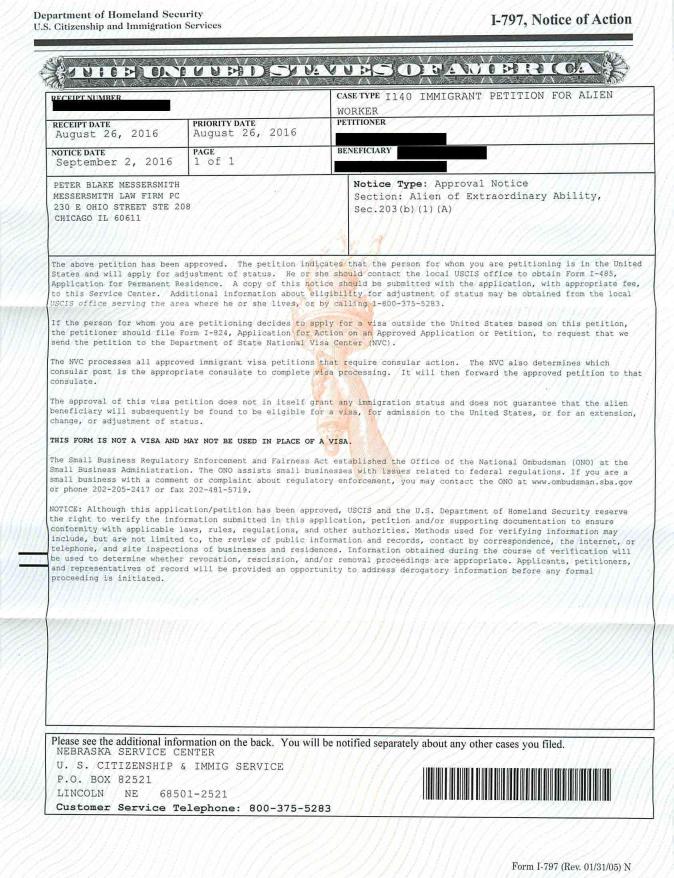
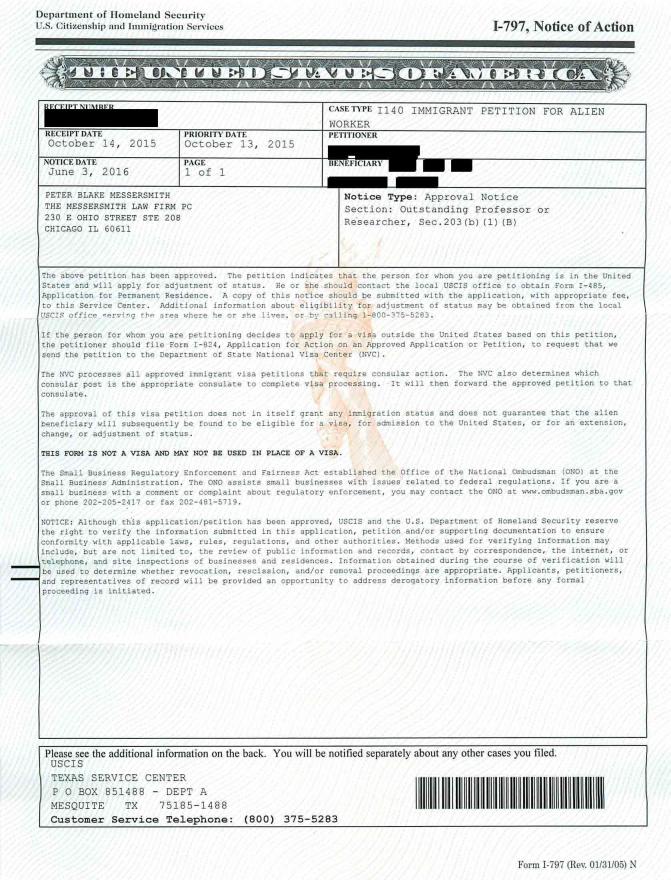
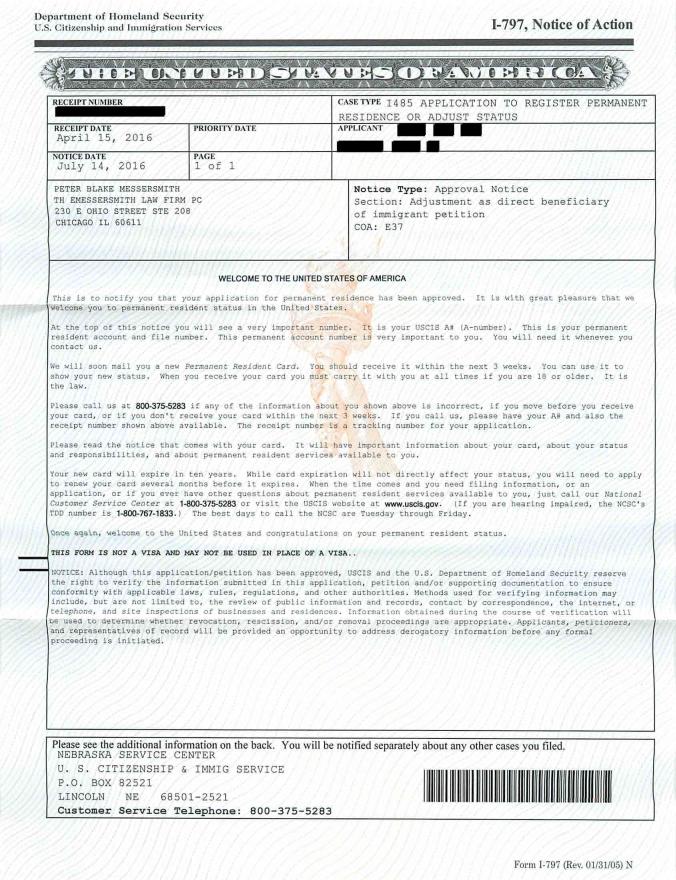
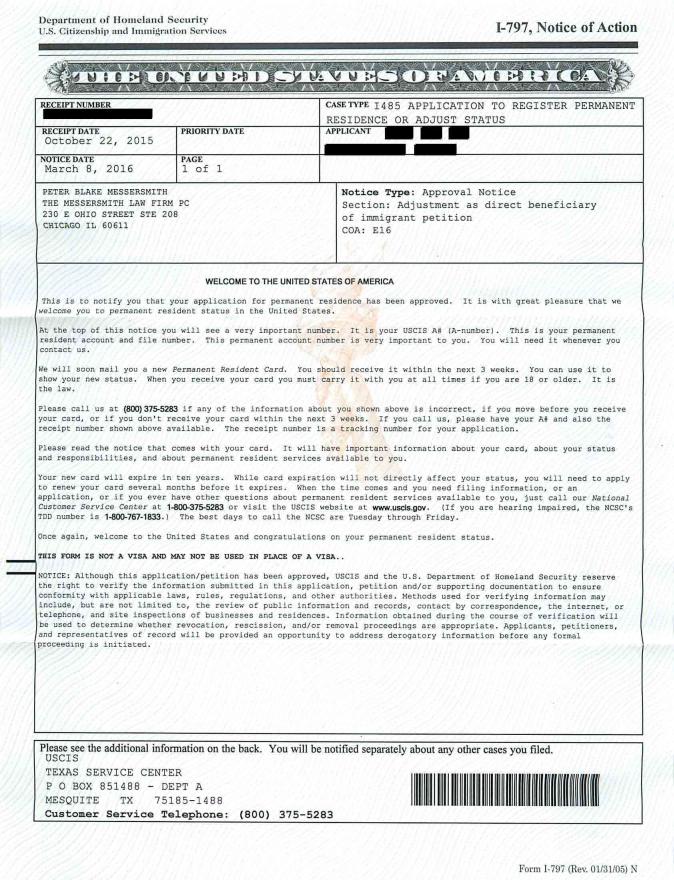
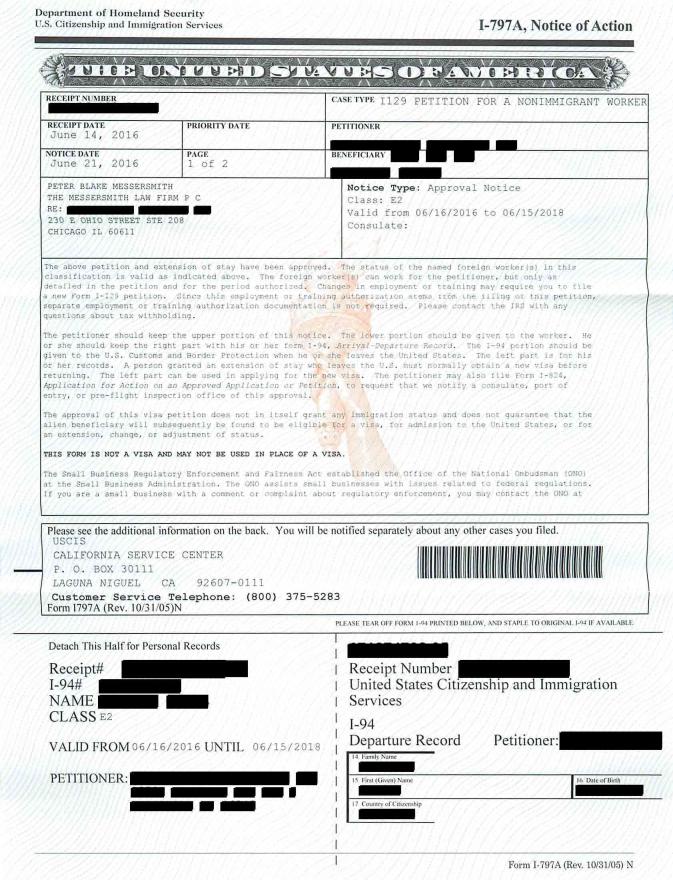
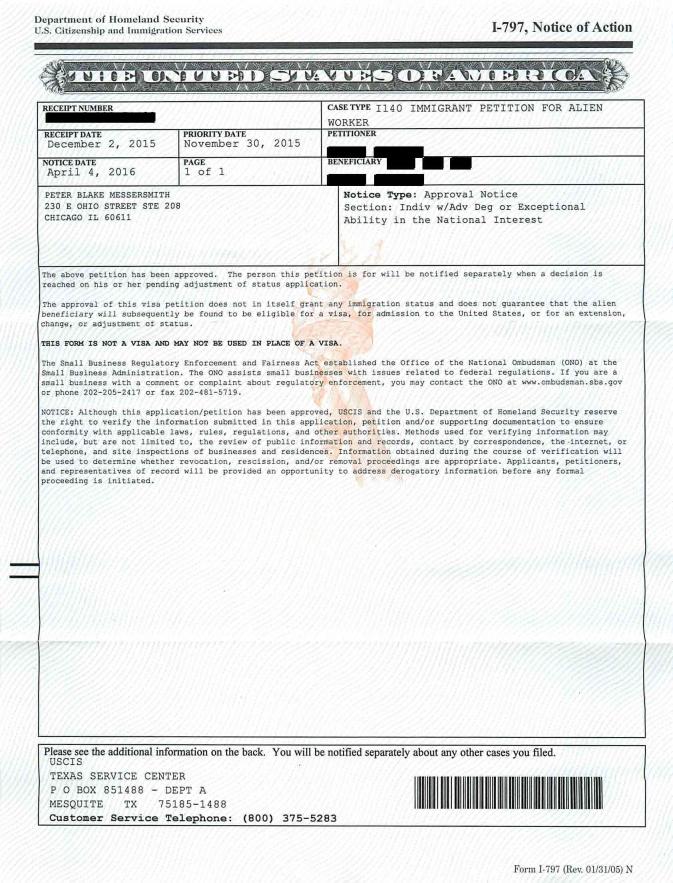
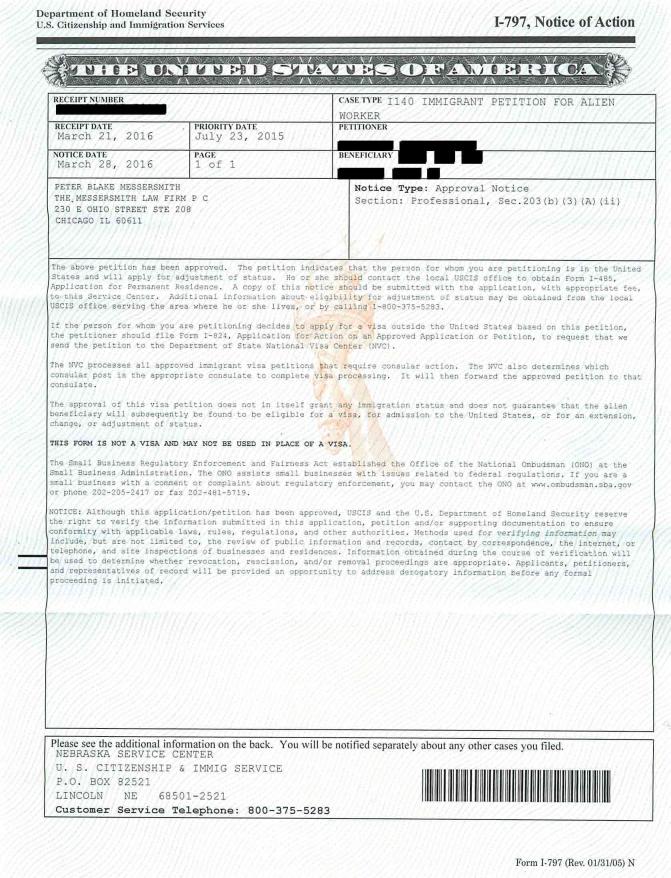
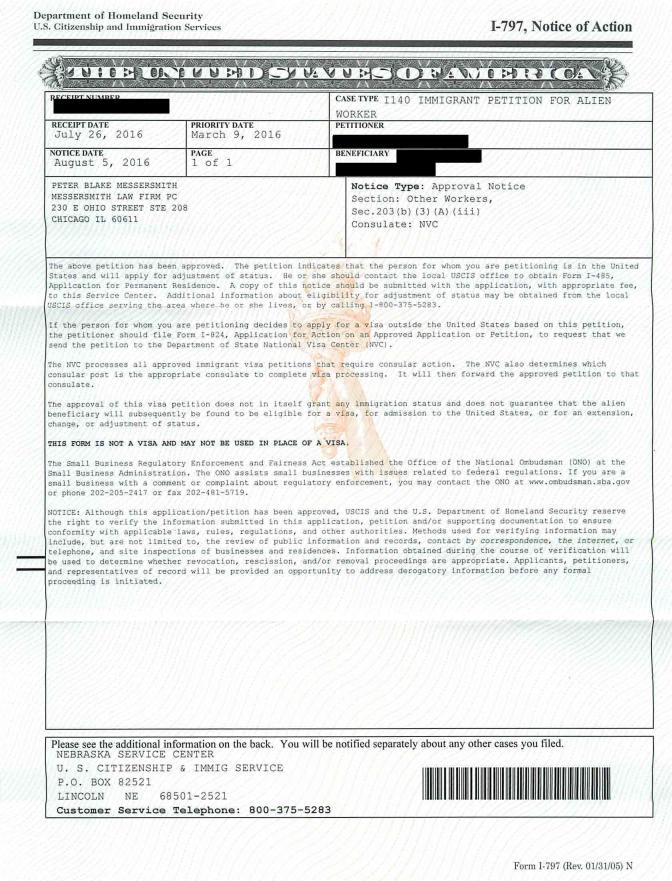
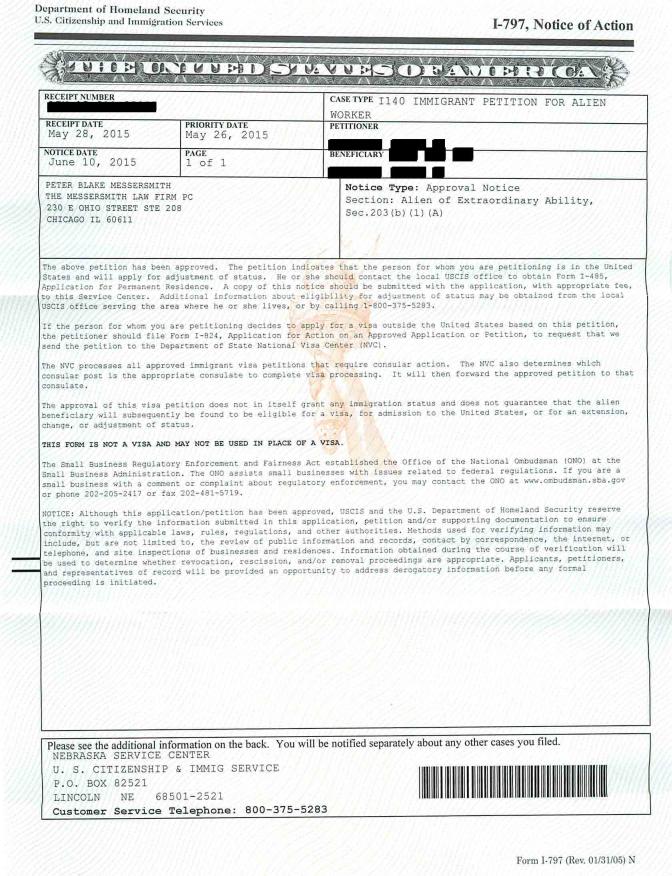
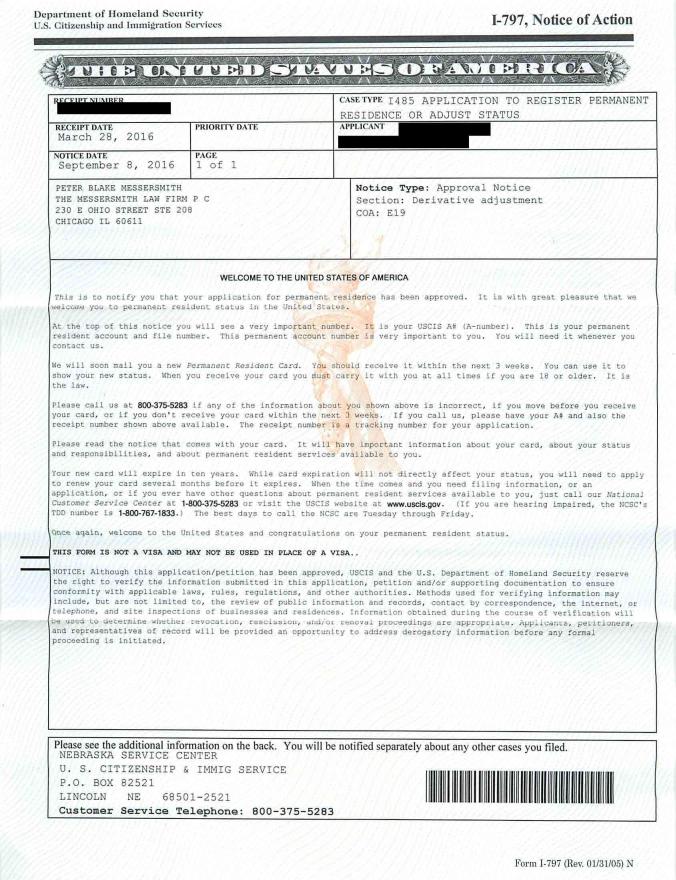
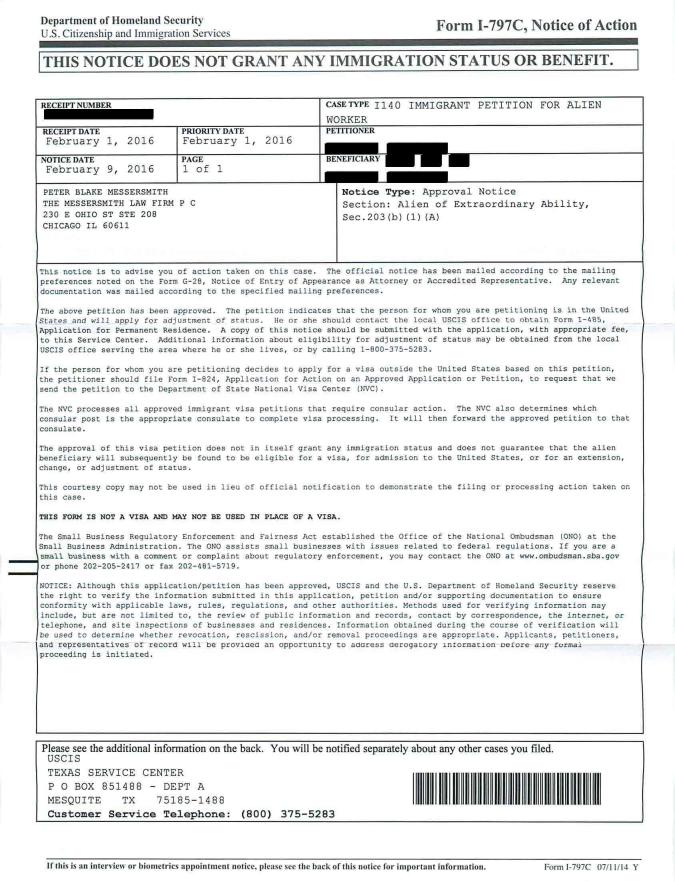
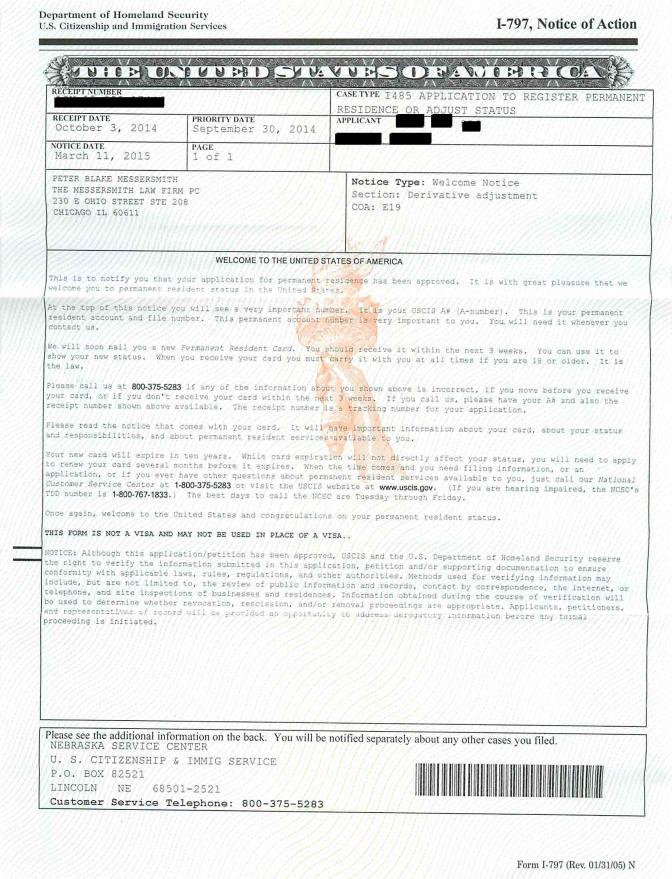
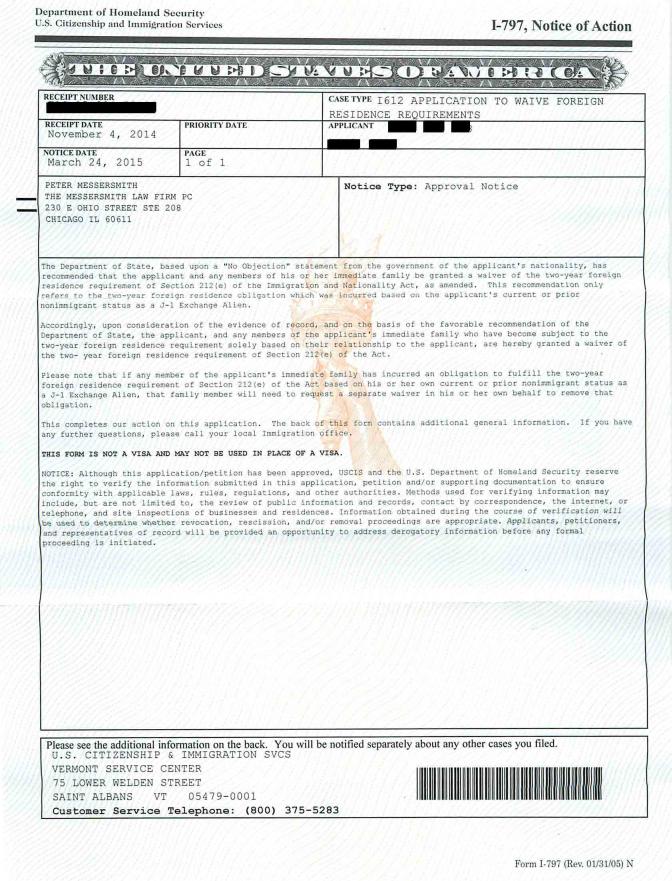
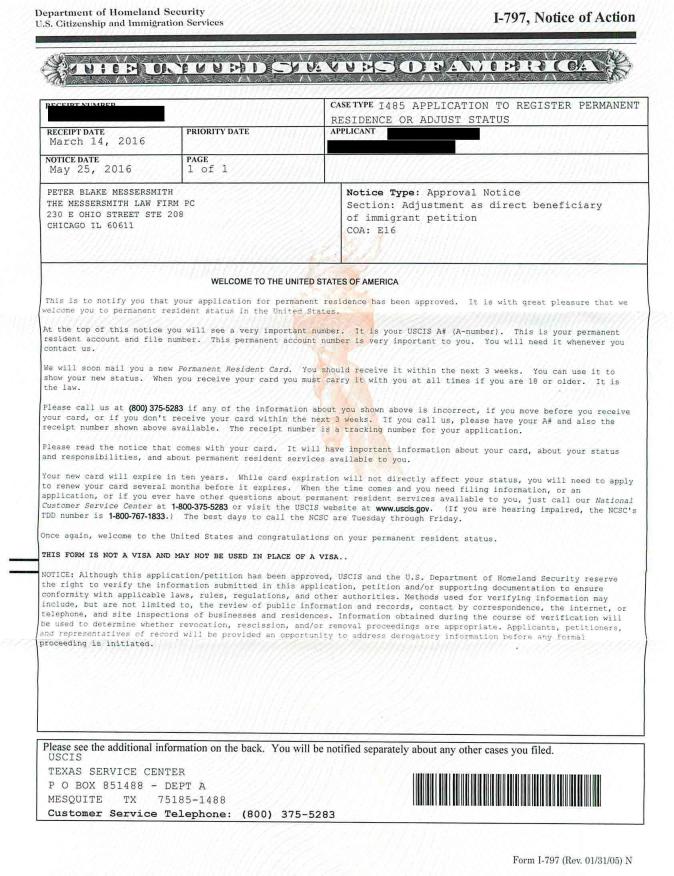
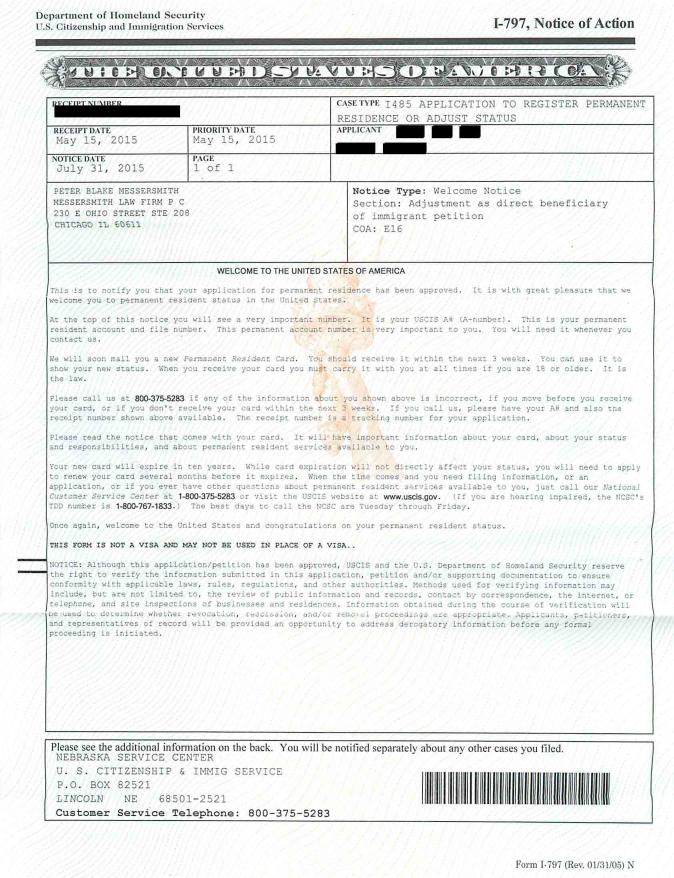
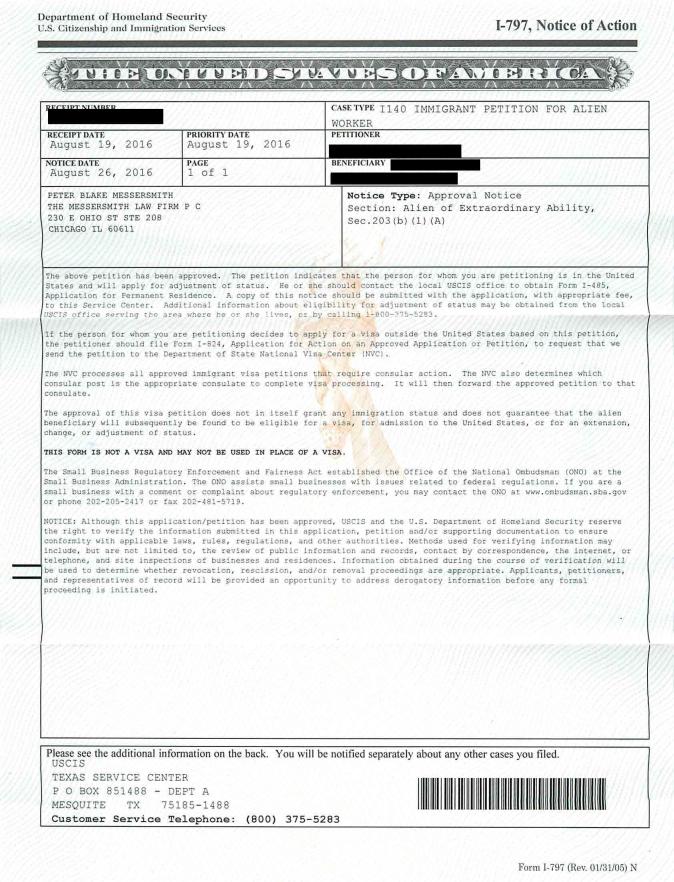
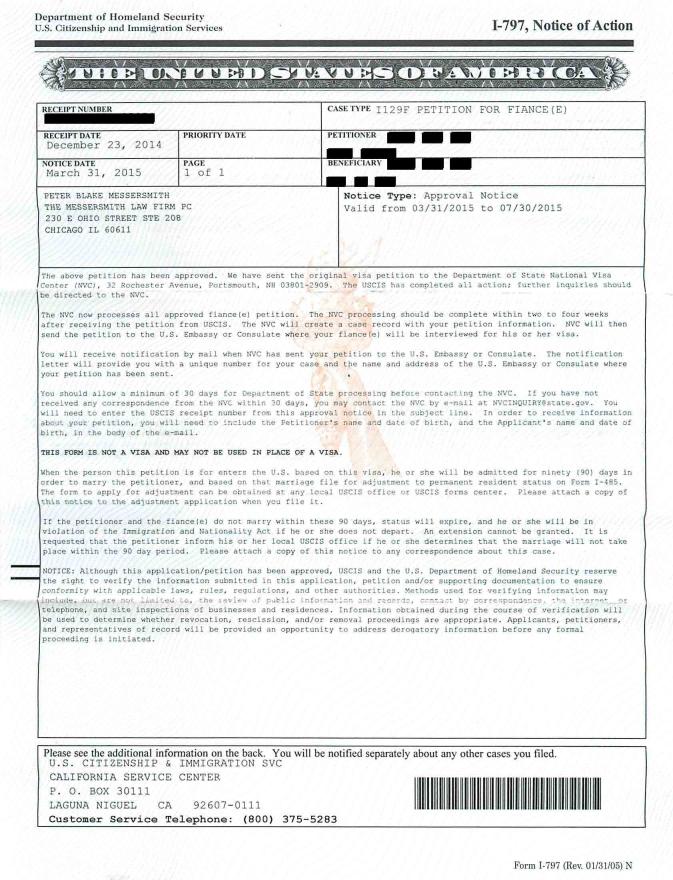
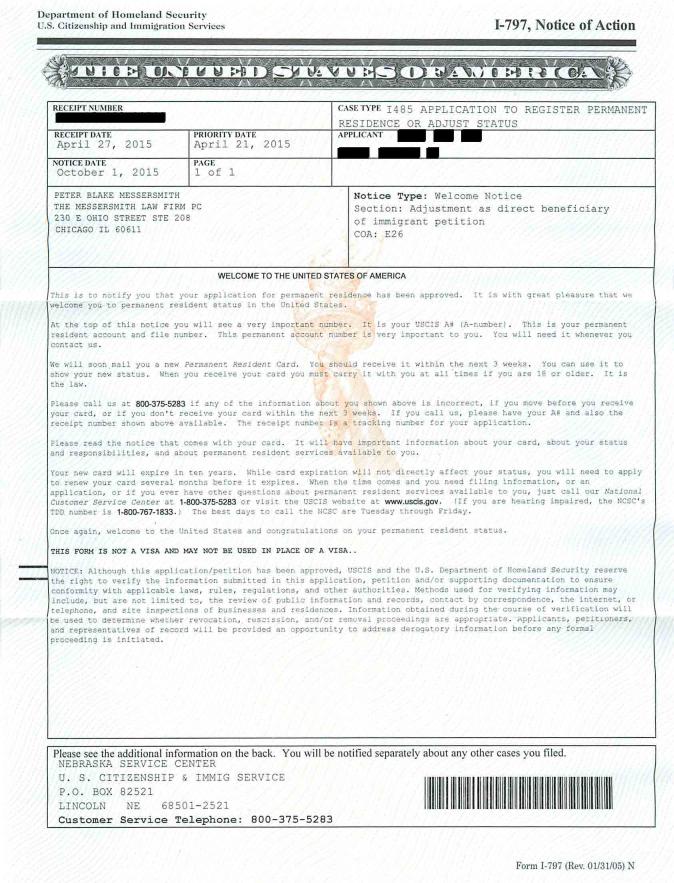
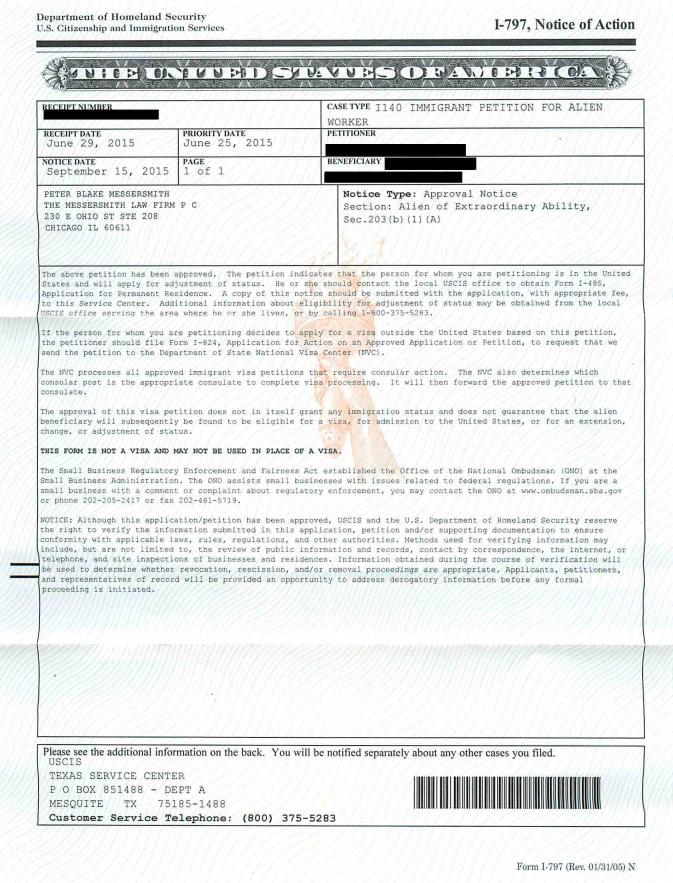
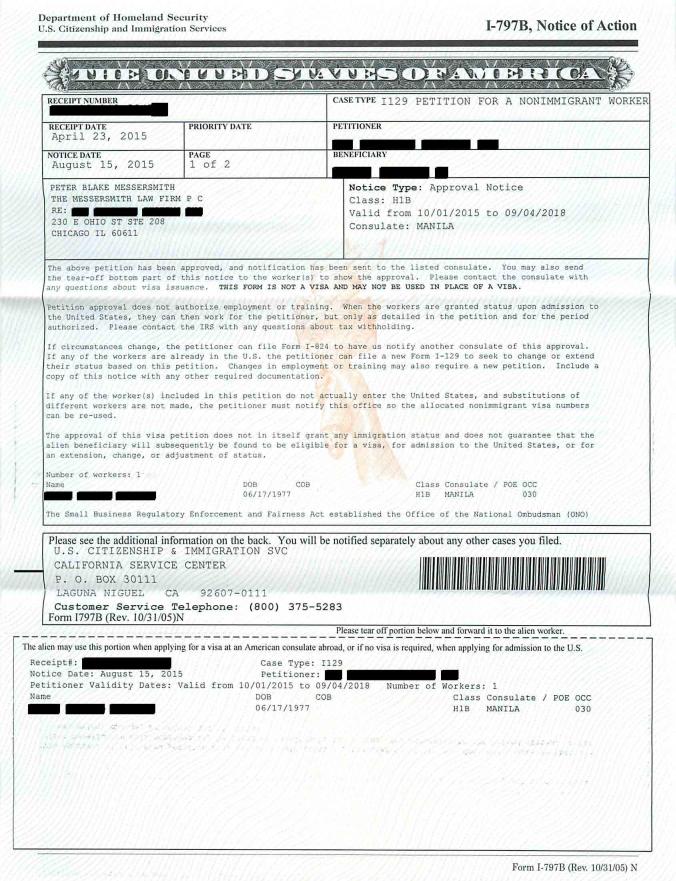
Scroll through fifty recent approval notices below or click here to view thousands.

Customer Testimonials

Real Testimonials from Past Clients