O-1 Visa — Extraordinary Ability, O-1A, O-1B, Agent Petitions, and O-1 to Green Card

O-1 Visa — Extraordinary Ability, O-1A, O-1B, Agent Petitions, and O-1 to Green Card

O-1 Visa — Extraordinary Ability, O-1A, O-1B, Agent Petitions, and O-1 to Green Card

People often inquire about this issue as O-1 visa, O1 visa, extraordinary ability visa, O-1A visa, O-1B visa, O-1 visa requirements, O-1 agent petition, O-1 consultation letter, or O-1 to green card. The O-1 visa is for individuals with extraordinary ability or achievement who are coming temporarily to the United States to continue work in their area of expertise. O-1A applies to extraordinary ability in the sciences, education, business, or athletics, while O-1B applies to extraordinary ability in the arts or extraordinary achievement in motion picture or television. O-1 cases often involve artists, musicians, actors, athletes, chefs, researchers, entrepreneurs, and other high-achieving professionals working through a U.S. employer or agent.

Common O-1 issues include proving sustained national or international acclaim, choosing the correct O-1A or O-1B standard, preparing a strong evidence package, obtaining the required consultation, using an agent petition correctly, planning extensions, and evaluating longer-term green card options.

O1 Visa Details

The O1 visa is designated for aliens of extraordinary ability in the sciences, arts, education, business or athletics. The O1 visa is very helpful for artists, athletes, entertainers, high-end chefs, and business people lacking professional degrees. There is no prevailing wage requirement, the O1 visa may be extended indefinitely and there is no numerical limit to the number of O1 visas issued.

The O1 visa is a good option for J1 visa holders who are subject to INA §212(E) and have not obtained a waiver.

Scientists, educators, business persons and athletes who wish to qualify for the visa must show three of the following:

  • Receipt of nationally or internationally recognized prizes/awards for excellence in the field;
  • Membership in associations in the field that require outstanding achievement of their members, as judged by recognized national or international experts;
  • Published material in professional or major trade publications or major media about the alien;
  • Participation on a panel or as a judge of the work of others in the same or an allied field of specialization;
  • Original scientific, scholarly, or business-related contributions of major significance;
  • Authorship of scholarly articles in professional journals or other major media;
  • Current or previous employment in a critical or essential capacity for organizations and establishments that have a distinguished reputation; or,
  • Past or proffered high salary or other remuneration for services, evidenced by contracts or other reliable evidence.

Artists and Entertainers (except TV or movie stars) who wish to qualify for the visa must show three of the following:

  • as performed/will perform services as a lead/starring participant in productions/events with distinguished reputations as shown by critical reviews, ads, publicity releases, publications, contracts, or endorsements;
  • National/international recognition for achievement through critical reviews, other published materials by or about the beneficiary in major papers, trade journals/magazines, etc.;
  • Has performed in a lead, starring or critical role for organizations and establishments that have a distinguished reputation evidenced by media articles, testimonials, etc.;
  • Has record of major commercial or critically acclaimed success;
  • Has achieved significant recognition from organizations, critics, government agencies, recognized experts;
  • Has commanded or will command a high salary/other remuneration in relation to others in the field.

Artists and Entertainers in connection with TV or Movies who wish to qualify for the visa must show a very high level of accomplishment in the motion picture or television industry evidenced by a degree of skill and recognition significantly above that ordinarily encountered to the extent that the person is recognized as outstanding, notable, or leading in the motion picture or television field.

Spouses and children of the O1 visa holder may obtain an O3 visa to enter and remain in the US. The O3 visa holder may attend school but if he or she wishes to work, he or she must change his or her status to obtain a work visa.

For Whom Is an O1 Visa Appropriate?

Foreign nationals who have received major prizes or awards or other recognition for outstanding achievements in the field of arts, sciences, education, business or athletics and with a job offer from a US. company.

O1 Visa Requirements

An O1 classification applies to:

  1. An individual alien who has extraordinary ability in the sciences, arts, education, business, or athletics which has been demonstrated by sustained national or international acclaim and who is coming temporarily to the United States to continue work in the area of extraordinary ability; or
  2. An alien who has a demonstrated record of extraordinary achievement in motion picture and/or television productions and who is coming temporarily to the United States to continue work in the area of extraordinary achievement.

O-1 visa requirements

To qualify for an O-1 visa, the petitioner and beneficiary usually must show that the beneficiary has extraordinary ability or achievement and is coming to the United States temporarily to continue work in the area of expertise. The O-1 category is divided into O-1A and O-1B, and the evidence should match the correct track from the beginning. USCIS treats O-1A as the track for extraordinary ability in the sciences, education, business, or athletics, and O-1B as the track for extraordinary ability in the arts or extraordinary achievement in motion picture or television.

O-1A visa requirements

O-1A applies to individuals with extraordinary ability in the sciences, education, business, or athletics. USCIS says the beneficiary must show sustained national or international acclaim and must be coming to continue work in the area of extraordinary ability. O-1A cases often involve scientists, researchers, entrepreneurs, founders, executives, athletes, and other high-achieving professionals.

O-1B visa requirements

O-1B applies to individuals with extraordinary ability in the arts or extraordinary achievement in the motion picture or television industry. USCIS uses a different standard for motion picture and television cases, so the petition should be organized around the correct O-1B framework. O-1B cases often involve artists, actors, musicians, singers, directors, designers, chefs, dancers, and other creative professionals.

Extraordinary ability and extraordinary achievement

A strong O-1 case usually depends on showing a level of accomplishment that stands out in the field through awards, press, critical roles, original contributions, judging, high salary or remuneration, commercial success, or other qualifying evidence depending on the category. USCIS policy materials and recent policy updates continue to focus on the evidentiary criteria and on whether the person is coming to work in the area of extraordinary ability or achievement.

Temporary work in the area of expertise

The beneficiary must be coming to the United States temporarily to continue work in the area of extraordinary ability or achievement. USCIS policy states that the work in the United States should remain within the beneficiary’s area of expertise, even if the specific job title or project format is not identical to prior work.

U.S. employer or U.S. agent

An O-1 petition is generally filed by a U.S. employer, a U.S. agent, or a foreign employer through a U.S. agent. This is especially important in fields where a beneficiary works on multiple projects, events, or engagements through an agent structure.

Consultation letter and supporting documents

Many O-1 cases require a written advisory opinion or consultation from a peer group, labor organization, or management organization with expertise in the beneficiary’s area. USCIS also provides a consultation-letter address index for O petitions, which makes consultation issues a key part of the filing process.

Itinerary and project planning

When the O-1 case involves multiple engagements, productions, events, or project-based work, the petition package often needs to show what the beneficiary will be doing, for whom, and over what period of time. That is why itinerary planning is a common practical issue in O-1 filings. USCIS’s O classification guidance and petitioner rules both support organizing the case clearly around the offered work.

Common evidence used in O-1 cases

Strong O-1 filings often include:

  • major awards or nationally or internationally recognized prizes
  • published material about the beneficiary
  • evidence of critical or leading roles
  • proof of original contributions or influential work
  • judging or panel service
  • scholarly publications, commercial success, or high remuneration, depending on the category
  • contracts, deal memos, or engagement letters
  • consultation letters and itinerary materials where required

O-1 visa for artists, athletes, scientists, entrepreneurs, and other professionals

The O-1 visa is used across a wide range of fields, but the petition should always be built around the correct O-1A or O-1B standard. O-1A covers extraordinary ability in the sciences, education, business, or athletics. O-1B covers extraordinary ability in the arts or extraordinary achievement in motion picture or television.

O-1 visa for artists

O-1B cases are commonly used for artists whose work has received distinction and recognition in the field. This can include visual artists, designers, photographers, chefs, dancers, and other creative professionals whose work shows a record of achievement.

O-1 visa for musicians and singers

O-1B is also commonly used for musicians, singers, composers, music producers, and other performing artists. A strong case often includes evidence such as major performances, press coverage, notable recordings, awards, critical reviews, high-profile collaborations, and commercial success where applicable.

O-1 visa for actors, filmmakers, and television professionals

Actors, directors, producers, cinematographers, editors, and other film and television professionals may qualify under O-1B when the evidence meets the correct motion picture or television standard. USCIS applies a distinct extraordinary-achievement standard in that part of O-1B practice.

O-1 visa for athletes

O-1A may be used for athletes and certain athletic professionals who can show extraordinary ability and sustained acclaim in the sport. Evidence may include major competitions, awards, rankings, media coverage, contracts, endorsements, and important roles with recognized teams or organizations.

O-1 visa for scientists, researchers, and professors

O-1A is commonly used for scientists, researchers, inventors, professors, and other academic or technical professionals. These cases often focus on publications, citations, original contributions, judging, high-profile research roles, awards, and other evidence showing distinction in the field.

O-1 visa for entrepreneurs and business professionals

O-1A may also be used for entrepreneurs, startup founders, executives, and business professionals whose record shows extraordinary ability in business. These cases are often built around major press, leading roles, original contributions, high remuneration, major commercial success, investment activity, or evidence that the beneficiary has risen to the top of the field.

O-1 visa for chefs and hospitality professionals

Chefs are a common O-1B profession category when the record shows distinction through awards, media, notable restaurants, critical reviews, high-level roles, or other industry recognition. This is one of the more frequently sought O-1 profession types and fits naturally within the arts side of the category.

O-1 visa for multiple projects and short-term engagements

Some O-1 beneficiaries work on multiple productions, performances, appearances, projects, or engagements rather than one long-term position. In those cases, the petition structure often depends on an employer or agent filing strategy, consultation requirements, and clear documentation of the planned work.

O-1 visa to green card

Many people also look for O-1 as part of a longer immigration strategy. The O-1 is a nonimmigrant visa, but it is often discussed together with immigrant options such as EB-1A or employer-sponsored permanent residence because the evidence developed for an O-1 case may overlap with later green card planning.

Frequently asked questions about the O-1 visa

What is the O-1 visa?

The O-1 visa is for individuals with extraordinary ability or achievement who are coming temporarily to the United States to continue work in their area of expertise. USCIS divides the category into O-1A and O-1B.

What is the difference between O-1A and O-1B?

O-1A is for extraordinary ability in the sciences, education, business, or athletics. O-1B is for extraordinary ability in the arts or extraordinary achievement in motion picture or television.

Who can file an O-1 petition?

An O-1 petition is generally filed by a U.S. employer, a U.S. agent, or a foreign employer through a U.S. agent.

What is an O-1 consultation letter?

Many O-1 cases require a written advisory opinion or consultation from a peer group, labor organization, or management organization with expertise in the beneficiary’s area of ability or achievement.

Can an agent file an O-1 petition?

Yes. USCIS allows O petitions to be filed by a U.S. agent in qualifying situations.

How long can O-1 status last?

USCIS says O-1 status may be approved for the time necessary to accomplish the event or activity, up to 3 years initially, with extensions available in increments of up to 1 year.

Can O-1 status be extended?

Yes. USCIS allows extensions of stay in increments of up to 1 year to continue or complete the same event or activity.

Can family members come with an O-1 beneficiary?

Yes. The spouse and unmarried children under 21 of an O-1 beneficiary may accompany or follow to join in O-3 status.

Can O-3 family members work in the United States?

No. O-3 dependents may study in the United States, but they may not work in O-3 status.

Can O-1 lead to a green card?

The O-1 is a nonimmigrant visa, but many people use O-1 status as part of longer-term immigration planning because the evidence used in an O-1 case may overlap with later immigrant visa strategies.

Top Notch Immigration Services

You will receive top notch immigration services at The Messersmith Law Firm. We guarantee personalized legal services, a high rate of success, and very reasonable fees. At The Messersmith Law Firm, you will always get more than what you pay for. While the majority of our clients are referred to our law firm, we are open to take new cases if we feel we can help you achieve your goals. We have no doubt that you will refer everyone you know to us once your case is approved! Our goal is to get your case approved in the shortest amount of time possible yet strive to keep our fees reasonable!

Thousands of Approved Cases

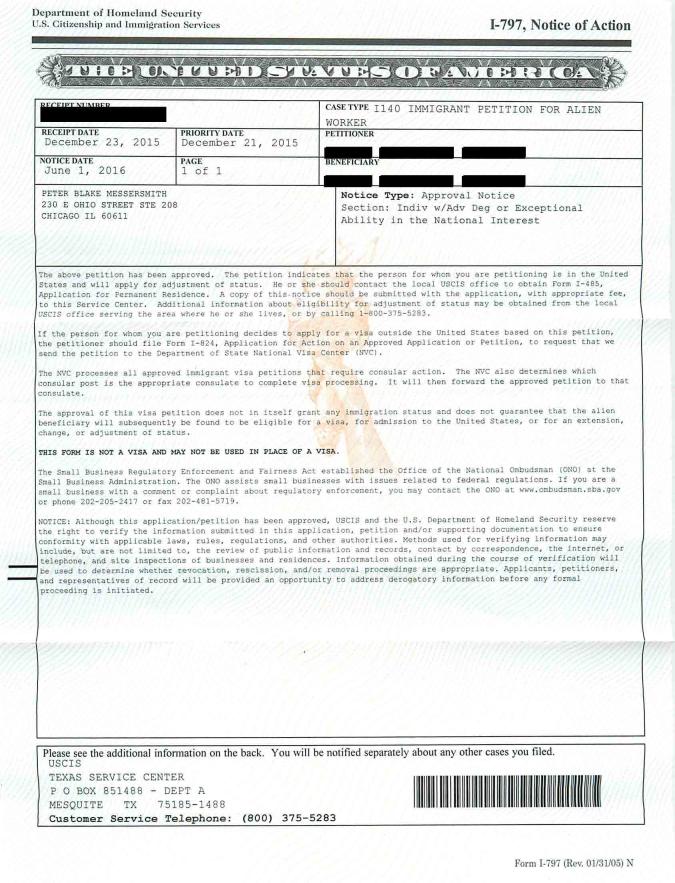
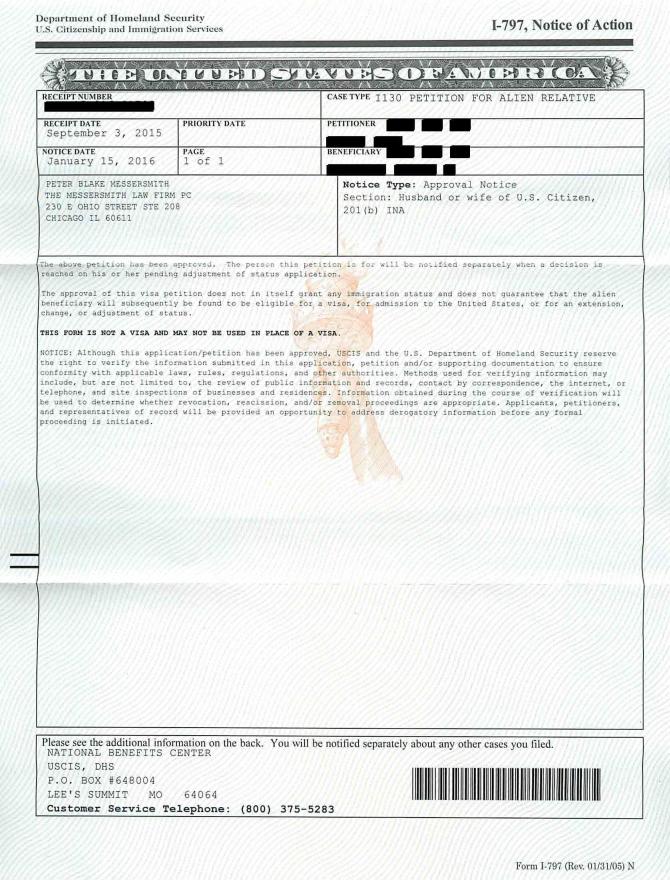
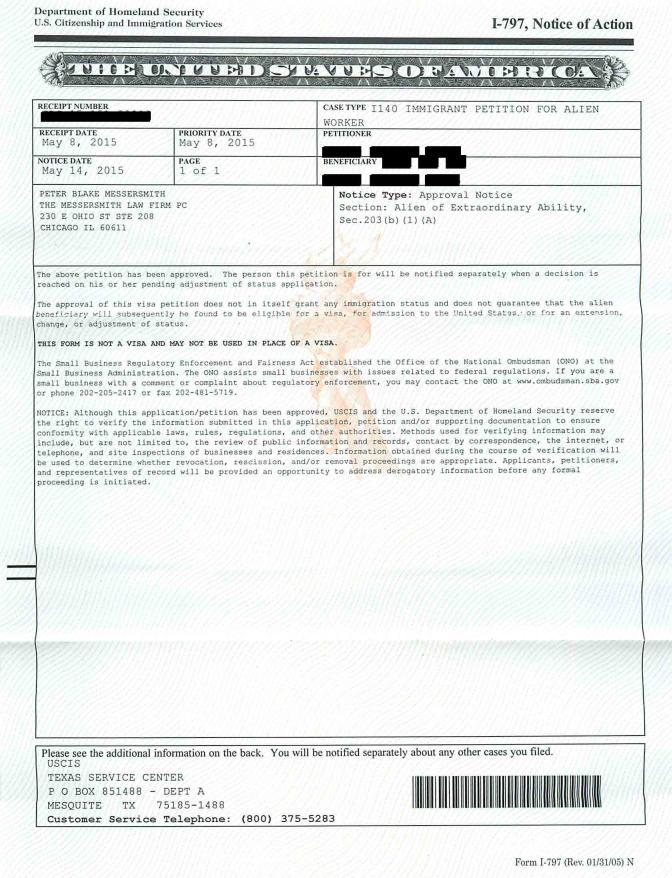
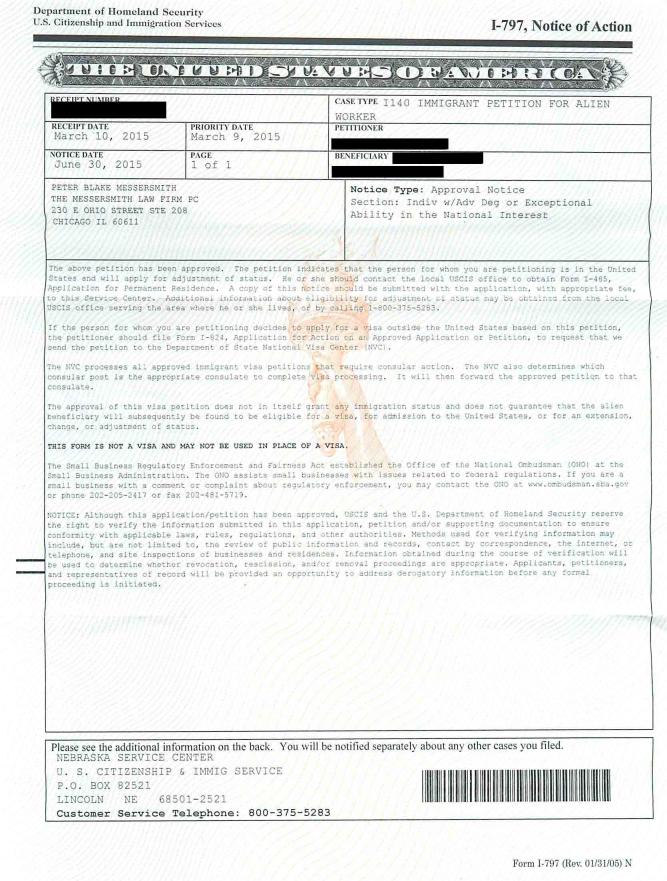
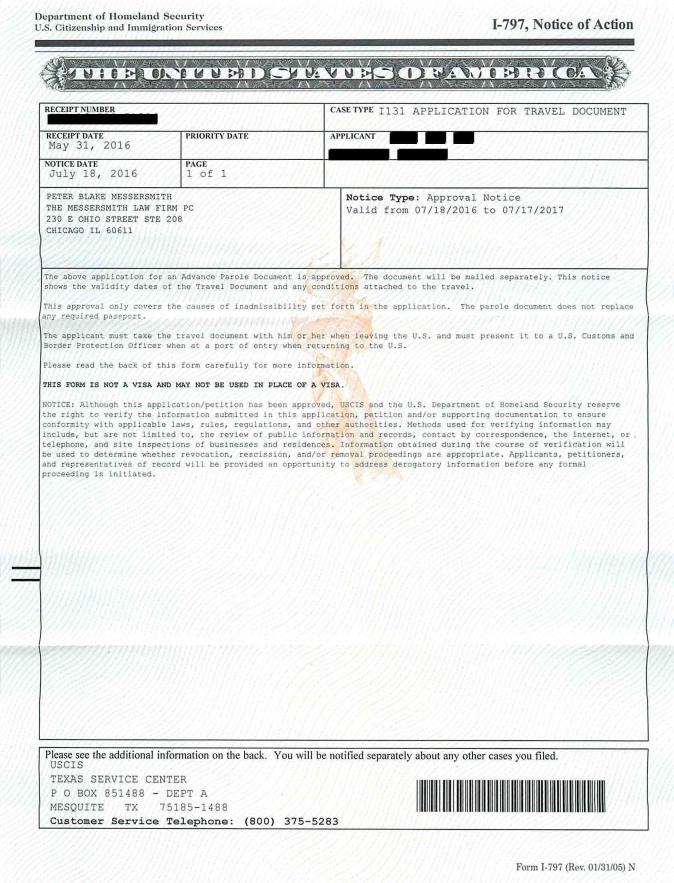
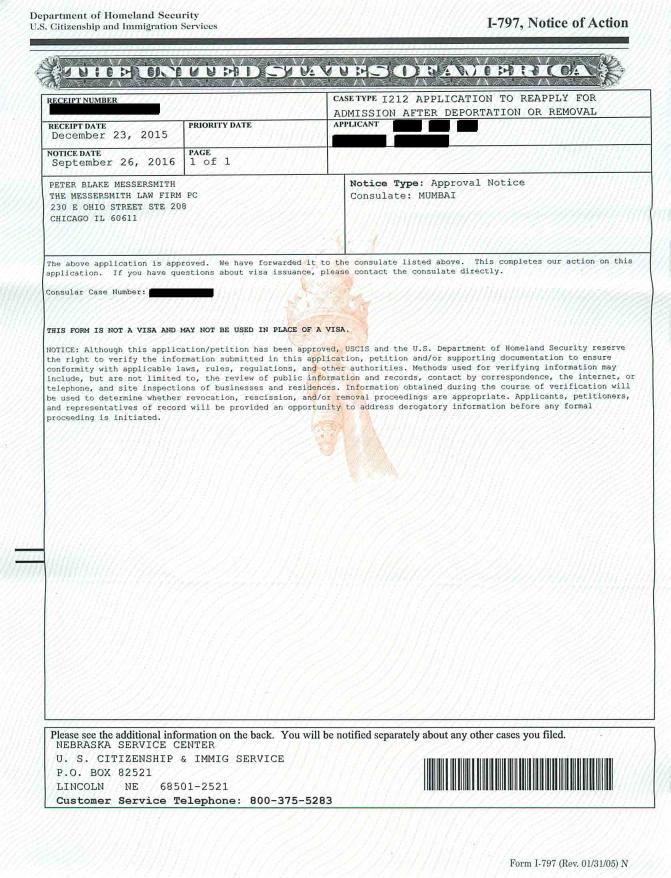
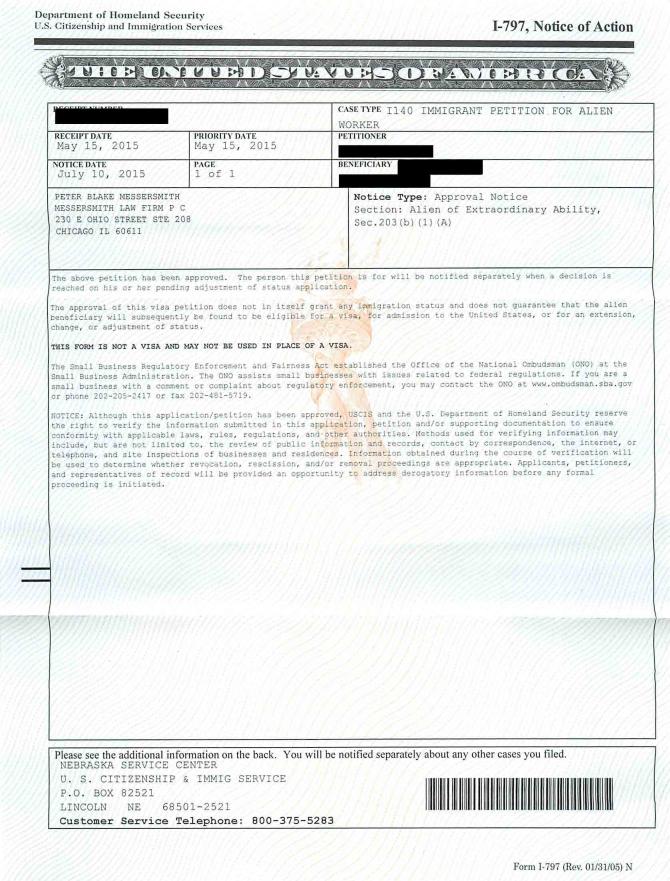
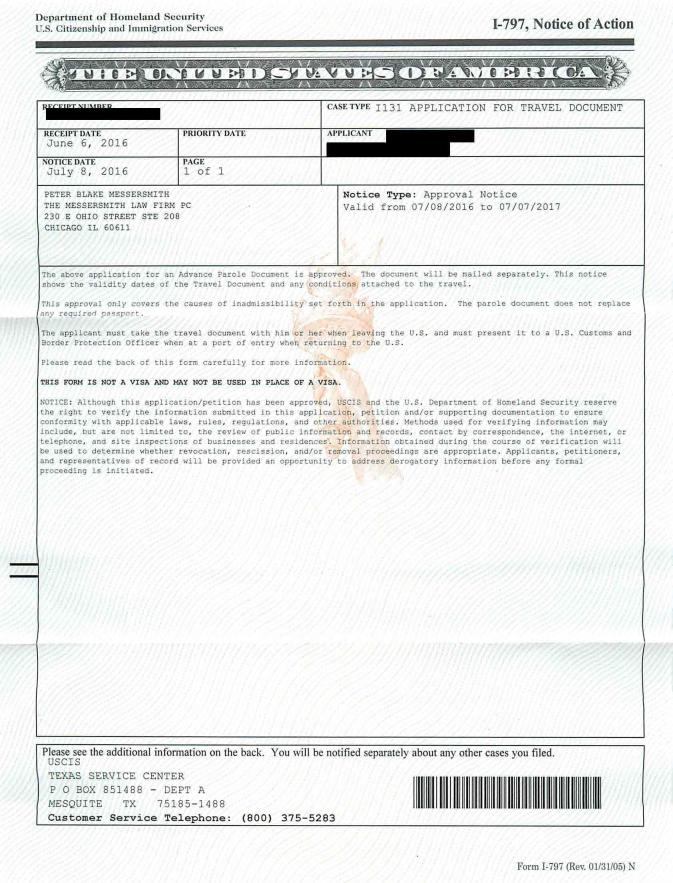
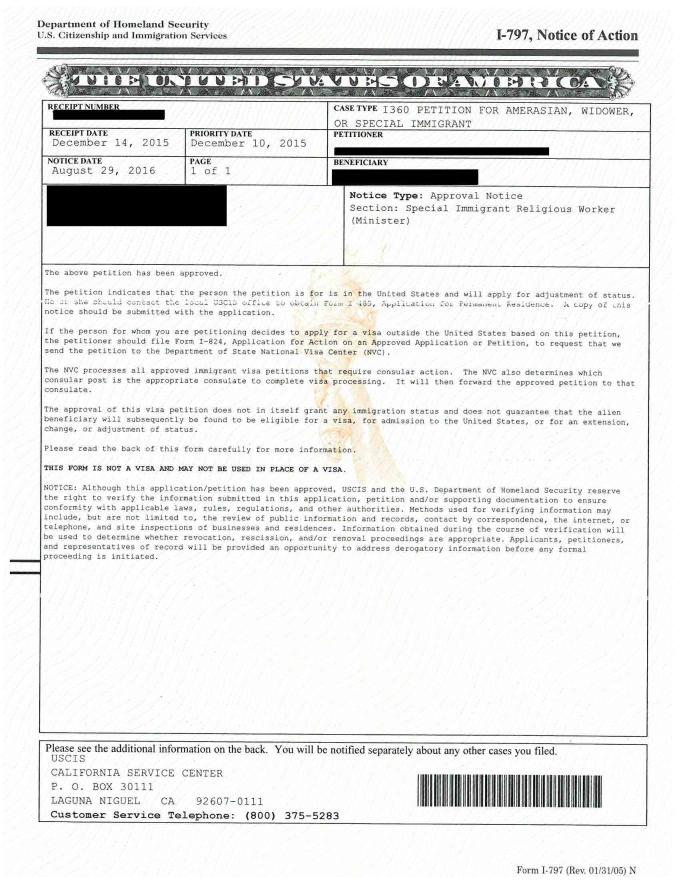
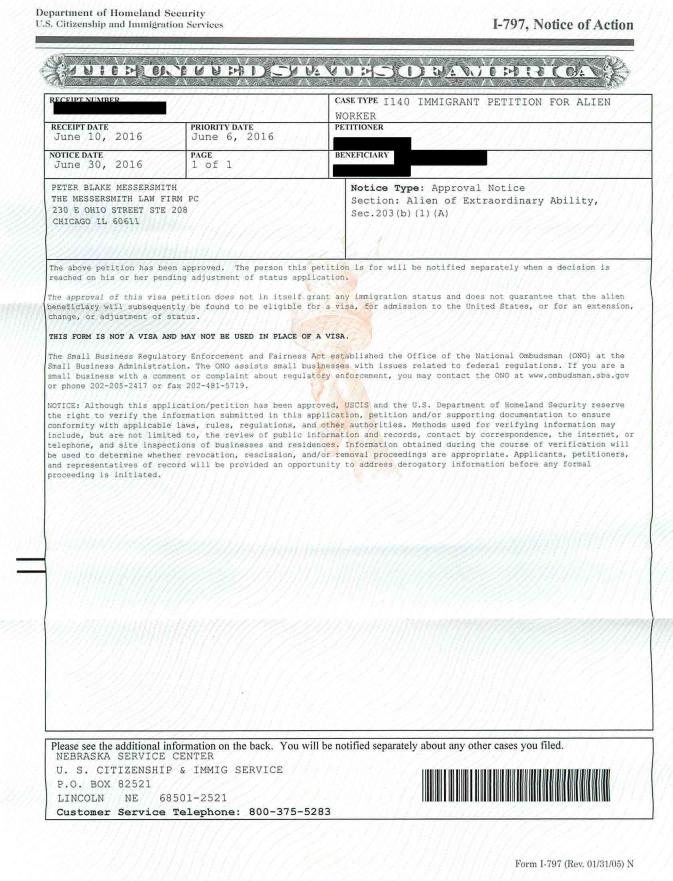
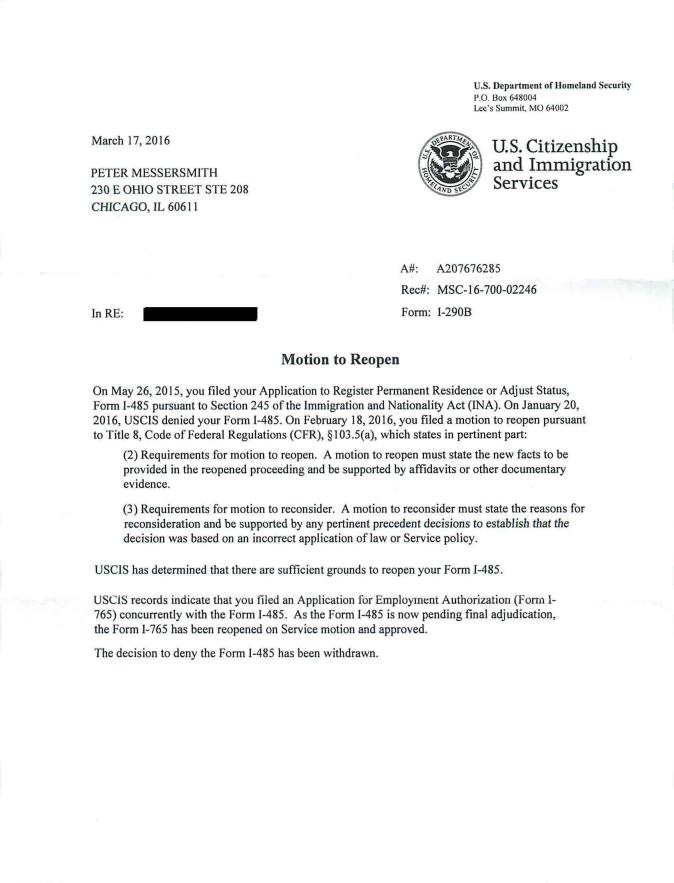
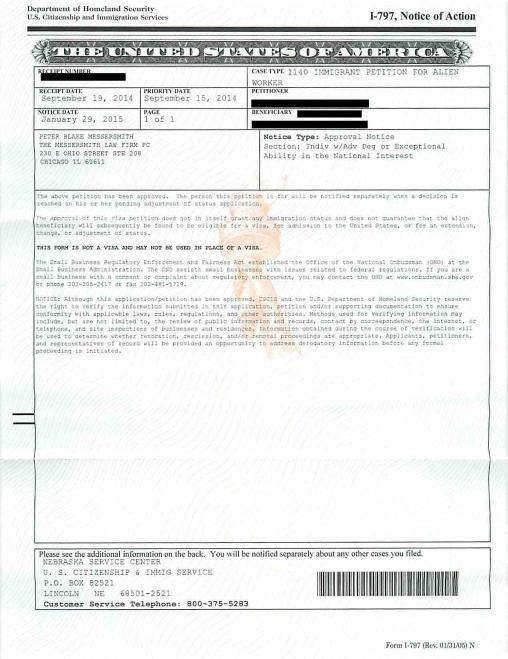
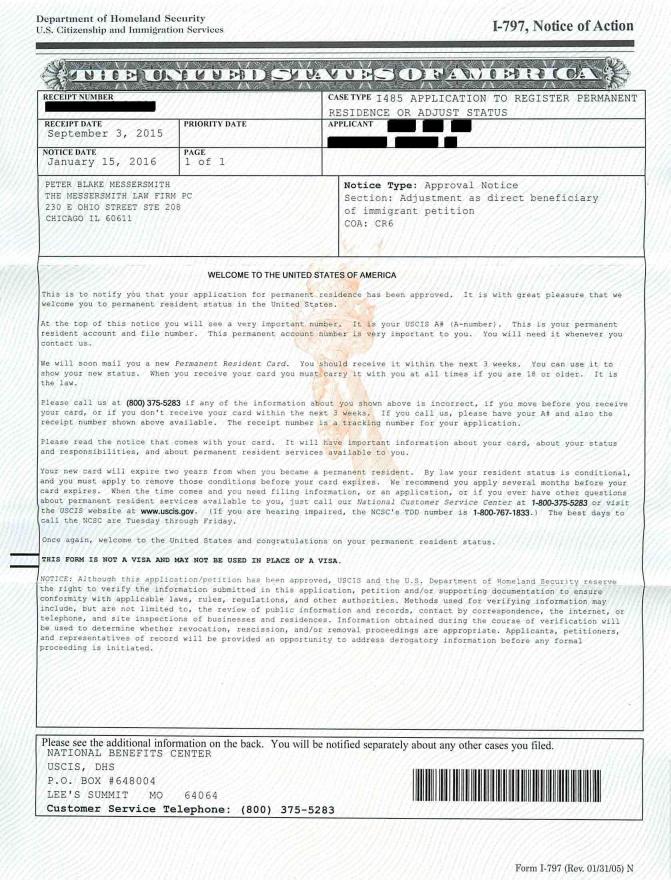
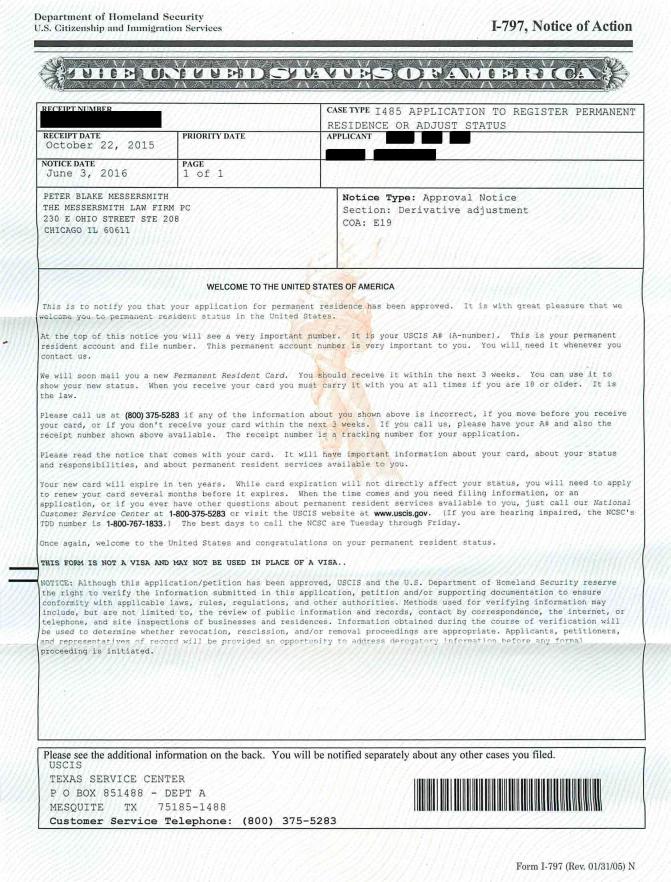
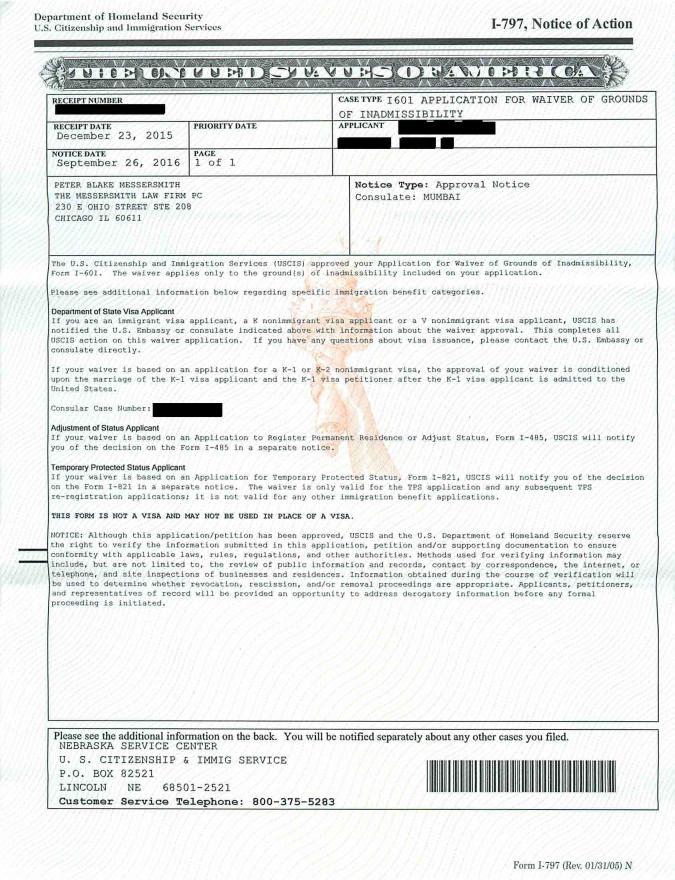
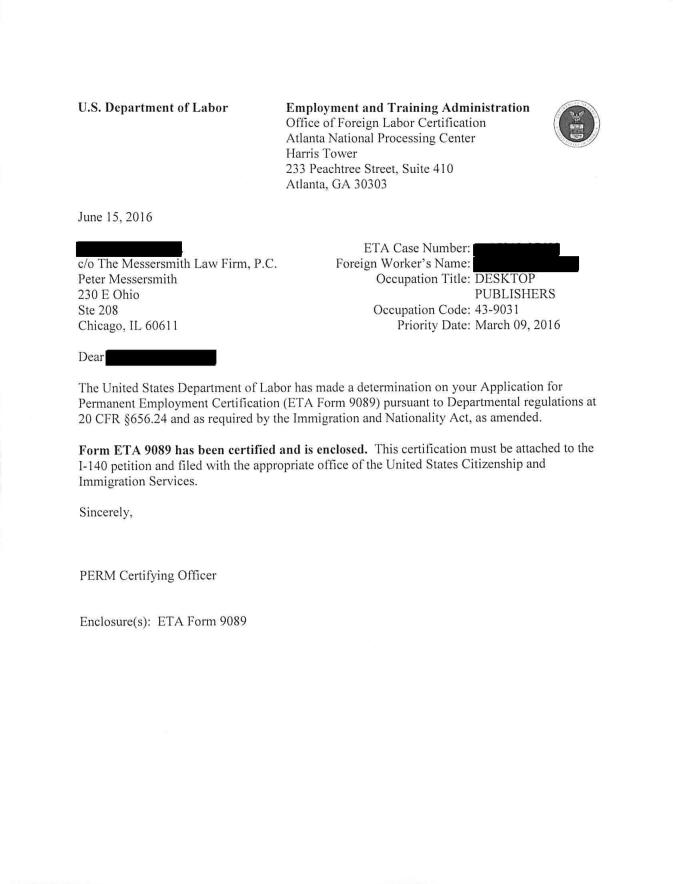
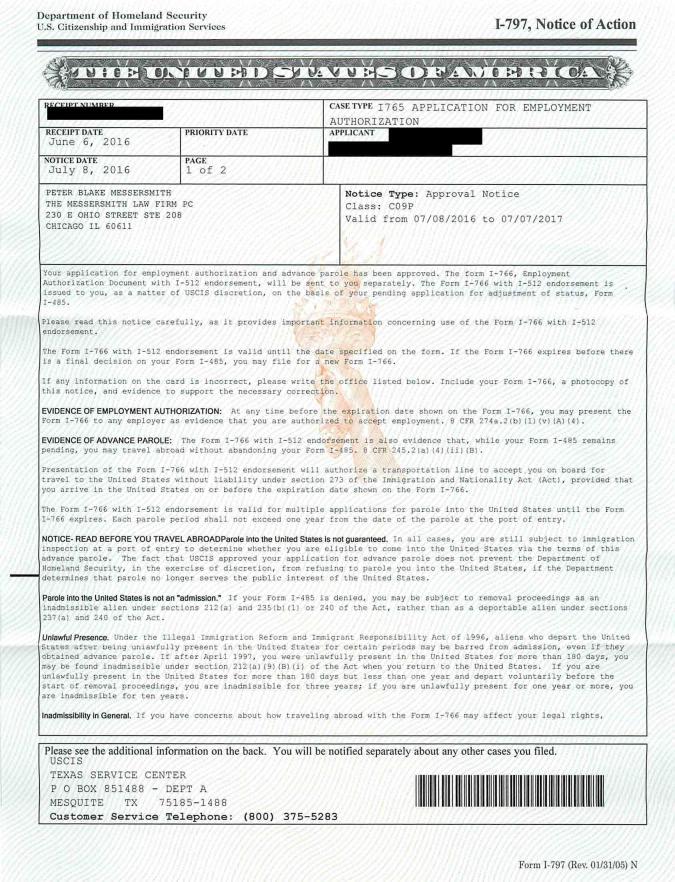
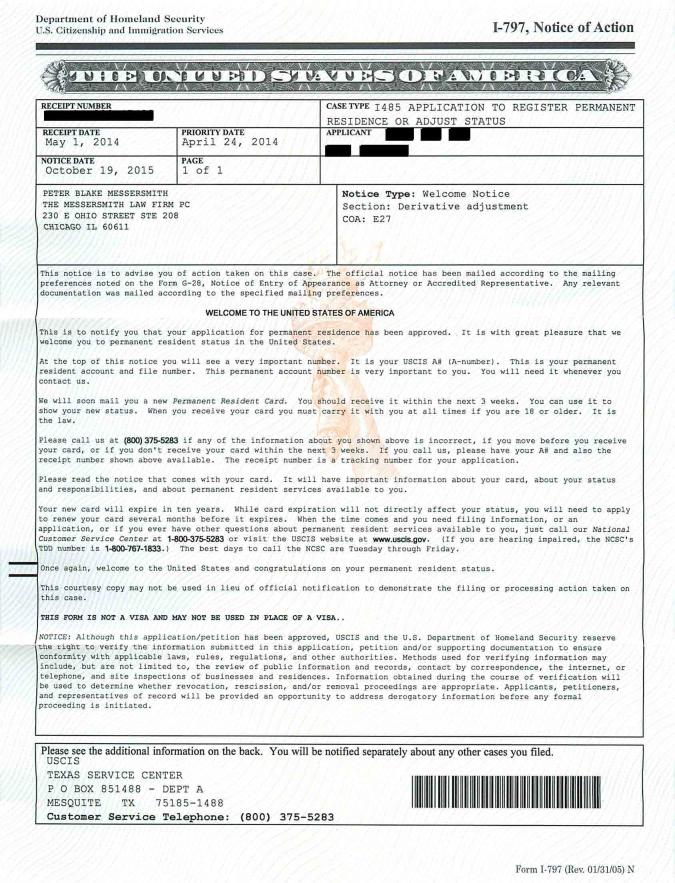
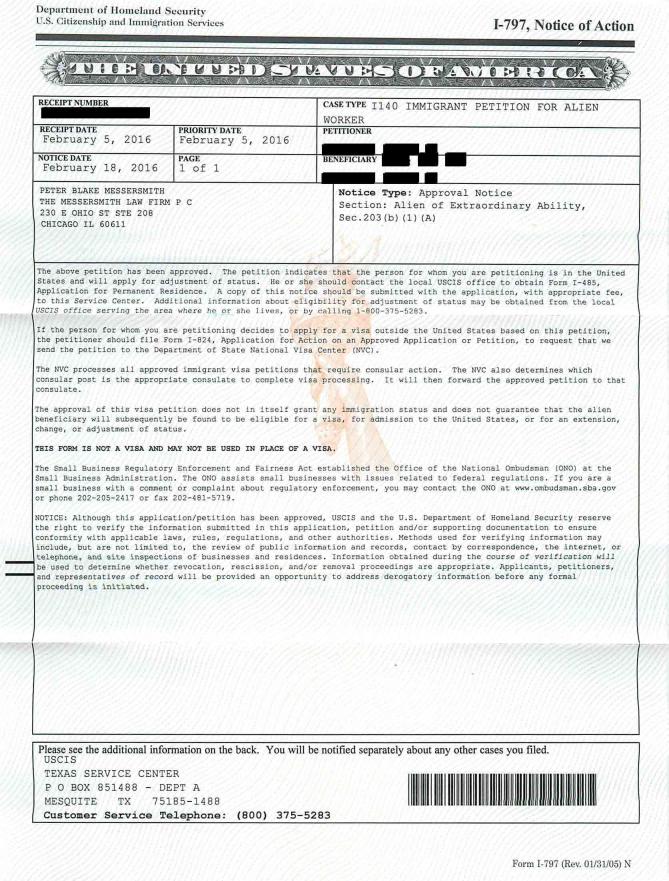
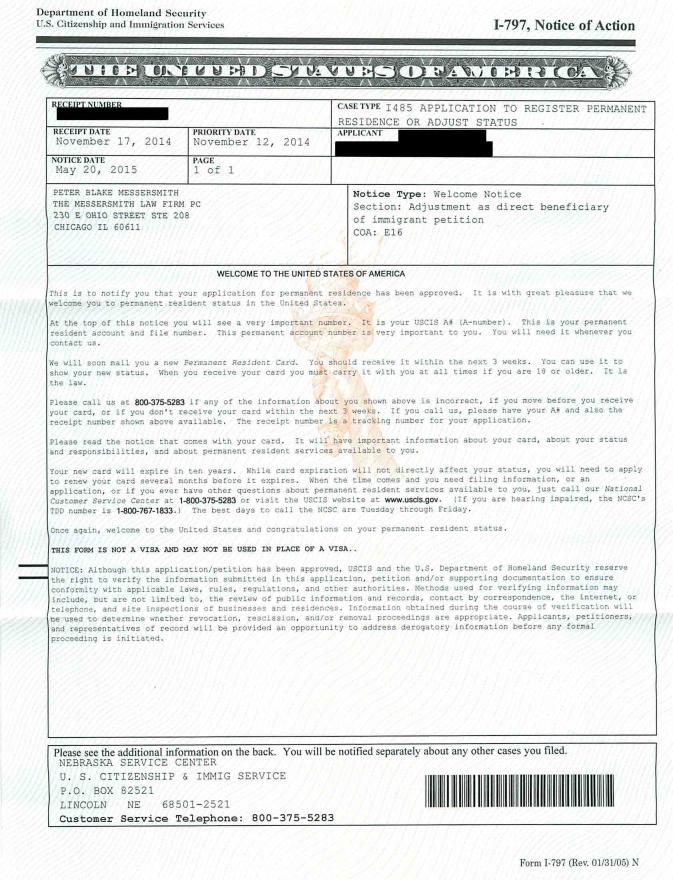
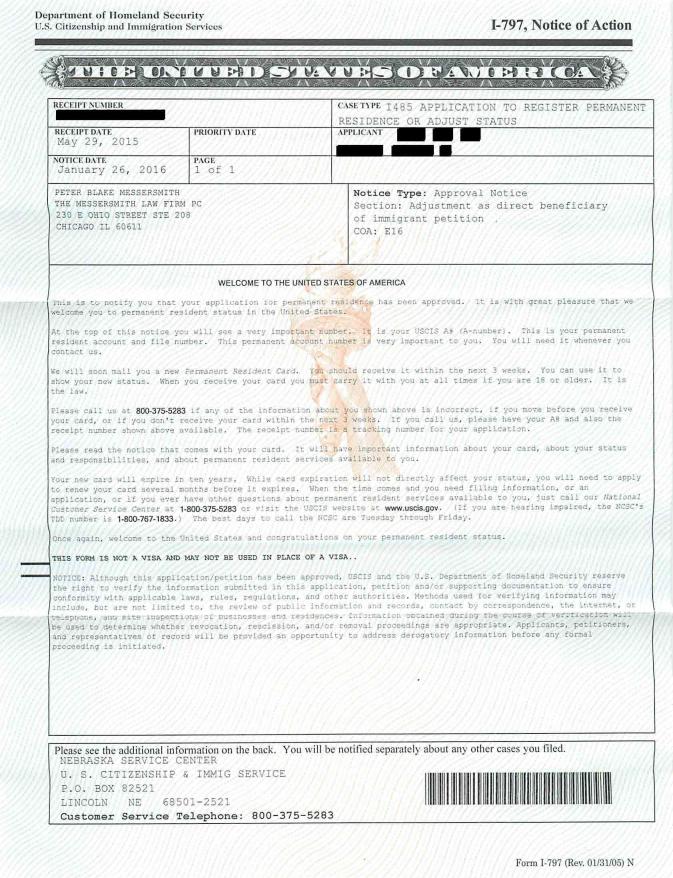
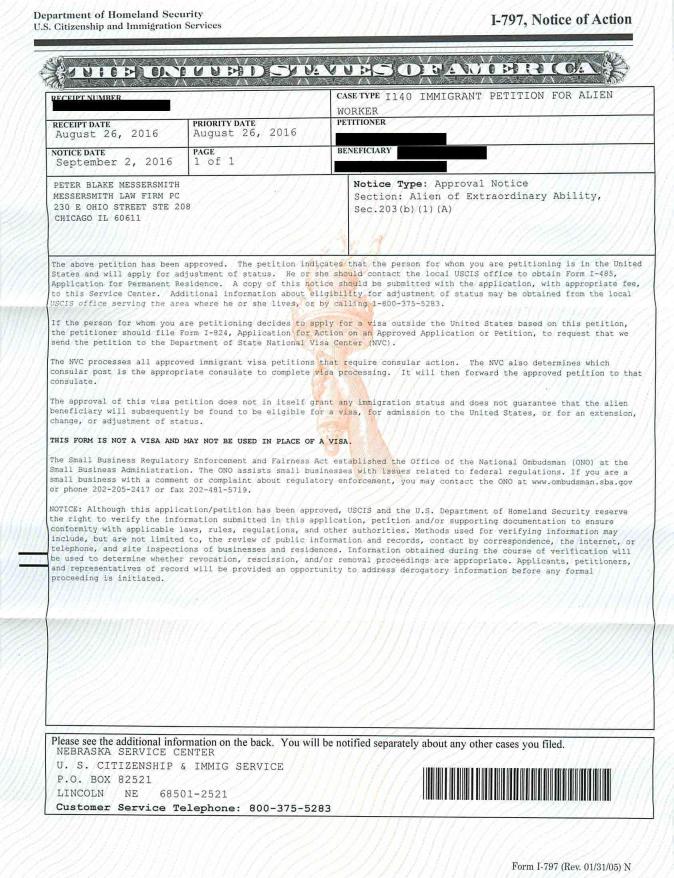
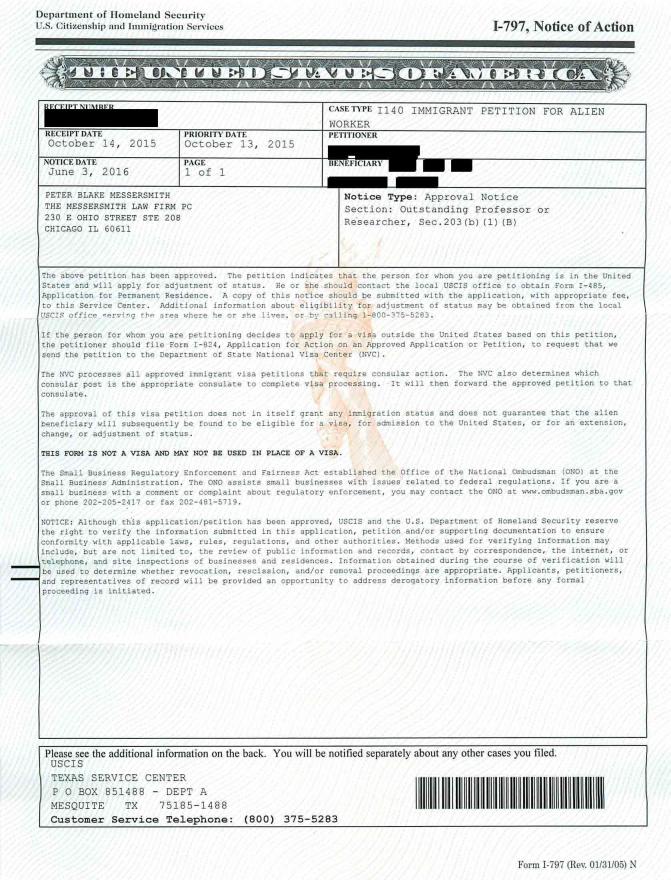
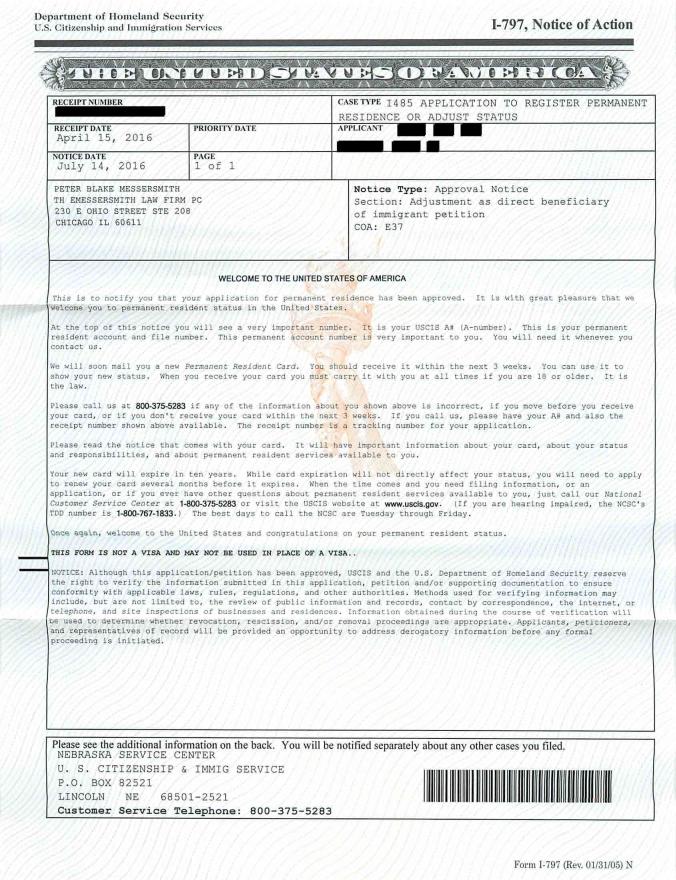
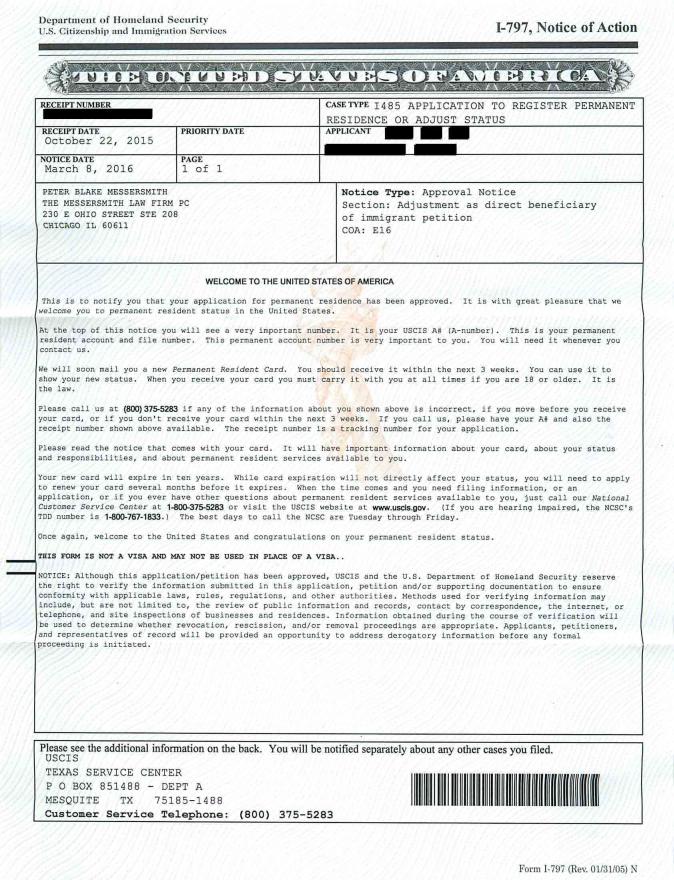
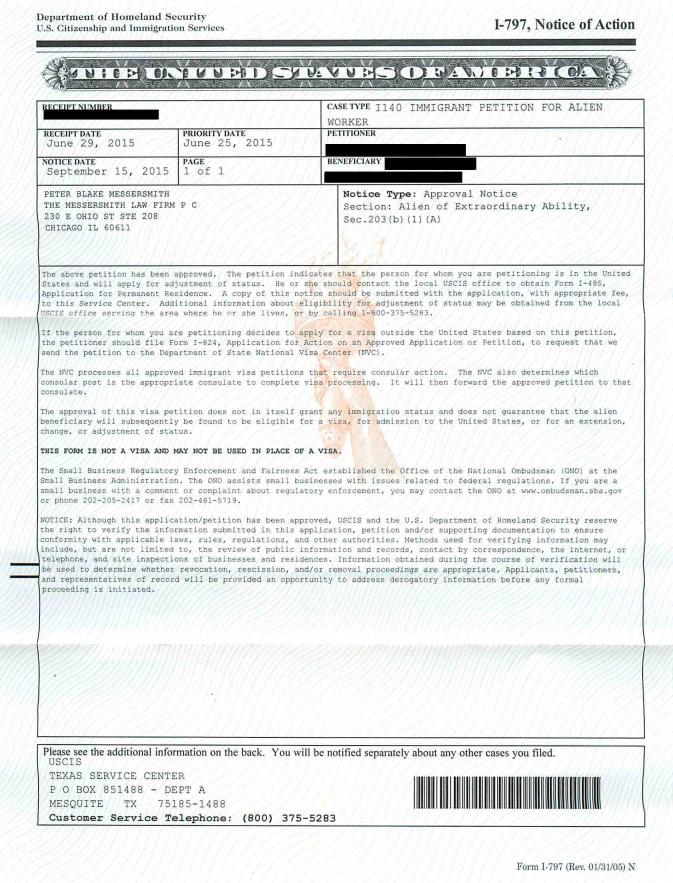
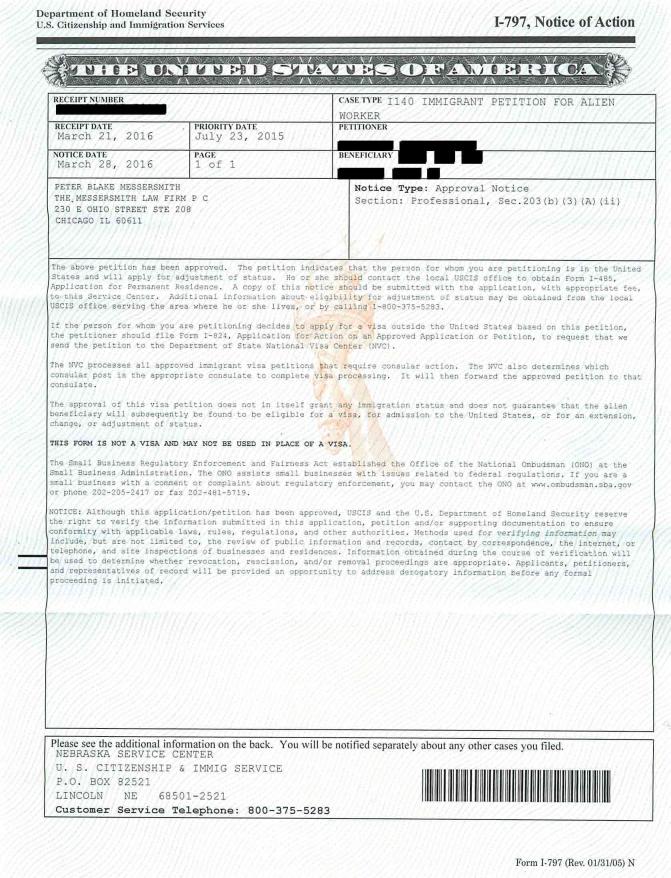
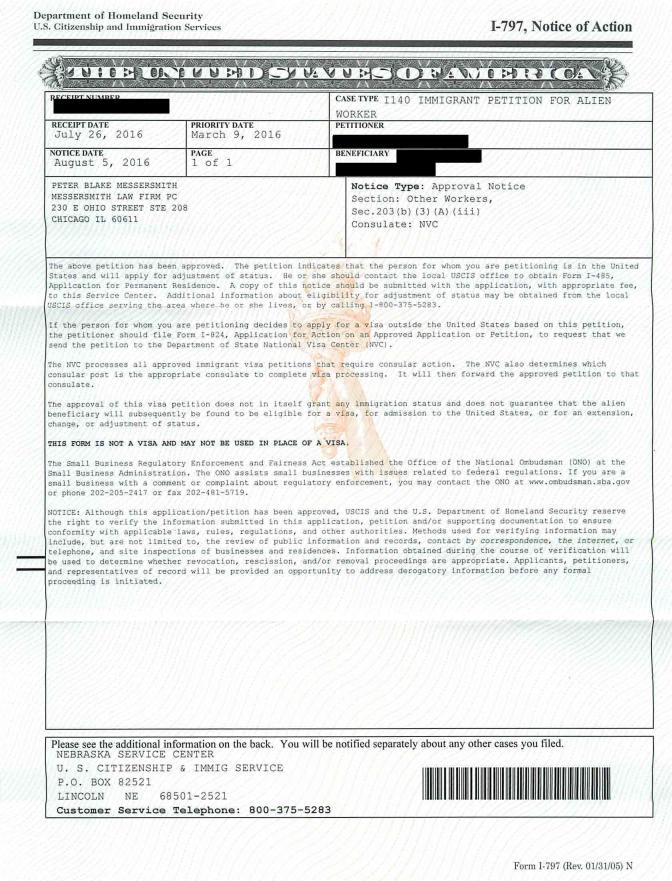
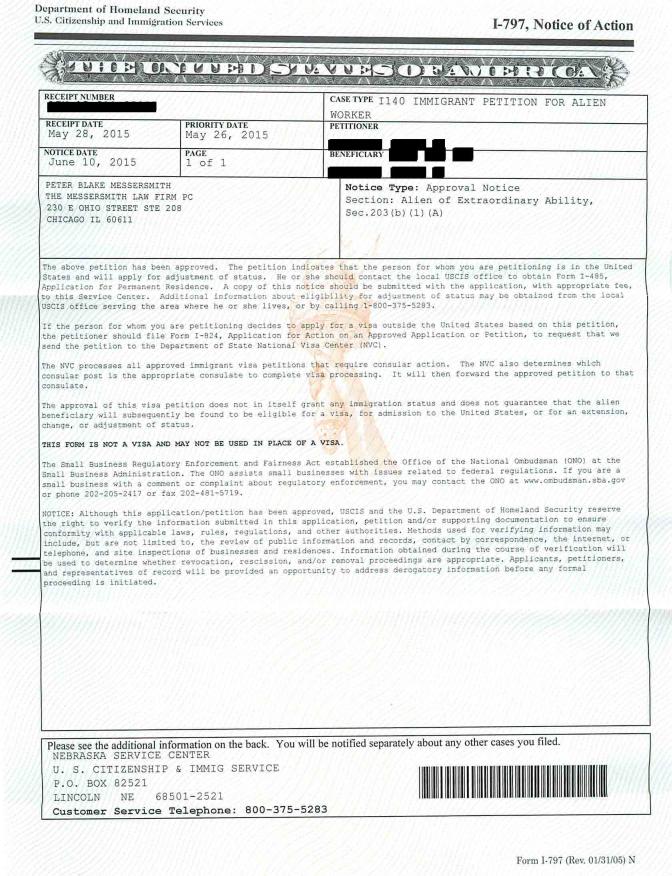
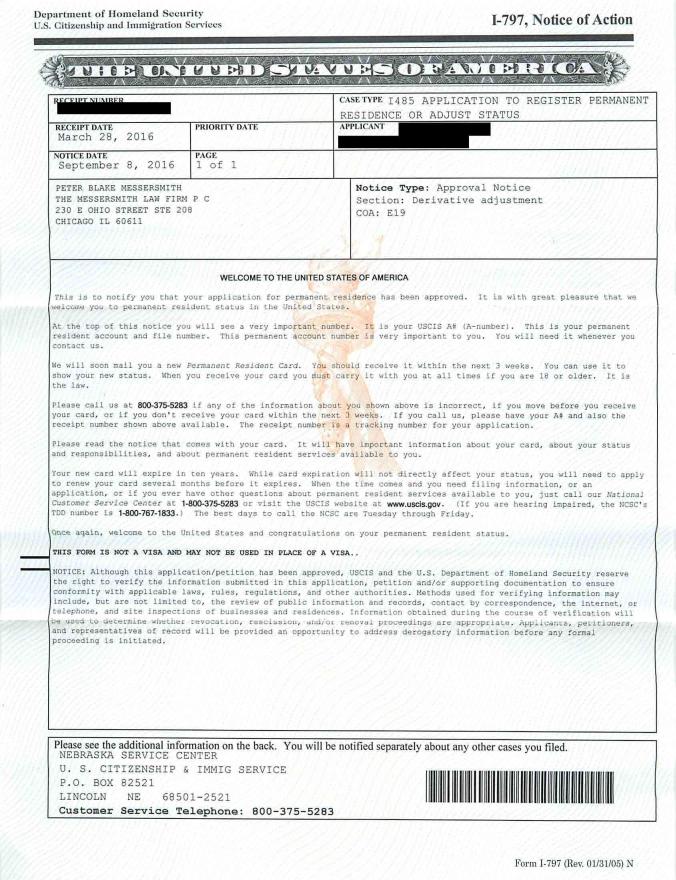
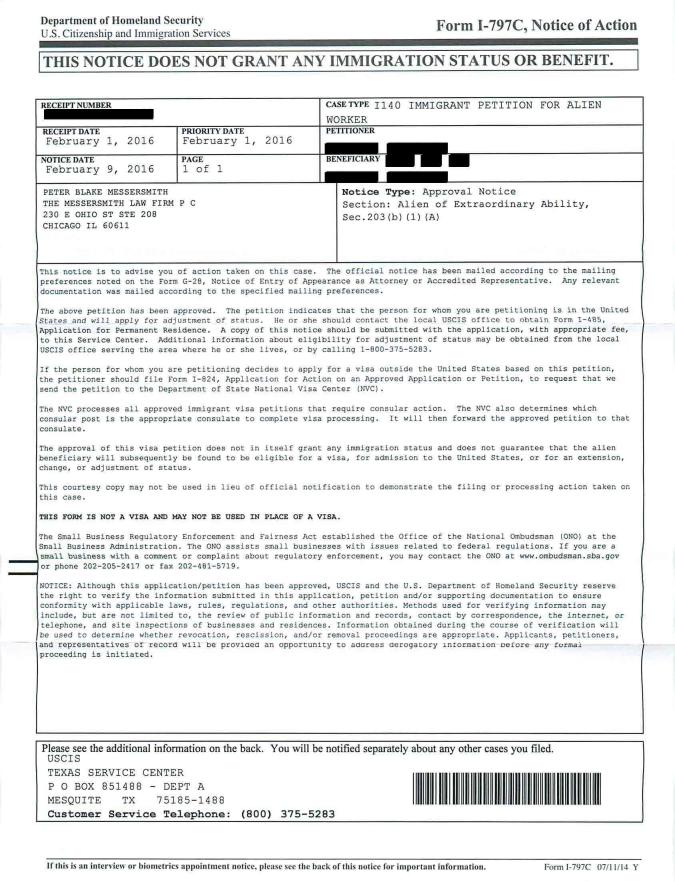
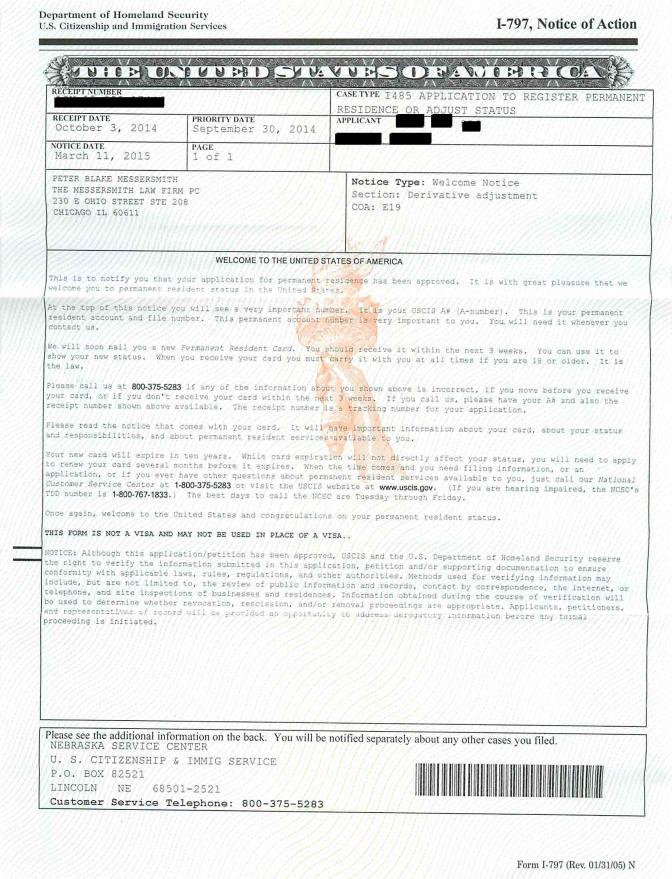
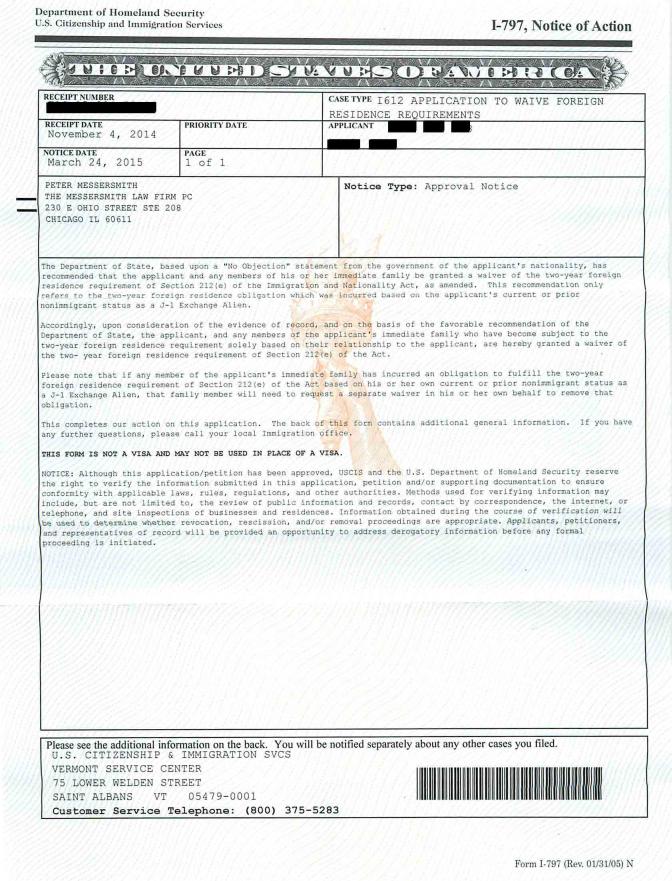
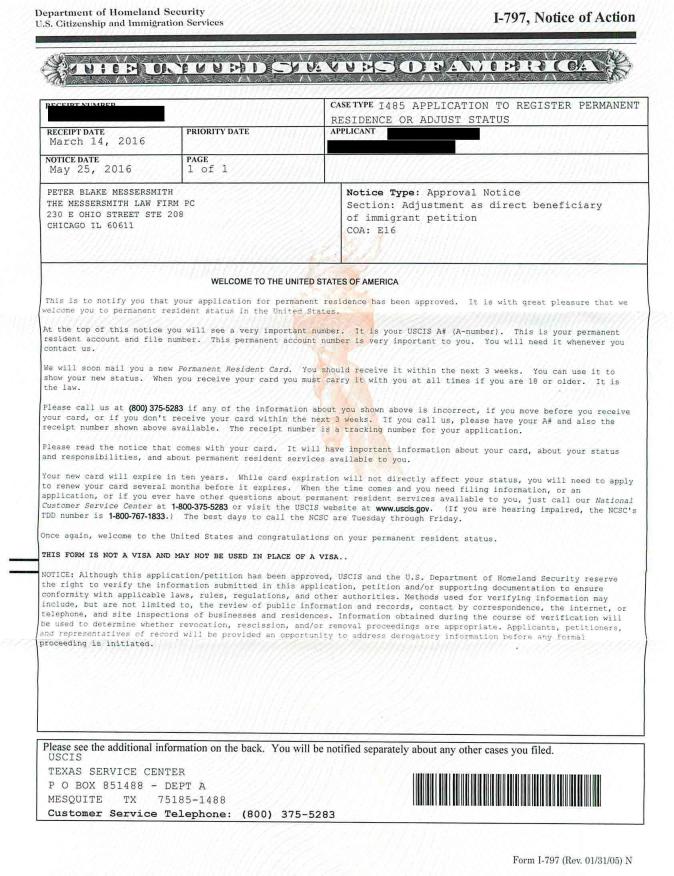
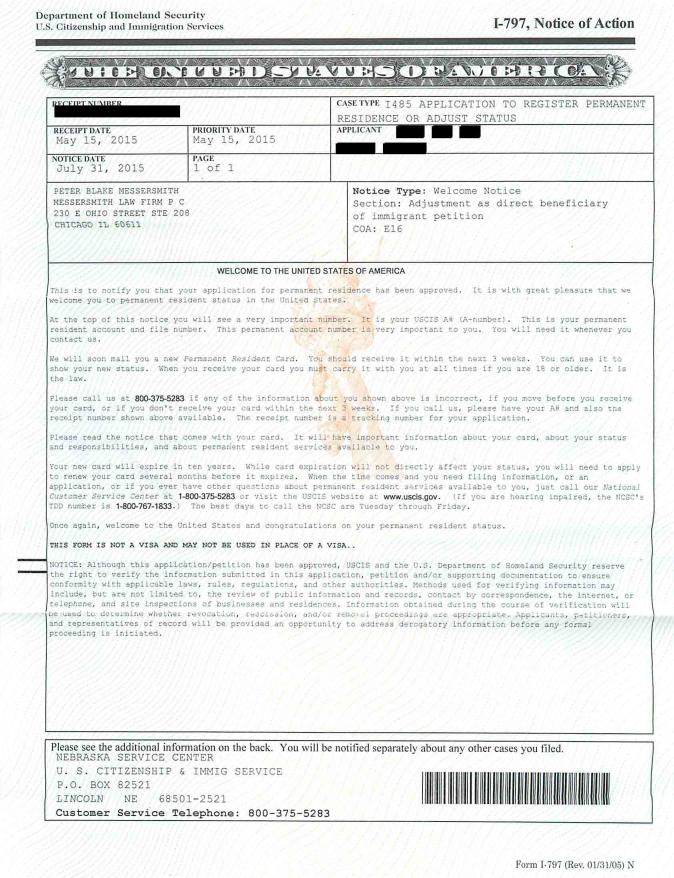
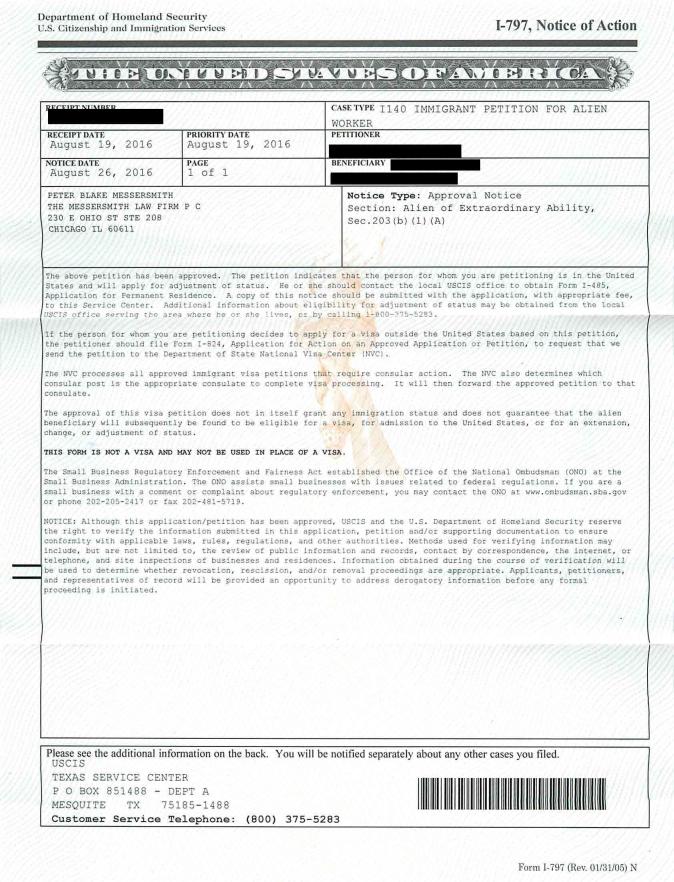
Scroll through fifty recent approval notices below or click here to view thousands.

Customer Testimonials

Real Testimonials from Past Clients